Algeria Crypto Ban: How the 2018 Financial Law Led to Today's Total Prohibition
 Nov, 1 2025
Crypto Penalty Impact Calculator
See how the Algerian crypto fines compare to the average monthly salary (40,000 DZD)
A fine of 500,000 DZD equals 12.5 months of average salary
(1 month = 40,000 DZD)
(1 month = 40,000 DZD)
Important: Algerian law makes crypto possession a criminal offense with fines up to 1,000,000 DZD and up to 1 year imprisonment.
Algeria didn’t just discourage cryptocurrency - it made owning it a crime. While the world moved toward regulating digital assets, Algeria took a different path: total elimination. The journey started in 2018 with a vague law, but by 2025, it became one of the strictest crypto bans on Earth.
The 2018 Financial Law: A Ban Without Teeth
In 2018, Algeria passed its first Financial Law that explicitly banned the use of cryptocurrencies. It said you couldn’t buy, sell, or use Bitcoin, Ethereum, or any other digital currency. But here’s the catch - it didn’t say what would happen if you broke the rule. No fines. No jail time. No clear enforcement plan. That left a gray zone. People still traded crypto. Some used it to send money abroad, bypassing strict capital controls. Others bought Bitcoin as a hedge against inflation, which was climbing above 10% annually. Banks didn’t officially support it, but people found ways - peer-to-peer exchanges, foreign wallets, anonymous apps. The law existed on paper, but in practice, it was ignored. For years, the Bank of Algeria warned against crypto. They called it a threat to the Algerian Dinar. But without penalties, the warning meant little. The 2018 law wasn’t a deterrent - it was a signal. A signal that the government didn’t like crypto. But not a signal that it would stop you.The 2025 Thunderbolt: Law No. 25-10
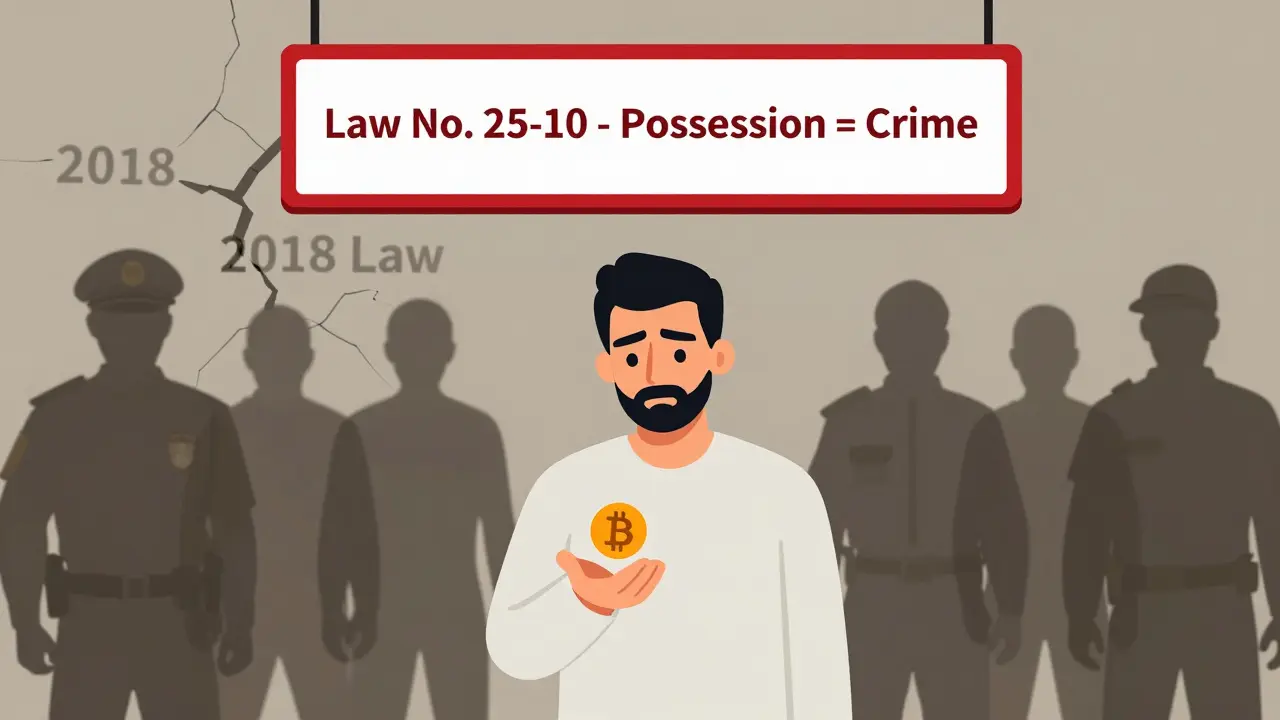
On July 24, 2025, everything changed. Algeria published Law No. 25-10 in its Official Journal. This wasn’t an update. It was a total overhaul. The government didn’t just tighten the ban - it turned every possible interaction with crypto into a criminal offense. Now, it’s illegal to:- Buy or sell any cryptocurrency
- Possess Bitcoin, Ethereum, or any altcoin - even if you never traded it
- Use crypto to pay for goods or services
- Invest in crypto or speculate on price changes
- Advertise crypto, even as a social media post or YouTube video
- Create or run a crypto exchange
- Mine cryptocurrency using your computer or rig
- Teach others how crypto works - yes, even explaining blockchain in a blog post
Penalties: Jail Time for Holding Crypto
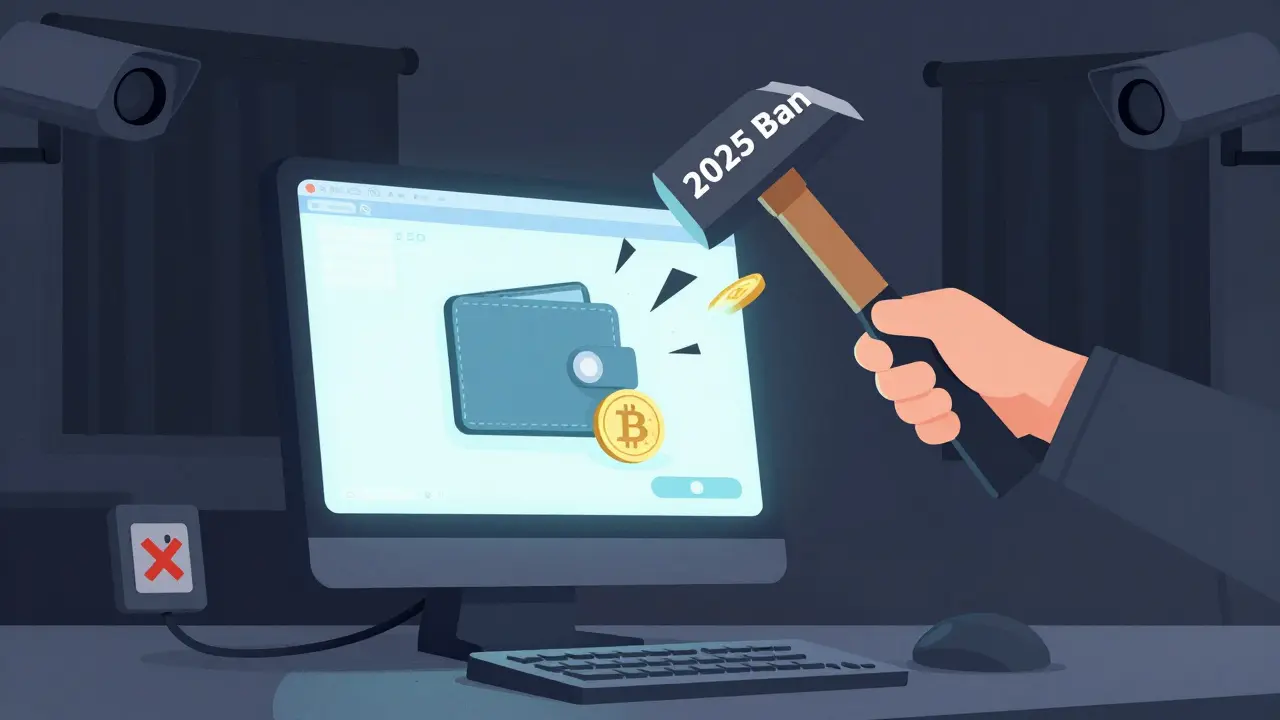
The punishment is harsh - and it’s the same no matter the scale. Individuals caught violating the law face:- Prison sentences from two months to one year
- Fines between 200,000 and 1,000,000 Algerian dinars (about $1,540 to $7,700 USD)
Why Algeria Went So Far
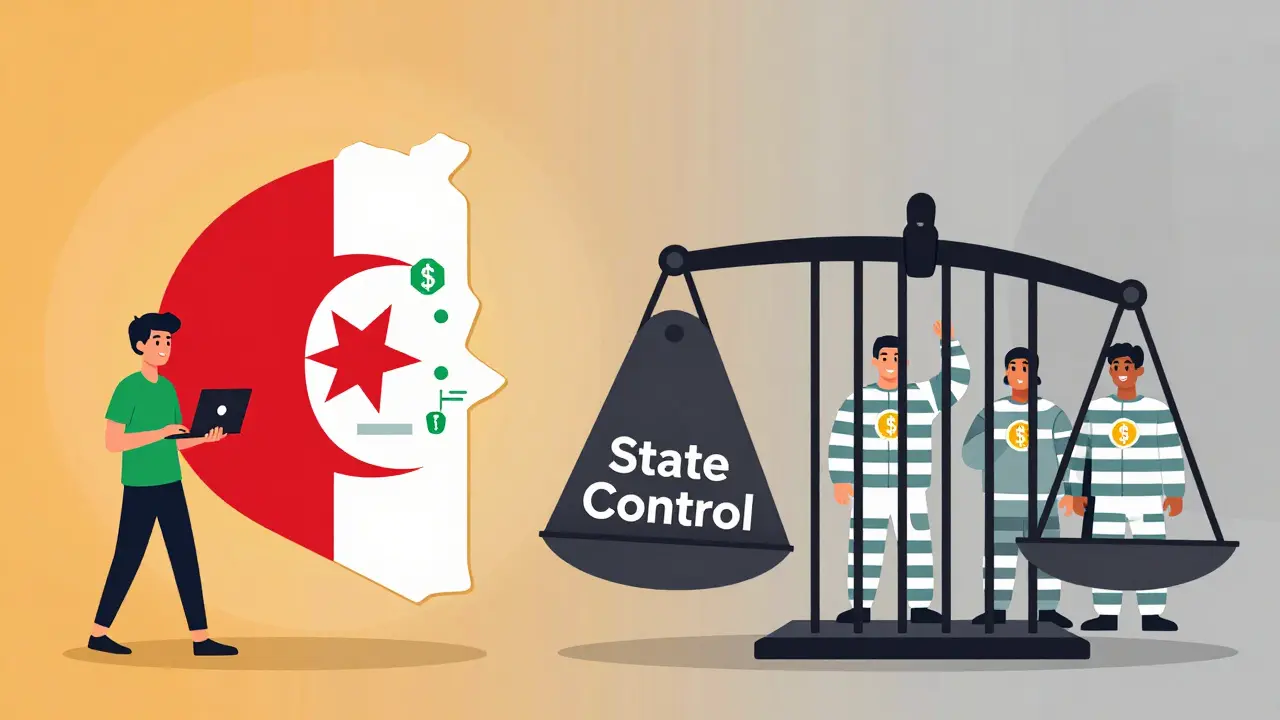
The government says the ban protects the national currency and prevents money laundering. The Bank of Algeria argues crypto threatens monetary sovereignty. They point to the Financial Action Task Force (FATF) guidelines, which urge countries to crack down on unregulated financial flows. But other countries use FATF rules to build regulations - not bans. The UAE, Saudi Arabia, and Bahrain all created clear rules for crypto exchanges, licensing platforms and requiring KYC. Algeria chose to outlaw everything. Another reason? Energy. Algeria subsidizes electricity heavily. Crypto mining uses a lot of power. The government doesn’t want its citizens using subsidized energy to mine Bitcoin while households face blackouts. But the real fear might be control. Crypto is borderless. It doesn’t need banks. It doesn’t need the state. In a country where the government tightly controls foreign exchange, capital outflows, and even internet access, crypto is a threat to its authority.Who’s Enforcing It?
Enforcement isn’t left to one agency. Multiple bodies work together:- Bank of Algeria monitors banks and financial institutions to prevent crypto-related transactions.
- Banking Commission ensures banks don’t process payments linked to crypto.
- Judicial authorities prosecute cases under Law No. 25-10.
- Financial authorities investigate suspicious transfers and digital wallets.
- Security agencies track online activity, monitor social media, and may even raid homes for crypto hardware.
Jay Weldy
December 5, 2025 AT 03:21Man, I can't believe they criminalized holding crypto. I get wanting to control capital flight, but this is like banning people from owning gold because the government doesn't like how it's traded. It's not about finance anymore - it's about control. And that's scary.
Algeria's got a young, tech-savvy population that just wants to participate in the global economy. Instead of shutting them down, why not create a sandbox for regulated crypto use? They could’ve turned this into a national innovation project.
Now they're just driving talent overseas and turning citizens into criminals for downloading a wallet. That’s not security - that’s self-sabotage.
Melinda Kiss
December 5, 2025 AT 12:14This is heartbreaking. I’ve worked with Algerian students online who were so excited about blockchain - they saw it as a way to build something beyond the limitations of their economy. Now they’re scared to even mention it.
Imagine being a college kid who bought $20 worth of Bitcoin to learn, and now you’re looking at jail time. That’s not policy - that’s cruelty wrapped in bureaucracy.
And the fact that teaching blockchain is illegal? That’s intellectual suppression. They’re not just banning currency - they’re banning curiosity.
Christy Whitaker
December 7, 2025 AT 01:15Of course they banned it. People were using it to escape the state’s grip. And now? They’re punishing people for having the audacity to want financial freedom. It’s pathetic. They’re terrified of anything that doesn’t run through their banks.
Meanwhile, the rest of the world is moving forward, and Algeria’s stuck in 1973 with a digital-age problem. Pathetic. Just pathetic.
Nancy Sunshine
December 8, 2025 AT 06:11It is imperative to note that the legislative framework enacted under Law No. 25-10 represents an unprecedented escalation in the suppression of decentralized financial instruments within the context of global monetary policy evolution.
While the Bank of Algeria cites monetary sovereignty as a justification, the absence of any mechanism for asset forfeiture, redemption, or legal transition renders the statute not merely draconian, but economically incoherent.
Furthermore, the criminalization of educational discourse regarding blockchain technology constitutes a violation of the fundamental right to informational autonomy - a principle enshrined in international human rights frameworks, even if domestically ignored.
The energy consumption argument is specious; Algeria produces surplus natural gas. The real issue is not power allocation - it is the state's inability to tolerate non-hierarchical systems of value transfer.
Historically, such prohibitions have always failed. Prohibition of alcohol in the U.S. did not eliminate consumption - it fostered organized crime. This will be no different.
It is my professional opinion that this law will accelerate capital flight, brain drain, and the informalization of the digital economy - outcomes antithetical to the stated goals of financial stability.
Algeria stands not as a guardian of sovereignty, but as an outlier in the global financial architecture - a cautionary tale of regulatory overreach.
Perhaps the next legal amendment will criminalize the use of the internet itself. After all, it enables access to information outside state-approved channels.
One must ask: when the state fears its citizens more than foreign adversaries, what does that say about its legitimacy?
It is not crypto that is the threat. It is the absence of trust - and that, dear reader, is the true crisis.
Alan Brandon Rivera León
December 9, 2025 AT 23:55My cousin’s in Algiers. He bought some BTC in 2020 just to learn. Now he’s deleting every trace of it. He says he doesn’t even want to talk about it anymore.
It’s not about money. It’s about fear. And that’s the real win for the government - they made people afraid of their own curiosity.
I used to think crypto was just a financial tool. Now I see it as a symbol of freedom. And Algeria just made owning that symbol a crime.
They’re not protecting the dinar. They’re protecting their grip on power. Sad.
Ann Ellsworth
December 11, 2025 AT 07:41OMG this is the most *vibe* thing I’ve read all week. Like, imagine being fined 1M DZD for owning 0.002 BTC? That’s so extra. The state is basically saying, ‘We know you’re techy, we know you’re smart, but we’re gonna make you pay for it.’
Also, teaching blockchain? That’s not a crime, that’s a TED Talk. The fact they’re prosecuting *education* is peak authoritarian flex.
Also, mining? On subsidized power? Bro, if you’re gonna ban it, at least give us a tax credit for the electricity we *didn’t* use. This law is so badly written it’s almost poetic.
Paul McNair
December 11, 2025 AT 21:30I’ve spent years working with youth programs in North Africa. I’ve seen how Algerian teens are the most curious, tech-literate generation their country has ever produced.
And now? They’re being told their interest in innovation is illegal.
This isn’t just bad policy - it’s a betrayal. They’re not just banning crypto. They’re banning hope.
When a government fears its own people’s potential more than foreign influence, it’s not protecting the nation - it’s imprisoning it.
One day, Algeria will look back on this law and wonder how they ever thought it was a good idea.
For now, the only thing thriving under this ban is silence.