Algeria Crypto Ban: Legal Penalties Under Law No. 25-10
 Nov, 18 2026
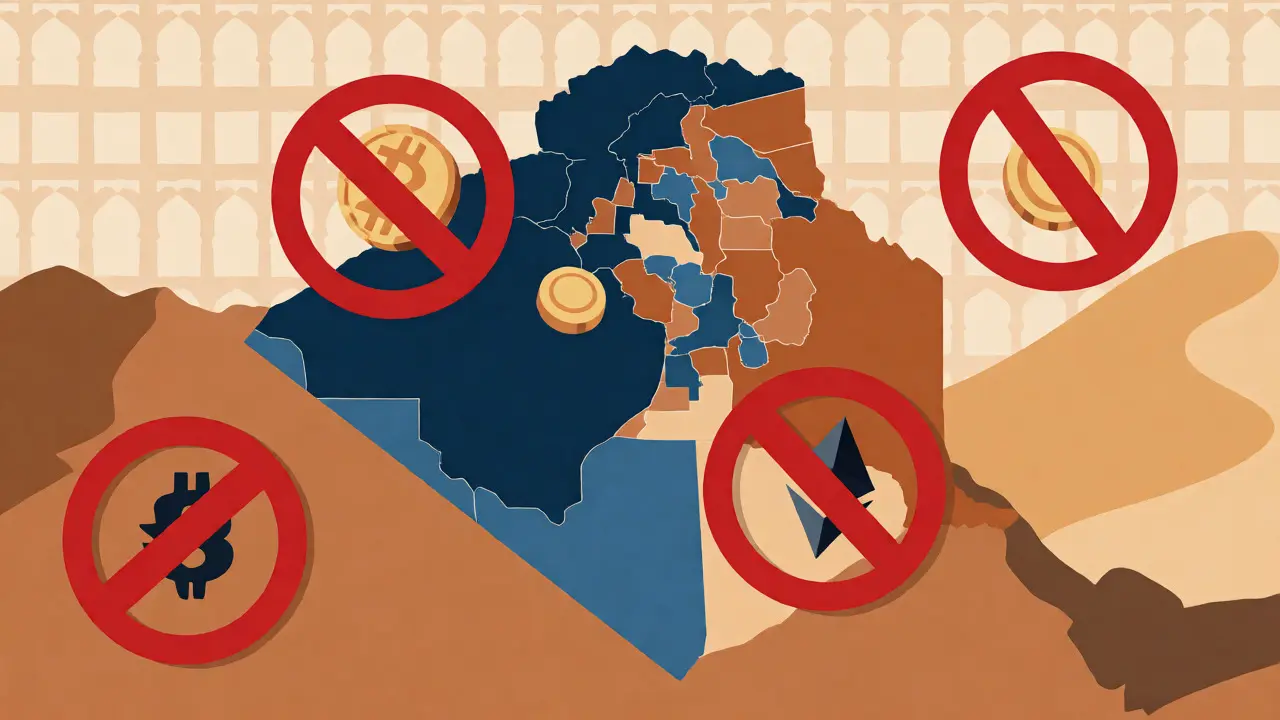
Imagine holding a handful of cash that could buy you a decent car, but if you use it to trade Bitcoin, you might end up in jail for a year. That is the reality for anyone touching digital assets in Algeria. Since July 24, 2023, the country has enforced one of the strictest cryptocurrency bans on the planet under Law No. 25-10, an amendment aimed at combating terrorism and money laundering. If you are a trader, developer, or even just someone who posts about crypto on social media from Algiers, you need to know exactly what is at stake.
This isn't just a warning label; it is a criminal code. The law explicitly prohibits the purchase, sale, use, and holding of virtual currencies. Unlike previous regulations that were vague and rarely enforced, this new legislation comes with teeth-specifically, prison sentences and heavy fines. But how severe are these penalties? Who gets targeted? And why did Algeria decide to shut down its doors to the global crypto economy while neighbors like the UAE and Bahrain roll out the red carpet?
The Core Prohibition: What Exactly Is Banned?
To understand the risk, you first need to understand the scope. Law No. 25-10 defines cryptocurrencies as "virtual instruments used as means of exchange via a computer system, without support from a central bank." This definition is broad by design. It doesn't just target Bitcoin; it covers every token, coin, and stablecoin you can think of, including Ethereum, USDT, and emerging altcoins.
The ban applies to five specific actions:
- Purchase: Buying crypto with Algerian Dinars (DZD) or foreign currency.
- Sale: Selling crypto to acquire fiat currency.
- Use: Using crypto to pay for goods or services.
- Holding: Simply possessing digital assets in a wallet.
- Mining: Generating new coins through computational work.
Crucially, the law extends liability beyond active traders. If you host a blockchain node, run a payment gateway linked to crypto, or even promote a foreign exchange platform, you are potentially breaking the law. This expansive interpretation creates a minefield for businesses. A local startup accepting crypto payments from international clients? Risky. An influencer posting "How to buy Bitcoin" tutorials? Potentially illegal promotion.
Breaking Down the Penalties: Fines and Prison Time
The most pressing question for any Algerian resident or business owner is: "What happens if I get caught?" The answer depends on the severity of the offense and whether it involves organized crime or money laundering links. However, the baseline penalties are clearly defined in the statute.
| Offense Type | Prison Sentence | Fine Amount (DZD) | Approximate USD Value* |
|---|---|---|---|
| Standard Trading/Holding | 2 months to 1 year | 200,000 - 1,000,000 | $1,540 - $7,700 |
| Aggravated Cases (ML/Terrorism link) | Up to 5 years (varies) | 500,000 - 2,000,000+ | $3,700 - $14,700+ |
| Repeat Offenses | Doubled term | Doubled fine | Varies |
*USD values are approximate based on official exchange rates at the time of reporting.
Courts have the discretion to impose both imprisonment and maximum fines simultaneously. While a one-year sentence might seem manageable compared to other jurisdictions, the financial hit is significant. For context, the average monthly salary in Algeria often hovers well below the lower-end fine of 200,000 DZD. This means a single violation could wipe out several months' worth of income for an average citizen.
Furthermore, enforcement bodies are increasingly prioritizing financial penalties over incarceration. Why? Because processing administrative fines is faster and less resource-intensive than managing prison populations. This suggests that while you might not see mass arrests immediately, you will likely see a surge in frozen accounts and hefty bank statements.
Who Is Actually at Risk?
You might think this law only targets whales moving millions in Bitcoin. Wrong. The language of Law No. 25-10 casts a wide net that captures passive participants and service providers alike.
The Passive Holder: If you bought some Ethereum three years ago and left it in a hardware wallet, you are technically violating the law by "holding" it. The law does not distinguish between short-term speculation and long-term investment.
The Promoter: This is where things get tricky for content creators. The law prohibits "promotion" of virtual currencies. Does explaining how blockchain works in a YouTube video count as promotion? Does sharing your portfolio on Instagram? Legal experts warn that the term "promotion" is vague enough to be interpreted broadly. Influencers, educators, and even software developers building tools accessible from Algeria face potential scrutiny.
The Service Provider: Local exchanges, P2P platforms, and payment processors are primary targets. Any entity facilitating crypto transactions within Algeria's borders must cease operations or relocate. Several startups have already moved their headquarters to Tunisia or Morocco to escape this regulatory chokehold.

Why Did Algeria Go Hardline?
If crypto adoption was growing, why kill it? In 2022, Chainalysis ranked Algeria among the top five fastest-growing crypto markets in the MENA region. So what changed?
The government cites three main reasons:
- Money Laundering & Terrorism Financing: The law is part of a broader anti-money laundering (AML) framework aligned with Financial Action Task Force (FATF) guidelines. Authorities argue that anonymous digital assets make it too easy to hide illicit funds.
- Capital Flight: With high inflation and a volatile Dinar, citizens were using stablecoins to preserve wealth and move value abroad. The state views this as a threat to monetary policy control.
- Financial Stability: Regulators fear that unregulated speculation could destabilize the traditional banking sector, which remains the backbone of Algeria's economy.
Unlike neighboring countries that chose regulation (like the UAE’s VARA or Bahrain’s Central Bank rules), Algeria chose prohibition. They decided that eliminating the risk entirely was safer than trying to manage it.
The Economic Fallout: Brain Drain and Lost Revenue
Bans don't always stop activity; they often drive it underground. Early reports suggest that the formal market has shrunk, but informal peer-to-peer (P2P) trading persists. However, the cost of doing business has skyrocketed due to the fear of prosecution.
A more tangible consequence is the "blockchain talent exodus." Skilled developers and entrepreneurs are leaving Algeria for jurisdictions with clearer rules. Industry analysts predict that 30-40% of the country's blockchain workforce could relocate within 18 months. This loss of human capital hurts Algeria's tech ecosystem long-term. When you ban the technology, you also ban the innovation that comes with it.
Additionally, the ban has eliminated an estimated $200 million in annual trading volume from the formal sector. That’s tax revenue gone, job opportunities lost, and a vibrant community forced into silence or exile.

How Enforcement Works in Practice
So, how do authorities actually catch you? They aren't walking around scanning QR codes. The National Agency for the Fight Against Money Laundering and the Financing of Terrorism (ANLCCFT) has established a specialized financial crimes unit. They use digital monitoring tools similar to those employed by the U.S. IRS.
Key enforcement tactics include:
- Bank Transaction Monitoring: Banks flag unusual transfers linked to known crypto exchanges or frequent small deposits/withdrawals typical of P2P trades.
- Blockchain Analytics: Investigators trace public ledger data to identify wallets associated with Algerian IPs or known users.
- Social Media Scrutiny: Public posts promoting exchanges or showing profits can serve as evidence of "promotion" or active trading.
Compliance is now a burden for banks too. They must review not just transactions, but marketing materials and partnerships to ensure they aren't inadvertently facilitating crypto engagement.
Regional Context: How Algeria Compares
Algeria stands out as an outlier in North Africa and the Middle East. Most of its neighbors are embracing digital assets with regulated frameworks.
| Country | Status | Regulatory Body | Key Feature |
|---|---|---|---|
| Algeria | Total Ban | Ministry of Finance / ANLCCFT | Criminal penalties for holding/trading |
| United Arab Emirates | Regulated | VARA (Virtual Assets Regulatory Authority) | Licensing framework for exchanges |
| Bahrain | Regulated | Central Bank of Bahrain | Clear guidelines for custodians |
| Egypt | Religious Ban (Fatwa) | Grand Mufti / CBE | Prohibited for religious reasons, but tolerated |
| Tunisia | Gray Area/Sandbox | Central Bank of Tunisia | Exploring pilot projects |
While Egypt has a religious ban, it is often loosely enforced. Algeria’s approach is unique because it combines statutory law with criminal penalties, making it legally binding and actively prosecutable.
Practical Advice for Residents and Businesses
If you live in Algeria or operate there, here is how to navigate the landscape:
- Avoid Local Exchanges: Do not use platforms that require KYC with Algerian addresses if they still offer crypto services. Shut them down or migrate.
- Be Careful with Social Media: If you are an influencer, avoid explicit calls to action like "Buy Bitcoin now." Educational content is safer, but even that carries risk if interpreted as promotion.
- Separate Personal and Business Finances: If you are paid in crypto by foreign clients, convert it to fiat outside Algeria before bringing it into the local banking system to avoid triggering AML flags.
- Monitor Regulatory Updates: Laws can change. Keep an eye on announcements from the Ministry of Finance regarding potential amendments or sandbox initiatives.
Is mining Bitcoin illegal in Algeria?
Yes. Law No. 25-10 explicitly prohibits mining activities. This includes both individual home miners and commercial mining farms. Violators face the same penalties as traders, including fines and potential imprisonment.
Can I hold crypto in a hardware wallet?
Technically, no. The law prohibits the "holding" of virtual currencies. While enforcement against individuals holding small amounts in cold storage may be difficult, the act itself is illegal. Possession alone constitutes a violation under the current statute.
What is the maximum fine for crypto trading?
For standard offenses, fines range from 200,000 to 1,000,000 Algerian Dinars (approx. $1,540-$7,700). For aggravated cases involving money laundering or organized crime, fines can reach up to 2,000,000 DZD or higher, depending on judicial interpretation.
Does the ban apply to foreigners living in Algeria?
Yes. The law applies to all activities conducted within Algerian jurisdiction, regardless of nationality. Foreign residents engaging in crypto trading or holding digital assets locally are subject to the same penalties as citizens.
Are there any exceptions for educational purposes?
The law is vague on this point. While teaching the technical aspects of blockchain is generally considered safe, promoting specific cryptocurrencies or exchanges can be construed as prohibited "promotion." Caution is advised when creating content that encourages investment.