BaFin Cryptocurrency Oversight and Compliance: What Businesses Must Know in 2025
 Dec, 8 2025
BaFin Crypto License Assessment Tool
Compliance Assessment
Enter your business details to check compliance status.
Germany doesn’t ban cryptocurrency. It regulates it. And if you’re running a crypto business in or targeting Germany, BaFin isn’t asking for permission - it’s demanding compliance. Since 2025, the rules have shifted from slow, bureaucratic hurdles to a clear, fast-track system - but the stakes are higher than ever. Miss a requirement, and your business could be shut down overnight.
What BaFin Actually Controls
BaFin, Germany’s Federal Financial Supervisory Authority, doesn’t just watch crypto. It owns the rulebook. Under the Kryptomärkte-Aufsichtsgesetz (KMAG) and the Finanzmarktdigitalisierungsgesetz (FinmadiG), any company offering crypto services - custody, trading, exchange, or even staking as a service - needs formal authorization. This isn’t a suggestion. It’s the law.Cryptocurrencies like Bitcoin and Ethereum are classified as financial instruments under the German Banking Act (KWG). That means if your business touches them in a service-oriented way, you’re in the same regulatory bucket as a bank. Even if you’re based in the U.S. or Singapore, if you market your service to Germans - even just one person with a German address - BaFin claims jurisdiction.
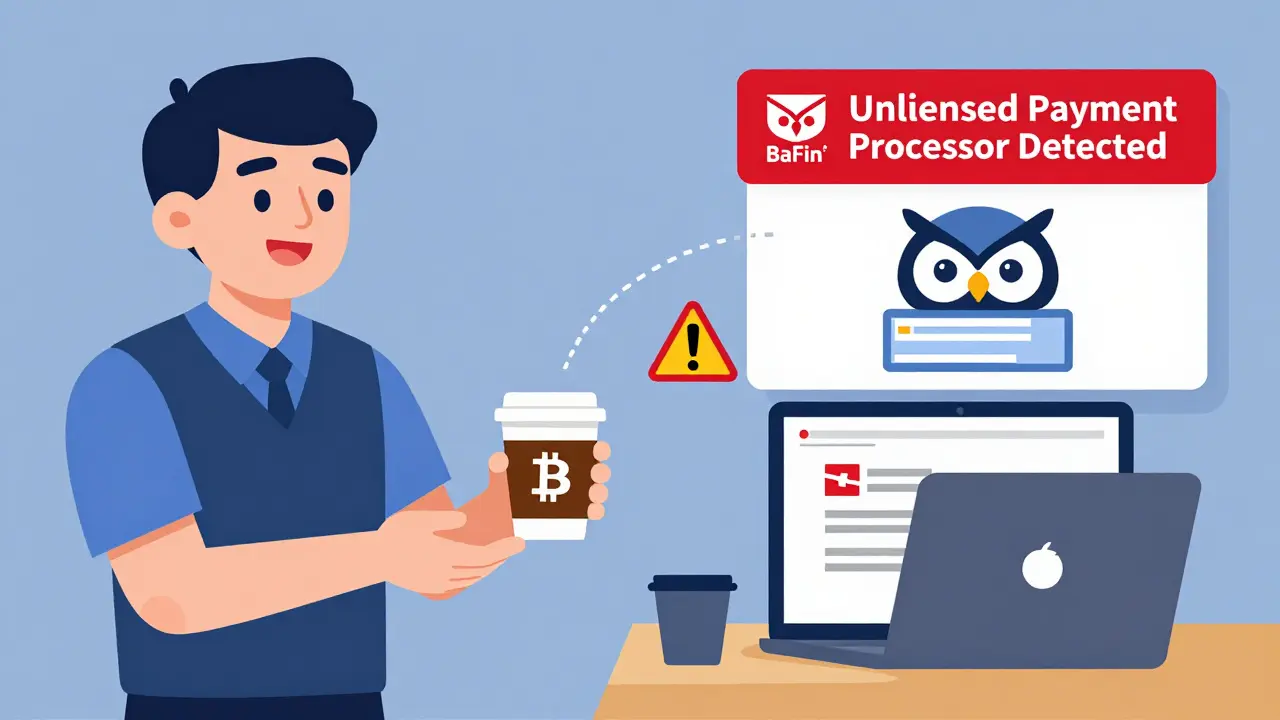
There’s one big exception: if you’re a small business accepting Bitcoin as payment for goods or services, you don’t need a license. But if you use a third-party payment processor that converts that Bitcoin to euros on your behalf, and that processor isn’t BaFin-licensed, you’re now liable. BaFin has gone after merchants for this exact loophole.
Compliance Isn’t Optional - It’s Built Into Every Step
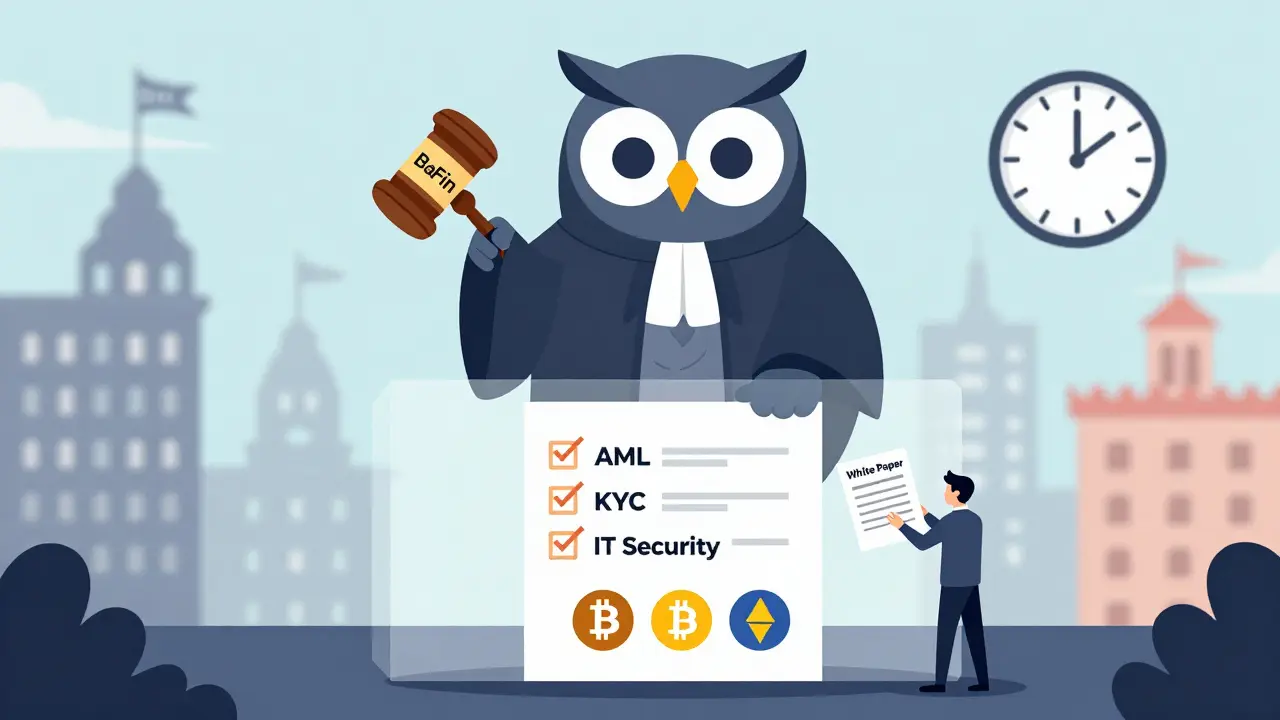
Getting licensed isn’t just about filling out forms. BaFin requires full compliance with three pillars: AML, KYC, and IT security.First, the Travel Rule. Since 2020, Germany implemented the FATF’s Travel Rule through the KryptoWTransferV. Every crypto transfer over €1,000 must include sender and recipient data - name, address, account number. If you’re running an exchange or wallet service, your system must capture, store, and transmit this automatically. No manual workarounds. No exceptions.
Second, KYC. You can’t just ask for an ID. You need verified, government-issued documents, facial recognition matching, and ongoing monitoring. BaFin doesn’t accept screenshots of passports. They require live verification through certified providers like Signicat or IDnow. And if you’re onboarding a corporate client? You need proof of beneficial ownership - not just a business registration.
Third, IT security. BaFin doesn’t care if you use AWS or your own servers. They care if your system can survive a hack. Minimum requirements include: encrypted data at rest and in transit, multi-factor authentication for all admin access, penetration testing every six months, and an incident response plan filed with BaFin. One breach, and your license is suspended - no warning.
White Papers and Public Offerings: No More Guesswork
If you’re launching a new token - whether it’s a utility token, stablecoin, or security token - you must submit a white paper to BaFin before you even advertise it. This isn’t a marketing doc. It’s a legal filing.Under MiCAR, your white paper must include: technical architecture, tokenomics, risk disclosures, team backgrounds with CVs, and a clear explanation of how the token will be used. BaFin reviews these within 60 days. If they find anything misleading - even a vague claim like “will revolutionize finance” - they’ll reject it. And if you launch anyway? You’re facing criminal charges.
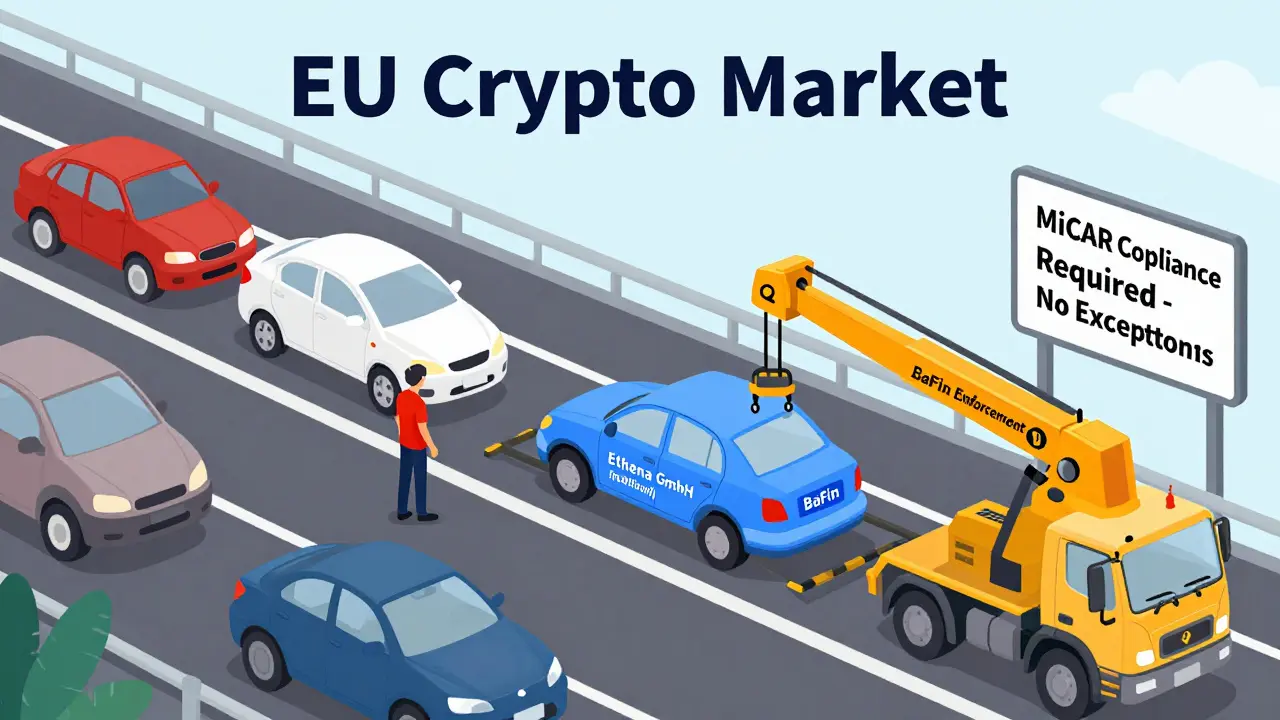
That’s what happened to Ethena GmbH in June 2025. BaFin ordered them to wind down operations of their USDe stablecoin in Germany. Token holders had until August 6 to redeem their tokens. BaFin appointed a third-party administrator to oversee the process. No appeal. No delay.
What Changed in 2025? Speed, Clarity, and Enforcement
Remember the Wirecard scandal? BaFin used to take 18-24 months to approve a crypto license. Now? Some approvals happen in under four months.The reason? MiCAR forced standardization across the EU. Germany had to align. BaFin streamlined its internal processes, hired 120 new crypto specialists, and created a dedicated digital assets unit. They now require applicants to submit compact, structured applications - no 200-page PDFs. They’ve also published detailed guidance notes, including what they expect in each section of the application.
But don’t mistake speed for leniency. BaFin’s rejection rate for first-time applications is still above 60%. Common reasons: incomplete KYC procedures, vague risk disclosures, or IT systems that don’t meet minimum encryption standards. They’re not testing your ambition. They’re testing your operational discipline.
Who Needs a License? The Gray Areas
Not every crypto activity needs BaFin approval - but the line is thin.- You’re safe if you’re just buying Bitcoin for yourself.
- You’re safe if you accept crypto as payment for a product and hold it.
- You’re not safe if you run a mining pool that distributes rewards in crypto - that’s considered a financial service.
- You’re not safe if you run a platform where users trade crypto among themselves, even if you don’t touch the funds.
- You’re not safe if you advertise crypto trading on Reddit or Telegram and take a commission - that’s considered brokerage under Section 1(1a) No. 4 of KWG.
Even decentralized finance (DeFi) protocols aren’t exempt. If your DeFi app has a German user base and facilitates lending, staking, or yield generation, BaFin considers you a financial intermediary. You need a license - even if you’re coded on Ethereum and have no legal entity.
Tax Implications Are Now Part of Compliance
In March 2025, Germany’s Federal Ministry of Finance updated its crypto tax rules. The term “virtual currency” is gone. Now it’s all “crypto assets.” And the rules are more detailed than ever.- Staking rewards are now classified as income - not capital gains - and taxed at your personal rate.
- DeFi transactions (like swapping tokens on Uniswap) trigger taxable events every time you trade.
- You must track every transaction, including gas fees, and keep records for 10 years.
- Valuation must use daily market rates from at least two reputable exchanges.
BaFin doesn’t handle taxes, but they share data with the tax office. If you’re licensed and your tax filings don’t match your transaction logs, you’ll get flagged - and your license could be revoked.
What Happens If You Ignore BaFin?
The penalties aren’t fines. They’re existential.Operating without a license is a criminal offense. BaFin can:
- Shut down your website and app within 24 hours
- Seize your German bank accounts
- Issue public warnings that damage your reputation across Europe
- Block your domain from German ISPs
- Impose personal liability on directors - yes, even if you’re based outside Germany
There’s no “first offense” policy. BaFin doesn’t warn. They act.
How to Get Licensed in 2025
If you’re serious about operating in Germany, here’s what you need to do:- Form a German legal entity (GmbH or AG) - foreign companies can’t apply directly.
- Hire a local compliance officer with experience in MiCAR.
- Implement a fully automated KYC/AML system certified by BaFin-approved providers.
- Submit your white paper (if applicable) and license application via BaFin’s online portal.
- Prepare for a 4-6 month review. Expect at least two rounds of questions.
- Once approved, maintain ongoing reporting: quarterly transaction volumes, annual IT audits, and real-time alerts for suspicious activity.
There’s no shortcut. But the reward? Access to Europe’s largest crypto market - with legal certainty.
Do I need a BaFin license if I’m a non-German crypto company?
Yes, if you actively target German customers - even if you’re based in the U.S. or Singapore. BaFin considers your business to be operating in Germany if you have a German website, accept euros, offer customer support in German, or advertise on platforms like Google Ads targeting German users. Passive access - like a German citizen stumbling on your site - doesn’t count. But if you market to them, you’re under BaFin’s jurisdiction.
Can I use a third-party custodian to avoid getting licensed?
No. If you’re offering custody as part of your service - even if you outsource the actual storage - you’re still the provider of record. BaFin holds the entity that interacts with the customer responsible. Using a licensed custodian like BitGo or Fidelity Digital Assets doesn’t exempt you. You still need your own authorization if you’re managing client assets.
What if I only serve non-residents from Germany?
If your company is based in Germany and you serve only non-residents, you still need a license. BaFin’s jurisdiction is tied to where the business is located, not where the customers live. The only exception is if you’re providing services on the customer’s initiative - meaning the customer reached out to you without any marketing or targeting from your side. That’s considered passive service and may be exempt.
How much does it cost to get a BaFin crypto license?
There’s no fixed fee. BaFin charges based on the scope of your operations and the complexity of your application. Most companies pay between €15,000 and €50,000 in application fees alone. Add legal counsel, compliance software, IT audits, and staffing - and the total cost often exceeds €100,000. It’s expensive, but cheaper than being shut down.
Are NFTs regulated by BaFin?
It depends. If an NFT represents ownership in a company, shares, or revenue streams - it’s a security token and fully regulated. If it’s just a digital collectible with no financial rights, it’s not. But BaFin watches closely. If you’re selling NFTs with promises of future profits, staking rewards, or resale guarantees, they’ll treat it as a crypto-asset and require licensing.
What’s the deadline to switch to MiCAR-compliant licenses?
Existing licenses under German law remain valid until December 31, 2025. After that, all crypto service providers must hold MiCAR-compliant authorization. BaFin has stopped issuing new licenses under old rules. If you’re waiting until 2025 to apply, you’re already behind.
Roseline Stephen
December 10, 2025 AT 07:03Just read this after my startup got flagged by BaFin last week. We thought we were fine since we’re US-based, but turns out our German-language support page counted as ‘targeting.’ We’re scrambling to hire a compliance officer and redo our KYC flow. No one warned us about the third-party processor liability either - we used a German payment gateway that auto-converted BTC to EUR. Now we’re facing a 6-month audit. Don’t make our mistake.
jonathan dunlow
December 11, 2025 AT 18:25Look, I get it - BaFin is terrifying, but here’s the truth: if you’re serious about Europe, this is the price of admission. I’ve helped three crypto firms get licensed in Germany now, and every single one of them thought they could skip the paperwork. Spoiler: they couldn’t. The good news? Once you’re in, you’re golden. Germany’s market is massive, and BaFin’s clarity means zero guesswork. The real losers are the ones who wait until they get shut down before they act. Start now. Hire the compliance expert. Don’t try to DIY this. Your future self will thank you - and so will your investors. This isn’t bureaucracy, it’s armor. Put it on.
Frank Cronin
December 12, 2025 AT 17:47Oh wow, another ‘crypto startup’ crying because Germany won’t let them run a sketchy staking pool without a license. Let me guess - you thought ‘decentralized’ meant ‘immune to laws’? Congrats, you’re not a disruptor, you’re a tax-evading con artist with a whitepaper. BaFin isn’t the problem - you are. If your business model relies on loopholes, maybe you should’ve gone into real estate instead of pretending you’re Satoshi’s heir. And yes, I’m talking to you, the guy who used ‘NFT’ as a verb and thought that counted as innovation. Go cry to the SEC.
miriam gionfriddo
December 14, 2025 AT 17:14OK so I just got my BaFin application rejected AGAIN and I’m sobbing into my coffee. I spent 3 months on this, hired a ‘expert’ from Berlin who charged me 20k, and they said my IT security plan was ‘vague’ and my KYC screenshots weren’t ‘live verified’ - like wtf?? I used DocuSign! And now my lawyer says I need to pay another 15k for ‘certified’ Signicat integration?? I’m not a bank!! I just want to let people swap tokens!! Also my cat knocked over my monitor and now I think BaFin is haunted. Someone help. I’m broke and my dog is judging me.
Nicole Parker
December 16, 2025 AT 15:25I’ve been thinking a lot about this - not just the rules, but why they exist. BaFin doesn’t hate crypto. They hate chaos. They’ve seen what happens when you let financial innovation run wild without guardrails - Wirecard, the 2008 crash, the whole ‘crypto winter’ mess. What they’re asking for isn’t perfection, it’s responsibility. The KYC, the Travel Rule, the audits - these aren’t red tape, they’re the scaffolding that lets real innovation survive. I get frustrated too, but when I look at how many people lost everything in unregulated platforms, I realize: this is protection. For users. For honest builders. Even for us, the ones trying to do it right. It’s heavy, it’s expensive, it’s slow - but it’s the only way to build something that lasts. Maybe we’re not the rebels anymore. Maybe we’re the ones who chose to build something that won’t burn down.
Vincent Cameron
December 17, 2025 AT 17:22There’s a deeper truth here that no one’s saying: BaFin isn’t regulating crypto. They’re regulating trust. In a world where anyone can spin up a token in 20 minutes and market it as ‘the future,’ Germany is forcing the industry to prove it deserves to be taken seriously. It’s not about control - it’s about credibility. The companies that survive this are the ones who stop treating regulation like a hurdle and start treating it like a badge. The license isn’t the end goal - it’s the first signal that you’re not just another scam artist with a Discord server. Maybe the real revolution isn’t in the code. Maybe it’s in the courage to follow the rules when everyone else is trying to bypass them.