Bank of Namibia Crypto Policy: Restrictions, Licensing, and the Virtual Assets Act
 Jun, 6 2026
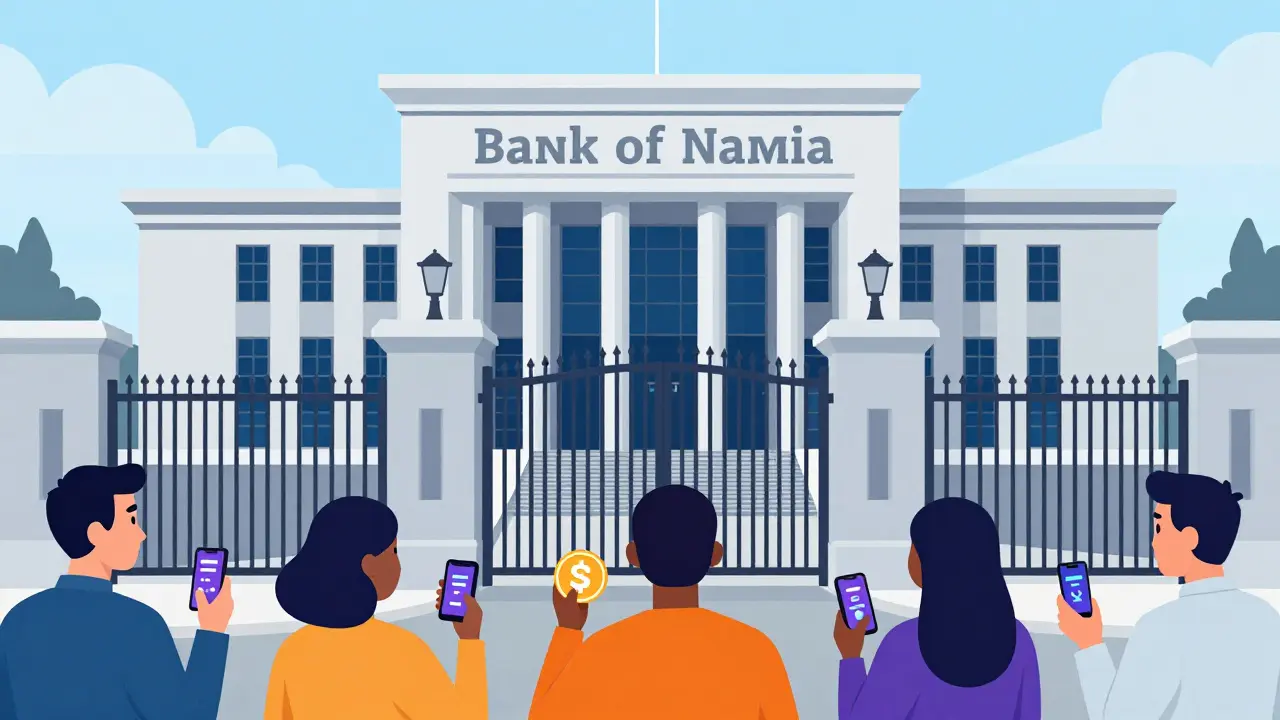
You might think that because your neighbor is trading Bitcoin or a local shop accepts crypto for coffee, everything is fair game in Namibia. But if you are running a business involving digital assets, the reality is much stricter. The Bank of Namibia has maintained a cautious stance on cryptocurrencies and virtual assets for years, balancing the need for financial stability with the inevitability of digital finance.
As of 2026, the landscape has shifted from total skepticism to a structured, albeit restrictive, regulatory environment. You can trade, but only if you follow specific rules. You can accept payments, but merchants decide at their own risk. And if you want to run an exchange, you face a rigorous licensing process that keeps many out of the market entirely.
The core question isn't just "is crypto legal?" It's "how do I operate without breaking the law?" Let’s break down exactly where things stand.
Key Takeaways: Bank of Namibia Crypto Stance
Aspect
Status / Rule
Legal Tender Status
No. Cryptocurrencies are not legal tender.
Merchant Acceptance
Allowed at merchant discretion (since 2022).
Exchange Operations
Requires strict licensing via NAMFISA under the Virtual Assets Act.
Foreign Exchanges
Banned. Only locally licensed entities can operate.
ICOs (Initial Coin Offerings)
Strongly discouraged due to fraud risks.
From Skepticism to Structure: How the Rules Changed
| Aspect | Status / Rule |
|---|---|
| Legal Tender Status | No. Cryptocurrencies are not legal tender. |
| Merchant Acceptance | Allowed at merchant discretion (since 2022). |
| Exchange Operations | Requires strict licensing via NAMFISA under the Virtual Assets Act. |
| Foreign Exchanges | Banned. Only locally licensed entities can operate. |
| ICOs (Initial Coin Offerings) | Strongly discouraged due to fraud risks. |
To understand today’s restrictions, you have to look back at where the Bank of Namibia started. In 2018, the central bank was blunt. They stated they did not recognize cryptocurrencies as commodities and did not support trading them on any financial market. For a long time, this meant operating in a gray area where individual holders weren’t prosecuted, but businesses had no clear path forward.
The first crack in the wall appeared in 2022. The Bank announced that Bitcoin could be used as payment if a merchant chose to accept it. This didn’t make crypto legal money-it still wasn’t the Namibian Dollar-but it acknowledged that people were using it anyway. Why fight what you can’t stop? Instead, regulate it.
The real turning point came in mid-2023 with two major laws:
- The Virtual Assets Act (Act No. 10 of 2023): This created the framework for regulating digital assets specifically.
- The Payment System Management Act (Act No. 14 of 2023): This regulated broader payment service providers, ensuring that anyone moving money digitally followed strict oversight.
These acts didn’t open the floodgates. They built a dam with controlled gates. Now, every entity touching virtual assets must fit into a predefined box. If you don’t fit, you’re shut out.
Who Can Operate? Understanding VASP Licensing
If you plan to run a crypto exchange, wallet provider, or trading platform in Namibia, you are classified as a Virtual Asset Service Provider (VASP). You cannot simply register a company and start trading. You need approval from the Namibia Financial Institutions Supervisory Authority (NAMFISA), working closely with the Bank of Namibia.
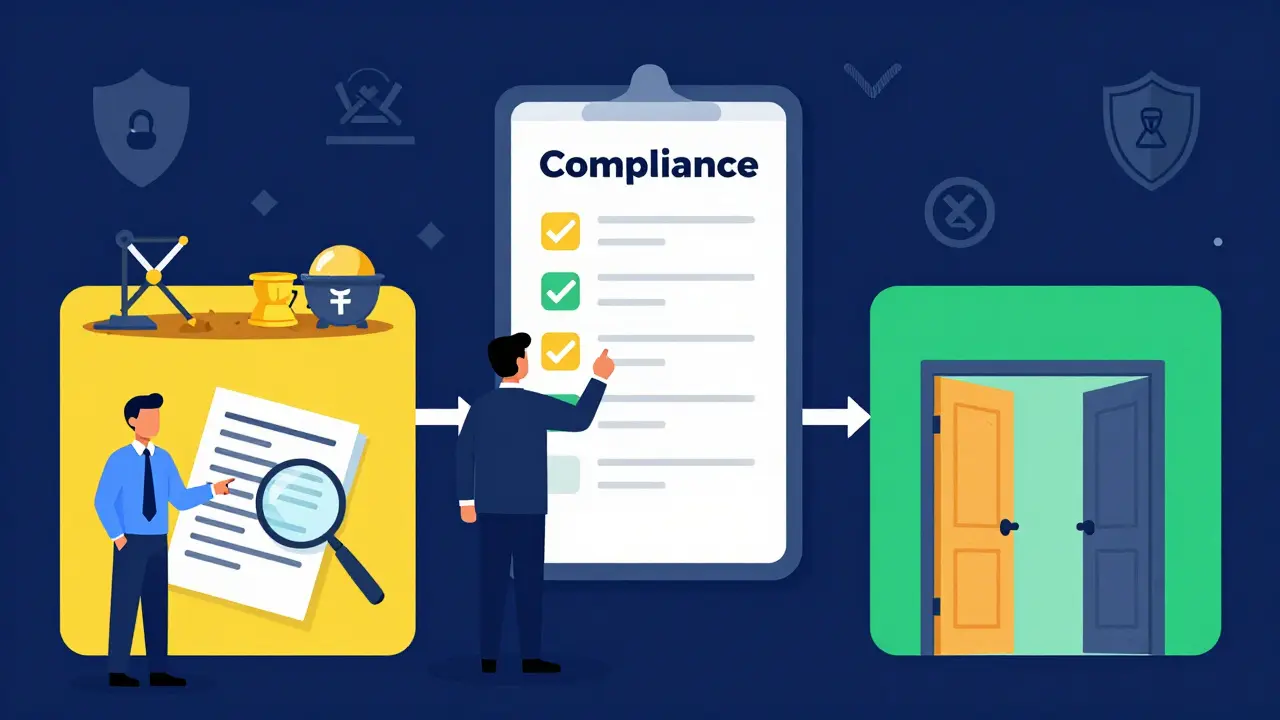
The licensing process is designed to be slow and deliberate. Here is how it works:
- Provisional Authorization: You apply for provisional status. If granted, you get six months. During this time, you cannot conduct business with the public. You cannot take deposits. You cannot facilitate trades. Your job is to set up infrastructure, hire staff, and install compliance software.
- Inspection: Before the six months end, regulators inspect your setup. They check your anti-money laundering (AML) systems, your cybersecurity measures, and your operational readiness.
- Full Operational License: Only after passing inspection do you get final approval to engage with customers.
This "sandbox" approach ensures that no one launches a risky platform without being fully prepared. However, it also means high upfront costs with zero revenue for half a year. Many startups find this barrier too high.
In January 2025, the Bank granted provisional authorization to four entities, including Mindex Virtual Asset Exchange and Landifa Bitcoin Trade CC. By mid-2025, some of these firms requested extensions because setting up compliant infrastructure takes longer than expected. This highlights a key reality: compliance in Namibia is complex and resource-intensive.
Strict Restrictions: What Is Banned or Limited?
Even with licensing available, significant restrictions remain. The Bank of Namibia remains wary of risks like fraud, manipulation, and money laundering. Here are the biggest hurdles:
1. Foreign Exchanges Are Illegal
You cannot use Binance, Coinbase, or Kraken if they are not based in Namibia. The law bans all crypto-exchanges not headquartered locally. This protects consumers from offshore scams but limits access to global liquidity. If you want to trade, you must use a Namibian-licensed VASP. As of now, options are limited because few companies have completed the full licensing process.
2. The Travel Rule Applies
For any transaction over NAD 20,000 (approximately USD 1,000), VASPs must collect and share detailed information about both sender and receiver. This includes names, ID numbers, and account details. This aligns Namibia with international standards but reduces privacy for users. Anonymous transactions are effectively dead for larger amounts.
3. ICOs Are Strongly Discouraged
Initial Coin Offerings (ICOs) are viewed with extreme suspicion. The Bank explicitly states that ICOs are prone to fraud and misrepresentation. While not always outright banned by statute, the regulatory tone makes it nearly impossible to launch an ICO legally. Investors should avoid them, and entrepreneurs should look for other funding models.
4. No Legal Tender Status
Cryptocurrency is not money in the eyes of the state. You cannot pay taxes in Bitcoin. A landlord cannot refuse to accept the Namibian Dollar even if you offer Ethereum. Merchants can choose to accept crypto, but they bear the risk of volatility and chargebacks. If a customer pays in crypto and the value drops, the merchant loses.
How Namibia Compares to Its Neighbors
Namibia’s approach is distinct in Africa. It sits between complete prohibition and free-market adoption.
| Country | Regulatory Stance | Key Difference |
|---|---|---|
| Namibia | Moderately Progressive | Licensed VASPs allowed; foreign exchanges banned; 6-month sandbox period. |
| South Africa | Advanced | VASP registration required since 2022; more established market. |
| Nigeria | Restrictive | Banks banned from facilitating crypto transactions (though enforcement varies). |
| Botswana | Prohibitive | Complete ban on crypto trading activities. |
| Kenya | Largely Unregulated | No comprehensive framework yet; higher risk for users. |
Namibia’s model is safer for consumers than Kenya’s wild west but slower for innovators than South Africa’s. The six-month waiting period during provisional licensing delays revenue generation, which disadvantages smaller players compared to jurisdictions like Mauritius that allow immediate operation under supervision.
Looking Ahead: CBDCs and Future Risks
The Bank of Namibia isn’t just watching private crypto; it’s exploring its own solution. In 2025, technical assistance reports highlighted the Bank’s interest in a Retail Central Bank Digital Currency (rCBDC). The goals are clear: improve financial inclusion, modernize payment systems, and streamline cross-border transfers.
An rCBDC would be a digital version of the Namibian Dollar, issued directly by the central bank. Unlike Bitcoin, it would have legal tender status and zero volatility against the local currency. If launched, this could coexist with regulated private cryptocurrencies, creating a hybrid ecosystem.
However, challenges remain. The U.S. Department of State noted in 2025 that the Bank shows "reluctance to allow the implementation of blockchain technologies" beyond strict control. This hesitation may slow innovation in areas like decentralized finance (DeFi) or smart contracts, which require more flexible regulatory frameworks.
Practical Advice for Users and Businesses
If you are an individual trader in Namibia:
- Use only locally licensed VASPs. Avoid offshore platforms to stay compliant.
- Expect less privacy. Transactions over NAD 20,000 will trigger identity checks.
- Understand that your assets are not protected by deposit insurance. If an exchange fails, you may lose everything.
If you are a business owner:
- Accepting crypto is your choice, but ensure your accounting system handles volatility.
- Do not rely on crypto for payroll or tax payments unless regulations change.
- If launching a crypto service, budget for at least six months of pre-revenue operations for licensing.
The Bank of Namibia’s policy is not hostile to crypto, but it is highly protective. The goal is stability, not speed. For investors and entrepreneurs, patience and compliance are the only paths forward.
Is cryptocurrency legal in Namibia?
Yes, but with strict conditions. Owning and trading crypto is legal if done through licensed Virtual Asset Service Providers (VASPs). However, crypto is not legal tender, and unlicensed exchanges are banned.
Can I use Binance or Coinbase in Namibia?
No. The Virtual Assets Act bans the use of foreign-based crypto exchanges. You must use a VASP that is physically located and licensed in Namibia.
What is the Travel Rule in Namibia?
The Travel Rule requires VASPs to collect and share sender/receiver details (name, ID, account info) for transactions exceeding NAD 20,000 (approx. USD 1,000). This aims to prevent money laundering.
Are Initial Coin Offerings (ICOs) allowed?
The Bank of Namibia strongly discourages ICOs due to high risks of fraud and manipulation. While not always explicitly criminalized, regulatory support is absent, making them practically unviable.
How long does it take to get a crypto license in Namibia?
At minimum, six months. Applicants receive provisional authorization for six months to set up infrastructure without engaging the public. Full licensing follows successful inspection.
Will Namibia launch its own digital currency?
The Bank of Namibia is actively exploring a Retail Central Bank Digital Currency (rCBDC) to improve financial inclusion and payment efficiency. No launch date has been confirmed as of 2026.
JEVON HALL
June 7, 2026 AT 16:08honestly this whole six month sandbox thing is a total joke for startups 😅 like who has the cash flow to survive half a year with zero revenue just waiting on regulators to look at your firewall settings? it feels less like safety and more like a pay-to-play barrier that only big corps can afford 📉
Kelly Tenney
June 8, 2026 AT 01:14I really appreciate how clear this breakdown is regarding the VASP licensing process. It is so important for people to understand that while you can hold crypto, operating a business around it requires serious infrastructure and patience. The distinction between individual trading and merchant acceptance is key here.
Greg Lewis
June 9, 2026 AT 04:59the state always fears what it cannot control but freedom is not a commodity to be licensed or regulated into submission they think they are protecting us from fraud yet they are merely protecting their own monopoly on value creation money is social agreement not legal decree
Dr Lynea LaVoy
June 11, 2026 AT 03:21The comparison to South Africa's framework is spot on. Namibia is definitely taking the cautious route which makes sense given the size of their economy. For anyone thinking about launching a fintech product there, do not underestimate the compliance costs. You need to budget heavily for legal counsel and cybersecurity audits before you even write a line of code. The Travel Rule implementation over NAD 20,000 also means your UX will suffer because users hate filling out ID forms for every transfer.
Caralee Robertson
June 12, 2026 AT 02:49i mean its kinda wild that they ban binance but let merchants take bitcoin if they want tho seems like a weird middle ground lol