BitFex Crypto Exchange Review: Is This Anonymous Platform Safe or a Scam?
 Nov, 9 2026
You see the ad: "Trade anonymously. No ID required. Low fees." It sounds like a dream for anyone tired of uploading passport scans just to buy $50 worth of Bitcoin. But when you dig into BitFex, a platform that has been around since 2018, the reality is far less comforting. While it promises privacy and simplicity, independent data from late 2025 suggests this Eastern European-focused exchange might be more headache than help.
Let’s cut through the marketing noise. If you are considering moving your money here, you need to know what you’re actually getting into. Spoiler alert: it involves a lot of risk, very little liquidity, and a reputation that raises serious red flags in the crypto community.
What Exactly Is BitFex?
BitFex is a cryptocurrency exchange launched in early 2018, primarily targeting users in Eastern Europe who want to avoid Know Your Customer (KYC) procedures. Unlike major players like Coinbase or Binance, BitFex markets itself on anonymity and low barriers to entry. The idea is simple: sign up with an email, deposit fiat currency via bank transfer, and start trading without handing over your identity documents upfront.
However, don’t confuse it with Bitfinex, the well-known, high-volume exchange founded in 2012. They are completely different entities. Bitfinex is a top-tier global player; BitFex is a niche, low-volume platform that struggles to gain traction outside its specific regional bubble. As of November 2025, BitFex ranks outside the top 100 exchanges by trading volume on CoinGecko, meaning if you try to sell a large amount of crypto, you might struggle to find a buyer at a fair price.
The Promise vs. The Reality of Anonymity
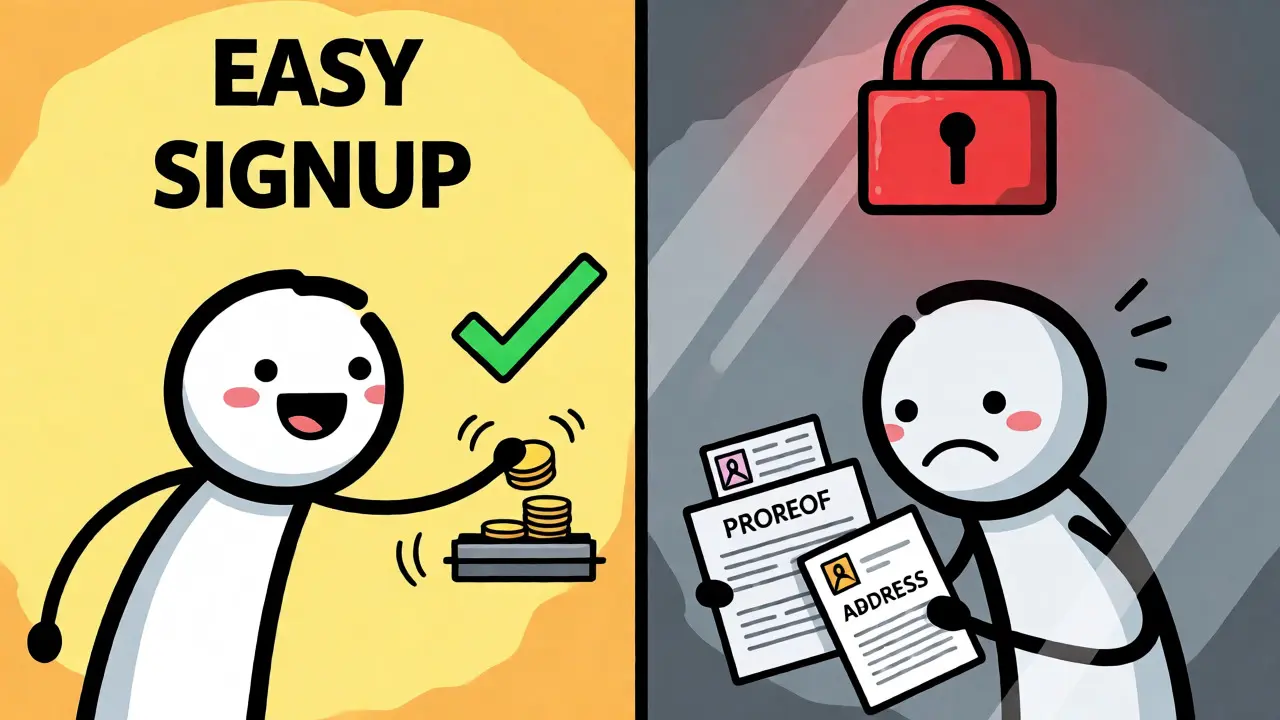
The biggest selling point of BitFex is the lack of mandatory verification. For privacy advocates, this is attractive. You can open an account quickly and start trading immediately. But there’s a catch that many users discover too late.
Multiple user reports indicate that while initial deposits go through smoothly, withdrawals often trigger sudden "compliance checks." A user named 'AnonTrader' on CryptoSlate noted in September 2025 that after depositing a significant sum, the platform demanded documents they were never asked for during registration. This isn't unique to BitFex-many shady platforms use this tactic-but it’s a critical pattern to watch out for.
- Initial Experience: Fast signup, no ID needed for small deposits.
- Withdrawal Phase: Sudden requests for proof of address, source of funds, and ID.
- Risk: Accounts get frozen until these documents are provided, sometimes indefinitely.
If you value true anonymity, you need to be aware that "no KYC" often just means "KYC later, when we feel like asking for it."
Fees and Trading Conditions
BitFex claims to offer low fees, which is standard fare for smaller exchanges trying to compete with giants. However, unlike transparent leaders like Kraken or Coinbase, BitFex doesn’t publicly detail its exact fee structure in authoritative sources. This lack of transparency is a major concern. You might think you’re paying 0.1%, but hidden spreads or withdrawal costs could eat into your profits.
Furthermore, the trading interface is basic. There are no advanced charting tools, no API access for automated trading bots, and no margin trading options. If you’re a day trader looking for precision and speed, BitFex will likely frustrate you. It’s designed for beginners or casual users who want to buy and hold, not for active traders seeking sophisticated execution.
| Feature | BitFex | Bitfinex | Kraken |
|---|---|---|---|
| Regulation Status | Unregulated / Gray Area | Regulated (various jurisdictions) | Highly Regulated (US/EU) |
| KYC Requirement | None initially (often requested later) | Mandatory for most features | Mandatory |
| Liquidity | Very Low | High | High |
| User Trust Score | Low (1.8/5 on Trustpilot) | Medium-High | High |
| Security Protocols | Undocumented | Proven track record | Industry-leading |
Red Flags: Why Experts Are Skeptical
If you search for "BitFex scam," you’ll find plenty of results. This isn't just internet rumor; there are concrete reasons for the skepticism. In September 2025, the UK Financial Conduct Authority (FCA) added domains associated with BitFex operations to its list of reported scam companies. When a regulator warns about a platform, you should listen.
John Rodriguez, a senior analyst at CryptoSecurity Labs, pointed out in late 2025 that exchanges promoting complete anonymity without verifiable security protocols typically operate in regulatory gray areas. He noted that BitFex’s lack of transparency about ownership and security measures aligns with patterns seen in previous exchange failures. Essentially, if a company won’t tell you who runs it or how it protects your money, assume the worst.
Another major issue is customer support. On Reddit and Trustpilot, complaints about unresponsive support are rampant. One user reported waiting three weeks for a response regarding a frozen withdrawal. In the fast-moving world of crypto, where prices can drop 20% in a day, being unable to access your funds because support is ignoring you is a disaster.
Who Should Actually Use BitFex?
Despite the warnings, some people still use BitFex. Who are they? Typically, they are inexperienced traders in Eastern Europe who prioritize convenience over security. They might be new to crypto, wary of big banks, and attracted by the promise of "no paperwork."
But let’s be honest: is the trade-off worth it? You save time on signup, but you risk losing access to your funds entirely. With only 12 reviews on Trustpilot averaging 1.8 stars, the sample size is small, but the sentiment is overwhelmingly negative. Common complaints include funds being frozen after initial deposits and sudden, unexplained verification requirements.
If you are a beginner, you might not recognize the red flags. You deposit €500, it shows up in your account, and you feel safe. Then you try to withdraw €400, and suddenly you’re stuck in limbo. Experienced investors usually avoid platforms like this entirely, preferring regulated exchanges even if it means uploading a driver’s license photo.
Final Verdict: Proceed with Extreme Caution
Is BitFex a scam? Not necessarily in the traditional sense of running off with everyone’s money overnight. But it operates in a way that exposes users to unnecessary risk. The combination of low liquidity, poor support, regulatory warnings, and opaque fee structures makes it a dangerous place to store significant capital.
If you must use BitFex, treat it as a disposable wallet. Only deposit what you can afford to lose or lock away for months. Do not keep your life savings there. For most users, the hassle of dealing with potential withdrawal issues outweighs the minor benefit of skipping the initial KYC check. Stick to established, regulated exchanges unless you have a very specific reason not to.
Is BitFex the same as Bitfinex?
No, they are completely different exchanges. Bitfinex is a large, globally recognized exchange founded in 2012 with high liquidity and regulatory compliance. BitFex is a smaller, newer platform launched in 2018 that focuses on anonymity and has much lower trading volumes. Confusing them can lead to poor investment decisions.
Does BitFex require KYC verification?
BitFex advertises that no KYC (Know Your Customer) verification is needed to start trading. However, many users report that verification is suddenly required when attempting to withdraw funds. This discrepancy between advertised policy and actual practice is a common complaint among users.
Why is BitFex considered risky?
BitFex is considered risky due to several factors: it lacks clear regulatory oversight, has poor customer support responsiveness, suffers from low liquidity, and has been flagged by regulators like the UK FCA. Additionally, user reviews frequently mention issues with frozen accounts and unexpected withdrawal delays.
Can I trust BitFex with large amounts of money?
It is generally not recommended to keep large amounts of money on BitFex. Due to its marginal market position, lack of documented security protocols, and history of user complaints regarding fund accessibility, experts suggest using it only for small, disposable amounts or moving funds to a personal hardware wallet promptly.
What are the main alternatives to BitFex?
For users seeking similar anonymity with better security, consider decentralized exchanges (DEXs) like Uniswap or PancakeSwap. For centralized exchanges with strong reputations and reasonable privacy policies, Kraken, Coinbase, or Binance are safer bets, though they do require KYC. Regional alternatives in Europe like Bitvavo also offer a balance of regulation and usability.