Bitospher Crypto Exchange Review: Is It Safe in 2026?
 Oct, 16 2026
You see an ad for Bitospher, a new cryptocurrency exchange claiming full SEC regulation and zero withdrawal fees. It sounds too good to be true. In a market where trust is the hardest currency to earn, does this platform actually deliver on its promises, or is it another shiny app with empty vaults? If you are considering moving your Bitcoin or Ethereum here, you need to look past the marketing fluff. This review breaks down what we know about Bitospher’s security, fees, and regulatory status as of October 2026, helping you decide if your money is safe.
The Big Question: Is Bitospher Actually SEC Regulated?
Let’s address the elephant in the room immediately. Bitospher markets itself heavily on being "SEC regulated." For anyone familiar with US financial laws, this claim raises eyebrows. The U.S. Securities and Exchange Commission (SEC) has historically sued major exchanges like Coinbase and Binance for operating without proper registration, rather than granting them broad "approval" in the way traditional stock exchanges receive it. As of late 2025 and into 2026, only a tiny fraction of global exchanges hold comprehensive federal securities licenses. Most operate under state-level money transmitter licenses or offshore jurisdictions.
Independent verification of Bitospher’s specific license number is difficult to find in public SEC filings. While WikiBit reviews mention this regulatory status, there is no clear link to a verifiable Form 19b-4 filing or a specific broker-dealer registration number that users can check directly on the SEC website. This ambiguity is a red flag. If a platform claims high-level compliance but cannot easily prove it with public documentation, proceed with extreme caution. You aren’t just trusting their word; you’re trusting their legal standing, which impacts your recourse if things go wrong.
Security Architecture: Cold Storage and Encryption
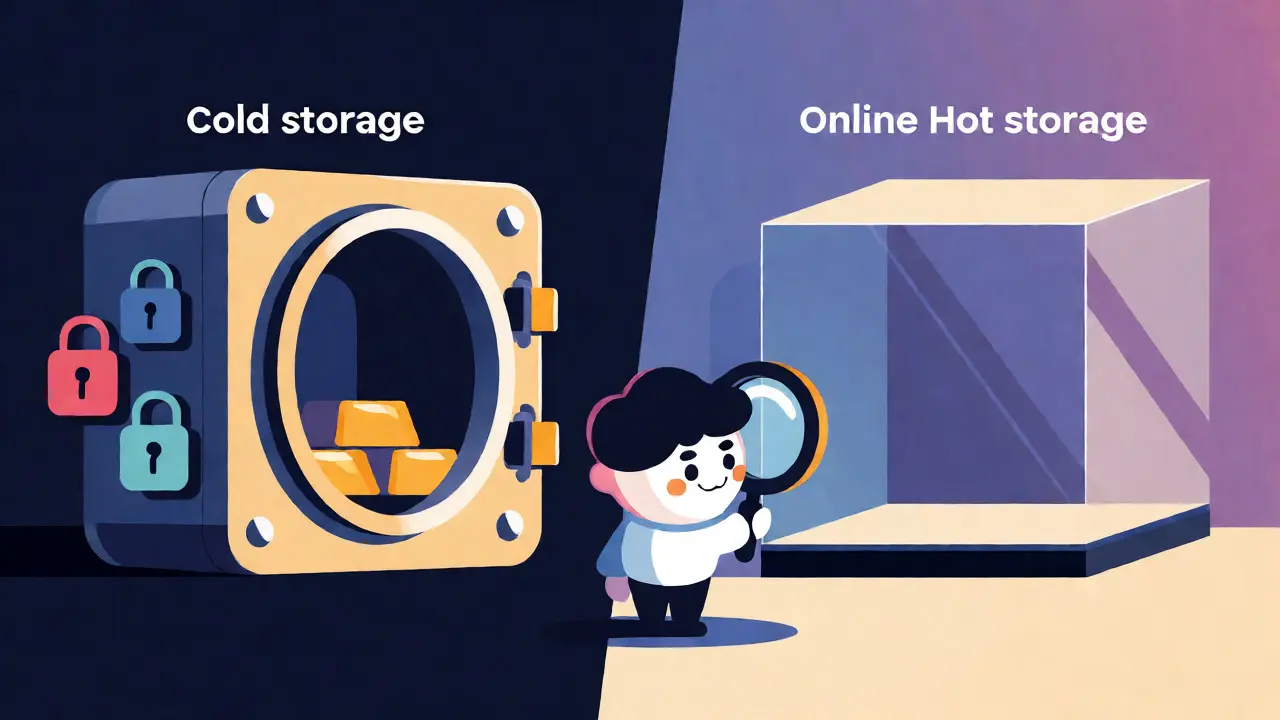
Security is non-negotiable when dealing with digital assets. Bitospher claims to use industry-standard protocols, including SSL encryption for data transmission and robust firewalls. More importantly, they state that the majority of user funds are kept in cold storage. This is a critical best practice. According to Krayon Digital’s 2024 analysis, exchanges keeping over 95% of assets offline experience significantly fewer security incidents. Research from Curtin University supports this, showing that heavy cold storage usage reduces successful hack risks by up to 85%.
However, claims are easy to make. What’s missing is proof. Established players like Coinbase publish monthly Proof-of-Reserves reports verified by independent auditors. Does Bitospher do the same? Current information suggests limited transparency regarding their audit frequency. Without regular, third-party SOC-2 audits-which PixelWeb Solutions notes reduce vulnerability exploitation by 67%-you are relying on internal assurances. Additionally, while they support two-factor authentication (2FA), details on whether they mandate hardware keys (like YubiKeys) versus basic SMS codes are scarce. Exchanges without mandatory strong 2FA see 3.2x more account takeovers, so verify exactly what security layers you must enable yourself.
Fee Structure: Competitive or Misleading?
Money talks, and fees are the loudest conversation. Bitospher advertises a flat trading fee of 0.25% for both makers and takers. They also tout zero fees for deposits and withdrawals. On paper, this looks attractive compared to giants like Coinbase, which charges up to 0.4% for takers, though Coinbase Advanced Trade offers lower maker fees. Binance, the volume leader, typically charges 0.1% for takers.
| Exchange | Maker Fee | Taker Fee | Withdrawal Fee |
|---|---|---|---|
| Bitospher | 0.25% | 0.25% | $0 (Claimed)* |
| Binance | 0.02% | 0.10% | Network Variable |
| Coinbase Advanced | 0.05% | 0.40% | Network Variable |
| Kraken | 0.16% | 0.26% | Network Variable |
*Note: While Bitospher claims zero withdrawal fees, most crypto networks (Bitcoin, Ethereum) charge miners/validators a network fee regardless of the exchange. Ensure you understand if "zero fee" means the exchange waives its service charge, not the blockchain gas cost.
The 0.25% flat rate is higher than tiered structures at larger venues. If you trade small amounts occasionally, this might feel simple. But for active traders, paying 0.25% per side adds up quickly. Compare this to Kraken, where fees drop significantly with volume. The lack of a visible VIP tier system on Bitospher limits potential savings for high-volume users.
User Experience and Liquidity Concerns
A pretty interface doesn’t mean deep liquidity. One of the biggest hurdles for smaller exchanges is order book depth. If you try to sell $10,000 worth of a mid-cap altcoin on Bitospher, will the price crash because there are no buyers? Data on Bitospher’s actual trading volume is sparse. CoinGecko data shows the top 10 exchanges control 78% of total volume. Newer platforms often struggle to attract enough market makers to keep spreads tight.
User feedback is virtually nonexistent in major forums like Reddit or Trustpilot. Coinbase boasts over 18,000 Trustpilot reviews; Bitospher has negligible presence. This silence is concerning. Are users happy, or simply few? Without community validation, you risk encountering hidden issues with customer support response times or withdrawal delays. The platform claims 24/7 support, which is a positive differentiator from many offshore competitors who offer email-only help during business hours. Test this before depositing large sums. Send a small amount, withdraw it, and time the process.

Regulatory Landscape and Risk Factors
The crypto industry is maturing, but risks remain high. Chainalysis reported $2.38 billion in crypto thefts from exchanges in recent years, with many incidents involving newer platforms. The FATF Travel Rule now requires compliance for transactions over $3,000, adding friction to cross-border transfers. Does Bitospher have the infrastructure to handle these compliance checks smoothly, or will your withdrawals get flagged for manual review?
Furthermore, the absence of a known parent company or transparent funding history makes valuation difficult. Established exchanges publish quarterly transparency reports detailing reserves and liabilities. Bitospher’s operational history is opaque. If the platform faces insolvency, how does their claimed regulatory status protect you? In the US, SIPC insurance covers brokerage accounts up to $500,000, but crypto holdings are rarely covered unless explicitly stated. Read the terms of service carefully to see if client assets are segregated from corporate funds.
Verdict: Who Should Use Bitospher?
Is Bitospher right for you? Probably not if you are a beginner looking for maximum safety and ease of mind. The lack of verifiable regulatory proof and minimal user base data creates unnecessary anxiety. However, if you are an experienced trader testing new venues with small capital, the low entry barriers and claimed zero withdrawal fees might offer short-term utility.
My advice? Treat Bitospher as a secondary wallet or trading venue, not your primary bank. Keep the bulk of your assets on established exchanges like Coinbase or Kraken, or better yet, in your own hardware wallet. Use Bitospher only for specific coins they list that others don’t, and never leave significant balances there overnight. Verify their current license status directly on the SEC EDGAR database before sending any fiat currency.
Is Bitospher really SEC regulated?
The claim is ambiguous. While Bitospher states it is SEC regulated, there is no widely publicized, verifiable federal license number comparable to those held by fully compliant US broker-dealers. The SEC typically sues unregistered exchanges rather than approving them broadly. Always check the SEC's official EDGAR database for specific filings related to Bitospher before trusting this claim.
Does Bitospher charge withdrawal fees?
Bitospher claims zero withdrawal fees. However, note that blockchain network fees (gas fees) are separate and paid to miners/validators, not the exchange. These network costs still apply when you move crypto off the platform.
How secure is Bitospher compared to Coinbase?
Coinbase is publicly traded and undergoes rigorous annual audits with published reserve proofs. Bitospher lacks public audit trails and has a much smaller user base, making its security posture less proven. Cold storage claims are standard, but without third-party verification, Coinbase remains the safer benchmark.
What cryptocurrencies does Bitospher support?
Specific listings vary, but they generally support major assets like Bitcoin, Ethereum, and stablecoins. Check their live listing page for altcoins, as smaller exchanges often have limited selection compared to Binance or Kraken.
Can I trust Bitospher with my life savings?
No. Due to limited operational history, unclear regulatory status, and lack of public trust signals like extensive user reviews or audited reserves, it is risky to store significant wealth on Bitospher. Diversify across multiple platforms or use self-custody wallets.