Catalyx Crypto Exchange Review: What Happened and Key Lessons
 Aug, 20 2026
Imagine depositing your hard-earned savings into a platform that promised seamless, one-click trading with transparent fees. For many Canadians, Catalyx was exactly that-a FINTRAC-compliant exchange offering real-time price tracking and support for over 40 cryptocurrencies. But in January 2024, the lights went out. The platform declared bankruptcy after its CFO allegedly misappropriated over $14 million in client assets, leaving users stranded and regulators scrambling. If you’re considering similar platforms or trying to understand what went wrong, this review breaks down the facts, the tech behind it, and the red flags that should keep you cautious.
What Was Catalyx and How Did It Operate?
Catalyx is a Canadian cryptocurrency exchange developed by CatalX CTS Ltd. that allowed users to trade fiat currency and digital assets with a flat 0.75% fee. Launched with a focus on simplicity, the platform aimed to make crypto accessible to everyday investors without the complexity of traditional brokerage interfaces. It supported major coins like Bitcoin (BTC), Ethereum (ETH), and stablecoins such as USDT and USDC, alongside altcoins like Cardano (ADA) and Hedera Hashgraph (HBAR).
The user experience was designed around speed. You could swap currencies with a single click, view live order books, and access advanced charting tools if you were an experienced trader. Registration required standard KYC procedures: being at least 18 years old, providing government ID, submitting a selfie video, and answering employment questions. This compliance posture helped it gain trust early on, especially since it operated under the watchful eye of FINTRAC, the Financial Transactions and Reports Analysis Centre of Canada, which oversees anti-money laundering compliance for financial institutions.
Technical Backbone: Built for Speed and Scale
Under the hood, Catalyx wasn’t just a basic web app. The development team, including software firm Quanterall, built the backend using Elixir and the Phoenix framework, known for handling high-concurrency systems efficiently. They used GraphQL as the communication protocol between frontend and backend, ensuring fast data retrieval and reducing unnecessary payload sizes. Database operations relied on PostgreSQL and TimescaleDB, a time-series database ideal for tracking market data and transaction history.
This tech stack enabled 24/7 monitoring and real-time price updates. However, technology alone doesn’t guarantee safety. While the infrastructure was robust, the internal controls around who had access to client wallets turned out to be the weak link. The system was designed for performance, but not necessarily for foolproof segregation of duties-a critical oversight that would later contribute to its downfall.

Growth Metrics and User Experience
In its peak year, Catalyx saw explosive growth. Trading volume jumped 91% month-over-month from February to March 2021, rising from C$14.88 million to C$28.44 million. Deposits surged 163% during the same period, reaching over C$9.1 million. Revenue also climbed significantly, hitting C$275,540 in March 2021. These numbers painted a picture of a rapidly expanding platform attracting both retail and institutional interest.
Users appreciated the transparency of the 0.75% flat fee-no hidden spreads or variable costs. The referral program offered up to 20% of referee trading fees with no lifetime cap, incentivizing word-of-mouth growth. Early reviews noted that while the interface felt overwhelming at first, it became intuitive once users got familiar with the layout. The platform’s blog kept users updated on features and market news, fostering a sense of community. Yet, beneath the surface, cracks were forming due to internal management issues that few outsiders could see.
The Collapse: Fraud, Negligence, and Bankruptcy
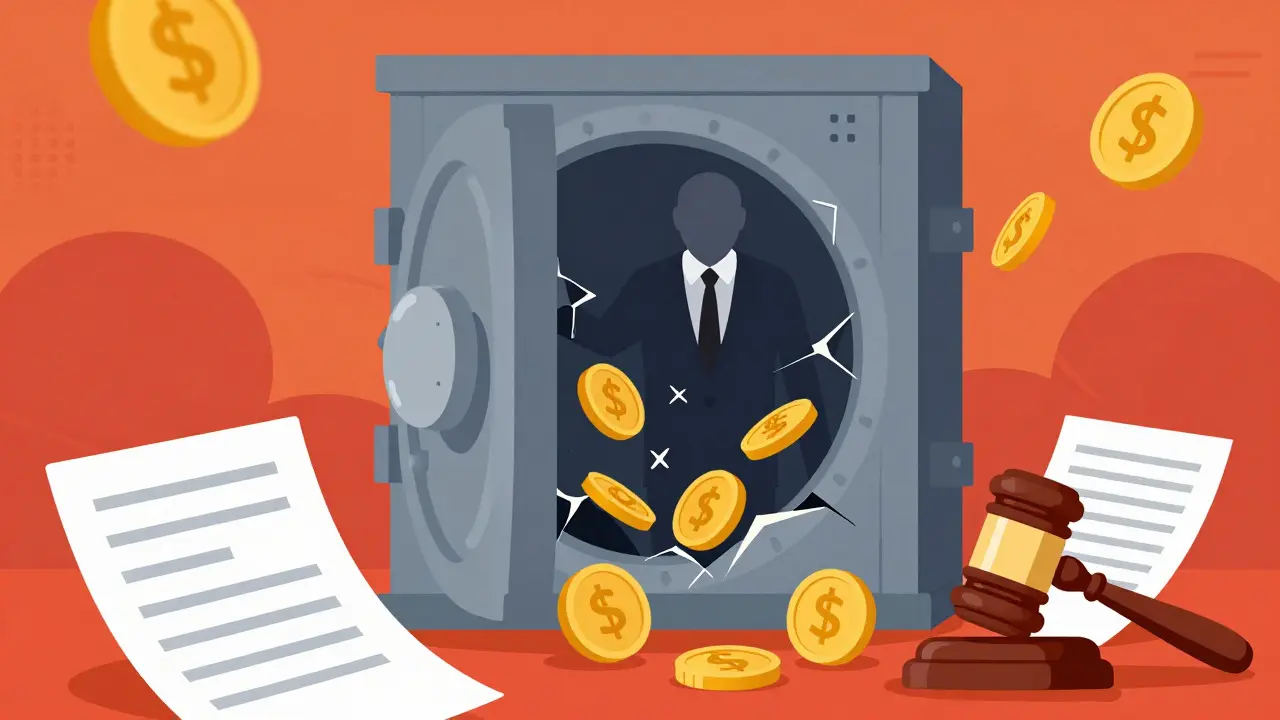
The trouble started in 2019 when Chief Financial Officer Jae Ho Lee allegedly withdrew over $14 million in client crypto assets without authorization. By late 2023, CEO Hyuk Jae Park realized Lee was no longer performing his duties. When Park requested access to company wallets and bank accounts, Lee stopped responding. Company lawyers sent formal demands in December 2023, but received silence. On December 28, 2023, Catalyx ceased operations. In January 2024, it filed for bankruptcy and entered receivership.
The Alberta Securities Commission (ASC) alleged that CatalX CTS Ltd. failed to maintain proper policies to prevent employee misappropriation of client funds. Despite knowing about the fraud by November 24, 2023, the company waited until December 21, 2023, to notify regulators. This delay breached their written undertaking to the ASC. A hearing was scheduled for September 2025 in Calgary to address these allegations. The case highlights how even technically sound platforms can fail if internal governance is weak.
Risks and Safety Considerations for Users
Centralized exchanges always carry inherent risks. At Catalyx, users faced the possibility of account freezes for suspicious activity, large deposits, or regulatory scrutiny. Unlike some competitors, there was no evidence of arbitrary freezing before the legal troubles emerged. However, the ultimate risk proved catastrophic: loss of access to assets due to insider fraud. This underscores a critical lesson-regulatory compliance (like FINTRAC registration) is necessary but not sufficient. Investors must also evaluate internal controls, such as multi-signature wallet requirements, regular audits, and clear separation of duties between finance and operations teams.
Lessons Learned and Moving Forward
The Catalyx saga serves as a cautionary tale for anyone investing in digital assets. Always verify where your funds are held-are they in cold storage? Are there independent audits? Check the track record of key executives and look for signs of transparency in financial reporting. Diversify across multiple reputable exchanges and consider hardware wallets for long-term holdings. The collapse of Catalyx reminds us that in crypto, trust must be earned through consistent operational integrity, not just flashy interfaces or rapid growth metrics.
| Feature | Detail |
|---|---|
| Supported Cryptocurrencies | ~40 assets including BTC, ETH, USDT, ADA, HBAR, LTC |
| Trading Fee | Flat 0.75% with no spread |
| Regulatory Status | FINTRAC compliant; pre-registration undertakings signed |
| Tech Stack | Elixir, Phoenix, GraphQL, PostgreSQL, TimescaleDB |
| Peak Monthly Volume (Mar 2021) | C$28.44 million |
| Status | Bankrupt (Jan 2024); under ASC investigation |
Is Catalyx still operating in 2026?
No. Catalyx ceased operations in December 2023 and declared bankruptcy in January 2024. It is currently under receivership, and legal proceedings with the Alberta Securities Commission are ongoing.
How much money did the CFO steal from Catalyx?
According to allegations by the Alberta Securities Commission, CFO Jae Ho Lee improperly withdrew over $14 million worth of client crypto assets starting in 2019.
Was Catalyx regulated by FINTRAC?
Yes, Catalyx was registered and compliant with FINTRAC, Canada’s financial intelligence unit responsible for anti-money laundering oversight. However, it also had to sign pre-registration undertakings while awaiting full authorization as a crypto asset trading platform.
What happened to Catalyx users’ funds?
User funds were placed into receivership following the bankruptcy filing in January 2024. Recovery depends on the outcome of legal proceedings and asset recovery efforts, which may take months or years.
What lessons can investors learn from the Catalyx collapse?
Investors should look beyond regulatory labels and examine internal controls, executive accountability, and transparency in fund management. Diversifying across exchanges and using self-custody solutions for long-term holdings can mitigate centralized exchange risks.
Jennifer Ulmer
August 21, 2026 AT 04:19It really makes you wonder how long the fraud was actually running before anyone noticed. The fact that it started in 2019 and wasn't fully realized until late 2023 is a huge red flag that internal controls were basically non-existent for years. I think this case proves that having a nice website and fast trading speeds doesn't mean anything if the people holding the keys are shady. We need to stop trusting the interface and start trusting the audit reports instead.
Calliope Clio
August 22, 2026 AT 02:15Oof, $14 million just vanished into thin air? 😱 That is absolutely criminal! 🤯 I can't believe they let one person have so much power over the wallets without any multi-sig checks. It’s like leaving your house key under the mat and wondering why the robbers got in. 💸📉
miranda gamboa
August 22, 2026 AT 04:40Let's talk about the tech stack here because people always get hung up on Elixir and GraphQL being 'fast' but forget that infrastructure speed is irrelevant if your custody layer is garbage. The use of TimescaleDB for time-series data is standard practice for high-frequency trading logs, sure, but the lack of segregation of duties between the CFO and the wallet access is a textbook governance failure. You can have the most robust backend in the world, but if your IAM policies are loose, you're just building a very expensive ATM for insiders. It’s a classic case of optimizing for latency while neglecting security architecture.
Zothana Pachuau
August 23, 2026 AT 01:27Sure, the tech was fancy, but did it pay their bills? I guess not when the CFO decided to take a personal vacation with client funds. Pretty ironic that they advertised 'transparency' while hiding a four-year heist. Maybe next time they should try transparency with the shareholders first? Or at least lock the doors properly.
OLIVER CHRISTIAN
August 23, 2026 AT 01:52Good point about the IAM policies. For anyone looking at other exchanges right now, check if they publish proof-of-reserves. If they don't, or if the audit is from a firm you've never heard of, run. Also, look at who signs off on the treasury operations. If it's the same person doing the accounting and holding the keys, that's a massive risk vector. Diversification isn't just about coins, it's about platforms too.
Kelsey Anne
August 23, 2026 AT 07:37You're all missing the obvious. They were FINTRAC compliant. That means they followed the rules. The problem was the CEO was an idiot. Stop blaming the system, blame the humans.
Phelan Deihl
August 24, 2026 AT 09:13I just feel bad for the small investors who put their life savings in there thinking it was safe because of the Canadian regulation. It’s a tough lesson to learn that compliance doesn’t equal safety. Hope they recover some of it eventually, even if it takes years.
Tasha Davis
August 24, 2026 AT 13:22This is so sad!! 😢 But also such a wake-up call! We have to be smarter about where we park our crypto. I’m moving my long-term holds to a hardware wallet starting today. No more trusting apps with my whole portfolio! Let’s stay safe everyone! 💪✨
Nikki keller
August 24, 2026 AT 19:33To add to the earlier points, the delay in notifying regulators from November to December is quite telling. It suggests either negligence or intent to cover tracks during those final weeks. In corporate governance, timely disclosure is as important as the initial control setup. This case will likely become a standard example in business ethics courses regarding fiduciary duty and internal audit failures. It serves as a reminder that trust in financial institutions must be verified continuously, not assumed based on initial reputation.