Challenges Facing DePIN Networks: Why Decentralized Infrastructure Isn't Easy
 Mar, 11 2026
DePIN networks promise a future where anyone can contribute physical resources-like Wi-Fi hotspots, solar panels, or computing power-and get paid in crypto for doing so. Sounds simple, right? But behind that clean idea is a mess of real-world problems that few talk about. If you’re wondering why DePIN projects haven’t taken over the world yet, here’s the unfiltered truth: DePIN networks are fighting uphill battles on every front.
Bootstrapping the Network: The Chicken-and-Egg Problem
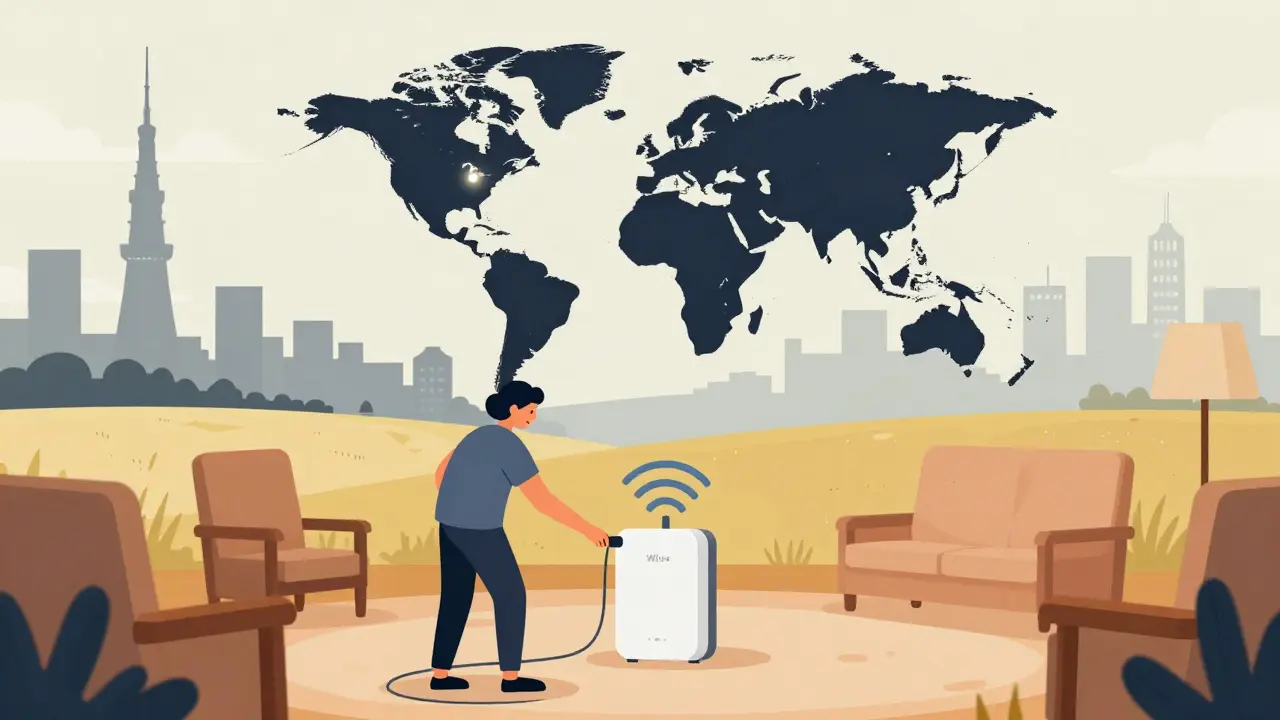
Imagine you’re trying to build a ride-sharing app, but no drivers sign up because there are no riders, and no riders join because there are no drivers. That’s the core problem for DePIN networks. Unlike software apps that can launch with just code, DePIN needs hardware. Someone has to buy a router, install a node, or set up a mining rig-then wait for users to show up. But users won’t come unless the service is already available. And it’s worse for location-based networks. A DePIN Wi-Fi network in rural Nebraska won’t help someone in Tokyo. You need critical mass in specific places, and that’s hard to force. Projects like Helium and Filecoin spent years trying to solve this. Many failed because they couldn’t get enough providers in the right places at the same time.Token Economics: Rewards That Don’t Last
DePIN networks pay people with tokens. That’s the glue. But here’s the catch: tokens are volatile. If the token price crashes, providers stop contributing. If it spikes, users can’t afford the service. Some projects tried to fix this with staking or bonding curves, but it rarely works long-term. Why? Because most DePIN projects don’t actually make real money. They burn through token supply to pay providers, hoping users will eventually pay enough to cover it. But users don’t pay much-often less than $1 a month. Meanwhile, the cost of hardware, electricity, and maintenance keeps rising. When token inflation stops, the whole system collapses. Look at early DePIN projects: many now have less than 10% of their original provider base. The incentives didn’t scale.Technical Chaos: Who Fixes the Broken Router?
In a centralized system, if your internet goes down, you call your ISP. They send a technician. Simple. In DePIN, you’re relying on strangers who may live across the country. If a node stops working, how do you know? How do you get it fixed? Smart contracts can’t detect if a router is overheating or if someone unplugged it. Some networks use reputation scores or uptime tracking, but those are gamed. A provider can fake uptime with a script while their hardware sits idle. And upgrades? Imagine trying to update firmware on 10,000 different devices, all owned by different people, with no central control. It’s a nightmare. Most DePIN networks have no way to enforce standards. One provider uses a cheap Chinese router. Another uses a $500 enterprise device. The network performance? Unpredictable.Scalability: Blockchain Isn’t Fast Enough
DePIN networks use blockchains to record payments and track usage. That’s great for transparency. Terrible for speed. If you’re running a decentralized cloud computing service and a user needs a response in 50 milliseconds, but the blockchain takes 15 seconds to confirm the payment, the whole thing falls apart. Real-time services-like mobile data sharing or edge computing-can’t wait for block confirmations. Some projects tried sidechains or layer-2 solutions, but they add complexity and reduce decentralization. The more you optimize for speed, the more you lose the blockchain’s core benefits. It’s a trade-off no one has solved cleanly.
Regulation: The Wild West of Infrastructure
Think about this: if you’re running a DePIN cell tower, are you a telecom provider? If you’re offering decentralized storage, are you a data center operator? In the U.S., the FCC regulates wireless spectrum. In the EU, GDPR governs data storage. In India, telecom licenses are tightly controlled. DePIN networks operate across borders with no clear legal status. One day, a city might say, “You need a permit to broadcast signals.” The next, a regulator says, “You’re running an unlicensed financial service by paying people in crypto.” Most DePIN teams avoid legal counsel until it’s too late. Investors shy away. Banks freeze accounts. And users get caught in the middle when services suddenly disappear overnight.Quality Control: No Customer Service, No Accountability
Ever had a bad experience with a DePIN service? Maybe your connection dropped, or your file didn’t download. Who do you call? There’s no support line. No refund policy. You’re stuck with a reputation score and a community forum. Some networks use slashing (penalizing bad actors), but it’s reactive, not preventive. A provider can deliver 99% good service, then have one outage-and get punished. Meanwhile, the person who’s always offline gets paid the same because they never got flagged. There’s no way to guarantee performance. And without SLAs (service level agreements), businesses won’t rely on DePIN for anything critical. That kills enterprise adoption.Who Pays for the Hardware?
In traditional infrastructure, a company buys thousands of routers and spreads the cost across millions of users. In DePIN, you’re asking a single person to spend $300 on a node, hoping they’ll break even in two years. That’s a huge barrier. Most people don’t have the cash, the space, or the technical skill. And if the network changes its rules? That $300 device might become worthless overnight. No one’s offering warranties. No one’s taking trade-ins. If your node dies, you’re out the money. That’s not a community-it’s a gamble. And most people aren’t willing to gamble on infrastructure.
Fragmentation: Too Many Projects, No Standards
There are now over 150 DePIN projects. Each one uses different hardware, different tokens, different rules. There’s no way for a Wi-Fi node from Project A to work with Project B. That means users have to install five different apps just to get decent coverage. Developers have to build five different integrations. It’s inefficient. Worse, it creates dead zones. If one project fails in a neighborhood, the whole area loses service. There’s no fallback. Without open standards-like how the internet uses TCP/IP-DePIN will stay a collection of isolated experiments, not a unified infrastructure.Security: Physical Nodes Are Easy Targets
A hacker can’t steal data from a blockchain. But they can steal a physical node. Or burn it out with a power surge. Or use it to launch attacks on other networks. DePIN networks have no way to secure the hardware they rely on. A node in a garage might be easy to break into. A node in a public space might be stolen. And if a bad actor controls enough nodes, they can manipulate the network-faking usage, blocking traffic, or draining rewards. Reputation systems help, but they’re slow to react. Unlike centralized systems with 24/7 monitoring, DePIN is blind until damage is done.Energy Use: The Hidden Cost
Some DePIN projects combine blockchain operations with energy-hungry hardware. A node that runs 24/7 to validate transactions and provide Wi-Fi? That’s two sources of power drain. In places with unreliable grids, this creates blackouts. In places with climate goals, this draws scrutiny. The environmental cost isn’t just about carbon-it’s about public trust. If users think DePIN is making climate change worse, they’ll walk away. Projects that don’t address this-like using solar-powered nodes or low-energy consensus-are already losing ground.What’s Next?
The good news? Some projects are adapting. A few are blending DePIN with traditional infrastructure-letting ISPs partner with node operators. Others are using off-chain verification to cut blockchain delays. A handful have started charging real money instead of relying only on tokens. The best ones now focus on one use case and do it well-like decentralized mobile data in Latin America or edge computing for AI in Southeast Asia. They’re not trying to replace the whole internet. They’re just trying to fix one broken piece.DePIN isn’t dead. But it’s not magic either. It’s hard. It’s messy. And until the industry stops pretending otherwise, it won’t scale. The next wave of success won’t come from bigger tokens or flashier marketing. It’ll come from teams that admit the challenges-and build around them.
Why don’t more people join DePIN networks as providers?
Most people don’t join because the upfront cost is too high, the pay is too uncertain, and the risk of losing equipment or having it become obsolete is real. Many try once, see their earnings drop after token prices fall, and quit. Without stable income or support, it’s not worth the hassle for most.
Can DePIN networks replace traditional ISPs or cloud providers?
Not yet. Traditional providers offer reliability, support, and guaranteed performance. DePIN offers decentralization and lower costs-but with inconsistent quality. For now, DePIN works best as a supplement, not a replacement. Think of it like ride-sharing versus public transit: useful in gaps, but not ready to be the main system.
Are DePIN tokens a good investment?
Most aren’t. Many DePIN tokens are designed to pay providers, not to appreciate in value. Their price often crashes once the initial rewards slow down. Investors who buy them hoping for quick gains usually lose money. The real value is in using the service, not holding the token.
Do DePIN networks use a lot of electricity?
Yes, some do. Nodes running 24/7, especially those combining blockchain consensus with physical services, can consume significant power. Projects that use proof-of-stake or off-chain validation reduce this, but many early networks still rely on energy-heavy models. Environmental impact is now a major concern for regulators and users alike.
What’s the biggest risk for DePIN users?
The biggest risk is service disruption. If a network’s token crashes, providers leave. If regulations change, the service shuts down. If a key node goes offline and no one fixes it, you lose access. There’s no backup, no refund, and no legal recourse. You’re relying on a system that can vanish overnight.
Anshita Koul
March 11, 2026 AT 11:33Let’s be real-DePIN isn’t about tech, it’s about trust. And trust? It’s fragile. You can’t code it. You can’t mine it. You can’t stake it. You have to earn it. Every time a node goes dark, every time a reward vanishes, every time a user gets ghosted by a system that says ‘decentralized’ but acts like a black hole-trust shrinks. And once it’s gone? It doesn’t come back with a whitepaper.
vishnu mr
March 12, 2026 AT 00:08i mean like… why do we even try? 😅 i set up a helium miner, it made $0.50 in 6 months, the router got hot, my wifi got weird, and now it’s just a paperweight with a usb cord. maybe we need to stop calling it ‘infrastructure’ and start calling it ‘a really expensive hobby’ 🤷♂️
Grace van Gent-Korver
March 13, 2026 AT 23:54I love the idea. But in the U.S., if you plug something into your wall and broadcast a signal, the FCC shows up. No one talks about that. You’re not just building a network-you’re risking a fine. And that’s not a bug. It’s a feature of reality.
Tom Jewell
March 14, 2026 AT 23:07Here’s the thing no one admits: DePIN is capitalism with a blockchain veneer. We’re outsourcing infrastructure maintenance to strangers who don’t get benefits, pensions, or health insurance. We call it ‘permissionless innovation’-but it’s just gig work with more hardware. And when the token crashes? You’re left holding a $300 brick that won’t even boot. The romanticism is beautiful. The economics? Brutal.
And don’t get me started on the environmental cost. We’re not just trading crypto-we’re trading carbon. Every node running 24/7 is a tiny, silent climate crime. We’re building a decentralized future… on a pile of overheated routers.
Maybe the answer isn’t more nodes. Maybe it’s fewer. Better ones. With warranties. With support lines. With actual human beings who care if the thing works.
Decentralization shouldn’t mean abandonment. It should mean resilience.
Sherry Kirkham
March 15, 2026 AT 03:41Regulation isn’t the enemy. Ignorance is. If you’re building infrastructure, you owe the public safety. Not just code. Not just tokens. Responsibility. And if you can’t handle that? Don’t call it DePIN. Call it a gamble.
Jennifer Pilot
March 16, 2026 AT 03:34Oh, how quaint. You think a ‘router’ can be ‘decentralized’? Darling, infrastructure requires hierarchy. Order. Authority. What you’re describing is not innovation-it’s anarchy with Wi-Fi. And let’s not pretend that a $150 Chinese device can compete with Cisco’s enterprise-grade systems. This isn’t Web3. This is Web3.0… in a basement.
Sharon Tuck
March 17, 2026 AT 00:16Hey, I’ve got a node. It’s been running for 14 months. I got paid $12 total. But I keep it because I believe in the vision. Not the token. Not the hype. The vision. Maybe we’re not building the future. Maybe we’re just the first ones to try.
karan narware
March 18, 2026 AT 02:22Oh wow, another ‘real talk’ post about DePIN. Let me guess-you’re the guy who sold his car to buy a Helium miner? Congrats. You’re now the proud owner of a $300 paperweight and a very expensive lesson in crypto optimism. The real DePIN problem? Not the tech. Not the regulation. It’s the people who think ‘community’ is a business model.
Michael Suttle
March 18, 2026 AT 07:08They’re using this to track us. Every node is a spy device. The government, the banks, the AI overlords-they’re all waiting for enough people to plug in so they can map every home, every movement, every byte. This isn’t infrastructure. It’s a honeypot. And we’re the flies. 🕷️