Coinchase Crypto Exchange Review: Scam Alert & Safe Alternatives
 Jun, 24 2026
Have you seen ads for a platform called Coinchase? It sounds familiar. It sounds like the big players in the industry. But here is the hard truth: Coinchase does not exist as a legitimate, regulated cryptocurrency exchange. If you are looking to deposit money there, stop right now. You are likely staring at a phishing site or a sophisticated scam designed to drain your wallet.
In the world of digital assets, names matter. Scammers love to use names that sound like trusted brands-mixing "Coin" with popular words like "Chase," "Base," or "Switch." This tactic relies on your brain making a quick, lazy connection to a brand you trust. Today, we are going to break down why Coinchase is a red flag, how these scams operate, and where you should actually be trading if you want to keep your money safe.
The Coinchase Illusion: Why No Data Is Bad Data
When I review an exchange, I look for three things: regulatory licenses, transparent ownership, and independent user feedback. For Coinchase, all three are missing. A search through government databases, financial news outlets, and reputable crypto tracking sites yields zero results for a company by this name.
This silence is deafening. Legitimate exchanges like Coinbase, which is publicly traded on the NASDAQ and included in the S&P 500, have thousands of pages of documentation. They publish quarterly reports, list their CEO, and provide clear contact information. Coinchase has none of this.
If a platform cannot be found in a basic web search, it is not because they are secretive; it is because they are fraudulent. These sites often pop up for a few weeks, lure in victims with promises of high returns, and then vanish. The Massachusetts Attorney General’s Office and California’s Department of Financial Protection and Innovation (DFPI) maintain active trackers for crypto scams. While Coinchase might not be listed yet (as these scammers change domains frequently), the pattern matches dozens of other flagged entities like BitFreds or CryptoMMS Exchange Ltd.
How Name-Spoofing Scams Work
Why do scammers choose names like Coinchase? It’s psychological manipulation. You know JPMorgan Chase is a bank. You know Coinbase is an exchange. Your brain glances at "Coinchase" and assumes safety. This is known as "authority bias."
Here is the typical lifecycle of a fake exchange like Coinchase:
- The Hook: You see an ad on social media claiming "70% monthly returns" or "exclusive early access." These returns are mathematically impossible in sustainable investing.
- The Deposit: You sign up with an email and password. The interface looks professional, often copied directly from real platforms. You are asked to deposit Bitcoin or Ethereum into a specific wallet address.
- The Fake Dashboard: Once you send funds, the website shows your balance growing. You see green numbers. You feel smart. But this is just code running on their server. Your actual crypto is gone.
- The Wall: When you try to withdraw, you hit problems. Maybe they ask for a "withdrawal fee" or "tax verification." Every time you pay, they move the goalpost. Eventually, the site goes offline, and your support emails bounce.
The California DFPI has documented cases where victims were promised 60% daily returns only to lose everything. Do not let greed blind you to the mechanics of theft.
Red Flags: How to Spot a Fake Exchange
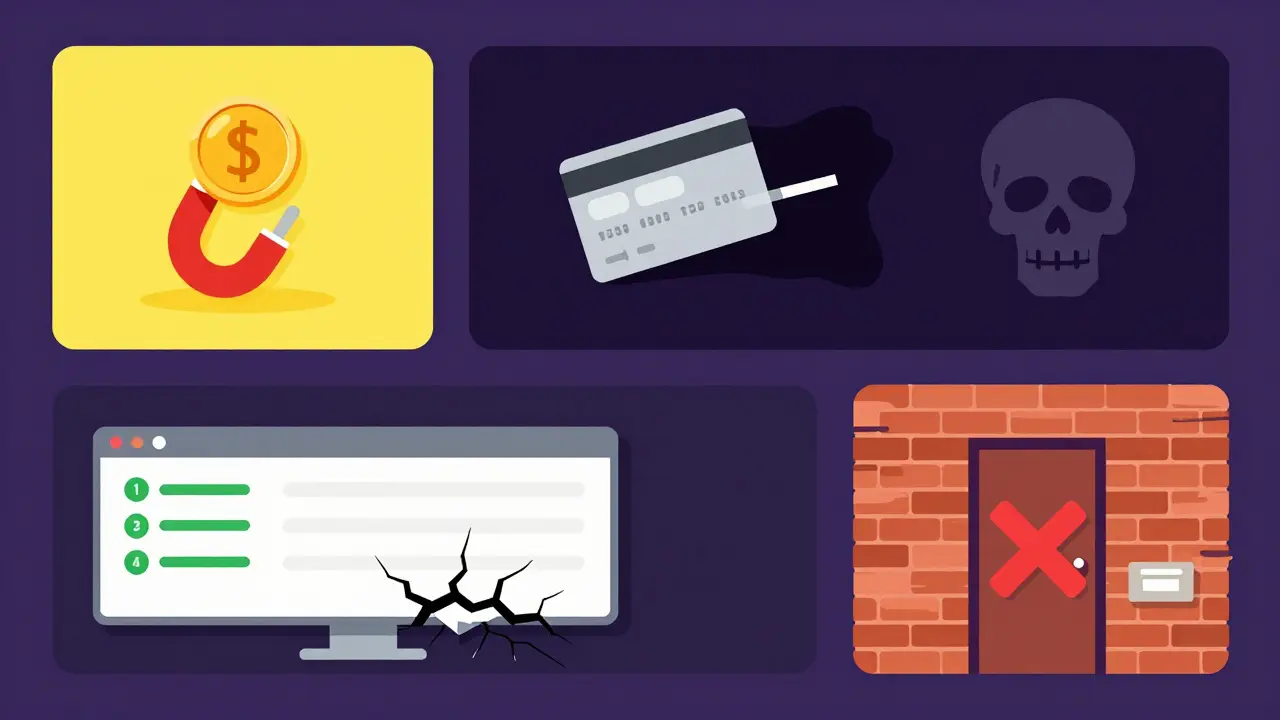
You don’t need to be a cybersecurity expert to spot a scam. Here are the concrete warning signs that a platform is illegitimate:
- No Regulatory License: In the US, legitimate crypto businesses must register as Money Services Businesses (MSBs) with the Financial Crimes Enforcement Network (FinCEN). Check the FinCEN registry. If they aren’t there, stay away.
- Anonymous Team: Real companies have founders with LinkedIn profiles, Twitter accounts, and public speaking history. If the "About Us" page lists generic stock photos or no names at all, it’s a scam.
- Pressure Tactics: Phrases like "limited time offer" or "act now" are designed to bypass your critical thinking. Real investing takes patience.
- Poor Website Quality: Look for broken links, grammatical errors, or URLs that are slightly misspelled versions of real brands (e.g., coinchase.com vs. coinbase.com).
- Unrealistic Returns: If someone promises guaranteed profits, run. Volatility is the nature of crypto. Guaranteed high returns are the hallmark of a Ponzi scheme.
Safe Alternatives: Where You Should Trade Instead
Avoiding scams is step one. Step two is choosing a platform that protects your assets. Here are two verified, regulated alternatives that serve different needs.
| Feature | Coinbase | CoinSwitch |
|---|---|---|
| Regulation | Registered with FinCEN, NYDFS licensed | Compliant with Indian regulatory standards |
| Security | 98% of customer funds held in cold storage | Multi-signature wallets, insurance coverage |
| Assets | 200+ cryptocurrencies including BTC, ETH, SOL | 350+ cryptocurrencies |
| Best For | US users, beginners, institutional investors | Indian users, diverse altcoin selection |
| Fees | Variable; Coinbase One offers zero trading fees | Competitive market rates via liquidity pooling |
Coinbase is the gold standard for security in the United States. As the only publicly traded crypto exchange in the U.S., it is subject to strict SEC reporting requirements. They offer advanced tools for traders, including real-time order books and charting powered by TradingView. For casual users, their simple interface makes buying Bitcoin or Ethereum as easy as buying stocks.
If you are located in India, CoinSwitch is a robust option. It aggregates liquidity from multiple leading exchanges to ensure you get the best rate. With support for over 350 cryptocurrencies, it provides depth without sacrificing compliance.
Protecting Yourself: Best Practices for Crypto Safety
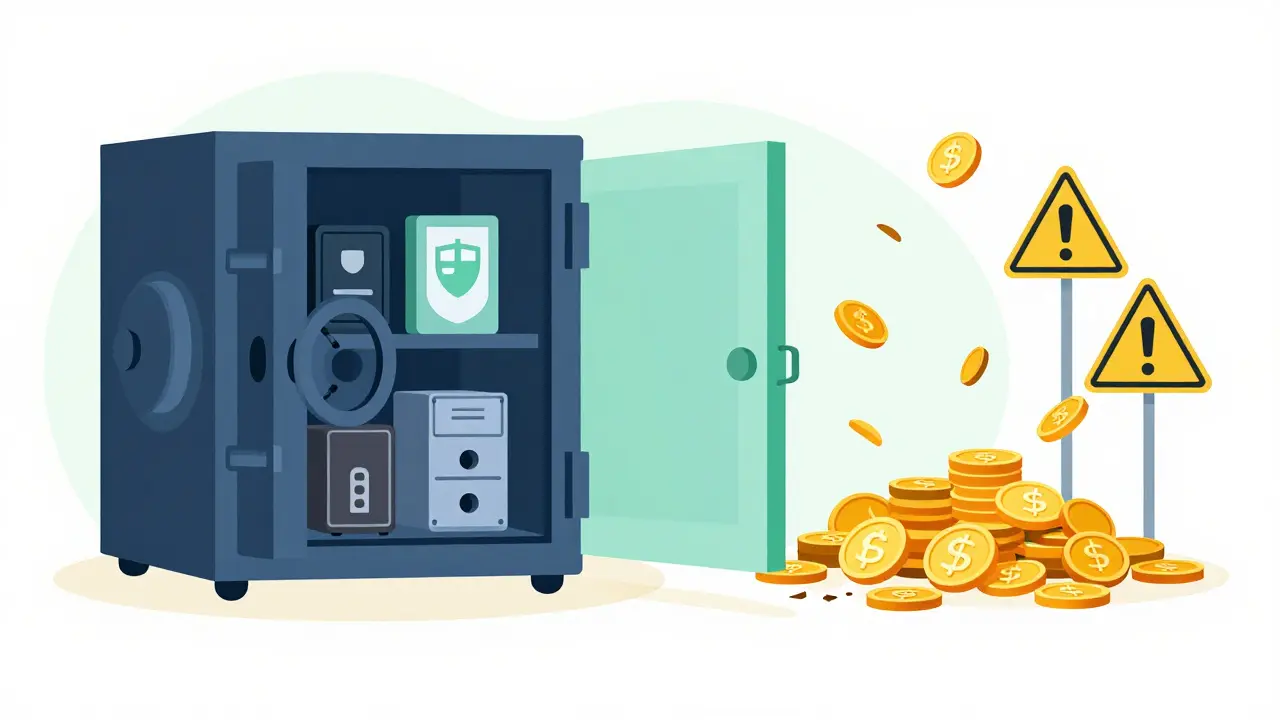
Even when using a legitimate exchange, you are responsible for your own security. Here is how to lock down your account:
- Enable Two-Factor Authentication (2FA): Never rely solely on SMS codes. Use an authenticator app like Google Authenticator or Authy. Better yet, use a hardware key like YubiKey.
- Use Cold Storage: For long-term holdings, move your crypto off the exchange and into a hardware wallet like Ledger or Trezor. Not your keys, not your coins.
- Beware of Phishing Emails: Scammers will send emails that look like they’re from Coinbase or Binance, asking you to "verify your account." Always navigate to the exchange directly by typing the URL into your browser.
- Check Domain Names: Hover over links before clicking. Does the URL match the official domain exactly? Small typos are a major red flag.
What To Do If You’ve Already Sent Money to Coinchase
If you have already deposited funds into a suspicious platform, act immediately. Time is your enemy.
- Stop Sending More: Do not pay any "fees" to withdraw your money. That is part of the scam.
- Document Everything: Take screenshots of the website, your deposits, chat logs, and transaction hashes on the blockchain.
- Contact Your Bank: If you bought crypto with a credit card or bank transfer, call them immediately. Report fraud. They may be able to reverse the charge.
- Report to Authorities: File a report with the Internet Crime Complaint Center (IC3) in the US or your local consumer protection agency. This helps law enforcement track these networks.
- Change Passwords: If you used the same password elsewhere, change it immediately. Enable 2FA on all your financial accounts.
Recovery is difficult, but reporting helps protect others. Blockchain transactions are irreversible, which is why prevention is infinitely better than cure.
Is Coinchase a legit crypto exchange?
No, Coinchase is not a legitimate exchange. There is no regulatory record, no verifiable company information, and no positive user reviews for this platform. It exhibits all the signs of a phishing scam or fraudulent investment scheme.
How can I tell if a crypto exchange is a scam?
Look for missing regulatory licenses, anonymous teams, promises of unrealistic guaranteed returns, and pressure to invest quickly. Legitimate exchanges are transparent about their ownership, security measures, and fees.
What is the safest crypto exchange for beginners?
For US users, Coinbase is widely considered the safest due to its public listing and regulatory compliance. For users in India, CoinSwitch is a top choice. Both offer strong security features and user-friendly interfaces.
Can I recover money sent to a fake exchange?
It is very difficult. Blockchain transactions are irreversible. However, if you paid via credit card or bank transfer, contact your financial institution immediately to dispute the charge. Reporting to authorities like the IC3 is also crucial.
Why do scammers use names similar to real brands?
This is called name-spoofing. Scammers exploit authority bias by using names that sound like trusted institutions (like mixing "Coin" and "Chase") to lower your guard and trick you into trusting them without doing due diligence.
Sajjad Ghorbani Moghaddam
June 26, 2026 AT 08:20Hey everyone, just wanted to chime in on this because I see way too many people getting burned by these copycat sites. It’s honestly heartbreaking how easy it is for scammers to exploit that split-second recognition bias we all have. When you see 'Coin' and 'Chase' together, your brain just auto-completes to safety, but that’s exactly what they’re counting on. I’ve been mentoring a few newbies in crypto lately, and the biggest lesson I keep hammering home is that if it sounds too good to be true, it absolutely is. The fact that there’s zero regulatory footprint for Coinchase should be the end of the discussion right there. No FinCEN registration? No CEO with a LinkedIn profile? That’s not mystery; that’s malice.
I really appreciate posts like this that break down the mechanics of the scam instead of just saying 'don’t do it.' Understanding the lifecycle-from the fake dashboard showing green numbers to the sudden withdrawal fees-helps people recognize the signs before they send their life savings into a black hole. Let’s keep looking out for each other in this space. It’s wild how much trust we put into digital interfaces, so staying skeptical is basically a survival skill now.
Jay Sharma
June 27, 2026 AT 17:10lol typical mainstream narrative. they want you to believe only the big regulated exchanges are safe because those are the ones being watched by the feds. coinbase is literally selling your data and freezing accounts whenever the government tells them to. real freedom is off-chain, anon, untraceable. these scams are just a symptom of a system designed to control you. i don't trust any exchange that requires KYC anyway. if you're smart, you use p2p or dapps where no one can touch your funds. this article is just fear-mongering to keep you in the centralized cage.
Rebecca Shoniker
June 27, 2026 AT 20:31Oh, please. Spare me the naive optimism about 'looking out for each other,' Sajjad. You clearly haven't done your due diligence on the actual infrastructure of these platforms. The concept of 'authority bias' is elementary psychology, yet here we are, explaining it to adults who apparently lack basic critical thinking skills. It is frankly embarrassing that users still fall for such rudimentary phishing attempts in 2024. If you cannot distinguish between a legitimate NASDAQ-listed entity and a fly-by-night operation using stock photos, perhaps cryptocurrency trading is simply beyond your cognitive capabilities.
Furthermore, suggesting that Coinbase is the 'gold standard' ignores the myriad of security breaches and custodial risks inherent in centralized finance. True financial literacy involves understanding cold storage protocols, multi-signature wallets, and the immutable nature of blockchain transactions-not blindly trusting a platform because it has a nice UI. Your 'mentorship' seems to consist of regurgitating marketing copy from compliant exchanges. How utterly tedious.
Scott Miller
June 29, 2026 AT 17:46WAKE UP PEOPLE! This isn't just a review, it's a lifeline! I've seen friends lose everything to these exact scams, and it breaks my heart every single time. We need to be LOUDER about this! Stop sleeping on the importance of hardware wallets! If you're holding your crypto on an exchange, you're already losing! Get a Ledger, get a Trezor, take control of your destiny! These scammers are predators, and they are waiting for you to slip up. Don't let them win! Fight back by educating yourself and spreading the word! The future of finance is in our hands, but only if we protect it fiercely! Keep grinding, stay safe, and never trust anyone promising guaranteed returns because that's just code for 'I'm going to steal from you!' Let's go!
Abby Martin
June 29, 2026 AT 21:48Ugh, can we stop pretending that everyone is equally responsible for their own gullibility? It’s exhausting watching people defend these scams as 'just part of the risk.' There is a moral failure here when platforms use psychological manipulation tactics like name-spoofing to target vulnerable individuals. It’s not just 'bad luck'; it’s predatory behavior. And honestly, the commenters above who are arguing about decentralization vs. regulation are missing the point entirely. The issue is that Coinchase doesn't exist. It’s a ghost.
I’m just saying, if you’re dumb enough to click on an ad promising 70% monthly returns, maybe you deserve to learn a hard lesson. But seriously, shame on the industry for making it so easy for these grifters to operate. We need stricter enforcement, not just more blog posts telling people to 'do their own research.' Some people genuinely don’t know how to check a FinCEN registry, and that’s on us for not making compliance more transparent. Anyway, glad someone finally wrote this up because I’m tired of seeing the same questions over and over.
Mélanie Boulay
June 30, 2026 AT 13:08I think it is important to acknowledge that while the advice given here regarding regulatory checks and hardware wallets is technically sound, the tone of some of the discourse surrounding crypto scams often becomes unnecessarily hostile towards those who have fallen victim, which I feel creates an unwelcoming environment for newcomers who are genuinely trying to navigate this complex and rapidly evolving landscape. While it is undeniable that platforms like Coinchase exhibit clear hallmarks of fraudulent activity, including the absence of verifiable ownership and unrealistic return promises, we must also consider the sophisticated nature of modern social engineering campaigns that are specifically designed to bypass even the most diligent user’s defenses through targeted advertising and fabricated social proof. Therefore, rather than placing the entire burden of security on the individual user, which can be overwhelming and sometimes unrealistic given the technical barriers to entry, we should advocate for stronger systemic protections and clearer labeling standards across digital advertising platforms to prevent these deceptive entities from gaining visibility in the first place, thereby reducing the overall incidence of fraud without resorting to blame-shifting rhetoric that ultimately serves no constructive purpose in enhancing collective security awareness.