Crypto Ban Penalties: What Happens If You Break the Law in 2026?
 Jul, 1 2026
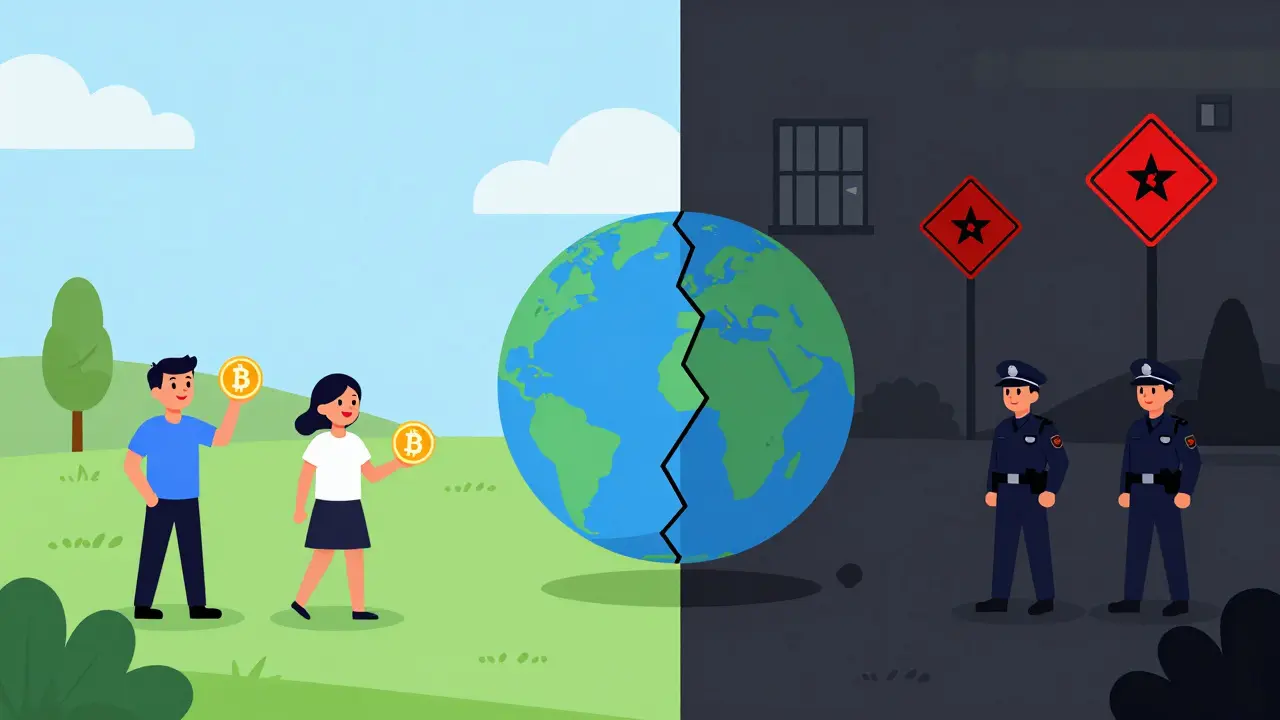
Imagine buying Bitcoin in a country where it’s strictly forbidden. You think you’re just diversifying your portfolio, but suddenly, you’re facing prison time or massive fines. It sounds like a scene from a thriller, but for millions of people living in nations with strict cryptocurrency bans, this is a very real risk. As we move through 2026, the legal landscape around digital assets is no longer a gray area-it’s a minefield.
You might assume that because crypto lives on the internet, borders don’t matter. They do. While some countries welcome blockchain technology with open arms, others treat holding or trading digital coins as a serious criminal offense. The confusion comes from the fact that "bans" look different everywhere. In some places, you can hold Bitcoin but not trade it. In others, even owning a wallet is illegal. And then there are the penalties-ranging from slap-on-the-wrist fines to severe prison sentences.
The Global Landscape: Who Bans Crypto?
To understand the risks, you first need to know where you stand. According to data from the Atlantic Council's Cryptocurrency Regulation Tracker in 2025, out of 75 countries studied, 45 have fully legalized crypto, 20 have partial bans, and 10 have general bans. That means roughly one-third of the world has put up significant roadblocks.
The countries with the strictest prohibitions often share common economic traits. Nations like Algeria, Morocco, and Egypt prohibit the purchase, sale, use, and holding of virtual currencies. Why? Usually, it’s about controlling capital flight. These governments want to keep money within their traditional banking systems to stabilize their local economies. When people move wealth into Bitcoin, they bypass these controls, which threatens national financial stability.
Then there’s China. China represents one of the most aggressive regulatory environments. Since 2021, they’ve banned exchanges, trading, and mining. But here’s the twist: while business operations are crushed under the weight of enforcement, individual holders often fly under the radar-until they don’t. The distinction between what’s illegal for a company versus an individual is crucial, and getting it wrong can lead to disaster.
Real Penalties: Fines, Jail, and Confiscation
So, what actually happens if you get caught? The answer depends entirely on where you live. There is no universal "crypto jail sentence." Instead, penalties are tied to existing financial crimes laws.
- Algeria: Under Article 117 of its official journal, any breach of the crypto prohibition is punishable by law. While specific fine amounts aren’t always quantified in public records, violations are treated as breaches of exchange regulations, leading to potential imprisonment and asset seizure.
- Morocco: The Office des Changes declared that transactions via virtual currencies infringe on exchange regulations. This means you could face penalties similar to those for illegal foreign currency trading, including heavy fines and confiscation of funds.
- Egypt: Individuals and banks are prohibited from dealing in cryptocurrencies. Enforcement has historically been sporadic, but recent years have seen tighter crackdowns on unlicensed exchanges, with operators facing closure and legal action.
- Bangladesh: One of the harshest regimes. Violations can lead to up to seven years in prison and substantial fines. The central bank actively blocks access to crypto platforms and pursues individuals involved in large-scale transactions.
In many cases, the penalty isn’t just about punishment; it’s about deterrence. Governments want to send a message that moving money outside their system is dangerous. However, the TRM Labs 2025 Crypto Crime Report highlights that enforcement is increasingly targeted at specific illicit activities like money laundering and terrorist financing rather than blanket criminalization of all users.
The Enforcement Gap: Theory vs. Reality
Here’s the thing that surprises most people: despite these harsh laws, crypto adoption remains high in banned countries. The Atlantic Council notes that even in nations with general bans, usage doesn’t drop to zero. Why? Because the internet is hard to block completely.
Users in Morocco and Egypt frequently report using peer-to-peer (P2P) platforms like LocalBitcoins or decentralized finance (DeFi) protocols to bypass restrictions. On Reddit forums, users from these regions share stories of successfully trading for months without incident. One user, u/MaghrebTrader, reported using P2P services for 18 months in Morocco without legal trouble. Another, u/CairoCrypto, noted frequent payment processor blocks but no personal legal consequences.
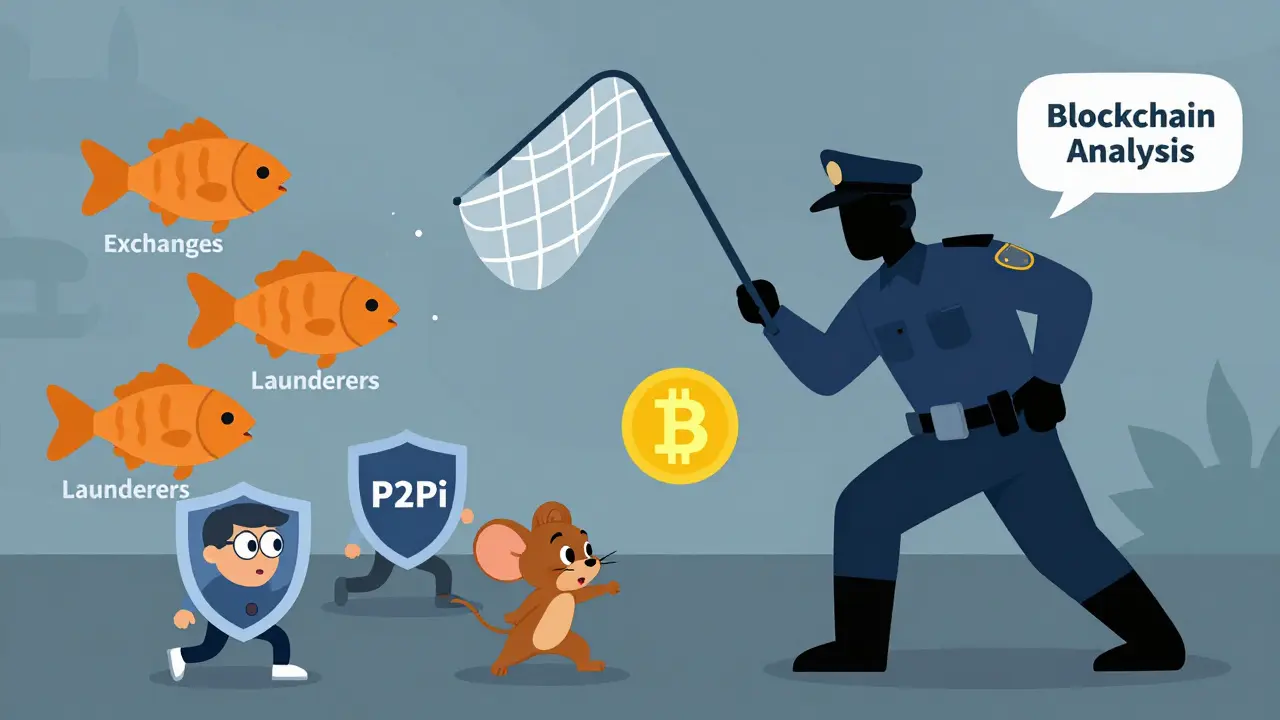
This creates a "cat and mouse" game. Authorities struggle to enforce bans against individuals because tracking every small transaction is resource-intensive. Instead, they focus on the big fish: exchanges, liquidity providers, and large-scale launderers. For example, the U.S. Department of the Treasury’s Office of Foreign Assets Control (OFAC) issued 13 sanctions designations in 2024 targeting entities supporting illicit economies, causing inflows to designated exchanges like NetEx24 to drop by 82%.
But don’t let this give you a false sense of security. Just because you *can* evade detection doesn’t mean you won’t be caught eventually. When enforcement does happen, it’s usually devastating. Assets are frozen, accounts are seized, and legal fees pile up. A CoinDesk survey from May 2025 found that only 12% of users in banned jurisdictions reported personal legal consequences, but those who did faced life-altering financial losses.
Why Countries Ban Crypto: The Root Causes
Understanding the "why" helps you predict the "what." Most crypto bans stem from three core fears:
- Capital Flight: Emerging markets worry that citizens will flee to stablecoins during economic crises, draining reserves.
- Money Laundering & Terror Financing: Anonymity features in some cryptos make them attractive for criminals. The TRM Labs report documents how sanctions targeted entities supporting Hamas and Hezbollah through virtual currencies.
- Loss of Monetary Sovereignty: Central banks fear losing control over interest rates and inflation if people adopt private digital currencies instead of the national fiat.
This is why many banned countries are simultaneously developing Central Bank Digital Currencies (CBDCs). Over 90% of countries analyzed by the Atlantic Council have active CBDC projects. They want the benefits of digital money-speed, efficiency-but without the decentralization that threatens their power.
The Shift Toward Targeted Enforcement
By 2026, the global approach is shifting. Blanket criminalization is proving ineffective and expensive. Instead, regulators are moving toward targeted enforcement. The U.S. Department of Justice’s April 2025 memorandum, "Ending Regulation by Prosecution," signaled a major change. It re-scoped digital asset enforcement to prioritize misappropriation of client assets, sanctions evasion, fraud, and unlicensed money transmission.
This means that simply holding Bitcoin might not get you arrested in some jurisdictions, but using it to evade sanctions or launder money definitely will. The GENIUS Act, signed into law in July 2025, improved the Treasury Department’s ability to combat illicit stablecoin activities by enhancing sanctions evasion capabilities. It regulates stablecoins as payment instruments rather than securities, focusing on function rather than form.
In Europe, the MiCA (Markets in Crypto-Assets) framework implemented in 2024 avoids criminal penalties for usage while establishing strict licensing requirements for service providers. This nuanced approach is becoming the new standard. Countries like South Korea passed the Virtual Asset Users Protection Act in 2023, adding requirements around record keeping and transparency rather than banning users outright.
How to Protect Yourself
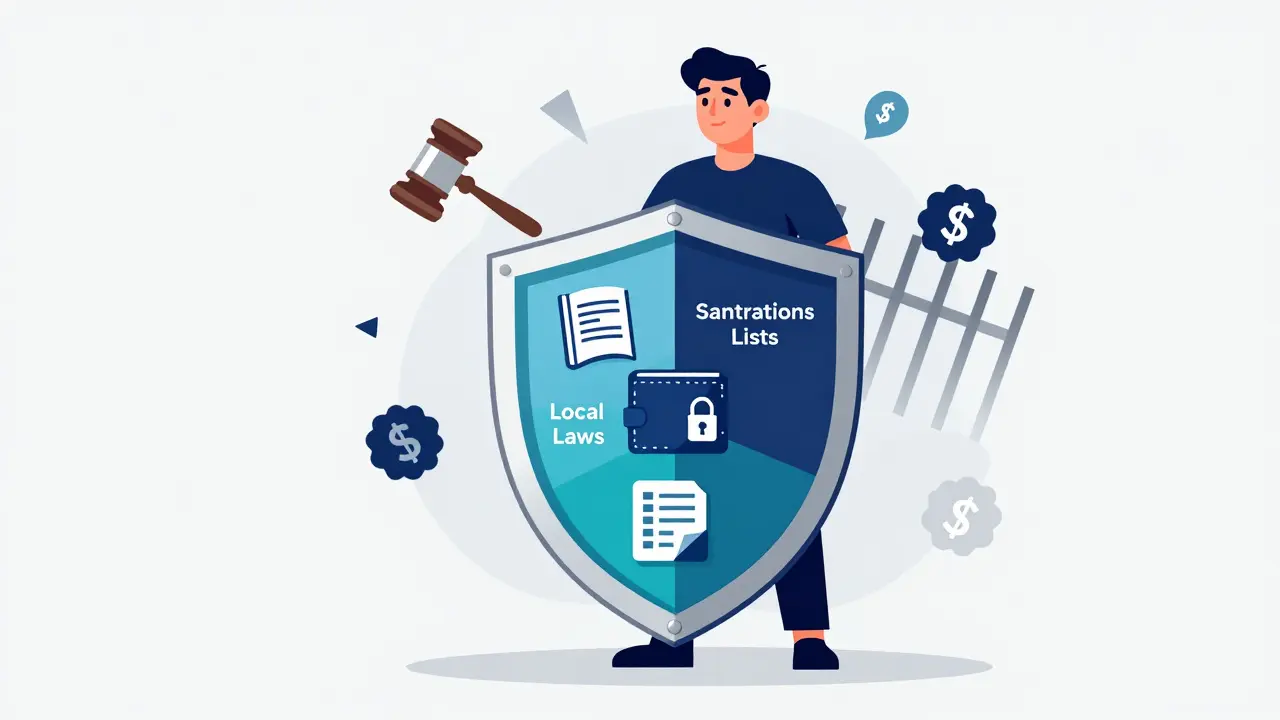
If you live in a country with crypto restrictions, ignorance is not a defense. Here’s how to navigate the risks:
- Know Your Local Laws: Don’t rely on rumors. Check official government statements or consult a local attorney specializing in financial law. Is holding illegal? Is trading illegal? Both?
- Avoid Unlicensed Exchanges: Using centralized exchanges based in restricted jurisdictions increases your risk. If an exchange is shut down, your funds could be trapped or seized.
- Use Self-Custody Wallets Carefully: While self-custody gives you control, it also makes you solely responsible for compliance. Ensure your wallet provider isn’t blacklisted in your region.
- Monitor Sanctions Lists: Keep an eye on OFAC and other regulatory lists. Interacting with sanctioned addresses can lead to secondary sanctions, even if you didn’t intend to break the law.
- Consider Legal Alternatives: Some countries allow certain types of digital assets, like security tokens or CBDCs. Explore these safer options if available.
| Country/Region | Status | Primary Penalty Focus | Enforcement Style |
|---|---|---|---|
| China | General Ban | Business Operations & Mining | Aggressive Infrastructure Shutdowns |
| Algeria | General Ban | Individual Trading & Holding | Exchange Regulation Breaches |
| Morocco | General Ban | Foreign Exchange Violations | Fines & Asset Seizure |
| South Korea | Regulated | User Protection & Transparency | Licensing & Record Keeping |
| European Union | Regulated (MiCA) | Service Provider Compliance | Licensing & AML/CFT Rules |
The Future of Crypto Bans
Will bans disappear? Probably not entirely. But they will evolve. The Atlantic Council predicts that by 2027, both emerging-market and advanced economies will develop more sophisticated enforcement mechanisms. The focus will remain on sanctions evasion, fraud, and unlicensed money transmission.
For the average user, this means the days of wild west crypto are over. Whether you’re in a banned country or a regulated one, accountability is increasing. Technology like blockchain analysis tools makes it easier for authorities to trace transactions than ever before. The key is to stay informed, act responsibly, and never assume that "digital" means "invisible."
Is it illegal to own Bitcoin in a country with a crypto ban?
It depends on the specific country. In nations like Algeria and Morocco, holding and trading are generally prohibited. In others, like China, the ban primarily targets business operations and mining, though individual usage exists in a legal gray area. Always check local laws, as penalties can include fines or imprisonment.
What are the typical penalties for violating crypto bans?
Penalties vary widely. They can range from heavy fines and asset confiscation to prison sentences. For example, Bangladesh imposes up to seven years in prison for violations. Other countries treat crypto transactions as breaches of foreign exchange regulations, leading to financial penalties similar to illegal currency trading.
Can I use crypto anonymously in a banned country?
While privacy coins and decentralized finance (DeFi) offer more anonymity, they are not foolproof. Blockchain analysis tools used by regulators can often trace transactions. Furthermore, using peer-to-peer platforms carries the risk of scams or platform shutdowns, leaving your funds vulnerable.
Why do countries ban cryptocurrency?
Countries typically ban crypto to prevent capital flight, stop money laundering and terrorist financing, and maintain control over their monetary policy. They fear that widespread crypto adoption could undermine the value of their national currency and destabilize the economy.
Is the trend moving away from crypto bans?
Yes, there is a global shift toward regulation rather than outright bans. Frameworks like the EU’s MiCA and the US GENIUS Act focus on licensing service providers and combating illicit activities like sanctions evasion, rather than criminalizing all users. However, strict bans remain in place in several countries.
Drew M
July 2, 2026 AT 13:39The sheer audacity of governments trying to stifle innovation is almost quaint in its futility. 🙄 They ban it, they jail people, and yet the blockchain just keeps ticking along like a metronome for their own irrelevance. It’s not just about money; it’s about sovereignty. When you see countries like Bangladesh throwing seven years in prison at citizens for holding digital assets, you realize they aren’t protecting the economy-they’re protecting their own power structures from transparency. The GENIUS Act and MiCA are nice steps, sure, but they’re bandaids on a bullet wound for nations that refuse to adapt. We are watching the slow, painful death of fiat currency’s monopoly, and these bans are just the death rattle. Don’t let the fear-mongering fool you into thinking compliance is safety. In this new world order, ignorance isn’t bliss; it’s bankruptcy. 💎🚀
Alicia Hull
July 3, 2026 AT 19:18I have to push back hard on the idea that enforcement is merely a "cat and mouse" game that favors the user. This narrative is dangerously misleading for anyone living in jurisdictions with actual authoritarian oversight. While you might cite Reddit anecdotes of users trading for months without issue, those are survivorship biases, not statistical realities. The article mentions that only 12% reported legal consequences, but what about the 88% who were simply too terrified to speak up or had their accounts frozen silently? The risk asymmetry is massive. You put your entire financial future on the line for a speculative gain, while the state holds the keys to your physical freedom. I find it incredibly irresponsible to suggest that self-custody wallets offer any real protection when the KYC points of failure-like buying the initial crypto via P2P-are where the trap snaps shut. We need stricter adherence to local laws until these frameworks mature, not reckless experimentation.
Ella Collinson
July 5, 2026 AT 14:21Your emotional appeal regarding "physical freedom" ignores the fundamental arbitrage opportunities presented by regulatory inefficiencies. The market doesn't care about your moral compass; it cares about liquidity and access. The data from TRM Labs clearly indicates that enforcement is resource-intensive and thus targeted at high-volume entities, not retail holders. To suggest otherwise is to misunderstand the operational constraints of state actors. They cannot effectively monitor every micro-transaction on a decentralized ledger without expending more capital than the seized assets would ever yield. Therefore, the rational actor maximizes utility by operating within the gray zones defined by the enforcement gap. The shift toward targeted enforcement under the DOJ memo actually validates this strategy: if they only prosecute sanctions evasion and fraud, then simple possession becomes a non-issue in practice, even if technically prohibited. Stop letting fear dictate your portfolio allocation.
Andrew Schneider
July 5, 2026 AT 23:39Oh wow, look at you using big words like "arbitrage" and "rational actor" to justify breaking the law! 😂 It’s hilarious how you think being smart means you can outsmart the entire judicial system of a country. But here’s the tea ☕: when the hammer drops, it doesn’t matter how many jargon-heavy sentences you can string together. I’ve seen guys get ruined over $500 trades because they got sloppy with their IP addresses. And don’t get me started on the "survivorship bias" argument-that’s just code for "I got lucky." Luck runs out, folks! 📉 Also, saying the state can’t monitor everything is naive. They don’t need to monitor everyone; they just need to catch one guy to make an example. That’s how totalitarianism works. It’s not a game, it’s a minefield, and you’re walking around with flip-flops on. 👟💥
Ray Arney
July 7, 2026 AT 08:30I think both sides have valid points here. It is definitely risky, but the article makes it clear that the landscape is changing. The move towards regulation rather than total bans seems like a good sign for most people. I personally wouldn’t want to deal with the stress of potential prison time, so sticking to regulated exchanges in friendly jurisdictions feels safer. But I can see why people in banned countries take the risk when their local economies are struggling. It’s a tough spot to be in.
Nick Wengel
July 8, 2026 AT 00:44It is interesting to see how different cultures approach this. In my community, we often talk about trust in institutions. When trust is low, people naturally look for alternatives. Crypto fills that void. I do not judge those who use it. Everyone wants to protect their hard-earned money. The laws change, but the need for security does not. We should all try to understand each other's perspectives instead of arguing. Peace is important.
Deep Rahman
July 8, 2026 AT 14:29When we look at the deeper philosophical implications of banning cryptocurrency, we must consider the nature of property itself. Is money merely a construct of the state, or is it a universal medium of exchange agreed upon by individuals? By banning crypto, governments are asserting that their definition of value is the only one that matters. This creates a conflict between individual liberty and collective control. The long-winded debates about legality often miss the point that technology has already shifted the paradigm. People are seeking autonomy in a world that increasingly demands conformity. Whether one agrees with the methods or not, the desire for financial sovereignty is a profound human impulse that cannot be legislated away. It reminds us that freedom is not given; it is taken, bit by bit, transaction by transaction.
Nick G
July 9, 2026 AT 14:54I appreciate the nuanced discussion here, although I must respectfully disagree with the notion that regulatory gaps are sufficient justification for illegal activity. As someone who has traveled extensively and observed various economic systems, I believe that stability is paramount. While the allure of decentralization is strong, the chaos that ensues in unregulated markets can be devastating for the average person. The formal structures provided by MiCA and similar frameworks, though imperfect, offer a layer of consumer protection that is desperately needed. We must balance innovation with responsibility. It is not enough to simply say "the market decides"; we must also ensure that the vulnerable are not exploited in the process. A highly formal approach to compliance ensures that the industry matures sustainably, benefiting society as a whole rather than just the tech-savvy elite.