Crypto Derivatives Market Overview: How Futures and Options Are Reshaping Digital Assets in 2026
 Jul, 17 2026
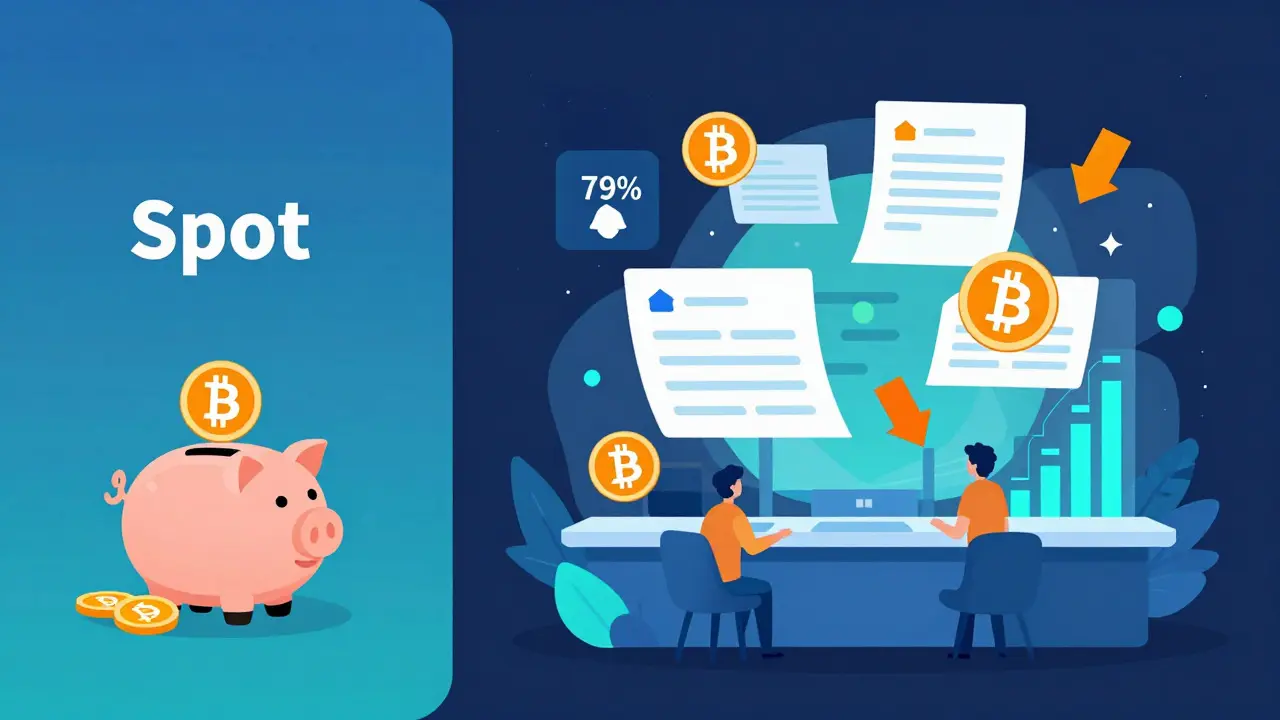
The crypto market isn't just about buying and holding coins anymore. If you look at the volume charts, you'll see that trading activity has shifted dramatically away from simple spot purchases. As of late 2025 and moving into 2026, crypto derivatives dominate the landscape, accounting for nearly 79% of all trading volume globally. This means most money moving through the system is betting on price movements rather than owning the underlying asset. For traders, this offers leverage and hedging tools; for institutions, it provides a regulated way to manage risk. But with $28 trillion in notional value circulating-much of it unregulated-the stakes have never been higher.
You might wonder why this shift matters to you. Whether you are a retail trader looking to amplify gains or an institutional investor trying to protect a portfolio, understanding how these instruments work is no longer optional. The lines between traditional finance (TradFi) and decentralized finance (DeFi) are blurring, and new regulatory approvals in the US are changing who can play the game. Let's break down what’s actually happening in this complex ecosystem.
What Exactly Are Crypto Derivatives?
At its core, a derivative is a financial contract whose value depends on the performance of an underlying asset. In the crypto world, that asset is usually Bitcoin, Ethereum, or another major token. You don't own the coin itself; instead, you hold a contract that pays out based on how the coin's price moves.
There are three main types you need to know:
- Futures Contracts: These obligate you to buy or sell an asset at a predetermined price on a specific future date. They are standardized and often traded on regulated exchanges like the Chicago Mercantile Exchange (CME).
- Options: These give you the right, but not the obligation, to buy or sell an asset at a set price before a certain date. They are popular for hedging because they limit your downside risk to the premium you pay.
- Perpetual Swaps (Perps): This is a crypto-native invention. Unlike traditional futures, perps have no expiration date. To keep the contract price close to the spot price, exchanges use a mechanism called "funding rates," where traders pay each other periodically. Perps now make up about 65% of all crypto derivatives volume.
The beauty of these instruments is flexibility. You can go long (betting prices will rise) or short (betting prices will fall). You can also hedge existing holdings. If you own Bitcoin but fear a short-term drop, you can open a short position in Bitcoin futures to offset potential losses. This strategy transforms derivatives from speculative toys into essential risk management tools.
The Great Divide: Centralized vs. Decentralized Platforms
| Feature | Centralized Exchanges (CEX) | Decentralized Finance (DeFi) |
|---|---|---|
| Market Share (Q3 2025) | ~95% | ~5% |
| Custody | Exchange holds funds | Non-custodial (you hold keys) |
| Leverage | Up to 125x (offshore), 2.5x (US-regulated) | Typically 5x-50x depending on protocol |
| Regulation | Varies (CFTC in US, MiCA in EU) | Minimal/None currently |
| Key Players | Binance, Bybit, CME, Coinbase Derivatives | dYdX, GMX, Hyperliquid |
The market is split into two distinct camps. On one side, you have centralized exchanges (CEXs) like Binance, Bybit, and the CME Group. These platforms handle the vast majority of volume. They offer deep liquidity, high leverage, and user-friendly interfaces. However, you must trust them with your funds. During the Q3 2025 volatility event, offshore CEXs saw $2.1 billion in liquidations, highlighting the risks of high leverage and opaque risk controls.
On the other side is DeFi. Protocols like dYdX and GMX allow you to trade without giving up custody of your assets. While their market share is small (around 5%), it grew by 217% year-over-year in 2025. DeFi appeals to privacy-focused traders and those wary of exchange insolvencies. The trade-off? Lower liquidity and sometimes higher slippage during extreme moves. As Layer 2 solutions improve scalability, expect DeFi derivatives to become more competitive.

Institutional Adoption and Regulatory Shifts
If you thought crypto derivatives were just for degens gambling on Reddit, think again. Institutional adoption has accelerated rapidly. In Q3 2025, the CME Group reported over 1,000 large open interest holders, up from 612 the previous year. Traditional asset managers now represent 38% of their client base.
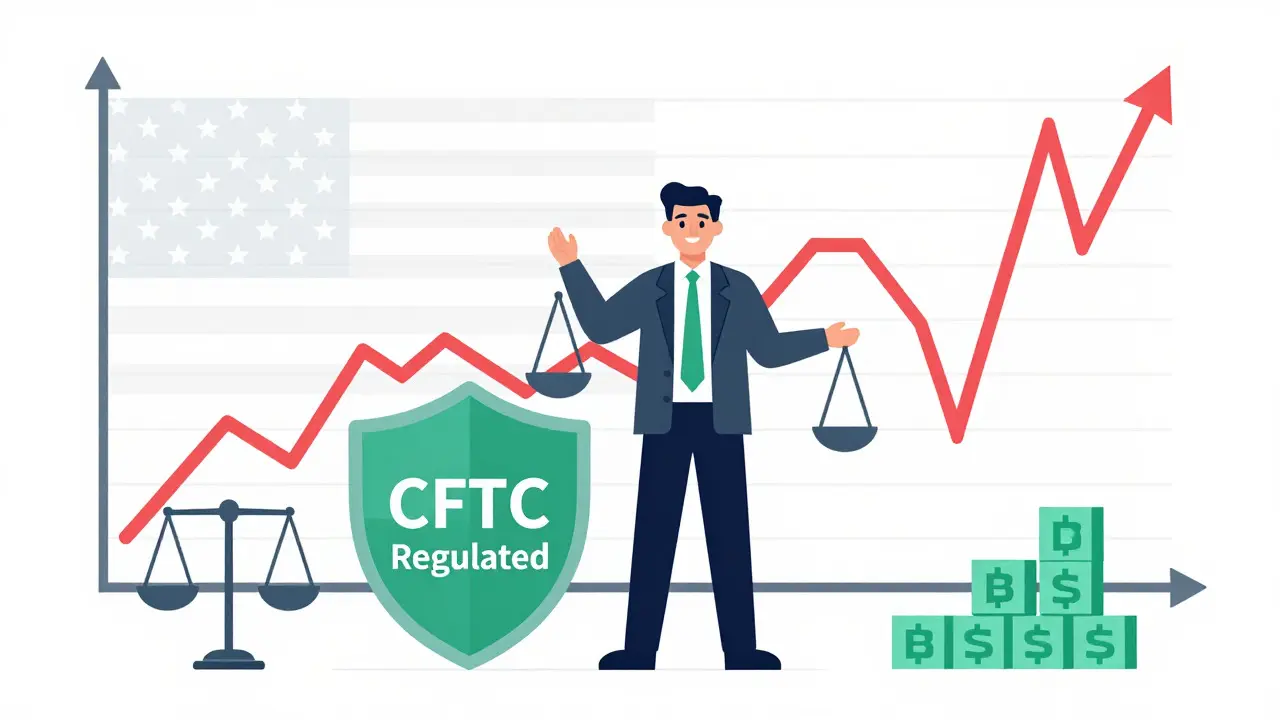
Why the shift? Regulation. For years, US institutions couldn't easily access perpetual swaps due to CFTC restrictions. That changed in April 2025 when Bitnomial Exchange and Coinbase Derivatives received approval to offer perpetual-style contracts on designated contract markets (DCMs). This was a watershed moment. It allowed big players to use the same tools retail traders love, but within a compliant framework.
The impact was immediate. In their first month, these new US perp contracts processed $42.3 billion in notional value. Gary Gensler, Chairman of the CFTC, noted that this self-certification process brings innovation into compliance without stifling it. Meanwhile, offshore exchanges face increasing pressure. The EU’s Markets in Crypto-Assets (MiCA) regulation is forcing global platforms to adapt, potentially consolidating the market around fewer, larger players.
Risk Management: Leverage Is a Double-Edged Sword
Let’s talk about the elephant in the room: leverage. Derivatives allow you to control large positions with a small amount of capital. A 10x leverage means a 10% move in Bitcoin’s price doubles or halves your entire position. Sounds exciting? It is-until the market turns against you.
Liquidation is the biggest risk. When your collateral falls below a maintenance margin, the exchange forcibly closes your position. In Q3 2025, a sudden market swing triggered billions in liquidations across offshore venues. In contrast, CME-regulated platforms, which cap leverage at 2.5x for most products, saw only $187 million in liquidations. The difference? Lower leverage means wider safety buffers.
For retail traders, the lesson is clear: high leverage is not a shortcut to wealth; it’s a fast track to ruin if you’re not careful. Here are some practical tips:
- Understand Funding Rates: In perpetual swaps, if the funding rate is positive, longs pay shorts. If negative, shorts pay longs. Ignoring this can eat into profits even if the price doesn’t move much.
- Use Stop-Losses: Always set automatic exit points. Emotional trading during crashes leads to poor decisions.
- Diversify Exposure: Don’t put all your capital into one leveraged position. Spread risk across different assets or strategies.
- Prefer Regulated Venues for Hedging: If you’re protecting a long-term portfolio, use CME or Coinbase Derivatives. The lower leverage is worth the peace of mind.
Future Outlook: Where Is the Market Heading?
Looking ahead to 2027 and beyond, several trends are shaping the future of crypto derivatives. First, consolidation. Bernstein analysts predict that 3-4 major regulated platforms will control 75% of US volume by 2027. The recent acquisition of Deribit by Coinbase signals a move toward bridging institutional trust with retail accessibility.
Second, product sophistication is increasing. We’re seeing derivatives tied to staking yields, mining hash rates, and even volatility indices (like MOVE contracts). Solana ecosystem derivatives grew 327% year-over-year in 2025, showing that altcoin derivatives are maturing alongside Bitcoin and Ethereum.
Finally, integration with traditional finance is accelerating. SWIFT announced blockchain integration for derivatives settlement in early 2026, aiming to speed up cross-border trades. This could bring even more institutional capital into the space, further legitimizing crypto derivatives as a standard part of modern portfolios.
The crypto derivatives market has grown up. It’s no longer the Wild West. With better regulation, deeper liquidity, and more sophisticated tools, it’s becoming a critical component of global finance. But remember: with great power comes great responsibility. Use these tools wisely, understand the risks, and always prioritize capital preservation over quick gains.
What is the difference between spot trading and derivatives trading?
In spot trading, you buy and own the actual cryptocurrency. In derivatives trading, you enter a contract based on the price movement of the asset without owning it. Derivatives allow for leverage, shorting, and hedging, while spot trading is simpler and involves direct ownership.
Are perpetual swaps safe for beginners?
Perpetual swaps carry significant risk due to leverage and funding rates. Beginners should start with low leverage (e.g., 2x-5x) and thoroughly understand liquidation mechanics before trading. Many experts recommend starting with spot trading or regulated futures first.
How does the CFTC regulate crypto derivatives in the US?
The Commodity Futures Trading Commission (CFTC) regulates crypto derivatives as commodity derivatives. It requires exchanges to register as Designated Contract Markets (DCMs) or Swap Execution Facilities (SEFs). Recent approvals for perpetual contracts on platforms like Bitnomial and Coinbase Derivatives mark a shift toward allowing more innovative products under strict oversight.
What happened during the Q3 2025 liquidation event?
In Q3 2025, extreme volatility caused $2.1 billion in positions to be liquidated across offshore exchanges due to high leverage and inadequate risk controls. In contrast, US-regulated platforms like CME saw only $187 million in liquidations, demonstrating the stability benefits of lower leverage caps and robust clearing systems.
Is DeFi derivatives trading better than centralized exchanges?
It depends on your priorities. DeFi offers non-custodial trading, meaning you retain control of your funds, which reduces counterparty risk. However, CEXs generally offer higher liquidity, lower fees, and more advanced order types. DeFi is growing rapidly but still represents a small fraction of total volume.
Heather Austin
July 17, 2026 AT 19:07look at the funding rates on perp swaps right now its basically free money if you know how to hedge properly but most people dont and they get rekt because they ignore the basics of risk management which is why i always say start with spot or low leverage futures until you understand the mechanics fully
Ran Tao
July 19, 2026 AT 09:35Oh, look at you, trying to act like a financial genius with your little hedging tips 🙄. You clearly have no idea what real institutional trading looks like. The rest of us are busy making actual alpha while you’re over here explaining basic concepts to people who probably can’t even open a brokerage account. Truly pathetic. 😂💸
Lisa Chong
July 20, 2026 AT 11:38The whole system is a sham designed by globalist elites to steal our wealth through complex financial instruments that no ordinary person can understand. They want us to trade derivatives so they can manipulate the markets and crash the economy whenever they choose. Wake up sheeple! The CFTC is just a puppet organization for the banking cartel. Do not trust these platforms with your hard earned money because they will liquidate you when the signal comes from above.
Alicia Hull
July 21, 2026 AT 23:29I find it absolutely infuriating that retail traders are still being pushed into high-leverage products without proper education. It is reckless and dangerous behavior that leads to significant financial loss for individuals who do not understand the underlying risks. We need stricter regulations immediately to protect consumers from predatory practices by offshore exchanges that operate with impunity. How many more people need to lose their life savings before regulators step in?
Melissa Beckwith
July 22, 2026 AT 15:51While I appreciate the concern for consumer protection expressed in previous comments, it is imperative to recognize that the market has evolved significantly since the early days of cryptocurrency, and the introduction of regulated perpetual contracts on designated contract markets such as Bitnomial and Coinbase Derivatives represents a substantial step forward in terms of compliance and transparency, thereby reducing the systemic risk associated with unregulated offshore venues, although one must acknowledge that the complexity of these instruments requires a sophisticated understanding of financial mathematics and risk management principles that most retail investors simply do not possess, which suggests that perhaps the solution lies not in banning these tools but in providing better educational resources and ensuring that only those who demonstrate sufficient knowledge are permitted to access them, thus creating a more stable and equitable marketplace for all participants involved in this rapidly changing ecosystem.
Hazel Fruitman
July 23, 2026 AT 12:38i think we need to talk about the moral implications of gambling with other peoples money using leverage its just wrong and unethical to encourage people to take risks they cant afford especially when the system is rigged against them anyway we should be focusing on community building and holding assets long term instead of speculating on price movements which benefits no one except the big banks
Josephine Finlayson
July 24, 2026 AT 00:14I completely agree with the sentiment regarding ethical trading practices; however, it is important to remember that derivatives also serve a vital function in hedging risk for legitimate businesses and investors who wish to protect their portfolios from volatility. Perhaps we can find a middle ground where education is prioritized, and responsible usage is encouraged rather than outright condemnation? Let's strive for a balanced perspective that acknowledges both the dangers and the utilities of these financial tools.
Tuan Nguyen
July 24, 2026 AT 02:59The inefficiency of decentralized finance protocols remains glaringly obvious to anyone with a rudimentary understanding of market microstructure. Slippage and liquidity fragmentation render DeFi derivatives practically useless for any serious arbitrage or hedging strategy. Only amateurs flock to these inferior platforms due to ideological delusions about 'trustlessness,' ignoring the stark reality that centralized order books provide superior execution quality and depth. The future belongs to regulated, consolidated venues, not fragmented codebases maintained by anonymous developers.