Crypto Exchanges That Allow Iranian Citizens to Trade in 2026
 Jan, 26 2026
For millions of Iranians, cryptocurrency isn’t just an investment-it’s a lifeline. With banks cut off from global systems, credit cards blocked, and foreign currency access restricted, digital assets have become the only reliable way to store value, send money abroad, and buy goods online. But not all exchanges are open to Iranian users. Some shut down accounts without warning. Others freeze funds overnight. And a few, like Nobitex, have been hacked for over $90 million. So which exchanges still work in Iran in 2026?
Domestic Exchange: Nobitex Still Leads, But It’s Risky
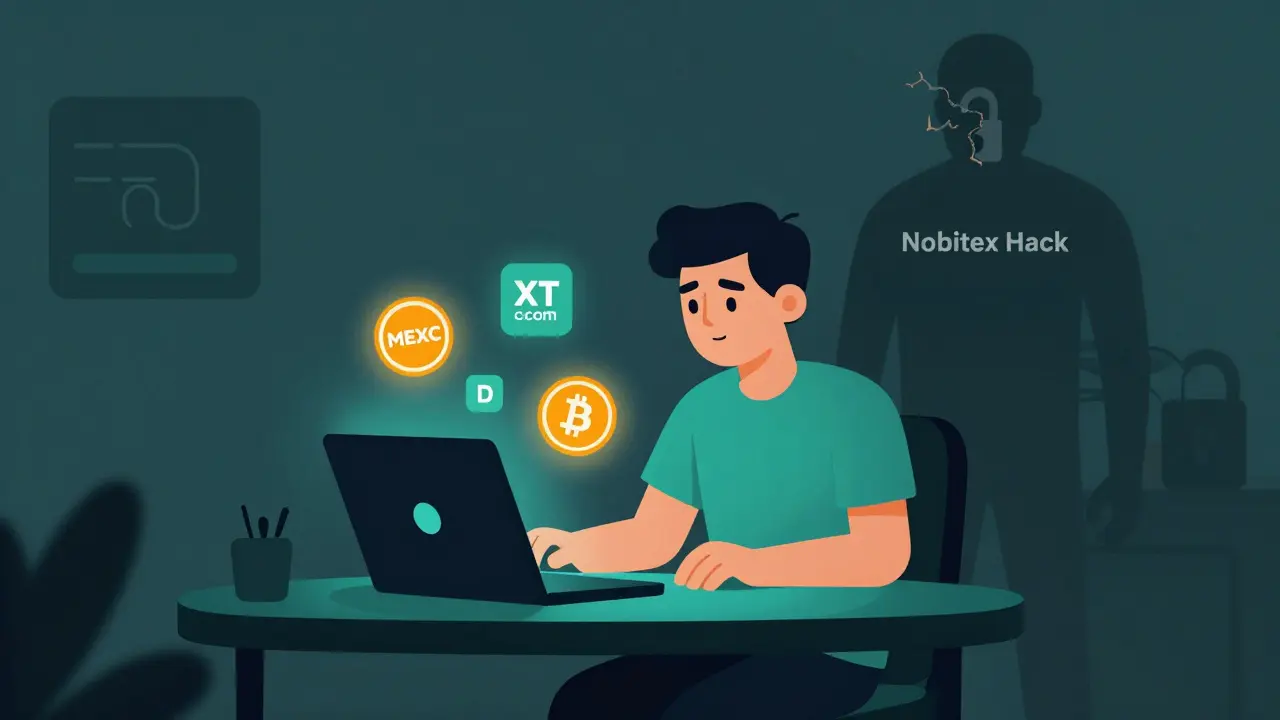
Nobitex handles more than 87% of all crypto trades inside Iran. It’s the go-to platform for everyday users-simple interface, Persian language support, and direct bank transfers in Iranian rials. Over 11 million people have accounts there. But here’s the catch: Nobitex was designated as a sanctioned entity by U.S. authorities in early 2025. Then, in June, hackers stole $90 million in Bitcoin, Ethereum, and stablecoins. The breach wasn’t just a technical failure-it exposed how deeply the exchange was tied to Iran’s underground financial networks. After the hack, many users lost access to their funds for weeks. Some never got them back. If you’re using Nobitex, treat it like cash in your mattress: useful, but not safe.International Exchanges That Still Accept Iranian Users
While Western exchanges like Coinbase and Binance have blocked Iranian IPs, several global platforms still let Iranians sign up and trade. These aren’t officially targeting Iran-they’re just not blocking them. That’s a gray zone. Your account might work today and get frozen tomorrow. But for now, these five are the most reliable:- MEXC (9.1/10 rating): Minimum deposit $30. Supports 196 coins. Spot trading fee: 0.2%. Fast withdrawals, good mobile app, and decent customer service. Many Iranians use it to swap USDT for altcoins.
- Bitsgap (8.4/10): No minimum deposit. Supports 673 coins. It’s not a direct exchange-it connects to others like Binance and KuCoin to automate trades. Great for advanced users who want bots to trade while they sleep.
- XT.com (8.3/10): $10 minimum deposit. 1,010 cryptocurrencies. 0.2% maker fee. One of the few platforms that still accepts Iranian ID documents during KYC. Popular for trading low-cap tokens.
- LATOKEN (8.0/10): Only $1 to start. 475 coins. Fee: 0.49%. Has a clean interface and decent liquidity. Fewer Iranians use it, so less chance of being flagged.
- CoinEx (7.9/10): $1 minimum. 475 coins. Same fee as LATOKEN. Offers staking and futures trading. Often recommended by Persian-language crypto YouTubers.
Some platforms like KuCoin and BingX are also used, but they’re less consistent. KuCoin has a beginner-friendly layout and lets you earn interest on holdings, but Iranian users report sudden account freezes without explanation. BingX is good for futures trading, but its support team rarely replies in Persian.
Why USDT Is No Longer Safe in Iran
In July 2025, Tether froze 42 cryptocurrency addresses linked to Iranian users. More than half of those wallets were connected to Nobitex. The move wasn’t random-it was a targeted strike. These wallets had clear transaction trails to addresses previously flagged by Israeli counter-terrorism agencies as tied to the IRGC. Overnight, Iranian users lost access to hundreds of millions in USDT. The panic was immediate. People rushed to swap USDT for DAI, a decentralized stablecoin built on the Polygon network. Why Polygon? Because it’s faster, cheaper, and harder to freeze. Within days, DAI usage in Iran jumped 300%. Today, most serious traders avoid USDT entirely. If you’re holding it, convert it now.
Regulation Is Changing-Now There’s a Crypto Tax
In August 2025, Iran passed its first crypto tax law. It’s called the Law on Taxation of Speculation and Profiteering. For the first time, profits from crypto trading are taxed like real estate or gold. The government isn’t trying to stop crypto-it’s trying to control it. The tax rate isn’t public yet, but reports suggest it’s around 15-20% on gains. The key point: if you make money trading, the state expects a cut. This means exchanges are now under pressure to report user activity. That’s why some platforms are tightening KYC. Don’t assume you’re anonymous. If you’re making consistent profits, keep records. You’ll need them.What Iranian Users Really Deal With
If you’re using an international exchange, here’s what you’ll face:- Account freezes: Your account might get locked without warning. No email. No explanation. You’ll need to appeal through support, which can take weeks.
- No Persian support: Most platforms only offer English or Chinese help. You’ll need to use Google Translate or rely on community forums.
- Payment limits: No direct bank transfers. You’ll need peer-to-peer (P2P) platforms like LocalBitcoins or Paxful to buy crypto with rials. Some users use gift cards or crypto-to-crypto swaps.
- Security risks: Scammers target Iranians with fake exchange sites. Always double-check URLs. Bookmark your exchanges. Never click links from Telegram groups.
Many users now avoid centralized exchanges entirely. They use decentralized platforms like Uniswap or SushiSwap on the Polygon network. It’s harder to use, but harder to freeze. You control your keys. No one can take your coins. But if you lose your seed phrase? Too bad. No customer service to call.
What You Should Do Right Now
If you’re in Iran and want to trade crypto in 2026, here’s your action plan:- Stop holding USDT. Swap it for DAI on Polygon. Use a wallet like MetaMask.
- Use MEXC or XT.com for spot trading. They’re the most stable right now.
- Never put all your crypto on one exchange. Split it between two or three.
- Use a VPN if your ISP blocks access. NordVPN and ExpressVPN still work reliably.
- Keep records of every trade. You’ll need them for taxes.
- Learn self-custody. Download MetaMask or Trust Wallet. Store your seed phrase offline.
The truth is, crypto in Iran isn’t about getting rich. It’s about staying financially alive. The system is broken. The banks are blocked. The government watches. But crypto still works-barely. The people who succeed aren’t the ones chasing moonshots. They’re the ones who stay low, move fast, and never trust a platform too much.
What’s Next for Iranian Crypto?
Iran’s crypto market won’t disappear. It’s too essential. But it will keep changing. More exchanges will get pressured to cut off Iranian users. More hacks will happen. More stablecoins will be frozen. But the people will adapt. They’ve done it before. With each crackdown, they find a new way-faster networks, new tokens, decentralized tools. The future of crypto in Iran isn’t about big platforms. It’s about resilience. About community. About individuals who refuse to be locked out of the global economy.Can I use Binance or Coinbase in Iran?
No. Both Binance and Coinbase block Iranian IP addresses and freeze accounts linked to Iran. Even if you sign up with a VPN, your account will likely be suspended later. Avoid them entirely.
Is Nobitex safe to use in 2026?
Not really. Nobitex is still the most popular exchange in Iran, but it was hacked for $90 million in 2025 and is under U.S. sanctions. Many users lost funds. Use it only for small, short-term trades. Don’t store large amounts there.
Do I need KYC to use these exchanges?
Yes, most international exchanges require KYC. You’ll need to upload a photo ID and sometimes a selfie. Some, like XT.com, accept Iranian documents. Others may reject you. If you’re denied, try another platform or use P2P trading instead.
What’s the best way to buy crypto with Iranian rials?
Use P2P platforms like LocalBitcoins, Paxful, or local Telegram groups. Find someone selling USDT or DAI in exchange for rials. Always use escrow. Never send money before receiving crypto. Avoid strangers who promise instant delivery.
Are there any crypto exchanges in Iran that are government-approved?
Nobitex is the only major domestic exchange, but it’s not officially approved by the government. Iran hasn’t created a legal framework for crypto exchanges. The government taxes profits but doesn’t regulate platforms. So while Nobitex operates, it’s not protected or endorsed.
Can I withdraw crypto from these exchanges to my wallet?
Yes, you can withdraw to any wallet you control. That’s the whole point of crypto. Just make sure you’re sending to the correct network (e.g., ERC-20 for Ethereum-based tokens, Polygon for DAI). Double-check the address before confirming.
What happens if my account gets frozen?
If your account is frozen, contact support immediately. Be polite and provide all requested documents. But don’t expect quick results. Many users wait weeks or months. If you’re locked out, keep your seed phrase safe-you can still access your funds via your wallet. The exchange can’t touch what you control.
Linda Prehn
January 26, 2026 AT 21:28Still, I can’t help but wonder how many of these users are just trying to buy medicine or send money to family, not fund some shadowy operation. The collateral damage here is staggering.
Adam Lewkovitz
January 27, 2026 AT 07:21Taylor Mills
January 28, 2026 AT 18:34Arielle Hernandez
January 29, 2026 AT 13:52HARSHA NAVALKAR
January 30, 2026 AT 21:05Ryan Depew
January 31, 2026 AT 01:48