Crypto Money Laundering Charges: What Really Happens If You Face 20 Years in Prison
 Jan, 3 2026
When you hear crypto money laundering and 20 years in prison, it sounds like something out of a crime drama. But in 2026, this isn’t fiction. Federal prosecutors are locking up people who move dirty crypto cash-and the sentences are getting longer. The 20-year mark isn’t just a rumor. It’s the legal ceiling for the worst cases. And if you’re running a crypto exchange, mixing Bitcoin, or turning stolen ETH into cash, you’re already on their radar.
How Crypto Money Laundering Actually Works
Crypto doesn’t hide money-it just makes it harder to trace. Criminals don’t need secret vaults anymore. They use blockchain addresses, mixers, and cross-border exchanges to turn stolen coins into clean cash. In 2025, over $2.17 billion was stolen from crypto platforms in just six months. That’s more than all of 2024. And most of it? Gone within hours. Stablecoins like USDT are now the favorite tool. Why? Because they’re pegged to the dollar, so they move fast and don’t swing in value like Bitcoin. A hacker steals $10 million in ETH, swaps it for USDT, sends it through three mixers, then cashes out at a kiosk in Mexico, Poland, or Nigeria. No bank account. No paper trail. Just a few blockchain transactions. But here’s the catch: blockchain doesn’t lie. Every transfer is recorded. Forensic firms like TRM Labs track every move-from the initial hack to the final cash-out. They map wallets, link addresses, and flag patterns. If you’re moving more than $1 million in crypto without a license, you’re not just breaking rules-you’re committing a federal crime.The Laws That Can Send You to Prison
There’s no single “crypto money laundering” law. Instead, prosecutors pile on charges:- 18 U.S.C. § 1956 - Federal money laundering statute. Carries up to 20 years per count.
- 18 U.S.C. § 1957 - Engaging in monetary transactions with criminally derived property. Up to 10 years.
- Operating an unlicensed money transmitting business - Up to 5 years, but often stacked with other charges.
- Violating the Bank Secrecy Act - Failing to report suspicious activity or keep records.
Real Cases, Real Sentences
In 2023, Kais Mohammad-known online as “Superman29”-got 24 months in federal prison. He ran a Bitcoin cash-out operation that moved $25 million. He charged 25% fees. He didn’t have a license. He didn’t report transactions. He didn’t even try to stop fraud. His sentence was light because he pleaded guilty and cooperated. Compare that to the 2025 Czech Bitcoin scandal. Investigators traced $619 million in Bitcoin moves from a darknet marketplace to hardware wallets, then to Kraken and other exchanges. The suspects? Still at large. But if caught, they’d face more than just one count. They’d face conspiracy, international money laundering, and possibly RICO charges. That’s where 20 years becomes real. The EU’s Anti-Money Laundering Authority calls crypto cross-border operations the “top emerging threat.” Why? Because one person can run a laundering network from a laptop in Thailand while cashing out in Argentina. No physical office. No employees. Just wallets and Telegram groups.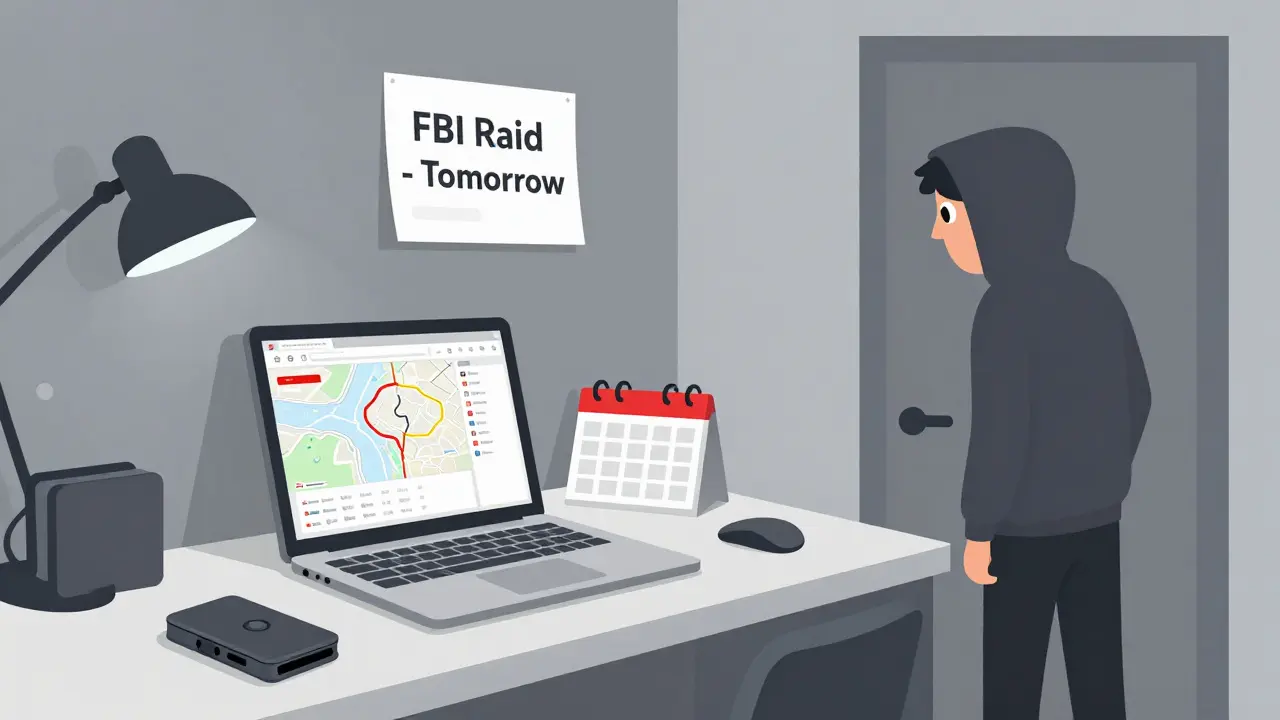
Why Some Get 2 Years and Others Get 20
Not everyone who moves crypto gets locked up for two decades. Sentencing depends on five things:- Amount laundered - Over $10 million? That’s a multiplier. Over $50 million? You’re in the top tier.
- Use of sophisticated tools - Mixers, tumblers, privacy coins, chain-hopping? That’s an aggravating factor.
- International scope - If you’re moving money across three or more countries, you’re facing enhanced penalties.
- Connection to other crimes - If your crypto came from ransomware, drug sales, or human trafficking, you’re looking at life sentences.
- Cooperation - If you flip on your partners, give up wallet keys, or help trace stolen funds? You might get half the sentence.
Who’s Getting Targeted Right Now
It’s not just darknet vendors. The biggest targets in 2026 are:- Unlicensed crypto kiosk operators - Those machines in gas stations and convenience stores that turn crypto into cash? Many are fronts for laundering.
- DeFi protocol developers - If you build a protocol that lets users swap coins anonymously and don’t add KYC, you’re liable.
- Exchanges with weak compliance - Huione Group processed $70 billion in crypto. No AML team. No reporting. Now it’s under FinCEN investigation.
- Wallet service providers - If you offer “private wallets” that can’t be traced, you’re helping criminals.
What Happens If You’re Investigated
You won’t get a warning. You won’t get a letter. You’ll wake up to federal agents at your door-or worse, your bank account will be frozen without notice. The government doesn’t need a warrant to freeze crypto. They just need a court order based on blockchain evidence. Your phone, laptop, and hardware wallets will be seized. Blockchain analysts will reconstruct every transaction you’ve ever made. They’ll look at your IP logs, your chat history, your wallet backups. If you used a mixer, they’ll trace it back-even if you think it’s untraceable. Defense lawyers now need blockchain experts. You can’t just say, “I didn’t know it was stolen.” If you moved $3 million in ETH from a known darknet address to a centralized exchange, the burden is on you to prove it was clean. Most people can’t.
Can You Avoid Prison?
Yes-but only if you act fast. If you’re already involved in crypto laundering:- Stop immediately. Every new transaction adds to your charges.
- Don’t delete anything. Destroying evidence is a separate felony.
- Get a lawyer who specializes in crypto crime. General attorneys won’t understand blockchain.
- Consider cooperating. If you can help trace the money or identify others, you might get a reduced sentence.
The Future: More Prison, More Tech
By 2027, the U.S. will likely pass new laws that make crypto money laundering a mandatory minimum offense. Some proposals suggest 5 years for laundering over $1 million, 10 for over $10 million, and 20 for over $50 million-especially if it ties to drugs, terrorism, or ransomware. AI is also changing the game. Regulators now use machine learning to spot laundering patterns in real time. A wallet that receives 50 small deposits from known fraud addresses, then sends one large transfer to an exchange? That’s flagged in seconds. Even privacy coins like Monero and Zcash are losing their edge. Researchers have developed new tracing methods that can now identify 80% of Monero transactions with over 90% accuracy. What used to be anonymous? Now it’s just delayed.Bottom Line
The 20-year sentence isn’t a threat. It’s a possibility-and it’s happening right now. Crypto didn’t make money laundering easier. It made it bigger. And the government is responding with the full weight of federal law. If you’re in crypto, understand this: moving dirty money isn’t a technical loophole. It’s a prison sentence waiting to happen. And the clock is ticking.Can you get 20 years in prison just for using crypto?
No. Using crypto legally-buying, selling, holding, or staking-is completely legal. The 20-year sentence applies only to people who knowingly move money from illegal activities through crypto to hide its origin. It’s not about owning Bitcoin. It’s about laundering stolen or criminal funds.
What’s the difference between tax evasion and crypto money laundering?
Tax evasion is failing to report income. Crypto money laundering is actively hiding the source of funds that came from crime-like theft, fraud, or drugs. You can evade taxes without laundering. But if you use crypto to disguise stolen money, you’re facing federal money laundering charges, which carry far heavier penalties.
Do I need a license to run a crypto exchange or kiosk?
Yes. Under U.S. law, any business that exchanges crypto for fiat currency (like USD) must register as a Money Services Business (MSB) with FinCEN. Failure to do so is a federal crime, even if you didn’t know the funds were stolen. Ignorance isn’t a defense.
Can mixing crypto make you guilty of money laundering?
It depends. If you’re mixing your own crypto for privacy reasons and the funds are legal, it’s not a crime. But if you’re mixing stolen funds to obscure their origin, especially for others, that’s a clear violation of 18 U.S.C. § 1956. Mixing services used by criminals are now considered “sophisticated means” under sentencing guidelines, which can double your prison time.
Are stablecoins like USDT more dangerous for money laundering?
Yes. Because they’re stable and widely accepted, stablecoins move faster and are harder to track than Bitcoin. Criminals use them to bypass traditional banking systems. In 2025, over 70% of laundered crypto was moved through USDT. That’s why regulators are now targeting Tether and other stablecoin issuers for compliance failures.
What happens if I inherited crypto that was stolen?
If you didn’t know it was stolen and you didn’t try to hide or move it, you’re unlikely to be charged. But if you later sell it or transfer it without reporting, you could be accused of laundering. Always consult a lawyer before touching crypto you didn’t earn yourself, especially if it came from an unknown source.
Is it possible to get a lighter sentence if I cooperate?
Yes. The DOJ offers substantial sentence reductions for defendants who provide meaningful assistance-like handing over wallet keys, identifying co-conspirators, or helping trace stolen funds. Many low-level operators have reduced their sentences from 10 years to under 2 by cooperating. But only if they do it before trial.
Can I be charged if I used a crypto ATM that turned out to be illegal?
Only if you knew or should have known it was illegal. If you deposited your own earnings and had no reason to suspect the machine was unlicensed, you’re not guilty. But if you used it repeatedly, deposited large amounts, or used it to cash out after a hack, you’re at risk. Prosecutors look at patterns-not single transactions.
Rajappa Manohar
January 4, 2026 AT 07:11bro just stopped using mixers and youll be fine
prashant choudhari
January 4, 2026 AT 11:41the real issue isnt the tech its the lack of clear regulatory guidance. developers are left guessing what counts as laundering vs privacy. the law moved faster than the industry and now everyone’s walking a minefield
rachael deal
January 6, 2026 AT 03:25i know people who bought crypto years ago and now cant sell without panic. they dont even know if their coins are tainted. the system is so opaque its punishing the innocent just to catch the guilty. we need better tools for ordinary users to verify legitimacy
Kevin Gilchrist
January 7, 2026 AT 17:56so let me get this straight - you’re telling me i can’t even use a crypto ATM to buy a burrito without the feds tracing my wallet like i’m some cartel kingpin? 😤 this isn’t justice it’s digital witch hunt with a side of overzealous enforcement. they’re turning blockchain into a surveillance grid and calling it ‘compliance’. 🤬
Elisabeth Rigo Andrews
January 9, 2026 AT 01:49the 18 U.S.C. § 1956 application to crypto is functionally overbroad. when you conflate mixer usage with intent to launder without proving knowledge of illicit origin, you violate due process. the burden of proof is inverted - users must now prove a negative. this sets a dangerous precedent for pseudonymous financial systems globally
Brandon Woodard
January 9, 2026 AT 07:18While the legal framework is technically sound, the enforcement strategy is fundamentally flawed. Prosecutors are treating every unlicensed MSB operator as a criminal mastermind, when in reality many are small business owners who simply didn’t understand the regulatory maze. The DOJ’s focus should be on systemic risk actors - not the guy running a crypto kiosk in a Nebraska gas station. There’s a difference between willful criminality and regulatory ignorance, and stacking 20-year sentences on the latter is not deterrence - it’s cruelty disguised as policy. The real solution isn’t more prison time - it’s education, clear licensing pathways, and collaboration with industry to build compliant infrastructure. Right now, we’re criminalizing ignorance instead of correcting it.