Crypto Regulations in Canada by Province: A 2026 Guide
 Oct, 2 2026
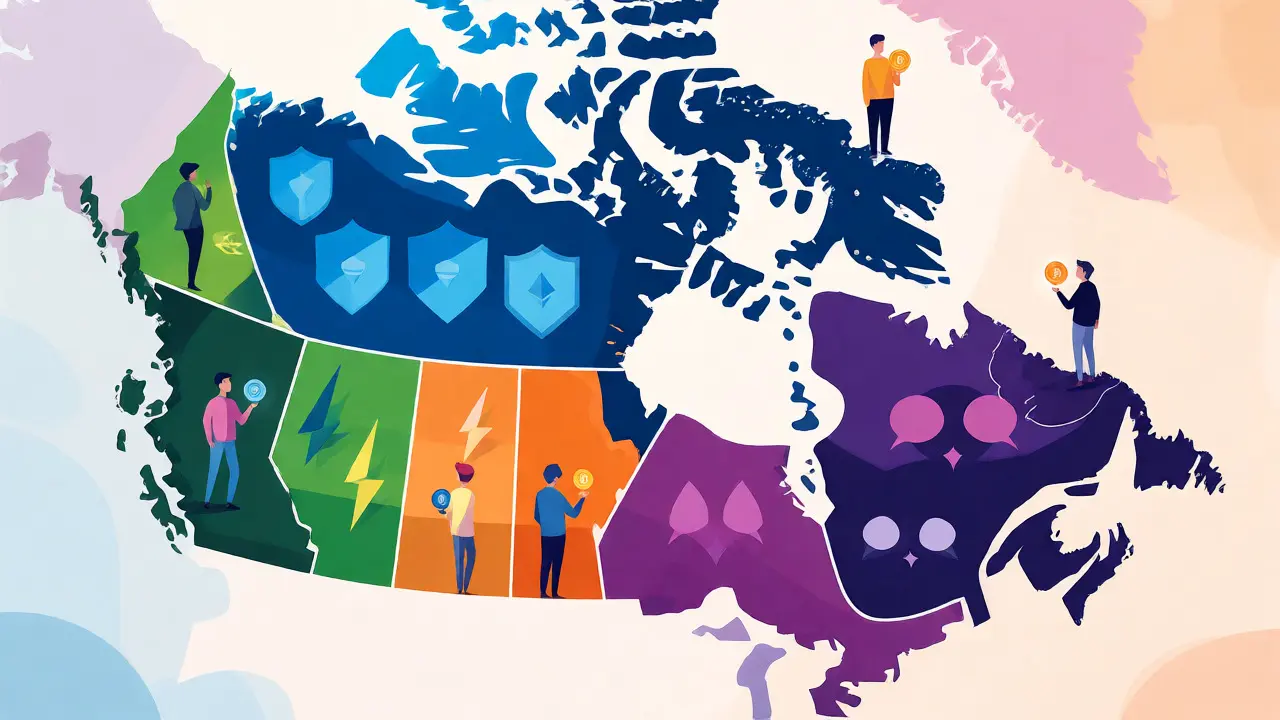
You just bought some Bitcoin on your phone. Simple, right? Well, not exactly. If you're holding that digital asset in Ontario, it feels very different from holding it in British Columbia or Quebec. Why? Because while the federal government sets the broad rules, your province holds the keys to how you actually trade, mine, and report those coins.
As of October 2026, Canada remains one of the most sophisticated jurisdictions for cryptocurrency digital assets regulated as commodities rather than legal tender. But here is the catch: there is no single "Canadian Crypto Law." Instead, you are navigating a patchwork of federal mandates and provincial quirks. This guide breaks down exactly what changes when you cross provincial borders, so you don't get caught off guard by a surprise tax bill or a platform ban.
The Federal Baseline: What Never Changes
Before we look at the map, let's clear up the foundation. No matter where you live in Canada, three things stay constant. First, the Canada Revenue Agency (CRA) federal tax authority responsible for administering income tax and GST/HST treats crypto as a commodity. That means capital gains tax applies when you sell, trade, or use crypto to buy goods. Second, any business dealing with crypto must register with FINTRAC the Financial Transactions and Reports Analysis Centre of Canada, the country's financial intelligence unit. Third, the Canadian Securities Administrators (CSA) an umbrella organization of provincial securities regulators provides guidelines, but they don't enforce them directly-your local regulator does.
Think of the federal level as the floor. You can't go below it. But provinces? They build the walls, the ceiling, and sometimes lock the doors.
Ontario: The Strictest Gatekeeper
If you live in Ontario, you know the drill. The Ontario Securities Commission (OSC) the regulatory body overseeing the capital markets in Ontario has been aggressive about protecting investors since the early days of crypto hype. In 2021, they introduced the Client Focused Reforms, which forced platforms to explain risks clearly. By 2026, these rules have matured into a rigorous standard.
What does this mean for you? If you want to trade on a major platform like Newton Crypto or Kraken, you aren't just signing up; you're undergoing a suitability assessment. The OSC requires platforms to ensure you understand what you're buying. It’s annoying if you’re an expert trader who just wants to execute a quick swap, but it’s a safety net for everyone else.
Also, watch out for advertising. Ontario cracked down hard on misleading crypto ads. If you see a promise of "guaranteed returns" on a billboard in Toronto, it’s likely gone-or heavily disclaimed. The OSC works closely with the Competition Bureau to keep claims honest. For miners, Ontario is less restrictive than western provinces, but energy costs remain a hurdle. There are no specific bans on residential mining, but grid stability concerns mean large operations need careful planning.
British Columbia: The Mining Battleground
Cross over to British Columbia, and the conversation shifts from investor protection to energy consumption. BC was once the gold rush destination for Bitcoin miners because of cheap hydroelectric power. That party ended abruptly in late 2022 when BC Hydro paused new connections. As of 2026, the situation has stabilized, but it’s not open season for miners.
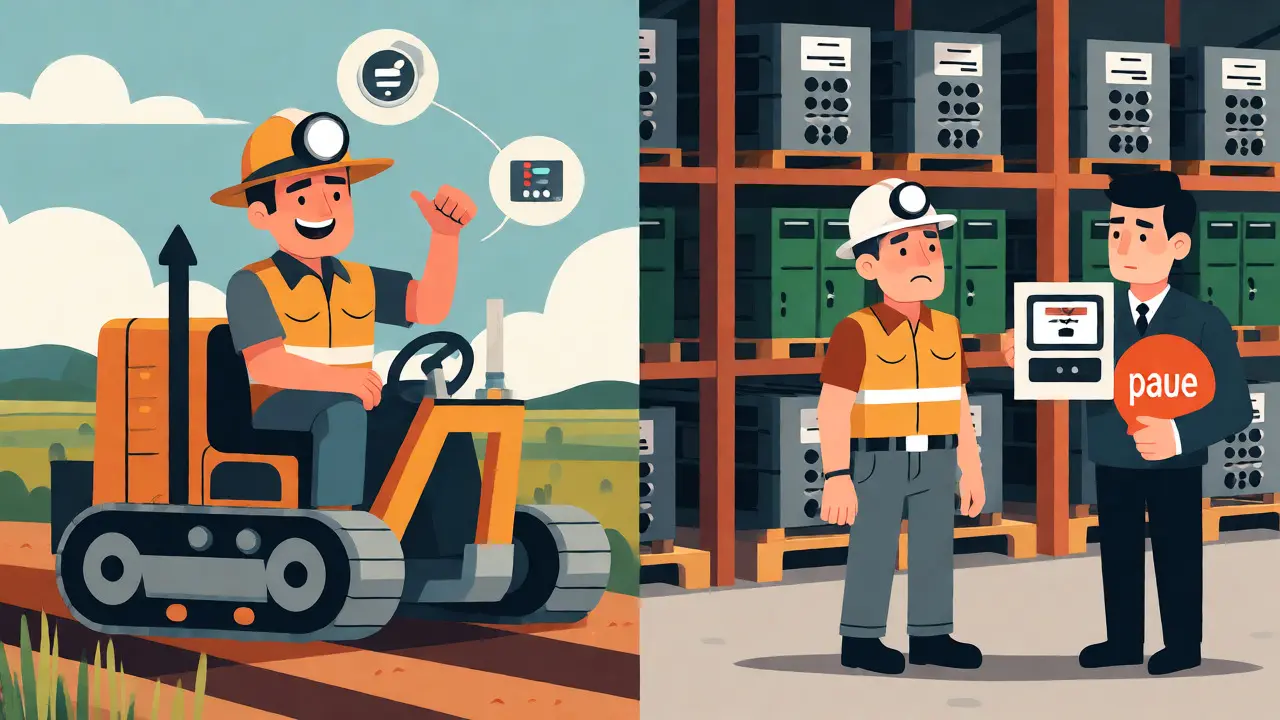
The BC Utilities Commission regulatory agency that oversees public utilities in British Columbia implemented permanent regulations effective May 2024. These rules allow the province to restrict or prohibit electricity supply to new mining projects. If you’re running a small home rig, you’re probably fine. But if you’re scaling up to a warehouse full of ASICs, you need explicit permission.
For traders, BC follows the general CSA guidelines, but the focus on environmental impact spills over into consumer perception. Many BC-based platforms highlight their carbon-neutral initiatives more aggressively than those in other provinces. If sustainability matters to you, BC’s market offers more transparency on the green credentials of trading platforms.
Quebec: Energy Rates and Distinct Rules
Quebec operates differently. Period. The province has its own civil law system and a distinct approach to energy management. The Régie de l'énergie the independent administrative tribunal regulating energy rates in Quebec took action in January 2023 to control crypto mining impacts. They didn’t ban mining outright, but they introduced a specific rate structure.
New crypto mining projects using at least 50 kilowatts of installed capacity face a higher electricity rate of approximately 16.603¢ per kWh. This isn’t a ban; it’s a price signal. It makes small-scale residential mining viable but pushes industrial-scale operations to think twice about profitability. If you’re a miner in Montreal or Quebec City, check your current rate plan. Your old grandfathered rates might be expiring soon.
On the trading side, Quebec’s Autorité des marchés financiers (AMF) the financial regulator for Quebec aligns with the CSA but adds local nuances. French-language disclosure requirements are strict. All platform communications, including risk warnings, must be available in French. If you’re using an English-only interface without proper French localization, you might find certain features restricted or unavailable.
Alberta and the Prairies: Innovation vs. Regulation
Alberta has historically been more pro-business regarding crypto. The Alberta Securities Commission (ASC) the regulatory body overseeing the capital markets in Alberta tends to take a lighter-touch approach compared to Ontario. While they still require registration for money service businesses, the enforcement culture is often described as collaborative rather than punitive.
This doesn’t mean Alberta is a wild west. The ASC participates in CSA-wide initiatives, such as the recent amendments to National Instrument 81-102 Investment Funds. These changes clarified how Public Crypto Asset Funds operate, affecting ETFs available in Alberta. Investors here have access to a wide range of crypto ETFs, similar to Ontario, but the path to approval for new funds has sometimes been faster.
Saskatchewan and Manitoba follow similar patterns, leveraging low energy costs for mining. However, unlike BC, they haven’t imposed heavy-handed moratoriums. The focus here is on attracting investment. If you’re looking to start a mining operation with moderate scale, the Prairie provinces offer a more predictable regulatory environment than BC or Quebec, provided you meet basic grid connection standards.
Comparison: Provincial Regulatory Landscape
To make sense of the differences, look at this snapshot of key regulatory pressures across major provinces as of late 2026.
| Province | Primary Regulator | Mining Restrictions | Trading Platform Focus |
|---|---|---|---|
| Ontario | OSC | Low (Grid dependent) | High (Investor Suitability) |
| British Columbia | BCUC / BCSC | High (Energy Supply Limits) | Medium (Green Compliance) |
| Quebec | AMF / Régie | Medium (Rate Hikes >50kW) | Medium (French Disclosure) |
| Alberta | ASC | Low (Business Friendly) | Medium (Innovation Focus) |
| Saskatchewan | FSC | Low | Low (General CSA) |

Taxation: The One Thing Everyone Misses
Here is a trap that catches Canadians every year: provincial taxes don’t change the definition of a taxable event, but they change the rate. When you sell crypto, you trigger a capital gain. Only 50% of that gain is taxed, but it’s added to your total income. Then, your marginal tax rate kicks in.
In Ontario, the top marginal rate is high. In Alberta, it’s lower. So, selling $10,000 worth of Bitcoin in Calgary leaves more cash in your pocket than selling the same amount in Toronto, purely due to provincial income tax brackets. Don’t forget GST/HST. If you’re a business accepting crypto, you must charge GST/HST based on the location of the customer. In Nova Scotia, that’s 15%. In Alberta, it’s 5%. Getting this wrong leads to audits.
Also, note that transferring crypto between your own wallets is generally not a taxable event. But swapping Bitcoin for Ethereum? That’s a disposal of Bitcoin and an acquisition of Ethereum. Two transactions. One tax calculation. Keep detailed records. The CRA’s Voluntary Disclosures Program is your friend if you realize you missed a few swaps from last year.
How to Stay Compliant Across Provinces
If you move frequently or run a business that serves clients nationally, fragmentation is your biggest headache. Here is how to handle it:
- Check Platform Authorization: Just because a platform is registered with FINTRAC doesn’t mean it’s authorized to trade in your province. Look for the CSA list of authorized dealers. Kraken, Crypto.com, and Newton are widely approved, but smaller players might only hold licenses in specific provinces.
- Monitor Energy Tariffs: If you mine, subscribe to updates from your local utility. BC and Quebec adjust rates and policies frequently. A sudden rate hike can wipe out your profit margins overnight.
- Use Local Legal Advice: A generic online contract might not satisfy Quebec’s French language laws or Ontario’s disclosure rules. If you’re raising capital or offering services, get a lawyer licensed in your target province.
- Track Everything: Use software that categorizes transactions by type (trade, spend, earn). This saves hours during tax season and helps prove your intent (business vs. personal) to auditors.
The Future: Will Harmonization Happen?
People ask if Canada will ever have a unified crypto law. Probably not soon. The Constitution gives provinces power over property and civil rights, which includes securities regulation. The CSA coordinates, but it can’t override provincial sovereignty. Expect more alignment on definitions (like what counts as a security) but continued divergence on enforcement intensity and sector-specific rules like mining.
For now, adaptability is key. The regulatory environment in 2026 is stable but complex. Those who treat compliance as a feature, not a bug, thrive. Those who ignore provincial nuances pay the price-in fines, lost opportunities, or stressful audits.
Is cryptocurrency legal in all Canadian provinces?
Yes, owning and trading cryptocurrency is legal in every province and territory. However, the regulations governing how you trade, mine, and report it vary significantly by region. For example, mining restrictions are stricter in British Columbia and Quebec due to energy concerns, while trading platform approvals differ by provincial securities commission.
Do I have to pay taxes on crypto in my home province?
You pay federal tax on capital gains, but the rate depends on your provincial income tax bracket. Selling crypto triggers a taxable event in all provinces. Additionally, if you are a business accepting crypto, you must collect GST/HST based on the customer's province. Personal transfers between wallets are generally not taxed.
Which province is best for crypto mining?
Alberta and Saskatchewan are currently considered more favorable for mining due to lower regulatory barriers and competitive energy rates. British Columbia has strict limits on new connections, and Quebec imposes higher electricity rates for large-scale projects. Always check current utility tariffs before investing in hardware.
Are all crypto exchanges available in every province?
No. Major platforms like Kraken and Crypto.com are authorized in multiple provinces, but smaller exchanges may only hold licenses in specific jurisdictions. Always verify that your chosen platform is registered with your provincial securities regulator before depositing funds.
What happens if I move to another province with crypto holdings?
Moving does not trigger a tax event. You simply update your address for tax purposes. Your future gains will be taxed according to the new province's rates. Ensure you keep records of your cost basis and acquisition dates, as these carry over regardless of where you live.