Crypto Taxation in Australia: CGT Treatment and the 50% Discount Explained
 May, 7 2026
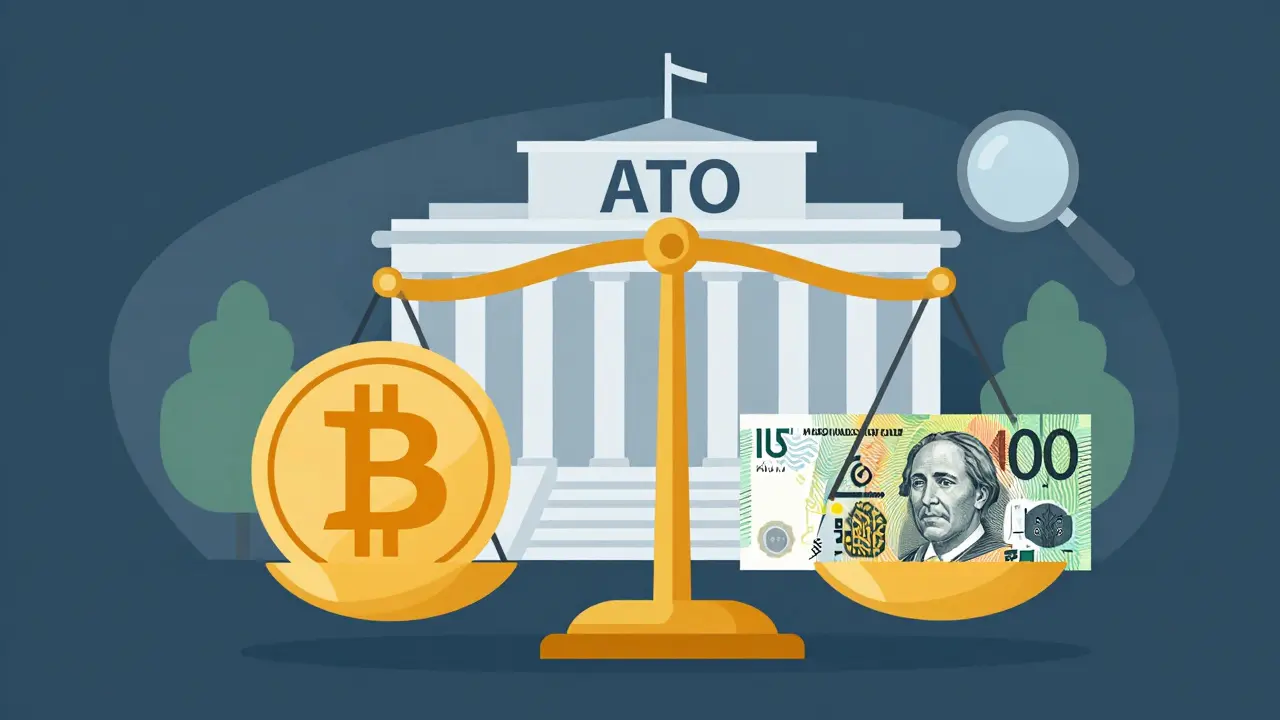
Did you know that simply paying a network fee in Bitcoin can trigger a taxable event? If you are holding digital assets in Australia, the Australian Taxation Office (ATO) is the government agency responsible for collecting taxes and administering superannuation, insurance, and some payment schemes watching closely. For many investors, the biggest surprise isn't just that they owe tax, but how much they owe because they missed the Capital Gains Tax (CGT) discount is a 50% reduction in capital gains tax liability available to individuals who hold an asset for more than 12 months before disposing of it.
Cryptocurrency in Australia is not treated as currency. It is classified as property. This distinction changes everything about how you calculate your tax bill. Whether you bought Ethereum in 2021 or received staking rewards last month, understanding the specific rules for disposal, cost base, and holding periods is critical. Getting this wrong doesn't just mean a late fee; it can mean thousands of dollars in unexpected tax liabilities.
How the ATO Defines Crypto Assets
The foundation of Australian crypto tax law rests on Interpretative Decision ATO ID 2014/178. This document established that cryptocurrencies are cryptocurrency is a digital or virtual currency secured by cryptography, which makes it nearly impossible to counterfeit or spend twice assets rather than foreign currency. Why does this matter? Because currency exchanges between two fiat currencies (like AUD to USD) are generally not taxable events. However, exchanging one crypto for another, or spending crypto on goods, is a disposal event subject to Capital Gains Tax.
This means every time you swap Bitcoin for Solana, or use Litecoin to buy coffee, you have triggered a CGT event. You must calculate the gain or loss at that exact moment. The value must be converted to Australian Dollars (AUD) based on the market rate at the time of the transaction. This creates a complex web of calculations for active traders, as each transaction requires its own valuation record.
The 50% CGT Discount: Your Best Friend
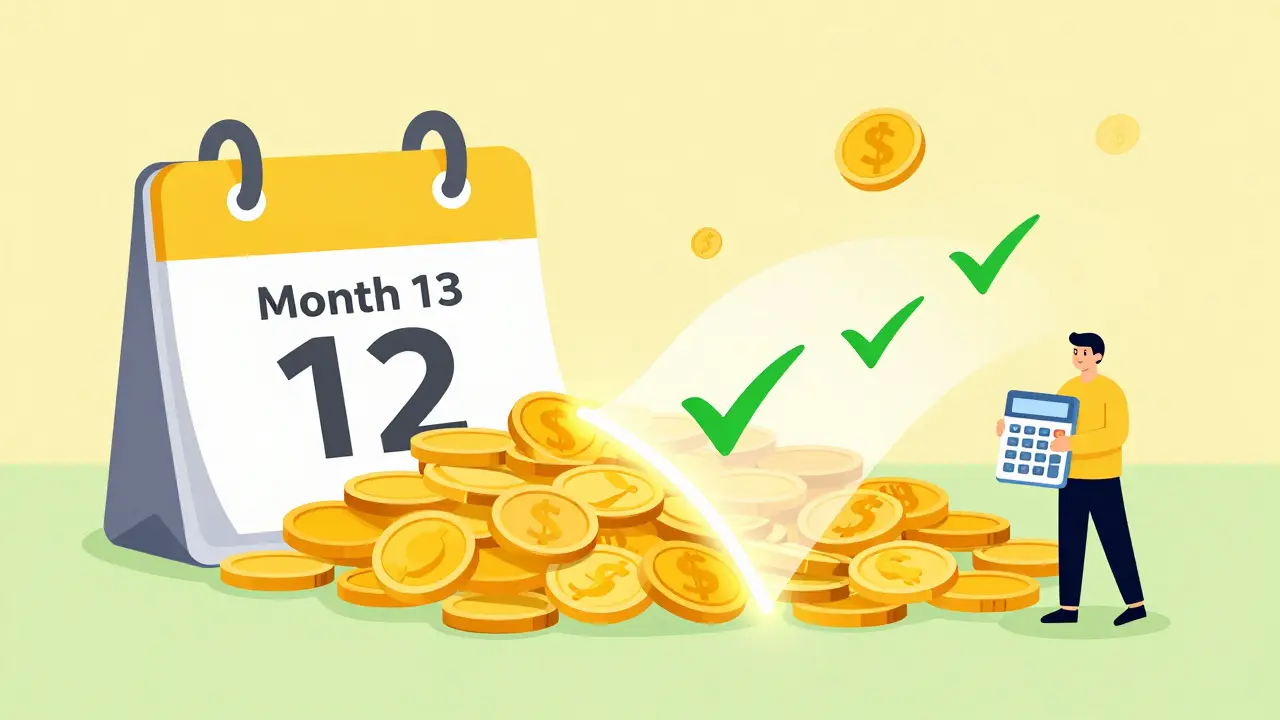
If there is one rule you need to memorize, it is the twelve-month rule. In Australia, if you hold a crypto asset for more than 12 months before disposing of it, you qualify for a 50% CGT discount is a tax benefit that allows individual taxpayers to reduce their capital gains by half if the asset was held for at least 12 months. This effectively halves the capital gain that is added to your taxable income.
Let’s look at a concrete example. Imagine you bought $10,000 worth of Bitcoin in July 2023. You sell it in August 2024 for $20,000. Your capital gain is $10,000. Without the discount, this $10,000 would be added to your ordinary income and taxed at your marginal rate. If you are in the 37% tax bracket, you would pay $3,700 in tax on that gain. However, because you held it for over 12 months, you apply the 50% discount. Your assessable gain becomes $5,000. Your tax bill drops to $1,850. That is a savings of $1,850 purely from waiting an extra month.
This discount is the single most important tax planning opportunity for Australian crypto investors. Many users report holding assets specifically to cross the 12-month threshold, even during volatile markets. The discipline required to wait can be difficult, but the financial reward is significant.
| Scenario | Holding Period | Capital Gain | Assessable Income | Tax Rate (Example) | Tax Payable |
|---|---|---|---|---|---|
| Short-Term Trade | 6 Months | $10,000 | $10,000 | 37% | $3,700 |
| Long-Term Hold | 13 Months | $10,000 | $5,000 | 37% | $1,850 |
Investor vs. Trader: A Critical Distinction
Not all crypto activity qualifies for the CGT discount. The ATO distinguishes between passive investors and active traders. If you are carrying on a business of trading cryptocurrency, your gains are treated as ordinary income, not capital gains. This means no 50% discount, regardless of how long you held the asset.
So, how do you know if you are a trader? There is no bright line test, but the ATO looks at several factors:
- Frequency of transactions: Do you trade daily or weekly?
- Volume of transactions: Are you executing hundreds of trades per year?
- Intent: Did you buy with the intention to resell quickly for profit?
- Organization: Do you keep separate books for your trading activities?
If the ATO determines you are a trader, your profits are taxed at your full marginal income rate, which can go up to 45% plus the Medicare levy. This classification is particularly harsh for high-frequency traders who may see their effective tax rate double compared to long-term holders. The ATO has increased compliance efforts targeting frequent traders, specifically those with 100+ transactions per year.
Calculating Your Cost Base
To calculate your capital gain or loss, you need to determine your cost base. This is not just the purchase price. It includes all incidental costs associated with acquiring, selling, or holding the asset. These costs can include:
- Exchange fees
- Bank transfer fees
- Legal or accounting fees directly related to the acquisition
- Network fees paid in crypto (which themselves trigger CGT events)
The method you use to identify which specific coins you sold matters. The ATO prefers the specific identification method is a cost basis calculation method where the taxpayer identifies exactly which units of an asset were disposed of. This allows you to choose which lots to sell to minimize tax, such as selling the highest-cost coins first to reduce gains. First-In-First-Out (FIFO) is also common but often results in higher tax bills if you bought early at lower prices.
Record-keeping is mandatory. You must keep details for each crypto asset as they are separate CGT assets. This includes the date of acquisition, the amount paid, and the date of disposal. The learning curve is significant, with tax professionals estimating it takes 15-20 hours for the average investor to properly document a year of crypto activity.

Common Pitfalls and Hidden Traps
Many investors fall into traps that increase their tax burden unnecessarily. One common issue is the "transfer fee trap." When you send crypto to another wallet, you often pay a network fee in the same cryptocurrency. The ATO views this as a disposal of a portion of your holdings. You must calculate the CGT on the fraction of crypto used to pay the fee. Ignoring this can lead to underreporting.
Another misconception involves the personal use asset exemption. Some believe that small purchases under $10,000 are tax-free. This is incorrect unless the asset is genuinely for personal use, like buying a coffee machine. If you buy NFTs or collectibles with investment intent, they are still subject to CGT, even if the value is low. The exemption applies only to non-business assets used personally, and even then, losses cannot be claimed.
Staking rewards and airdrops are also frequently misunderstood. These are not capital gains; they are ordinary income. You are taxed on the market value of the reward at the time you receive it. This establishes your cost base for future CGT calculations when you eventually sell those tokens.
Reporting and Compliance in 2025
The landscape of crypto compliance in Australia is tightening. The ATO now shares data directly with major exchanges like Swyftx, CoinSpot, and Independent Reserve. This means the ATO knows what you bought and sold. They expect you to report these transactions accurately in your tax return.
For the 2024-2025 financial year, tax returns are due by October 31, 2025, for individual taxpayers. You must convert all values to AUD at the time of each transaction. While the ATO provides an online calculator, many users find third-party software more effective for complex portfolios. Tools like Koinly or CoinTracker automate the process of importing transaction data and calculating gains and losses according to Australian tax laws.
Failure to comply can result in penalties. With the introduction of stricter data matching capabilities, including the planned integration with the Digital Asset Data Exchange, compliance rates are expected to rise significantly. The era of ignoring crypto taxes is over.
Is cryptocurrency considered cash or property in Australia?
In Australia, cryptocurrency is classified as property, not currency. This means that any disposal of crypto, including swapping one type for another or spending it, triggers a Capital Gains Tax (CGT) event. You must calculate the gain or loss based on the difference between the cost base and the disposal value in AUD.
How does the 50% CGT discount work for crypto?
If you hold a crypto asset for more than 12 months before disposing of it, you can claim a 50% discount on the capital gain. This means only half of the gain is added to your taxable income. For example, if you made a $10,000 gain, only $5,000 would be taxed at your marginal income tax rate.
What happens if I trade crypto frequently?
If the ATO determines you are carrying on a business of trading cryptocurrency, your gains are treated as ordinary income rather than capital gains. This means you do not qualify for the 50% CGT discount, regardless of how long you hold the assets. Your profits are taxed at your full marginal income tax rate.
Are staking rewards taxable in Australia?
Yes, staking rewards are treated as ordinary income. You must declare the market value of the rewards in AUD at the time you receive them. This amount becomes your cost base for future CGT calculations when you eventually sell or dispose of the staked tokens.
Do I need to pay tax on network fees?
Yes, paying network fees in cryptocurrency triggers a CGT event. Since you are disposing of a portion of your crypto to pay the fee, you must calculate the capital gain or loss on that specific fraction of the asset based on its value at the time of the transaction.