Divergence (DIVER) Airdrop: How to Claim, Eligibility, and Token Details
 Jun, 8 2026
You’ve probably seen the buzz around Divergence is a decentralized platform for hedging and trading volatility of DeFi assets via synthetic binary options. If you’re here, you likely want to know if there’s free money to be made through an airdrop. The short answer? It’s complicated. Unlike some projects that hand out tokens just for liking a tweet, Divergence has focused heavily on its Initial DEX Offering (IDO) and community utility rather than a broad, open-airdrop campaign.
But don’t click away yet. There are still ways to earn or acquire DIVER tokens are the governance and utility token of the Divergence Protocol ecosystem. Whether you missed the initial sale or are looking to get in on the ground floor, understanding how this project distributes value is crucial. This guide breaks down what happened during their launch, how the current reward systems work, and whether you can still benefit from participating in the ecosystem.
Understanding the Divergence Launch: IDO vs. Airdrop
To understand why there isn’t a simple "claim button" floating around for everyone, we need to look at how Divergence launched. Many newer DeFi projects skip traditional venture capital rounds and go straight to the public using an Initial DEX Offering (IDO) is a fundraising method where tokens are sold directly to investors on a decentralized exchange. Divergence chose this path to ensure fairness and transparency.
Instead of giving tokens away for free, they used a Dutch auction mechanism. Here’s how it worked:
- Starting Price: $0.10 per token.
- Floor Price: $0.05 per token.
- Total Supply Sold: 20 million DIVER tokens.
This setup allowed the market to decide the price. If demand was high, the price stayed near $0.10. If interest waned, it dropped toward $0.05. This method prevents whales from buying up all the cheap supply before retail investors get a chance. For those who participated, it was a purchase, not a gift. However, the proceeds from this sale were largely funneled into liquidity pools, specifically on SushiSwap is a decentralized exchange built on Ethereum that allows users to trade cryptocurrencies without intermediaries., ensuring there was immediate depth for traders.
Is There Still an Airdrop Opportunity?
As of mid-2026, there is no widely publicized, open-ended airdrop program for Divergence that rewards random internet users. The project’s philosophy leans toward rewarding active participants rather than passive observers. This is a common shift in the crypto space; after the boom-and-bust cycles of early airdrops, teams are focusing more on sustainable engagement.
However, "no airdrop" doesn’t mean "no rewards." Divergence has implemented a community reward structure that functions similarly to an airdrop for those who actually use the platform. Think of it as earning your keep rather than waiting for a handout.
How to Earn DIVER Tokens Today
If you want DIVER tokens without buying them on the secondary market, you need to engage with the protocol. Here are the primary avenues:
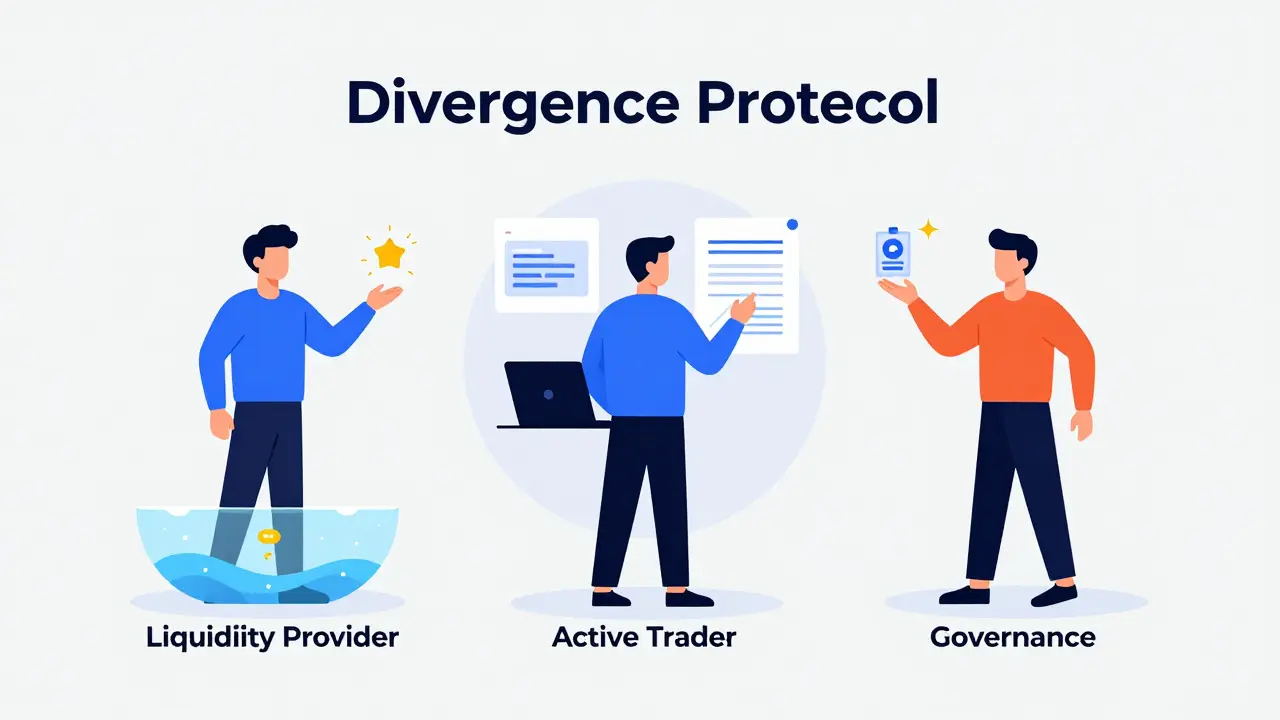
- Liquidity Provision: This is the biggest driver of rewards. By providing liquidity to the options markets on Divergence, you help enable trading. In return, the protocol distributes DIVER tokens to these providers. This mitigates impermanent loss and aligns the interests of traders and providers.
- Synthetic Binary Options Trading: Active traders who use the platform to hedge volatility may also receive incentives. The goal is to build a healthy, liquid market for DeFi-native asset derivatives.
- Governance Participation: Holding DIVER gives you a voice in the future of the protocol. While holding alone might not trigger an automatic airdrop drop, being an active voter often leads to snapshot-based rewards or bonus distributions announced by the team.
DIVER Token Utility: Why Does It Matter?
Before you rush to provide liquidity, it’s important to understand what you’re getting into. The DIVER token isn’t just a speculative asset; it has real utility within the Divergence Protocol is a decentralized finance platform specializing in volatility trading and hedging instruments. ecosystem.
| Attribute | Details |
|---|---|
| Primary Function | Governance voting rights and fee discounts |
| Reward Mechanism | Distributed to liquidity providers and active traders |
| Trading Venue | Primarily SushiSwap and other DEXs |
| Price Volatility | High (currently trading significantly below IDO price) |
| Ecosystem Role | Incentivizes deep liquidity for binary options markets |
The token acts as the glue holding the decentralized nature of the platform together. Without DIVER, there would be no incentive for people to lock up their capital in liquidity pools. When you hold DIVER, you’re essentially betting on the growth and adoption of the volatility trading market. If more people want to hedge their DeFi positions using Divergence, the demand for liquidity increases, which benefits token holders.
Market Reality Check: Price and Risk
Let’s talk numbers. During the IDO, the starting price was $0.10. As of recent data, DIVER trades at approximately $0.010686. That’s a significant drop. Why does this matter for an "airdrop" seeker?
If you had received a free airdrop back then, you’d have lost most of its value if you hadn’t sold immediately. But looking at it from today’s perspective, the low price means the barrier to entry is lower. You can buy a large amount of DIVER for a relatively small investment compared to the launch days. However, this also highlights the risk.
Crypto derivatives are complex. Synthetic binary options involve smart contracts that execute bets on price movements. These contracts carry inherent risks:
- Smart Contract Vulnerabilities: Like any DeFi protocol, code bugs can lead to exploits. Always check if audits have been conducted by reputable firms.
- Market Volatility: The underlying assets (DeFi tokens) can swing wildly, affecting the value of the options and the stability of liquidity pools.
- Liquidity Risk: If few people are trading, you might struggle to withdraw your liquidity without slippage.
Don’t treat this like a guaranteed win. Treat it like a research-heavy opportunity. The fact that the price is down could mean it’s undervalued, or it could mean the market has lost confidence. Your job is to dig deeper.
Step-by-Step: How to Get Involved
If you’re convinced that contributing to the Divergence ecosystem is worth your time, here is how you can start earning or acquiring DIVER tokens safely.
- Set Up a Wallet: You’ll need a non-custodial wallet like MetaMask or Trust Wallet. Ensure you have enough ETH (or the relevant base currency for the chain Divergence operates on) to pay for gas fees.
- Connect to Divergence: Navigate to the official Divergence website. Double-check the URL to avoid phishing sites. Connect your wallet securely.
- Explore Liquidity Pools: Look for the "Liquidity" or "Pool" section. Identify pairs that offer attractive annual percentage yields (APY) in DIVER rewards. Read the fine print about impermanent loss.
- Provide Assets: Deposit the required tokens into the pool. You will receive LP (Liquidity Provider) tokens in return, representing your share of the pool.
- Claim Rewards: Over time, DIVER tokens will accumulate in your account based on your contribution. Regularly claim these rewards to compound your earnings or sell them for profit.
Future Outlook: What’s Next for Divergence?
The team behind Divergence has indicated plans to expand accessibility. This includes listing DIVER on major centralized exchanges (CEXs). A CEX listing usually brings increased visibility and trading volume, which can positively impact the token price. Keep an eye on their official social channels for announcements regarding these listings.
Additionally, as the DeFi derivatives market matures, platforms that offer true decentralization and composability-like Divergence-may gain an edge over centralized competitors. The ability to hedge against volatility is a powerful tool for serious DeFi users. If Divergence captures even a fraction of this demand, the utility of the DIVER token could rise.
Remember, the landscape changes fast. What wasn’t an airdrop yesterday might become a retroactive reward program tomorrow. Stay engaged with the community, read the governance proposals, and never invest more than you can afford to lose.
Is there currently an open airdrop for Divergence (DIVER)?
No, there is no widespread, open-ended airdrop for DIVER tokens available to the general public. The project primarily distributed tokens through an Initial DEX Offering (IDO) and now focuses on rewarding active participants such as liquidity providers and traders within the ecosystem.
How can I earn DIVER tokens without buying them?
You can earn DIVER tokens by providing liquidity to the options markets on the Divergence Protocol. Additionally, actively trading synthetic binary options on the platform may yield rewards. Governance participation can also lead to bonus distributions.
What was the price of DIVER during the IDO?
The IDO started at $0.10 per token with a floor price of $0.05. The final price depended on the Dutch auction mechanism, which adjusted based on demand during the sale period.
Where can I trade DIVER tokens?
DIVER tokens are primarily traded on decentralized exchanges like SushiSwap. The team has expressed intentions to list the token on major centralized exchanges in the future to increase accessibility.
Is investing in DIVER risky?
Yes, like all DeFi projects, DIVER carries significant risks including smart contract vulnerabilities, market volatility, and liquidity issues. The token price has also experienced substantial drops since its launch, indicating high volatility.
Madhu Menon
June 8, 2026 AT 14:34It is fascinating how the market mechanisms evolve from simple giveaways to complex utility-based reward structures. The Dutch auction model mentioned here seems like a rational approach to price discovery, avoiding the artificial inflation often seen in traditional VC rounds. One must consider whether true value lies in passive holding or active participation in the liquidity pools. It reminds me of the philosophical shift from entitlement to meritocracy in digital economies. Perhaps the real 'airdrop' is the knowledge gained by navigating these volatile waters. We are witnessing the maturation of DeFi where speculation meets actual utility. This transition might be painful for those seeking quick riches but necessary for long-term sustainability. The ecosystem rewards those who understand the underlying mechanics rather than just chasing hype. It is a subtle lesson in economic theory applied to blockchain technology. I wonder if future protocols will adopt similar models as standard practice. The complexity serves as a barrier to entry but also a filter for serious participants. This dynamic creates a more resilient foundation for the protocol's growth.
Narendra Kulkarni
June 8, 2026 AT 20:34hey there! thanks for sharing this info. i was lookin for ways to get involved without buyin straight away. providing liquidity sounds intersting but i am a bit worried about impermanent loss. has anyone else tried this on divergence? would love to hear some experinces if you dont mind sharin. just want to make sure im not missin any red flags before i put my money in. appreciate the help!
Dinesh Pattigilli
June 10, 2026 AT 02:08You absolute amateurs need to wake up and smell the coffee. This article is barely scratching the surface of what Divergence actually represents in the broader macroeconomic landscape of decentralized finance. While you lot are busy counting pennies from liquidity pools, the smart money is analyzing the synthetic binary options architecture and its implications for institutional hedging strategies. The fact that the token price dropped from $0.10 to $0.01 is not a 'risk' as this poorly written piece suggests; it is a correction to fundamental value after the initial speculative mania subsided. Only the intellectually elite can discern the difference between noise and signal. Most of you are too distracted by the shiny object of 'free tokens' to realize that true alpha comes from understanding the delta-neutral positioning opportunities available to sophisticated traders. Stop reading basic guides and start studying stochastic calculus if you want to survive in this arena. The rest of you are merely liquidity providers for the whales, and you should be grateful for the crumbs. Your inability to grasp the nuance of Dutch auctions versus fixed-price sales speaks volumes about your financial literacy. Do not mistake accessibility for simplicity. This platform is designed for those who have done their homework, not for the casual browser looking for a handout. If you cannot comprehend the risk-reward ratio of smart contract interactions, perhaps you should stick to fiat savings accounts. The divergence between informed investors and retail gamblers is widening, and you are clearly on the losing side of that equation. Wake up.
verna kennedy
June 10, 2026 AT 03:21I find it quite amusing how people still chase these so-called opportunities with such blind enthusiasm. The reality is that most of these DeFi projects are built on sand, and when the tide goes out, everyone realizes they are swimming naked. You claim to be an expert, but you fail to address the systemic risks inherent in unregulated synthetic derivatives. It is a classic case of selling hope while hiding the peril. The drop in price is not a correction; it is a reflection of dwindling confidence and poor tokenomics design. Those who provided liquidity early are likely sitting on massive losses due to impermanent loss that outweighs any meager rewards. To suggest that this is a 'maturation' of the space is delusional. It is simply a slower bleed. Smart money does not gamble on unaudited smart contracts hoping for governance bonuses. They wait for regulatory clarity and proven track records. Until then, this remains a casino dressed up as a financial instrument. Do not let the jargon fool you into thinking you are part of an exclusive club. You are just another source of exit liquidity for the insiders who know exactly when to sell. Stay safe, or rather, stay away entirely.
Greg Lewis
June 10, 2026 AT 16:14look i think we are all missing the bigger picture here. why do we even care about the price action when the whole point is decentralization. its about taking control back from the banks and big institutions. sure the tech is complex and yeah maybe you lose some money along the way but isnt that the cost of freedom. every time someone says its risky they are just projecting their own fear onto the system. the system itself is pure math and logic. no emotions no bias just code executing trades based on volatility. thats beautiful really. you talk about elites and experts but who defined those terms. maybe the real experts are the ones willing to take the leap into the unknown. stop overthinking it and just use the tool. if you cant handle the volatility then maybe crypto isnt for you but dont try to convince others to stay in their comfort zone either. its a new world and we are writing the rules as we go. lets not forget that.
Caralee Robertson
June 11, 2026 AT 00:30i totally agree with the idea of learning through doing but i am still kinda nervous about the whole smart contract thing. i read somewhere that audits are super important but i dont know how to check if they were done properly. does anyone have a link to a guide on how to verify audits? i want to make sure i am not putting my funds at risk. also i noticed the post mentions sushi swap. is that the only place to trade or are there other options? just trying to gather all the info before i make a move. thanks for the discussion everyone.
JEVON HALL
June 11, 2026 AT 07:00Hey Caralee! 👋 Great questions. Always good to be cautious. For audits, look for reports from firms like CertiK or OpenZeppelin. They usually publish them on the project's official website or GitHub. If you can't find them easily, that's a red flag 🚩. As for trading, SushiSwap is the main one mentioned but keep an eye on Uniswap too. Sometimes liquidity moves around. Just double-check the contract addresses to avoid scams. Hope that helps! Let me know if you need more tips. Happy trading! 🚀📈
Kelly Tenney
June 11, 2026 AT 21:04It is wonderful to see such a supportive community forming around these discussions. Education is truly the key to navigating the complexities of decentralized finance. Each of us brings a unique perspective that enriches the collective understanding. Whether you are a seasoned trader or a curious beginner, your participation matters. Let us continue to share resources and cautionary tales alike. By lifting each other up, we build a stronger and more resilient ecosystem. Remember to always prioritize security and do your own research. There is no shame in asking questions or admitting uncertainty. In fact, it is often the first step toward mastery. Keep exploring, keep learning, and never hesitate to reach out for guidance. Together we can demystify these technologies and unlock their potential for positive change. Your journey in DeFi is valid regardless of where you start. Embrace the process and enjoy the ride.