Document Forgery for Crypto Exchange Access: Legal Consequences You Can't Ignore
 Jan, 6 2026
Using fake documents to get into a crypto exchange isn’t just a shady hack-it’s a federal crime with real prison time. People think they can slip through KYC checks with a Photoshopped driver’s license or a deepfake video, but the system isn’t fooled like it used to be. And even if they do get in, the legal fallout hits harder than any market crash.
How Document Forgery Actually Works on Crypto Exchanges
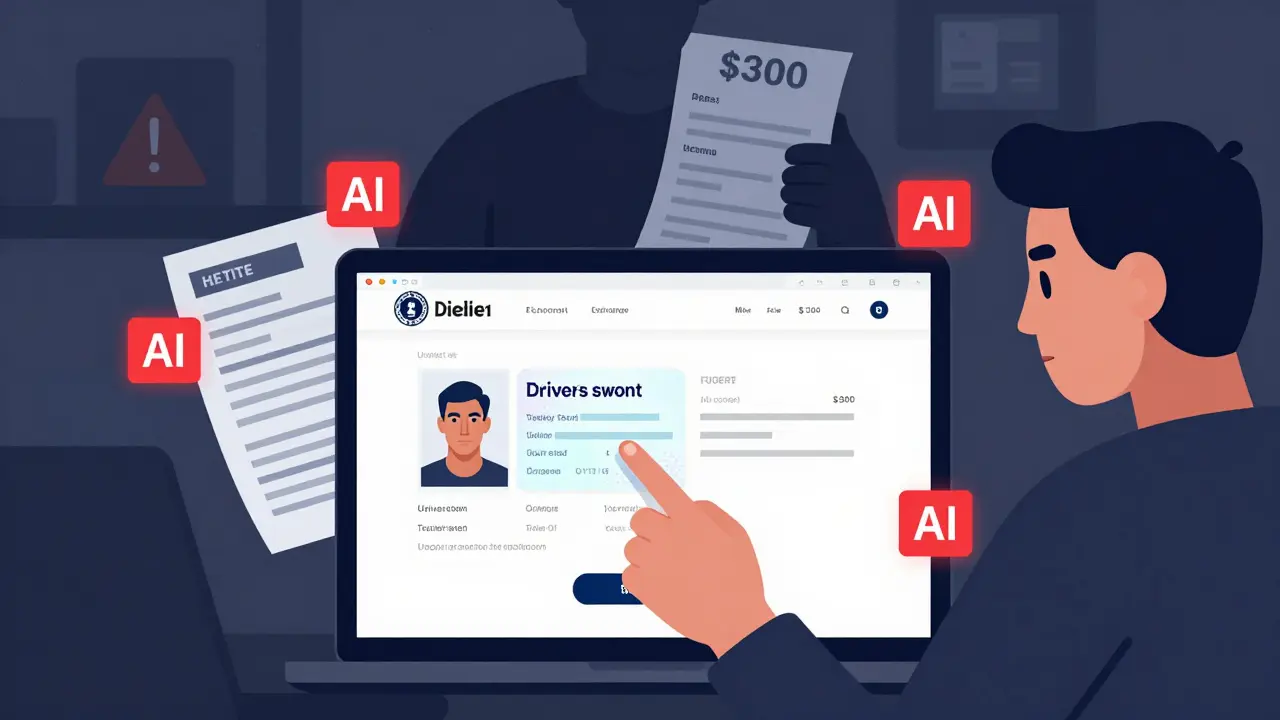
Fraudsters don’t just upload a bad ID. They build full identity packages. That means a fake government-issued ID, a counterfeit utility bill with a real address, and sometimes even a synthetic video that blinks and speaks like a real person. These aren’t cheap knockoffs-they’re made with AI tools sold on dark web marketplaces for $15 to $500. Some even include voice clones to pass voice verification steps. The goal? Bypass Know Your Customer (KYC) and Anti-Money Laundering (AML) checks. Exchanges need these to comply with U.S. law. But not all platforms have the same defenses. Smaller exchanges with weak verification systems are the main targets. Fraudsters test their fake IDs there first, then move to bigger ones once they’ve passed the basic checks. Modern systems don’t just look at the photo. They check for inconsistencies: the lighting in the eyes doesn’t match the background, the font on the ID is off by a pixel, the watermark is missing in the infrared layer. AI tools now detect unnatural blinking patterns-real humans blink differently than algorithms generate. One exchange reported catching 1,200 fake IDs in a single month using these automated red flags.Federal Charges You Could Face
If you’re caught using forged documents to access a crypto exchange, you’re not looking at a fine. You’re looking at federal charges. The Department of Justice treats this as wire fraud, securities fraud, or money laundering-depending on what you did after getting in. - Wire fraud: Using electronic communication (like an exchange’s website) to commit fraud. Penalty: up to 20 years in prison per count. - Securities fraud: If you used fake identity to trade unregistered tokens or manipulate prices. Penalty: up to 20 years, plus fines. - Money laundering: If you moved crypto through the account to hide its origin. Penalty: up to 20 years, asset forfeiture, and mandatory restitution. These charges often stack. Prosecutors don’t pick one-they pile them on. Someone who used a fake ID to buy $200,000 in Bitcoin and then moved it to a mixer could face three counts. That’s 60 years in federal prison, not counting fines or asset seizure. The SEC and FinCEN work with the DOJ. If you’re flagged by an exchange, your case gets passed to federal agents. Your IP address, device fingerprint, and transaction history are all tracked. Even if you used a VPN, your real identity can still be uncovered through financial trails.Exchanges Aren’t Just Victims-They’re Liable Too
It’s not just the fraudster who gets punished. Exchanges that don’t properly verify users can be fined or shut down. Kraken paid $30 million to OFAC in 2022 for allowing transactions with sanctioned addresses. That wasn’t because they were cheating-they failed to stop others from cheating. Regulators now expect exchanges to use multi-layered verification: document analysis + biometric checks + external database matching + behavioral monitoring. If you skip even one layer, you’re at risk. The SEC doesn’t care if you’re a small platform. If you serve U.S. users, you’re subject to U.S. law. Platforms that ignore red flags-like multiple accounts using the same phone number or IP address-are seen as complicit. Defrauded users have sued exchanges for negligence. Courts are starting to rule that exchanges have a duty to protect users from fraud, not just report it after the fact.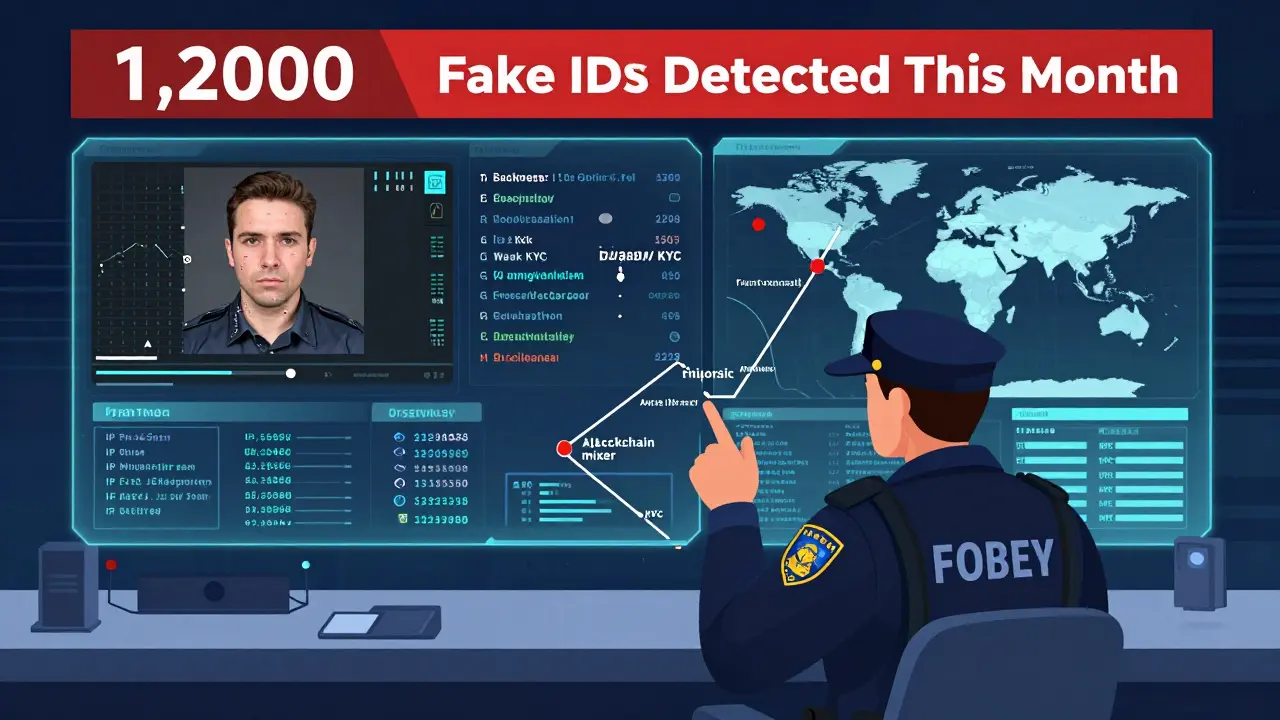
How Detection Systems Are Fighting Back
The tech side of this battle is moving fast. Five years ago, a fake ID with a good photo might have worked. Today, verification systems use AI trained on millions of real and fake documents. They don’t just look at the document-they analyze how it was scanned. - Light reflection analysis: Real ID cards reflect light in specific ways. AI detects if the reflection was digitally added. - Micro-pattern detection: Government IDs have tiny, invisible patterns printed with special ink. AI checks for their presence and alignment. - Behavioral biometrics: How you hold your phone, how fast you type, where you look during a video check-all of it is logged and compared to your past behavior. - External verification: Systems cross-check your address with public utility records, credit bureaus, and postal databases. If your fake bill doesn’t match the real utility records, it’s flagged instantly. Each time a new forgery method is discovered, it’s added to the system’s training data. Fraudsters are always trying new tricks, but the systems learn faster. What worked last month won’t work next month.Why Intent Matters More Than the Fake Document
Just having a fake ID isn’t enough to get you convicted. Prosecutors have to prove you knew it was fake and used it to commit fraud. That’s why most cases involve digital footprints: search history showing you bought fake IDs on dark web forums, messages asking how to bypass KYC, or transaction patterns that match known fraud rings. Defense lawyers often try to argue “I didn’t know it was fake.” But if you paid $200 for an ID that looked too perfect, or if you used the same document on three different exchanges, the court won’t buy it. The law assumes you knew what you were doing. In one 2024 case, a man used a forged passport to open accounts on five exchanges. He then moved $1.2 million in crypto to offshore wallets. He claimed he thought the documents were “legally obtained.” The judge didn’t buy it. He got 18 years.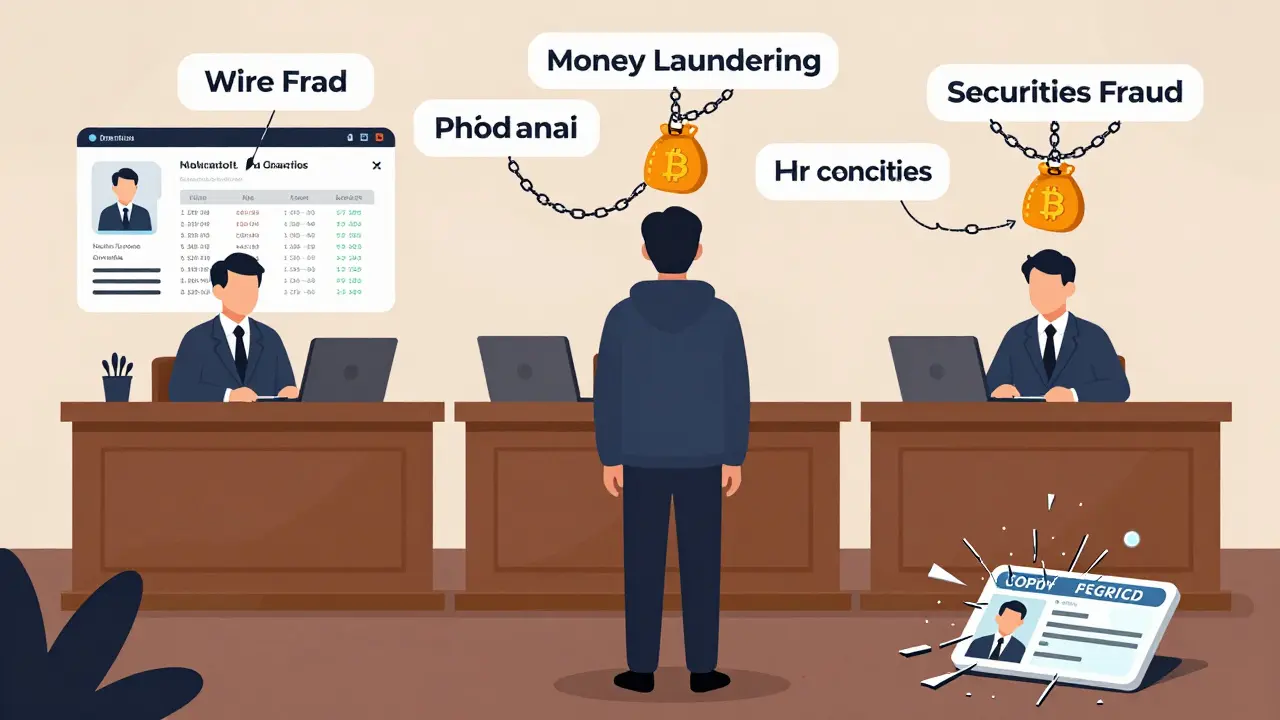
What Happens to Your Crypto If You’re Caught?
Your crypto doesn’t stay yours. Federal agencies can seize any assets linked to fraudulent activity-even if you didn’t spend it. That includes wallets, exchange accounts, and even crypto held in cold storage if it’s tied to your identity. Asset forfeiture is automatic in federal fraud cases. The government doesn’t need to convict you first-they just need to prove the assets were used in a crime. If your fake ID opened the account, the crypto inside is fair game. Some people think they can hide crypto in decentralized wallets. But if you ever linked your real phone number, email, or bank account to that wallet-even once-the trail leads back. Blockchain analysis firms work with the FBI. They don’t need your password. They just need your transaction history.The Bigger Picture: Why This Is Getting Worse
As crypto becomes more mainstream, fraudsters see it as a goldmine. The lack of physical oversight makes it feel like a loophole. But regulators are catching up fast. The U.S. is leading global efforts to standardize KYC rules. The EU’s MiCA regulation and the FATF’s travel rule are pushing every exchange worldwide to tighten verification. In 2025, the DOJ launched a new task force focused solely on crypto identity fraud. They’re working with banks, exchanges, and AI developers to build a shared database of known fraudulent documents. Within two years, any fake ID uploaded to a major exchange will be flagged against this database-even if it’s never been used before. The message is clear: if you’re trying to cheat the system, you’re not just risking your money. You’re risking your freedom.What You Should Do Instead
If you can’t pass KYC, don’t fake it. There are legal alternatives: - Use a licensed exchange that supports non-U.S. verification if you’re outside the U.S. - Apply for a real ID if yours is expired or lost-most states offer expedited services. - Use a crypto wallet that doesn’t require identity verification for small amounts (under $200 in some cases). - Wait for regulated platforms that support decentralized identity (DID) systems coming in 2026. There’s no shortcut that doesn’t come with a prison sentence. The system is designed to stop you. And it’s getting better every day.Can I get in trouble for using a fake ID on a crypto exchange even if I didn’t steal money?
Yes. You don’t need to steal money to be charged. Simply using a forged document to bypass KYC checks is enough for federal wire fraud charges. Prosecutors only need to prove you knowingly used a fake document to gain access. Even if you just opened the account and never traded, you’re still violating federal law.
What happens if I use a fake ID but the exchange doesn’t catch me?
If you’re never caught, nothing happens-on paper. But the risk never goes away. Your transaction history is stored forever on the blockchain. If you later move funds to a regulated exchange, or if you’re investigated for another crime, your past fraud can be uncovered. Many people get caught years later during unrelated investigations.
Can a crypto exchange be sued if they let someone use a fake ID?
Yes. If an exchange fails to follow basic KYC standards and someone loses money because of fraud on their platform, users can sue for negligence. Courts are increasingly holding exchanges responsible for protecting users. The Kraken $30 million settlement in 2022 is a clear warning: compliance isn’t optional.
Are AI-generated fake IDs harder to detect than real ones?
No-they’re easier to detect. AI-generated documents leave behind digital fingerprints: unnatural lighting, inconsistent shadows, pixel-level artifacts. Modern systems are trained to spot these exact flaws. The more advanced the forgery, the more likely it is to be flagged. Human-made fakes used to slip through. Now, AI fakes are the easiest to catch.
Can I avoid jail if I cooperate with authorities after being caught?
Possibly. If you’re a low-level participant and you provide useful information about larger fraud rings, prosecutors may reduce your sentence. But if you were the one who created or sold the fake IDs, or if you organized the operation, cooperation won’t save you. The DOJ treats masterminds and tech providers as primary targets.
Is it legal to use a fake ID on a crypto exchange outside the U.S.?
No-if you’re a U.S. citizen or resident, U.S. law still applies. Even if you’re in another country, using fake documents to access a platform that serves U.S. users violates federal law. Many non-U.S. exchanges now screen for U.S. IP addresses and block them. Trying to bypass that is still a federal crime.
What if I didn’t know the document was fake?
It’s not a defense. Courts don’t accept ignorance if the document was obviously fake-like a driver’s license with a blurry photo, wrong font, or missing hologram. If you paid for it, you’re assumed to have known. Even if you bought it from someone else, the law expects you to verify its authenticity before using it for financial access.
Can I get my crypto back if I’m convicted of document forgery?
Almost never. Once the government seizes crypto tied to fraud, it’s forfeited permanently. Even if you return the funds, the asset seizure is separate from your criminal case. The government doesn’t return property used in a federal crime, regardless of your cooperation or remorse.
sathish kumar
January 7, 2026 AT 07:30Utilizing forged documentation to circumvent Know Your Customer (KYC) protocols constitutes a flagrant violation of federal statutes, particularly under the purview of wire fraud and money laundering statutes. The legal ramifications are not merely punitive; they are existential for the individual involved. The Department of Justice has demonstrated unequivocal resolve in prosecuting such offenses, with precedent-setting sentences exceeding fifteen years in aggregate. Moreover, the convergence of AI-driven forensic analysis and inter-agency data-sharing platforms renders evasion increasingly untenable. It is not a matter of if, but when, digital footprints are traced back to their origin. The notion of plausible deniability is legally indefensible when transactional patterns, device fingerprints, and behavioral biometrics align in corroborative fashion. Compliance is not optional-it is the sole permissible pathway.
Rahul Sharma
January 8, 2026 AT 18:20Bro, this is wild but also super important 🚨. I saw a guy on Reddit try to use a fake ID on a small exchange and got flagged within 10 minutes. The system noticed his eyes didn't blink right-like, AI knows if you're a bot or not. And now he's got a federal case open. Don't risk it. Just get a real ID. Some states give you same-day renewals. Seriously, it's cheaper than a lawyer.
Gideon Kavali
January 10, 2026 AT 08:14THIS IS WHY AMERICA IS STILL THE LEADER IN FINANCIAL INTEGRITY!! 🇺🇸 These fraudsters think they're slick? They're not-they're sitting ducks with a Wi-Fi signal. The DOJ, FinCEN, and the SEC are working in perfect sync now-no more loopholes, no more excuses. Every fake ID uploaded gets logged, tagged, and fed into a national database that grows smarter every second. And don't even think about hiding behind a VPN-you're still a U.S. citizen, and U.S. law follows you like a shadow. 20 years per count? That's a gift. If I were a judge, I'd stack them till they hit 100. This isn't crime-it's treason against the financial system.
Krista Hoefle
January 11, 2026 AT 16:10Jessie X
January 13, 2026 AT 12:18the real issue here is that exchanges are making it so hard to use crypto legally that people feel pushed to cheat. i get that fraud is bad but the system feels designed to exclude regular folks. i tried to verify my id on three platforms and got rejected because my utility bill was from a different county. no one helped me fix it. so yeah, maybe some people turn to fakes because the alternatives feel impossible.
Frank Heili
January 13, 2026 AT 18:13Let me break this down simply: AI doesn’t just check the ID-it checks how you held your phone while scanning it, how long you stared at the screen, even the pressure of your thumb on the camera. A fake ID made with the latest AI tools has more digital flaws than a hand-drawn one from 2015. Why? Because real documents have tiny, random imperfections-ink smudges, paper grain, lighting variations-that AI can’t perfectly replicate. The systems are trained on millions of real and fake examples. So the more advanced your forgery, the more it screams ‘FAKE’ to the algorithm. The days of slipping through with a good Photoshop job are over. Even the best forgers are getting caught within hours now. And yes, the crypto you bought? Gone. Seized. Forever. No appeals, no refunds.
Jacob Clark
January 15, 2026 AT 17:19Ohhh, so NOW you care about KYC compliance??!! 😭 I remember when everyone was bragging about how "crypto is unregulated" and "banks are obsolete"-and now you’re crying because the system actually WORKS?!! This isn’t freedom-it’s a trap! You built a castle out of sand and now you’re mad when the tide comes in?!! The moment you decided to use a platform that serves Americans, you agreed to follow American law-whether you liked it or not. And guess what? The government doesn’t care if you "didn’t know"-they care that you tried to outsmart them. You wanted anonymity? Too bad. The blockchain remembers everything. And the feds have the keys. So now you get to choose between prison… or a lifetime of explaining why you’re on the OFAC list. 🤡