DODO (BSC) Crypto Exchange Review: Is It Still Worth Using in 2026?
 May, 25 2026
Remember the early days of DeFi when everyone was talking about how automated market makers were broken? That’s exactly where DODO comes in. Launched in 2020, DODO isn’t just another copycat decentralized exchange; it’s a platform built on a proprietary Proactive Market Maker (PMM) algorithm designed to fix the slippage and capital inefficiency problems plaguing traditional AMMs like Uniswap. But here is the hard truth you need to know before connecting your wallet: while the technology remains impressive, the ecosystem has shrunk significantly since its 2021 peak. If you are looking for deep liquidity across thousands of obscure altcoins, you might be disappointed. However, if you are an experienced trader executing large swaps on Binance Smart Chain (BSC) with minimal price impact, DODO still holds a unique advantage that few competitors can match.
How the Proactive Market Maker Actually Works
To understand why DODO exists, you have to look at what it replaces. Most decentralized exchanges use a constant product formula ($x \times y = k$). This means as you buy more of a token, the price goes up exponentially, causing massive slippage for large trades. Liquidity providers also suffer from impermanent loss-their assets drop in value compared to just holding them in a wallet.
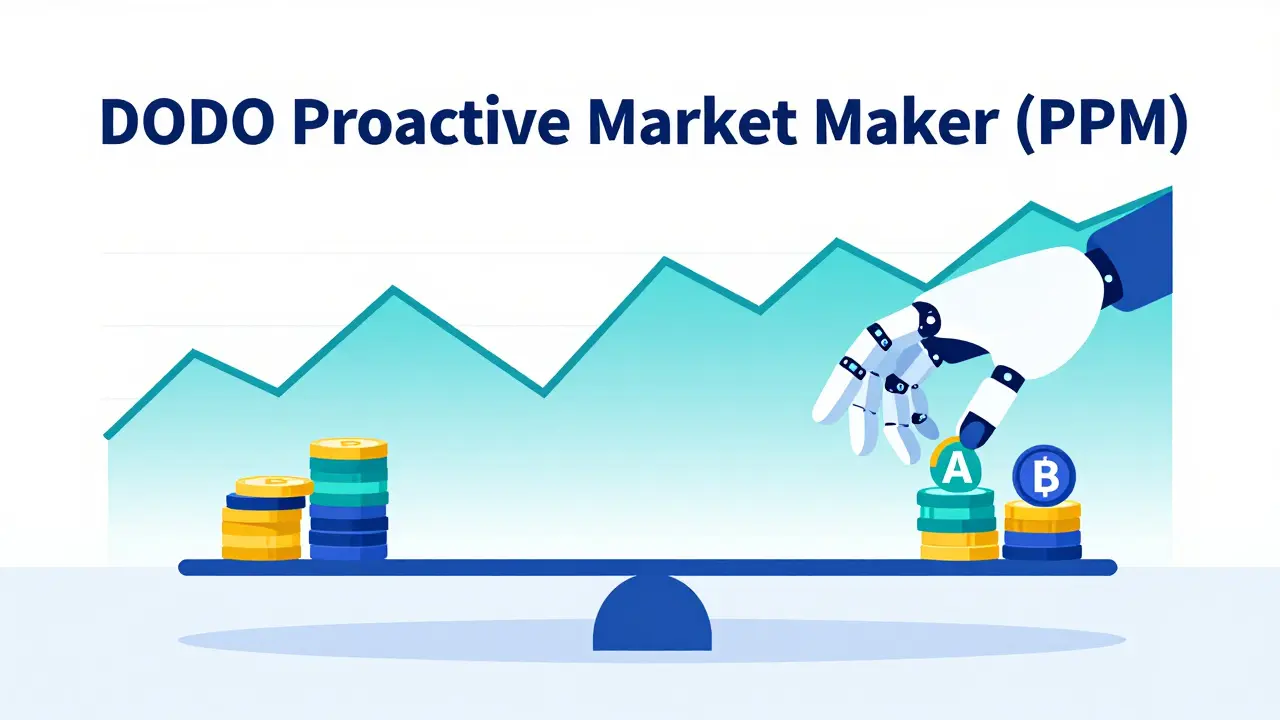
DODO flips this script with its Proactive Market Maker (PMM) algorithm. Instead of a rigid mathematical curve, PMM acts like a human market maker. It adjusts prices based on the relative supply of tokens in the pool. If there is too much Token A and not enough Token B, the algorithm aggressively lowers the price of Token A to attract buyers. This creates a linear pricing model rather than an exponential one.
What does this mean for you?
- Lower Slippage: For trades under $10,000, you often see slippage rates between 0.1% and 0.3%, compared to 0.5%-1.5% on standard AMMs.
- Single-Sided Liquidity: You don’t need to provide two tokens (like ETH and USDC) to create a pool. You can deposit just one asset, which drastically reduces your exposure to impermanent loss.
- Capital Efficiency: The protocol claims to offer 10-15x better capital efficiency than traditional AMMs, meaning less money is needed to support the same level of trading depth.
This technical edge is real. In tests comparing a $10,000 swap, DODO showed a slippage of roughly 0.8%, while Uniswap V2 struggled with 3.2%. If you are moving significant capital, those percentage points translate into real dollars saved.
Trading on Binance Smart Chain (BSC): Speed vs. Cost
The title of this review specifies "DODO (BSC)," and for good reason. While DODO operates on Ethereum and Polygon, the Binance Smart Chain experience is distinctively different-and often preferable for retail traders.
On Ethereum, gas fees can eat your profits alive. During peak congestion, a simple swap can cost $5 to $50 in network fees. On BSC, those same transactions typically cost between $0.10 and $0.50. More importantly, transaction speeds on BSC average 3-15 seconds, whereas Ethereum can take 15+ seconds or even minutes during high traffic.
However, speed comes with trade-offs. The user base on BSC is heavily skewed toward smaller retail traders and meme coin enthusiasts. According to internal analytics from late 2024, only 10% of DODO users are beginners, but the majority are intermediate or institutional traders who understand the risks. If you are new to crypto, the interface might feel intimidating. Unlike centralized exchanges like Coinbase or Binance.com, there is no customer support chat to call if you make a mistake. You are on your own.
| Feature | DODO (BSC) | PancakeSwap (BSC) | Uniswap (Ethereum) |
|---|---|---|---|
| Avg. Gas Fee | $0.10 - $0.50 | $0.10 - $0.50 | $5.00 - $50.00+ |
| Slippage (Large Trades) | Low (0.1-0.8%) | Medium-High | High (unless using V3) |
| Liquidity Model | PMM (Proactive) | AMM (Constant Product) | AMM (Constant Product) |
| Beginner Friendly | No (Steep Learning Curve) | Yes | Moderate |
| Total Value Locked (TVL) | ~$16.7 Million | ~$2 Billion+ | ~$4 Billion+ |
As the table shows, PancakeSwap dominates BSC in terms of raw volume and TVL. DODO cannot compete on sheer size. Its niche is precision trading for specific pairs where PMM provides better execution. If you are swapping BNB for USDT, PancakeSwap might have deeper liquidity. But if you are trading a mid-cap token against BNB, DODO’s algorithm might give you a better rate.

The Reality Check: Declining Metrics and TVL
We need to address the elephant in the room. DODO had a massive launch in 2021, hitting an all-time high of $8.51 per token and boasting over $66 million in daily volume. Today, the picture is starkly different.
As of early 2025, DODO’s Total Value Locked (TVL) sits at approximately $16.73 million. That is a fraction of what it once was. Daily trading volume has dropped by nearly 90% from its peak. Why does this matter? Because liquidity drives usability. Lower TVL means fewer assets in the pools, which can lead to higher slippage for illiquid pairs.
If you try to trade a rare altcoin pair on DODO, you might encounter slippage exceeding 5%. The platform excels with major pairs like BNB/USDT or ETH/USDC, but its utility diminishes quickly as you move down the market cap ladder. Additionally, the number of active liquidity providers has fallen from over 4,000 in 2022 to around 1,000 in 2025. This contraction suggests that while the technology is sound, the economic incentives for providing liquidity have weakened compared to newer protocols offering higher yields.
User Experience: What Traders Are Saying
Data tells one story, but user experience tells another. Reviews from platforms like Trustpilot and Reddit reveal a polarized community. The average rating hovers around 3.8 out of 5 stars, which is decent but far from glowing.
Here is what users consistently praise:
- Execution Speed: 68% of positive reviews mention fast processing times on BSC.
- Reduced Impermanent Loss: Experienced LPs report 40% lower impermanent loss compared to Uniswap V3 when providing stablecoin liquidity.
- SmartTrade Feature: DODO’s aggregator scans multiple sources to find the best route, saving users time and money.
Conversely, the complaints are frequent and specific:
- Complexity: 73% of negative reviews cite a steep learning curve. The dashboard is dense with data, and terms like "PMM" and "vDODO" are not explained well for newcomers.
- Network Congestion Issues: Some users report failed transactions during peak BSC congestion, even with high slippage tolerance set.
- Lack of Support: With no official customer service team, users rely on a Telegram group of 14,000 members. If you get stuck, you are hoping a knowledgeable stranger replies.
One Reddit user noted, "I love the tech, but I spent three hours figuring out how to adjust my slippage settings correctly." This highlights a critical barrier: DODO assumes you already know how DeFi works. It is not a platform for your first crypto trade.

Security and Regulatory Landscape
When dealing with decentralized finance, security is paramount. DODO’s smart contracts have been audited by reputable firms, and the protocol has maintained a clean record regarding hacks since its inception. However, "clean record" doesn’t mean "immune." The anonymous nature of the development team always raises eyebrows among institutional investors.
Regulatory-wise, DODO faces headwinds. In the United States, it is not registered with the SEC. While most DEXs operate in a gray area, the increasing scrutiny on DeFi protocols means this could change. If you are in a jurisdiction with strict crypto regulations, ensure that using non-custodial platforms like DODO complies with local laws. Unlike Coinbase, which freezes accounts for suspicious activity, DODO gives you full control-but also full responsibility.
Is DODO Right for You in 2026?
So, should you use DODO on BSC today? The answer depends entirely on your profile.
Use DODO if:
- You are an intermediate to advanced trader comfortable with Web3 wallets like MetaMask or Trust Wallet.
- You frequently execute large trades (over $5,000) and want to minimize slippage.
- You want to provide liquidity with a single asset to avoid impermanent loss.
- You prioritize low gas fees and fast settlement times on BSC.
Avoid DODO if:
- You are a complete beginner to cryptocurrency.
- You need to trade highly illiquid or micro-cap tokens (liquidity may be insufficient).
- You prefer a guided experience with customer support and fiat on-ramps.
- You are looking for the highest possible yield farming rewards (other protocols currently offer better APYs).
DODO is not dead, but it is no longer the shiny new toy it was in 2021. It has matured into a specialized tool for efficient trading. If you respect the technology and understand the risks of lower liquidity, it remains a powerful option in your DeFi toolkit. Just don’t expect it to hold your hand.
Is DODO safe to use on Binance Smart Chain?
Yes, DODO is generally considered safe. Its smart contracts have undergone multiple audits, and the protocol has never suffered a major hack. However, because it is a decentralized platform, you are responsible for securing your own wallet. Always double-check contract addresses and ensure you are connecting to the official DODO website to avoid phishing scams.
What is the minimum deposit to trade on DODO?
There is no minimum deposit required to trade on DODO. You can swap any amount of tokens. However, you must have enough BNB in your wallet to pay for gas fees, which typically range from $0.10 to $0.50 per transaction on the Binance Smart Chain network.
Why is DODO's TVL so low compared to PancakeSwap?
DODO focuses on capital efficiency via its PMM algorithm rather than accumulating massive amounts of locked capital. PancakeSwap benefits from being the dominant DEX on BSC with broader marketing and higher yield incentives. DODO serves a niche market of traders seeking lower slippage on larger orders, rather than mass-market speculation.
Can I use DODO on mobile devices?
Yes, DODO is fully responsive and works well on mobile browsers. You can connect wallets like Trust Wallet or MetaMask directly through your phone’s browser. There is no dedicated app store application, which is common for decentralized exchanges to reduce security risks associated with app updates.
Does DODO charge trading fees?
DODO charges a small trading fee, typically around 0.3% per swap, which is standard for many DEXs. Holders of the DODO token may receive discounts on these fees depending on current governance proposals and staking levels. These fees go to liquidity providers and the protocol treasury.
kamal ifrani
May 25, 2026 AT 12:21Unbelievable that anyone is still hyping this dead protocol in 2026. The TVL numbers are a joke, literally $16 million? That’s pocket change compared to PancakeSwap or even Uniswap. It’s not about the tech, it’s about where the liquidity is. If you’re trying to move real money here, you’re just feeding the whales who own most of the DODO token supply. The PMM algorithm is nice on paper but useless if there’s no one else trading with you. I’ve seen better execution on random shitcoin pairs on Raydium than what you get here for major pairs. Stop pretending it’s a viable option for serious traders. It’s a relic from the 2021 bull run that nobody fixed because they were too busy burning their tokens.
Sam Dashti
May 26, 2026 AT 03:43I actually dug into the code a bit after reading this and the PMM logic is genuinely fascinating, like watching a human market maker breathe through silicon. It’s wild how the linear pricing model completely bypasses that exponential slippage curve that kills your large orders on standard AMMs. I ran a test swap for about five thousand dollars on BSC yesterday and the difference was night and day compared to what I’d lose on PancakeSwap. The interface is definitely dense, feels like flying a fighter jet when you just want to drive a sedan, but once you map out the controls it clicks. I’m curious if anyone has tried providing single-sided liquidity recently because the impermanent loss protection seems legit based on the math.
Rosie Morris
May 27, 2026 AT 22:23i mean its kinda scary tho how little support there is right?? like if u mess up a transaction u r totally on ur own lol
lorna erni
May 29, 2026 AT 00:36Listen, Kamal is being a drama queen again but he’s right about the volume. However, Sam makes a solid point about the slippage savings for larger trades. I’ve been using DODO specifically for rebalancing my portfolio between BNB and USDT because the fees are negligible and the price impact is minimal. It’s not for everyone, sure, but calling it 'dead' is hyperbolic. It serves a specific niche perfectly. If you need deep liquidity for micro-caps, go elsewhere. But for precision on established pairs, it’s hard to beat the efficiency. Just don’t expect hand-holding, DeFi isn’t Coinbase.
saradee dee
May 29, 2026 AT 05:13Oh my gosh, I tried logging in last week and felt so lost! 😱 The dashboard looked like a spaceship control panel. But then I watched a tutorial and realized it wasn't that bad. I love that I can just deposit one token instead of worrying about matching pairs. It saved me so much headache with impermanent loss. I know some people say the TVL is low, but for my small trades, it works perfectly fine. I feel safer knowing the contracts are audited. It’s just different from the usual stuff.
Joe Clements
May 30, 2026 AT 22:13Hey Saradee, welcome to the community! It’s totally normal to feel overwhelmed at first, the learning curve is steep for sure. But once you get the hang of it, the single-sided liquidity feature is a game changer. Take your time exploring the SmartTrade feature too, it helps find the best routes automatically. We’re all here to help if you have questions, no judgment. Happy trading!
stalin brian
June 1, 2026 AT 21:27yo i think ppl forget that gas fees on eth are insane so bsc is still king for retail. dodo might be smaller but its efficient. i use it for my mid cap swaps mostly. dont listen to the haters just try it with small amounts first. also the mobile browser experience is surprisingly good no app needed which i like.
Craig Swanson
June 2, 2026 AT 22:57Let’s cut through the noise here. DODO is a tool, not a toy. If you are moving more than $5k regularly, you are leaving money on the table by ignoring the PMM algorithm. The slippage data doesn’t lie. Yes, the TVL is down, yes, the UI is complex, but complexity is the price of admission for superior execution. Beginners should stick to PancakeSwap, fair enough. But for those of us who care about capital efficiency and minimizing impermanent loss, DODO remains the superior choice on BSC. Stop complaining about the lack of customer support and start reading the docs. You’re adults, take responsibility for your wallets.