Double-Signing and Downtime Slashing: A Validator’s Survival Guide
 Jun, 26 2026
You lock up your tokens. You run the node. You expect rewards. Then, overnight, a chunk of your stake vanishes. No warning. No appeal. Just gone.
This is slashing, the protocol-enforced penalty mechanism in Proof-of-Stake (PoS) blockchain networks designed to confiscate staked tokens when validators violate consensus rules. It is not a bug; it is a feature. It exists to keep bad actors out and lazy operators honest. But here is the catch: you do not have to be malicious to get slashed. A network glitch, a misconfigured backup server, or even a momentary power outage can trigger these penalties.
Understanding validator slashing conditions is no longer optional for anyone running nodes on major networks like Ethereum, Cosmos, or Polkadot. As staking matures into a multi-billion dollar industry, the margin for error shrinks. This guide breaks down exactly what triggers slashing, how different chains handle it, and most importantly, how you can protect your capital from accidental destruction.
What Actually Triggers a Slash?
At its core, slashing targets two specific behaviors: double-signing and downtime (extended unavailability). These are the only two actions that consistently trigger automatic penalties across most Proof-of-Stake architectures.
Double-signing, also known as equivocation, happens when a validator signs two different blocks at the same height. Imagine you are a judge in a court case. If you issue two contradictory verdicts for the same trial simultaneously, the entire legal system collapses. In blockchain terms, this creates a fork-a split in reality where the chain disagrees on which transaction history is true. Because this threatens the fundamental integrity of the ledger, double-signing carries the heaviest penalties.
Downtime is less catastrophic but still dangerous. Validators must attest to blocks regularly to keep the network moving. If your node goes offline for too long-missing more attestations than the protocol allows-you are penalized. The logic is simple: if you are not contributing to security, you should not earn rewards, and you should pay for the risk you pose to network availability.
| Network | Double-Signing Penalty | Downtime Penalty | Fate of Slashed Tokens |
|---|---|---|---|
| Ethereum | 1% - 50% of stake (variable) | Proportional to missed attestations | Burned permanently |
| Cosmos (ATOM) | 5% of total stake | ~0.01% per epoch (customizable) | Burned permanently |
| Polkadot (DOT) | Up to 100% for coordinated attacks | Graduated scale (0.01%+) | Sent to Treasury (recoverable via governance) |
| BNB Chain | 200 BNB + 30-day jail | 10 BNB + 2-day jail | Removed from validator set |
The Hidden Danger: Accidental Double-Signing
Most people assume double-signing requires intent. They imagine a validator trying to attack the network for profit. While that is possible, the vast majority of double-signing incidents are accidental. They stem from poor infrastructure design.
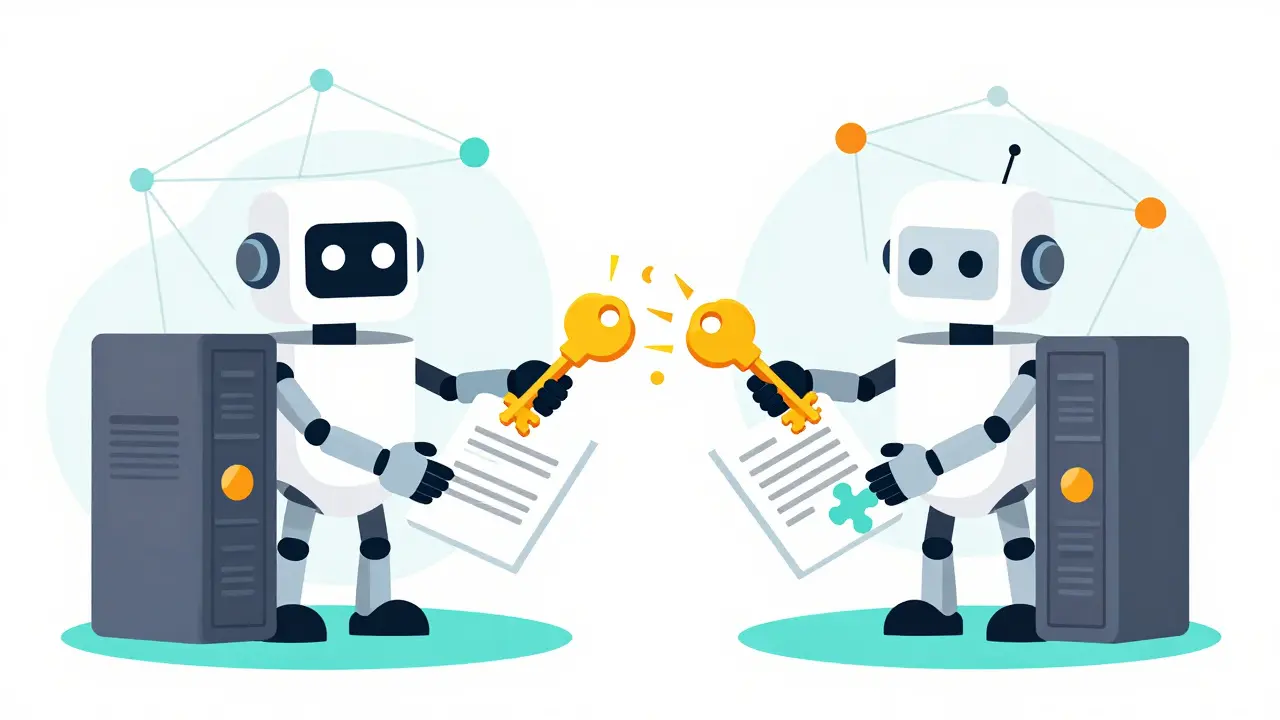
Consider this common scenario: You want high availability. So, you set up a primary node and a backup node. Both nodes need access to your private key to sign blocks. If your primary node crashes, the backup takes over. Sounds smart, right? Here is where it goes wrong.
If your failover script is slow, or if there is a network latency issue, both nodes might think they are the active one. For a few seconds, both nodes hold the private key and attempt to sign the next block. The network sees two valid signatures for the same slot. Boom. You have double-signed. The protocol does not care about your intentions. It only cares about the cryptographic evidence.
This is why key management is the critical process of securing and controlling access to validator private keys to prevent unauthorized or simultaneous usage is the single most important aspect of running a node. Without proper safeguards, your quest for uptime becomes your path to ruin.
How Different Chains Handle the Punishment
Not all chains slash the same way. The philosophy behind each network’s penalty structure reveals a lot about its governance model and economic design.
Ethereum takes a hardline approach. Slashed ETH is burned. It disappears forever. This creates deflationary pressure and sends a strong message: code is law. There is no committee to appeal to. If you mess up, you lose everything associated with that offense. The severity varies based on the context, ranging from small fractions for minor errors to up to 50% for severe equivocation events.
Cosmos SDK-based chains like ATOM use a standardized but customizable model. Double-signing usually results in a 5% loss of your total stake and "tombstoning," which removes you from the validator set indefinitely. You cannot come back unless you start a new validator with a new key. Downtime penalties are much smaller, often around 0.01%, but they add up quickly if your infrastructure is unreliable.
Polkadot offers a unique twist. Slashed DOT tokens are sent to the Treasury, not burned. This means that if a slashing event was deemed unfair or erroneous, the community could theoretically vote to return those funds. This adds a layer of human oversight to an otherwise algorithmic process, reflecting Polkadot’s emphasis on flexible governance.
BNB Chain uses fixed amounts rather than percentages. You lose 200 BNB for double-signing and 10 BNB for downtime. This creates a different risk profile. For a large validator with millions in stake, 200 BNB is a rounding error. For a small validator, it might be devastating. Fixed penalties provide certainty but lack proportionality.
Protecting Your Stake: Practical Strategies
You cannot control the market price of tokens, but you can control your exposure to slashing. Here is how professional validators mitigate these risks.
- Use Single-Key Access Controls: Never allow two nodes to access the same private key simultaneously. Solutions like Coinbase Cloud Double Signing Protection provide a technical service that locks access to private keys so that a backup node cannot sign if the primary node is already using the key solve this by ensuring only one node holds the key at any given time. When the primary fails, the key is explicitly released to the backup.
- Implement Proper Failover Logic: Your backup node should not just "try" to connect. It needs a robust heartbeat check. If the primary node stops sending heartbeats for a defined period (e.g., 60 seconds), the backup should take over. Avoid overlapping windows.
- Monitor Network Latency: High latency can cause your node to miss deadlines, leading to downtime slashes. Use low-latency connections and consider colocating your hardware near other validators to reduce propagation time.
- Keep Software Updated: Bugs in client software are a leading cause of unintentional double-signing. Always test updates on a testnet before applying them to mainnet. Follow official upgrade schedules meticulously.
- Diversify Your Infrastructure: Do not run your validator on shared hosting providers that are prone to widespread outages. Use diverse cloud providers or bare-metal servers to avoid correlated failures.
The Impact on Delegators
If you are delegating your tokens to a validator, you share their fate. When a validator gets slashed, the penalty is deducted from their total stake. Since your delegation is part of that stake, your balance drops proportionally.
This is often overlooked by retail investors. Many assume that because they did not run the node, they are safe. They are not. A validator’s incompetence or malice directly impacts your returns. Before delegating, ask yourself: Does this validator have a track record of uptime? Do they use double-signing protection tools? Are they transparent about their infrastructure?
Data from Q2 2023 showed that 32% of negative reviews for staking services mentioned unexpected slashing impacts. Delegators were blindsided by losses they didn’t understand. Education is your best defense. Know who you are trusting with your capital.
Future Trends in Slashing Mechanics
The current binary nature of slashing-either you follow the rules or you lose money-is evolving. Developers recognize that punishing unintentional errors too harshly discourages participation.
Ethereum’s upcoming upgrades aim to refine slashing conditions to reduce false positives. Cosmos chains are exploring dynamic penalty adjustments based on network health. If the network is under stress, downtime penalties might be temporarily relaxed. If the network is stable, penalties might increase to deter laziness.
We are also seeing the rise of "insurance" products and specialized monitoring services. Institutional validators now allocate 3-5% of their operational budgets specifically to slashing prevention technologies. This suggests that running a validator is becoming less about coding skills and more about enterprise-grade risk management.
As cross-chain protocols grow, we may see standardized slashing frameworks that work across multiple ecosystems. Until then, every chain remains its own jurisdiction, with its own laws and punishments. Stay informed, stay vigilant, and never underestimate the power of a misplaced signature.
What is the difference between double-signing and downtime slashing?
Double-signing occurs when a validator signs two conflicting blocks at the same height, threatening consensus integrity. It carries heavy penalties (often 5% or more). Downtime slashing occurs when a validator misses too many attestation opportunities due to being offline. Penalties are usually smaller but accumulate over time. Double-signing is considered a critical failure; downtime is considered a reliability failure.
Can I recover tokens after being slashed?
On most networks like Ethereum and Cosmos, slashed tokens are burned permanently and cannot be recovered. On Polkadot, slashed tokens go to the Treasury, meaning governance could theoretically vote to return them, though this is rare. On BNB Chain, tokens are removed from the validator set but not necessarily burned, depending on specific contract implementations. Generally, assume slashed funds are lost forever.
Why do validators accidentally double-sign?
Accidental double-signing usually happens due to improper high-availability setups. If a primary node and a backup node both have access to the same private key and activate simultaneously during a failover event, they will both sign the next block. Network latency, NAT traversal issues, or software bugs can also cause duplicate attestations. Using key-locking services prevents this by ensuring only one node accesses the key at a time.
Do delegators get slashed if their validator makes a mistake?
Yes. Slashing penalties are applied to the validator’s total stake, which includes delegated tokens. Therefore, delegators suffer proportional losses. If a validator loses 5% of their stake due to double-signing, all delegators also lose 5% of their delegated amount. This incentivizes delegators to choose reliable, well-configured validators.
Is slashing the same on all Proof-of-Stake networks?
No. Each network defines its own slashing parameters. Ethereum burns slashed ETH and has variable penalties. Cosmos uses a fixed 5% for double-signing and burns tokens. Polkadot sends slashed DOT to the Treasury. BNB Chain uses fixed token amounts (e.g., 200 BNB). Always check the specific documentation for the chain you are validating on.
Jon Milton
June 27, 2026 AT 07:31The philosophical implication of 'code is law' here is terrifyingly absolute. We are essentially building a legal system that has no concept of mercy or context, only binary truth. It reminds me of the rigid structures in ancient judicial systems where intent was irrelevant compared to the act itself. This creates a society of extreme caution rather than innovation because the penalty for error is existential. I worry this will stifle the very decentralization we seek by forcing everyone into corporate-grade infrastructure silos.
Routh Middaugh
June 27, 2026 AT 13:59Look; the table provided is incredibly useful!; however; one must consider the human element!; technology fails!; people fail!; and the network does not care!; it is brutal!; but necessary!; perhaps?; maybe not!; who knows!;
Carl Belgrave
June 28, 2026 AT 09:13This is exactly why American validators dominate the top spots. We have the best infrastructure, the most reliable power grids, and the engineers who actually know how to code without breaking things. You think you can run a node on some shared hosting in a basement and expect to compete? No way. The market rewards competence and punishes weakness. If you can't afford enterprise-grade redundancy, you don't deserve to be a validator. Simple as that. The slashing mechanisms are just the natural selection process kicking in to weed out the amateurs who drag down the network's integrity.
Daniel J. Cox
June 29, 2026 AT 02:39I've been running nodes since the early days and honestly the fear of double-signing keeps me up at night more than anything else 😬. The part about accidental double-signing due to failover scripts is so true. I once had a latency spike that made my backup think the primary was dead and for like 5 seconds both were trying to sign. Luckily I had that Coinbase protection mentioned. It’s wild how much money you can lose just from a bad script. Stay safe out there folks 🙏
Nicole Woessner
July 1, 2026 AT 00:11i really appreciate the breakdown on how delegators share the fate of the validator. it feels unfair sometimes because you put your trust in someone and they mess up but i guess that is the risk. the polkadot treasury option seems nice though having a chance to get funds back if it was an honest mistake feels more humane than just burning it forever. makes me want to look into chains with better governance recovery options before i stake more