Elk Finance (Polygon) Review: Cross-Chain Bridge or Overhyped DEX?
 May, 6 2026
Have you ever tried to move money from one blockchain to another and felt like you were solving a complex puzzle while paying high fees? That’s exactly the problem Elk Finance is a decentralized cryptocurrency platform designed to simplify cross-chain token transfers using its ElkNet bridge technology. Launched in 2021 by an anonymous team, Elk Finance positions itself as a user-friendly gateway between major networks like Ethereum, Polygon, and Solana. But does it actually deliver on that promise, or is it just another small player in the crowded DeFi space?
In this review, we’ll break down what Elk Finance really offers, how its Polygon-based exchange performs, and whether it’s worth your attention compared to giants like Uniswap or established bridges like Wormhole. We’ll look at the numbers, the risks, and the real-world experience of using the platform.
What Is Elk Finance Really?
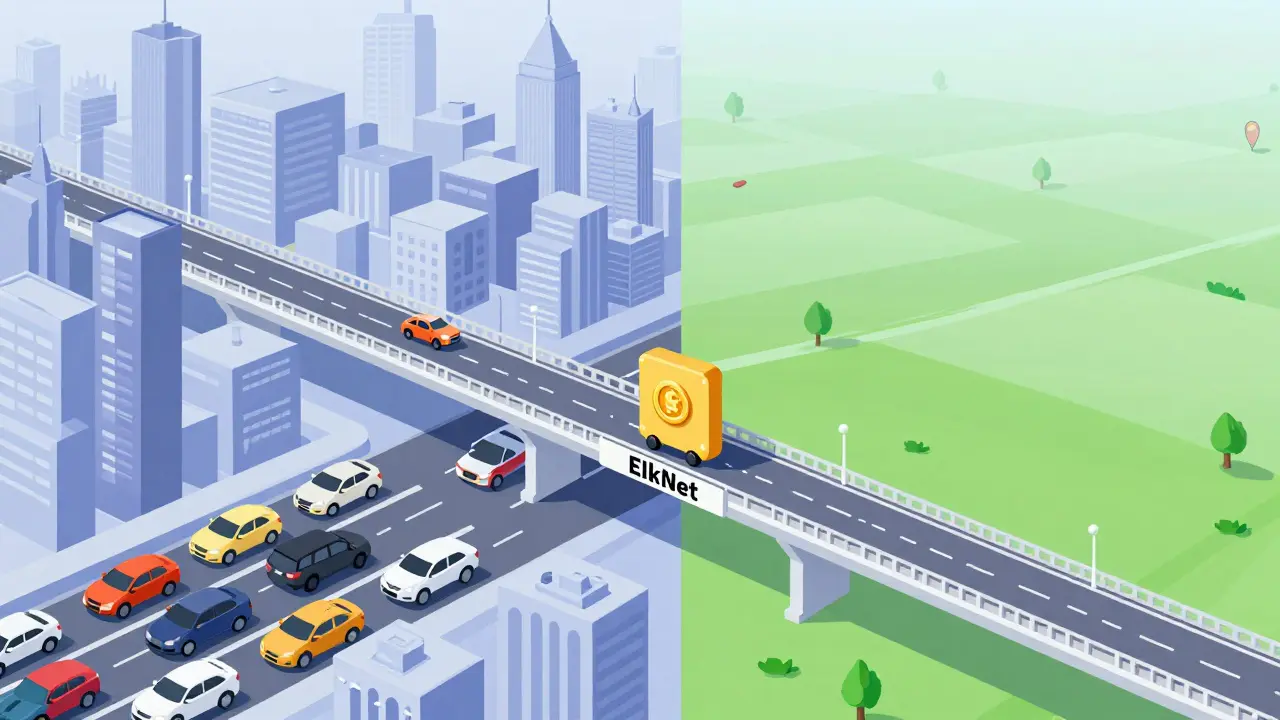
At its core, Elk Finance isn’t just a standard decentralized exchange (DEX). It’s primarily a cross-chain interoperability platform that uses its proprietary ElkNet bridge engine. The idea is simple: you shouldn’t have to jump through hoops to move assets between different blockchains. Elk claims to make this process as easy as “1, 2, 3.”
The platform supports 14 different blockchain networks, including heavy hitters like Ethereum, Polygon, Avalanche, Arbitrum, Optimism, Solana, and Binance Smart Chain. This multi-chain support is its biggest selling point. Unlike many DEXs that are stuck on one network, Elk allows you to swap tokens across these chains seamlessly.
However, there’s a catch. While the bridge functionality is robust, the actual trading volume on the exchange side is tiny. According to recent data, Elk Finance lists only 2 coins with 8 trading pairs. If you’re looking for a full-blown marketplace with hundreds of altcoins, you won’t find it here. Elk is specialized, not comprehensive.
The Numbers: Volume, Traffic, and Tokenomics
Let’s look at the hard data because promises don’t pay bills. As of late 2023, Elk Finance reported a 24-hour trading volume of approximately $19,930. To put that in perspective, top-tier DEXs like Uniswap process billions daily. This low volume indicates that Elk is still a niche platform with limited liquidity.
The native ELK token operates on multiple chains as an ERC-20, MATIC, and BEP-20 asset. Here’s a quick snapshot of its tokenomics:
- Total Supply: 42.42 million ELK
- Circulating Supply: ~11.99 million ELK
- Fully Diluted Valuation (FDV): ~$970,820
- Market Cap: ~$274,430
Technical indicators paint a cautious picture. The 14-day Relative Strength Index (RSI) sits around 40.23, suggesting the token is neither overbought nor oversold but lacks strong momentum. Price volatility over 30 days is about 8.31%, which is relatively moderate for crypto but doesn’t signal explosive growth. With only 43% of days showing price increases (“green days”), traders should expect choppy movement rather than steady gains.
How Does ElkNet Compare to Competitors?
The cross-chain bridge market is competitive. You’ve got players like Multichain (formerly Anyswap), Synapse Protocol, and Wormhole. So where does Elk fit in?
| Feature | Elk Finance | Uniswap | Wormhole |
|---|---|---|---|
| Primary Focus | Cross-chain bridging & DEX | Single-chain DEX | Cross-chain messaging |
| Supported Chains | 14 networks | Multiple (via integrations) | 30+ networks |
| Trading Pairs | 8 pairs | Thousands | N/A (Bridge only) |
| Regulatory Oversight | None | None | None |
| User Experience | Moderate learning curve | Highly optimized | Developer-focused |
Elk’s main advantage is its focus on user experience during network congestion. When Polygon gets busy, native bridges can get expensive and slow. Users have reported that ElkNet moves USDC from Polygon to Avalanche in about 7 minutes for under $1, which is significantly cheaper than native options during peak times. However, Elk lacks the massive liquidity and brand trust of Uniswap or the extensive chain coverage of Wormhole.
Risks and Regulatory Concerns
Here’s the part most reviews skip: regulatory risk. Elk Finance operates without any government oversight. FxVerify explicitly states that the company “does not appear to be regulated by any government authority.” In the world of crypto, this is common for DeFi platforms, but it means you have zero investor protection if something goes wrong.
Cross-chain bridges are also high-risk targets for hackers. The U.S. Treasury Department has identified them as “high-risk vectors for money laundering” following major exploits like the $625 million Wormhole hack in 2022. While Elk hasn’t suffered a massive breach, the lack of regulatory compliance and the inherent risks of smart contract vulnerabilities mean you should never deposit more than you can afford to lose.
Additionally, the platform’s web traffic metrics raise eyebrows. SimilarWeb data shows only 1,041 monthly visits, with a bounce rate of 49% and an average visit duration of nearly zero seconds. This suggests users might be encountering technical issues or finding the interface unintuitive, causing them to leave immediately.

User Experience and Practical Usage
If you decide to try Elk Finance, here’s what to expect. First, you need a compatible wallet like MetaMask, TrustWallet, or SafePal. Connect it to app.elk.finance, and you’ll see the cross-chain bridge interface.
The setup takes about 20-30 minutes for first-time users. You select your source chain, destination chain, and the amount to transfer. It sounds simple, but challenges arise during extreme network congestion. Elk’s documentation advises monitoring gas prices before initiating transfers, which adds a layer of complexity for beginners.
Community support is available via Telegram and Discord, with response times averaging 2-4 hours. This is decent for a small project but nowhere near the instant support you’d get from a centralized exchange. There are no comprehensive tutorials, so you’re largely on your own if things go sideways.
Is Elk Finance Worth It in 2026?
Elk Finance serves a specific niche: users who want cheap, fast cross-chain transfers between supported networks, particularly when Polygon is congested. If that’s your primary need, it’s a viable tool. However, if you’re looking for a full-featured DEX with deep liquidity, wide asset selection, or institutional-grade security, Elk falls short.
The platform’s future depends on expanding its chain integrations-recently adding Coinbase’s Base Layer 2-and improving its “Bridge-as-a-Service” infrastructure for developers. But until it sees significant user growth and addresses its low engagement metrics, it remains a speculative play rather than a mainstream solution.
For now, treat Elk Finance as a specialized utility, not a primary exchange. Use it for specific cross-chain tasks, keep your funds secure, and always verify transactions on block explorers before confirming.
Is Elk Finance safe to use?
Elk Finance is non-custodial, meaning you control your keys, but it lacks regulatory oversight and has experienced low user engagement metrics. While no major hacks have been reported, cross-chain bridges are high-risk targets. Always start with small amounts and verify smart contract audits before using large sums.
What is the ELK token used for?
The ELK token is the native governance and utility token of Elk Finance. It’s used for yield farming incentives, governance voting, and potentially fee discounts within the ecosystem. It operates on Ethereum, Polygon, and Binance Smart Chain.
How does ElkNet compare to other bridges?
ElkNet supports 14 chains and focuses on lower fees during network congestion, particularly on Polygon. Compared to competitors like Wormhole or Multichain, it has fewer supported chains but aims for a simpler user interface. However, it lacks the massive liquidity and brand recognition of larger protocols.
Why is Elk Finance’s trading volume so low?
Elk Finance lists only 2 coins with 8 trading pairs, making it a specialized rather than comprehensive DEX. Most users prefer larger platforms like Uniswap for trading due to deeper liquidity and wider asset selection. Elk’s primary strength is cross-chain bridging, not spot trading.
Can I connect MetaMask to Elk Finance?
Yes, Elk Finance supports MetaMask, TrustWallet, and SafePal. You simply connect your wallet to app.elk.finance and ensure it’s configured for the correct network (e.g., Polygon or Ethereum) before initiating transactions.
Is Elk Finance regulated?
No, Elk Finance is not regulated by any government authority. This is typical for decentralized finance (DeFi) platforms but means users have no legal recourse in case of fraud, bugs, or loss of funds. Always exercise caution and do your own research.