Equalizer Crypto Exchange Review: Flash Loans and DEX Mechanics
 Oct, 8 2026
Imagine you need $10 million in stablecoins to execute an arbitrage trade between two exchanges. Normally, you’d have to own that capital upfront. But what if you could borrow it instantly, use it, pay it back, and pocket the profit-all within a single blockchain transaction? That’s the core promise of Equalizer, a decentralized finance (DeFi) platform that blends flash lending capabilities with decentralized exchange (DEX) functionality. It’s not just another swap site; it’s a dual-function protocol designed for speed and efficiency.
But does it deliver on that promise? If you’re looking to maximize yield or execute complex trades without locking up massive amounts of capital, understanding how Equalizer works is crucial. This review breaks down its mechanics, tokenomics, and whether it fits your trading strategy in the current market landscape.
What Exactly Is Equalizer?
At its heart, Equalizer Finance is a dedicated flash loan platform that simultaneously offers decentralized exchange services. Unlike traditional banks or even some centralized crypto exchanges, it doesn’t require collateral for short-term loans. Instead, it relies on smart contract logic to ensure repayment happens within the same block.
The platform operates as a "next-generation quick loan marketplace." Think of it as a bridge connecting liquidity suppliers-people who park their tokens in pools-with borrowers who need temporary access to assets. These borrowers are often arbitrageurs, liquidators, or traders looking to capitalize on fleeting market movements. The key differentiator here is the integration of DEX features directly alongside the lending mechanism. You aren’t just borrowing; you can swap tokens on-chain using the same infrastructure.
The Core Mechanism: How Flash Lending Works Here
Flash loans sound like magic, but they’re strictly logical. When you request a loan from Equalizer, the smart contract checks if you can repay the principal plus a small fee by the end of the transaction. If you can’t, the entire transaction reverts. It’s as if the loan never happened.
- No Collateral Needed: You don’t need to deposit Bitcoin or Ethereum to get started.
- Same-Block Repayment: The loan exists only for the duration of one block. This minimizes risk for lenders because the funds never truly leave the pool until the trade is confirmed successful.
- Broad Token Access: Early roadmaps highlighted plans to support numerous tokens, contrasting with competitors who limited their offerings. This variety allows for more complex cross-token arbitrage strategies.
Why would anyone lend money this way? Because they earn fees. Every time someone uses the flash loan feature, a portion of the fee goes back to the liquidity providers. It’s a passive income stream for those willing to supply assets to the protocol.
Tokenomics and the ve-EQUAL Model
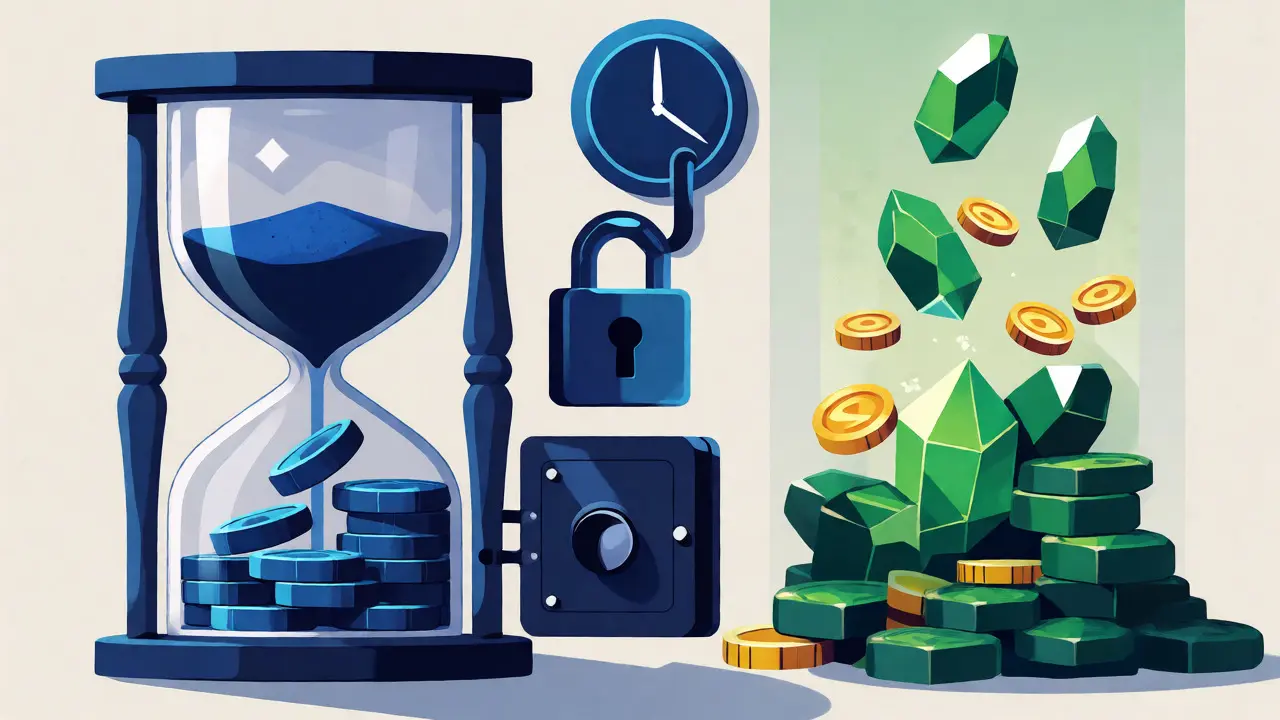
Most DeFi projects fail because their governance tokens lack real utility. Equalizer attempts to solve this with its ve-EQUAL (vote-escrowed EQUAL) mechanism. This isn’t just about voting rights; it’s about revenue sharing.
Here’s how it works: Users lock their EQUAL tokens for a set period. In return, they receive ve-EQUAL. The longer you lock your tokens, the more voting power you gain. But more importantly, ve-EQUAL holders receive a share of the "real yield" generated by the platform. What does "real yield" mean? It means rewards paid out in actual trading fees, not just inflated emissions of new tokens.
| Feature | Standard Governance Token | ve-EQUAL Model |
|---|---|---|
| Reward Source | New Token Emissions (Inflationary) | Protocol Trading Fees (Real Yield) |
| Voting Power | Based on holdings | Based on locked amount and duration |
| Liquidity Impact | Tokens often sold immediately | Tokens locked, reducing sell pressure |
This model aligns incentives. Long-term believers get rewarded for stability, while short-term flippers face higher opportunity costs. For traders, this creates a more predictable environment since the token supply circulating on exchanges remains tighter.
Liquidity Pools and Swapping Efficiency
Beyond flash loans, Equalizer functions as a standard Automated Market Maker (AMM). Liquidity pools store paired assets-commonly FTM (Fantom) and EQUAL, among others. When you want to swap Token A for Token B, you’re actually trading against these pools.
The fees from these swaps feed back into the system. Dynamic fee structures are determined by algorithms that consider market volatility and demand. This means during high-volatility periods, fees might increase to protect liquidity providers from impermanent loss. During calm markets, fees drop to encourage trading volume.
If you’re providing liquidity, you earn a cut of these fees. Services like Criffy track these opportunities, monitoring APY changes and notifying users when specific pools become profitable. However, always check the underlying asset risks. High APY often correlates with high volatility in the paired tokens.
Infrastructure and Scalability
Speed matters in DeFi. A slow transaction can mean missed arbitrage opportunities or failed liquidations. Equalizer emphasizes infrastructure scalability to ensure fast execution. Initially deployed on Ethereum, the roadmap included expansion to other chains like Binance Smart Chain. Multi-chain deployment is critical for user adoption, as it reduces gas fees and increases accessibility.
Third-party applications also leverage Equalizer’s liquidity pools. Developers can build tools that rebalance portfolios or provide short-term collateral for other DeFi services. This interoperability makes Equalizer more than just a standalone app; it becomes a piece of the broader DeFi plumbing.

Risks and Limitations
No platform is perfect, and Equalizer has its challenges. First, smart contract risk is inherent in all DeFi protocols. While audits are essential, bugs can still occur. Second, liquidity depth varies. If a specific token pair has low liquidity, large trades will suffer from significant slippage, eating into profits.
Additionally, information transparency can be an issue. As noted in various reviews, detailed metrics like exact Total Value Locked (TVL) statistics or comprehensive user adoption numbers aren’t always prominently displayed. Always verify current TVL on aggregators like DefiLlama before committing large sums.
Finally, regulatory uncertainty looms over all DeFi platforms. Depending on your jurisdiction, tax implications for flash loans and yield farming can be complex. Consult a tax professional familiar with crypto regulations in your area.
Who Should Use Equalizer?
Equalizer isn’t for everyone. It shines for specific user types:
- Arbitrageurs: If you hunt price discrepancies across exchanges, the flash loan feature lets you act without capital constraints.
- Liquidators: DeFi lending platforms require timely liquidations. Equalizer provides the instant capital needed to seize these opportunities.
- Long-Term Yield Farmers: If you believe in the project’s longevity, locking EQUAL for ve-EQUAL rewards offers sustainable yield rather than speculative inflation.
Conversely, casual investors looking for simple buy-and-hold exposure might find the complexity overwhelming. If you don’t understand impermanent loss or smart contract interactions, stick to simpler custodial solutions first.
Final Verdict
Equalizer carves out a niche by combining efficient flash lending with a robust DEX interface. Its ve-EQUAL model shows a commitment to sustainable tokenomics, moving away from the "farm and dump" mentality prevalent in early DeFi. However, success depends heavily on maintaining sufficient liquidity and expanding its multi-chain presence.
For active traders and DeFi power users, it’s a tool worth testing with small amounts first. Monitor the dynamic fees and liquidity depth closely. If the platform continues to scale and attract diverse token pairs, it could become a go-to hub for rapid, collateral-free trading.
Do I need collateral to use Equalizer's flash loans?
No, you do not need collateral. The smart contract ensures that the borrowed amount is repaid within the same transaction block. If repayment fails, the transaction automatically reverts, meaning no funds are lost.
What is ve-EQUAL and how does it generate yield?
ve-EQUAL stands for vote-escrowed EQUAL. Users lock their EQUAL tokens to receive ve-EQUAL, which grants voting power and a share of the protocol's trading fees. This is considered "real yield" because rewards come from actual usage fees, not new token emissions.
Is Equalizer safe to use?
Like all DeFi protocols, it carries smart contract risks. Ensure you check for recent security audits and monitor the Total Value Locked (TVL) trends. Start with small amounts to test the interface and confirm transaction speeds before committing larger capital.
Can I use Equalizer for long-term holding?
Yes, but primarily through the ve-EQUAL mechanism. By locking your EQUAL tokens, you participate in governance and earn fee-based yields. However, remember that locked tokens cannot be traded freely until the unlock period ends.
Which blockchains does Equalizer support?
Initially launched on Ethereum, the platform has expanded or planned expansions to other networks like Binance Smart Chain and potentially Fantom. Always check the official documentation for the most current list of supported chains, as deployments can change.