EU Privacy Coin Ban 2027: What Monero and Zcash Holders Need to Know
 Nov, 15 2026
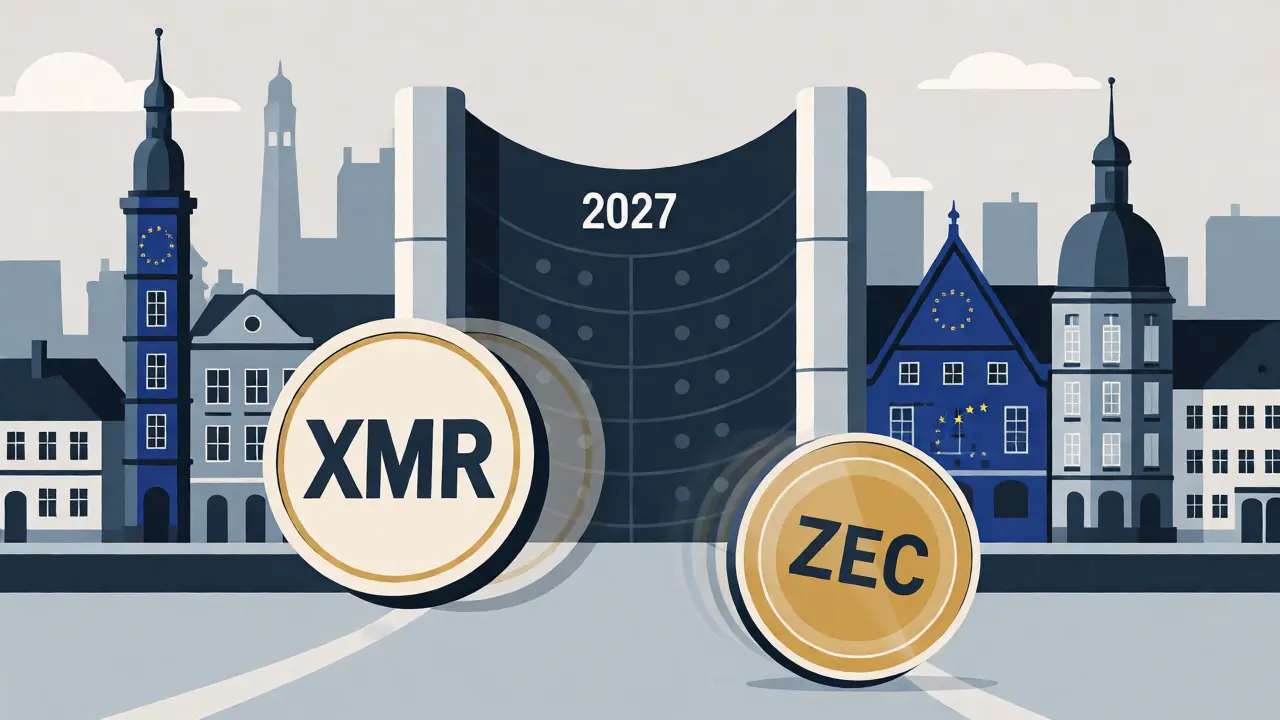
Imagine waking up in July 2027 and finding that your favorite private currency is suddenly invisible on every major exchange you use. That’s not a hypothetical scenario for European crypto users-it’s the new reality dictated by the European Union’s latest anti-money laundering (AML) regulations. The European Union has finalized a rulebook that effectively bans privacy coins like Monero and Zcash from regulated platforms starting July 1, 2027. If you hold these assets or trade them through EU-based services, you need to understand exactly what this means for your portfolio and your privacy rights.
The Core of the Ban: Regulation 2024/1624
This isn’t just a suggestion; it’s law. The mechanism driving this change is Regulation 2024/1624, also known as the Anti-Money Laundering Regulation (AMLR). Adopted in May 2024, this legislation targets the very heart of what makes privacy coins unique: their ability to obscure transaction details. Article 79 of the AMLR explicitly prohibits credit institutions, financial institutions, and Crypto-Asset Service Providers (CASPs) from handling accounts that allow for transaction anonymization.
Why the sudden crackdown? Regulators argue that untraceable transactions are a playground for money laundering and terrorist financing. While transparent cryptocurrencies like Bitcoin fit neatly into existing compliance frameworks because their ledgers are public, privacy coins pose a headache. They make it difficult for auditors to identify suspicious patterns. The EU decided that if you can’t trace it, you can’t trade it on regulated soil.
How Monero and Zcash Are Affected
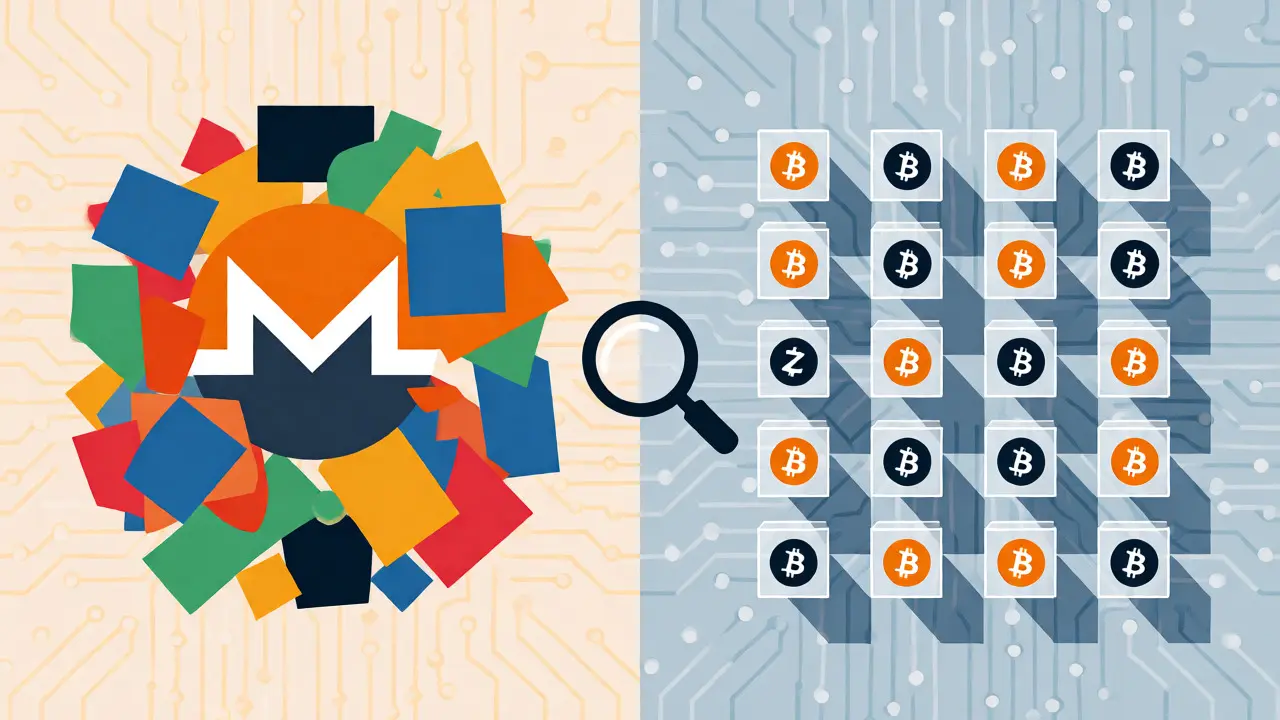
Not all privacy tech is treated equally, but both Monero and Zcash face significant hurdles. Monero (XMR) uses ring signatures and stealth addresses to hide sender, receiver, and amount information by default. This default-on privacy is its greatest strength and now its biggest liability under EU law. Because every transaction is obscured, regulators deem it impossible to verify compliance without breaking the protocol’s core design.
Zcash (ZEC) operates differently using zero-knowledge proofs. It allows for "shielded" transactions where details are hidden, but unlike Monero, Zcash offers "transparent" addresses that function similarly to Bitcoin. However, the EU’s broad definition of "anonymity-enhancing coins" often sweeps up Zcash as well, especially when shielded pools are involved. Exchanges fear that offering Zcash opens them up to compliance risks they aren’t willing to take, leading many to delist it preemptively.
| Feature | Monero (XMR) | Zcash (ZEC) | EU Requirement |
|---|---|---|---|
| Transaction Visibility | Fully Private (Default) | Optional (Shielded/Transparent) | Full Traceability |
| Address Type | Stealth Addresses | t-addresses / z-addresses | Identifiable Wallets |
| Compliance Status | Incompatible | High Risk / Restricted | Mandatory KYC/AML |
| Exchange Availability (Post-2027) | Banned on CASPs | Likely Banned/Delisted | Only Transparent Coins |
The Role of AMLA and MiCA
You might wonder who actually enforces this. Enter the Anti-Money Laundering Authority (AMLA). This new supervisory body will monitor the largest crypto firms serving tens of thousands of customers or processing over €50 million in transactions. Initially, AMLA will oversee about 40 major firms, creating a tiered system where the biggest players get scrutinized first.
This enforcement works hand-in-hand with the Markets in Crypto-Assets (MiCA) regulation. MiCA sets the general rules for crypto operations in the EU, while the AMLR adds the specific ban on anonymity. Together, they create a unified framework across all 27 member states. There’s no more patchwork of national laws; if you operate a CASP in France, Germany, or Spain, you must comply with the same strict identity verification standards.
What Happens to Your Holdings?
Here is the crucial distinction that saves many investors from panic: the ban does not criminalize possession. You won’t be arrested for holding Monero in your personal hardware wallet. The restriction applies to service providers. This means EU-regulated exchanges cannot list, buy, sell, or swap these coins for you after July 1, 2027.
So, what are your options?
- Hold: Keep your coins in a self-custody wallet. As long as you don’t interact with an EU-regulated bank or exchange, you’re fine.
- Sell Beforehand: Liquidate your positions before the deadline if you want to avoid liquidity issues later.
- Use Non-EU Platforms: Trade on decentralized exchanges (DEXs) or non-EU centralized exchanges that don’t fall under MiCA jurisdiction. Be aware that banking partners may still block transfers related to privacy coins.

Global Ripple Effects
The EU rarely acts alone in financial regulation. By setting such a high bar for transparency, Brussels creates a template that other jurisdictions often follow. We’ve already seen similar trends in South Korea and Japan, which have restricted privacy coins on local exchanges. The EU’s move signals that the era of anonymous digital cash in regulated markets is ending globally.
For developers, this poses an existential question. Will privacy protocols adapt by adding optional transparency layers that satisfy regulators? Or will they remain niche tools for those willing to navigate the gray market? Currently, the consensus among industry experts is that resistance is futile. The European Crypto Initiative (EUCI) has published handbooks advising firms to accept the reality: compliance trumps ideology.
Action Plan for Crypto Users
If you are active in the EU crypto space, waiting until 2027 is risky. Liquidity tends to dry up long before a ban takes effect. Start monitoring your exchange’s announcements now. Many platforms are already delisting privacy coins to prepare for the transition.
Consider diversifying your strategy. If privacy is essential to you, explore jurisdictions outside the EU or focus on layer-2 solutions that offer selective disclosure rather than total anonymity. For most casual traders, shifting to transparent assets like Bitcoin or Ethereum ensures you stay within the safe zone of regulatory compliance.
Will I lose my Monero if I live in the EU?
No, you will not lose your Monero. The ban applies to Crypto-Asset Service Providers (exchanges and brokers), not individual holders. You can keep XMR in your own wallet indefinitely. However, selling it through an EU-regulated exchange will become impossible after July 1, 2027.
Is Zcash completely banned in the EU?
Zcash faces severe restrictions. While its transparent addresses are compatible with AML rules, the existence of shielded transactions makes it high-risk for exchanges. Most EU-regulated platforms are expected to delist Zcash entirely to avoid compliance complexities, treating it similarly to Monero.
When does the EU privacy coin ban start?
The official implementation date is July 1, 2027. This gives service providers a two-year window to wind down operations involving privacy coins. Expect gradual delistings and reduced trading volumes leading up to this date.
Can I buy Monero on a Decentralized Exchange (DEX)?
Yes, generally speaking. DEXs operating without a central entity subject to EU licensing may continue to facilitate trades. However, accessing these DEXs via an EU bank account could trigger scrutiny, so direct fiat-to-crypto purchases might be harder.
Who is AMLA and what do they do?
The Anti-Money Laundering Authority (AMLA) is a new EU supervisory body. It directly oversees the largest crypto firms to ensure they comply with the new AML regulations, including the ban on privacy-preserving assets. It replaces fragmented national oversight with centralized EU-level supervision.