Famous Rug Pull Examples and Lessons from Crypto's Biggest Losses
 Apr, 7 2026
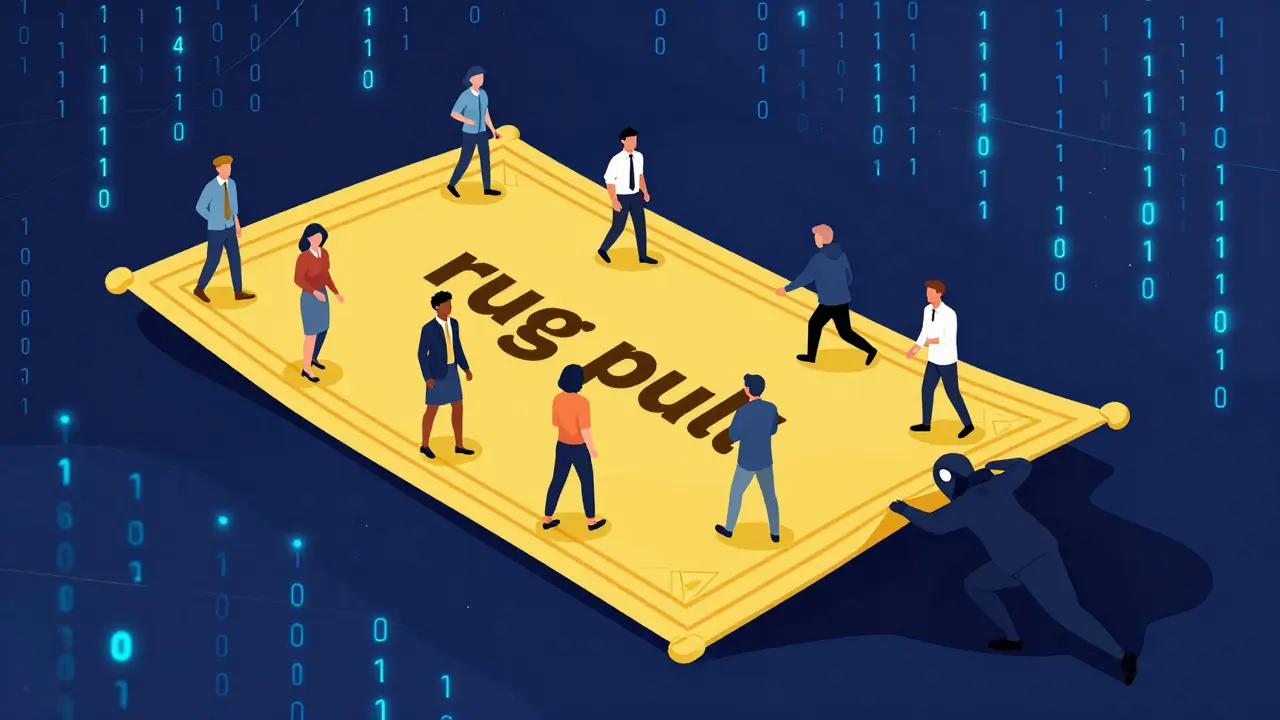
To stop yourself from becoming another statistic, you need to understand how these traps are set. Most rug pulls fall into two buckets: DeFi scams, where the actual code is rigged to steal your money, and exit scams, where the hype is fake and the developers simply disappear once the pot is full. Let's look at the most notorious examples to see how they played out.
The Heavy Hitters: Thodex and AnubisDAO
Not all rug pulls happen in decentralized finance. Sometimes, the betrayal comes from a centralized platform you thought was safe. Consider Thodex, a Turkish exchange that pulled off one of the most devastating exit scams in history. In 2021, the CEO simply vanished after halting all user withdrawals. Investors lost over $2 billion. This single event accounted for nearly 90% of all value stolen in rug pulls that year, proving that a centralized entity can cause far more damage than a small DeFi project.
On the other hand, AnubisDAO showed how quickly a DeFi project can implode. Launched in October 2021, it promised a decentralized currency backed by a basket of assets. There was no white paper, no website-just a logo inspired by Dogecoin and a lot of noise. In less than 20 hours, the project raised nearly $60 million in wrapped Ethereum (wETH). Then, in a flash, the funds disappeared from the liquidity pool, leaving investors with nothing but worthless ANKH tokens.
The Psychology of the Hype: Squid Game and BitConnect
Scammers love to ride the wave of pop culture. The Squid Game token is a masterclass in psychological manipulation. Capitalizing on the Netflix hit, the token skyrocketed from $0.01 to $2,861 in a week. But here's the catch: the developers used a "honeypot" exploit. This is a piece of malicious code that allows you to buy the token but prevents you from ever selling it. When users tried to cash out, they found the exits locked. The developers then dumped their own supply, crashing the price 99% and pocketing over $3.38 million.
If the Squid Game token was a sprint, BitConnect was a marathon of deception. Launching in 2016, it established the blueprint for the modern exit scam. It promised insane returns if you traded Bitcoin for their token. It took longer to collapse than AnubisDAO, but when it did, it served as a wake-up call for the entire industry about the dangers of promised "guaranteed" returns in a volatile market.

The NFT Trap: Bored Bunnies
Rug pulls aren't limited to coins; digital art is just as vulnerable. The Bored Bunny NFT project in December 2021 promised the world: a private metaverse, branded gear, and 10x returns. They even used celebrity endorsements from names like Floyd Mayweather and Jake Paul to build trust. The collection sold out in hours, raking in about 2,000 ETH.
The reality? Blockchain forensics revealed that the NFTs "owned" by celebrities were actually bought by the developers' own wallets to create the illusion of high demand. This is a classic case of wash trading. Once the hype peaked, the founders abandoned the project, and the floor price plummeted to a measly 0.085 ETH.
| Project | Primary Method | Key Red Flag | Estimated Loss |
|---|---|---|---|
| Thodex | Centralized Exit Scam | Withdrawal freezes | $2 Billion+ |
| Squid Game | Honeypot Exploit | Cannot sell tokens | $3.38 Million (Dev profit) |
| AnubisDAO | Liquidity Draining | No white paper/website | $58 Million+ |
| Bored Bunny | Fake Endorsements | Wash trading wallets | 2,000 ETH (Initial sales) |
Modern Evolutions: 2024's Meme Coin Chaos
You might think people have learned their lesson, but scammers just change their tactics. In early 2024, the Froggy (FROGGY) coin exploited the "community-driven" meme trend. It used a humorous brand to lure people into funding its liquidity pool. Once enough money was in, the developers drained it instantly. The token crashed 99.95% from its peak, landing at a price with ten decimal places that essentially means zero.
Even more shocking was the Hawk Tuah (HAWK) token in December 2024. This project leveraged the fame of social media personality Hailey Welch. In a staggering 20 minutes, the market value crashed from $500 million to $60 million. Unlike earlier scams, this one hit a legal wall quickly, with the law firm Burwick Law filing a federal lawsuit. This shows a shift in the landscape: law enforcement is becoming more aggressive toward celebrity-endorsed frauds.
How to Spot a Rug Pull Before It Happens
Since scammers are getting better at making projects look legitimate, you need a systematic way to vet them. Don't rely on a tweet from an influencer; instead, look for these concrete signals:
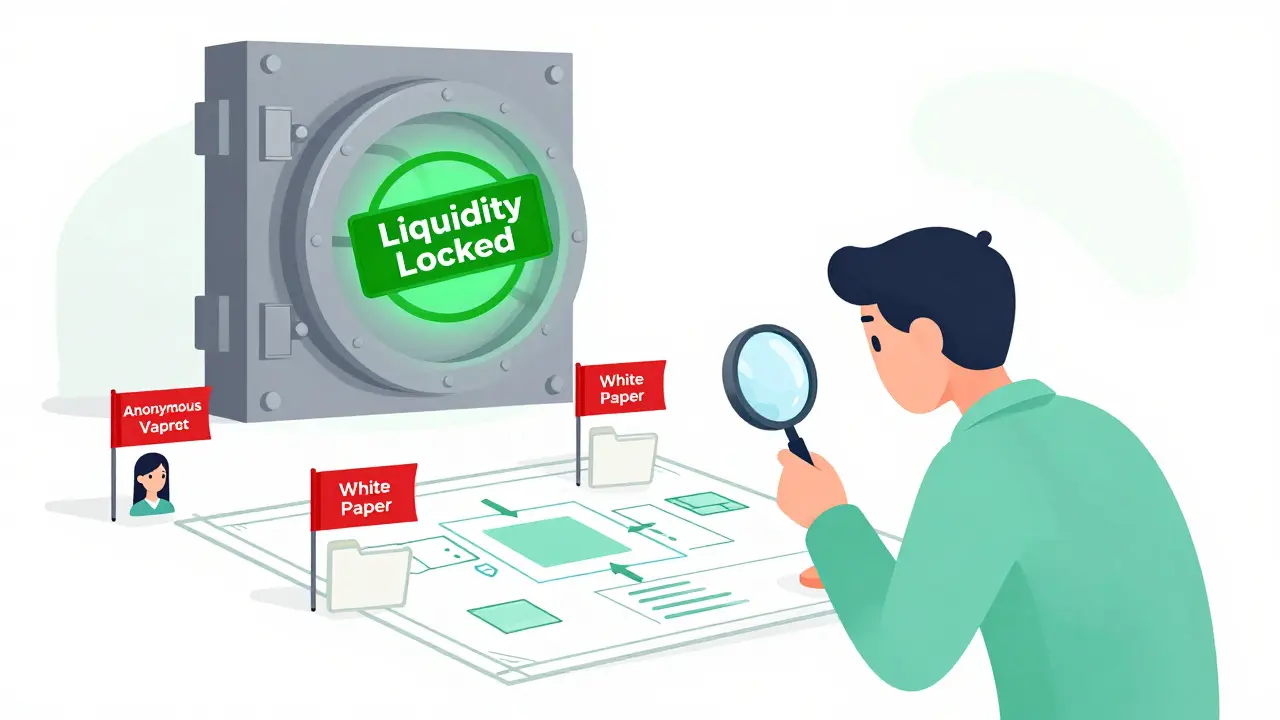
- Check the Liquidity Lock: If the developers can withdraw the liquidity pool at any second, they probably will. Look for "locked liquidity" certificates from reputable third-party services.
- Audit the Smart Contract: A project without a professional audit from a firm like CertiK or OpenZeppelin is a huge gamble. Look for "mint" functions that allow developers to create infinite new tokens out of thin air.
- Analyze the Team: Are they "doxxed" (identities revealed) or pseudonymous? If the team is a group of anime avatars with no LinkedIn history, be extremely cautious.
- Question the White Paper: Is the document full of buzzwords like "revolutionary" and "to the moon" without explaining the actual technology? If it reads like a sales brochure rather than a technical document, it's a red flag.
- Watch for Wash Trading: Use a blockchain explorer to see if a few wallets are just trading the same tokens back and forth to fake a high volume of activity.
The persistent creation of thousands of scam tokens proves that greed usually outweighs caution. But by treating every new "gem" as a potential scam until proven otherwise, you can protect your portfolio from the next big crash.
What is the difference between a rug pull and a normal market crash?
A market crash is caused by external economic factors or a general loss of confidence. A rug pull is an intentional act of theft where developers maliciously manipulate the project's code or liquidity to steal investor funds and abandon the project.
Can I get my money back after a rug pull?
In most cases, no. Because blockchain transactions are irreversible and many developers operate pseudonymously across international borders, recovering funds is incredibly difficult. However, reporting the crime to agencies like the FBI's IC3 or the SEC is important for potential future legal actions.
What is a "honeypot" in crypto?
A honeypot is a smart contract designed to look like a legitimate investment but contains a hidden rule that prevents anyone except the developer from selling the token. You can buy in, but you can never get out.
Are celebrity endorsements a guarantee of safety?
Absolutely not. As seen with the Bored Bunny and Hawk Tuah examples, celebrities are often paid to promote tokens without doing their own due diligence, or they may even be part of the scheme. Always verify the project's technicals regardless of who is tweeting about it.
How can I tell if liquidity is locked?
Check the project's documentation for a link to a liquidity locker (like Unicrypt or Team Finance). A locked pool means the developers cannot withdraw the underlying assets (like ETH or BNB) for a set period, which significantly reduces the risk of a sudden rug pull.
Deepak Prusty
April 7, 2026 AT 15:43Most people ignore the basic utility of a project and just chase the green candles. If there is no actual product or a clear revenue model, it is essentially a gambling ticket. You cannot call it an investment if the only value is based on other people buying in after you. The honeypot mechanism is basic code that any competent developer can spot in seconds by looking at the contract on Etherscan. It is honestly embarrassing how many people still fall for this in 2024.
sekhar reddy
April 7, 2026 AT 18:07OH MY GOD!!! I legit almost put my entire paycheck into a meme coin last month because some random guy on X was screaming about it!!! This is absolute madnes!!! The way these scammers just vanish with millions is actually insane and totally heartbraking for people who just wanted a better life!!!
Matthew Wright
April 8, 2026 AT 08:43The part about liquidity locks is super crucial... a lot of beginners miss that... you really have to check the lock period and who actually holds the keys... if it is just a multi-sig with two anonymous devs, it is basically a rug waiting to happen... definitely worth digging into those contracts more!!
Diana Martín Prieto
April 9, 2026 AT 10:13I totally agree that auditing the smart contract is a game changer for safety. For anyone struggling with this, you can actually use tools like TokenSniffer or Goplus to get a quick safety score without needing to be a pro coder. It helps highlight those 'mint' functions and hidden proxies mentioned here. Just remember to never invest more than you are willing to lose, because even audited projects can have unforeseen vulnerabilities. Keep learning and stay safe out there!
Arwyn Keast
April 10, 2026 AT 22:32Typical retail euphoria. The sheer lack of fiduciary oversight in these unregulated offshore entities is a systemic failure. It is a moral vacuum where the gullible provide the exit liquidity for the predatory. This whole sector is basically a digital Wild West, lacking any semblance of the rigorous standards we expect in proper British financial institutions. Absolute shambles.
Trish Swanson
April 11, 2026 AT 17:28Wait, celebrities actually do this... that is wild!!! Why do they risk their whole reputation... just for a quick payout... seems so reckless!!!
Suzanne Robitaille
April 12, 2026 AT 08:24It is truly a tragedy when we see the intersection of human greed and technological anonymity. We are witnessing a digital era where the veil of a screen allows the most predatory instincts of humanity to flourish without consequence. It makes one wonder if the decentralization we craved has simply decentralized the crime, leaving the vulnerable to wander a wasteland of broken promises. My heart goes out to those who lost everything chasing a dream that was merely a mirror of their own hope used against them. It is a sobering reminder that the fastest path to wealth is often the steepest cliff. We must strive for a more ethical implementation of these tools or we are simply building a more efficient casino for the cruel. The psychological toll of such betrayal is far heavier than the financial loss itself. It strips away trust in the very concept of progress. Truly, a modern Odyssey of loss and longing for stability. We must protect each other in this digital void. May we find the wisdom to value stability over the illusion of overnight riches. It is the only way to survive the storm. Let us be kinder and more cautious with our trust.
akash temgire
April 12, 2026 AT 11:45The correlation between celebrity endorsement and project failure is statistically significant. Due diligence is non-negotiable.