Garantex Exchange Sanctions: How They Affect Russian Crypto Traders in 2026
 Aug, 17 2026
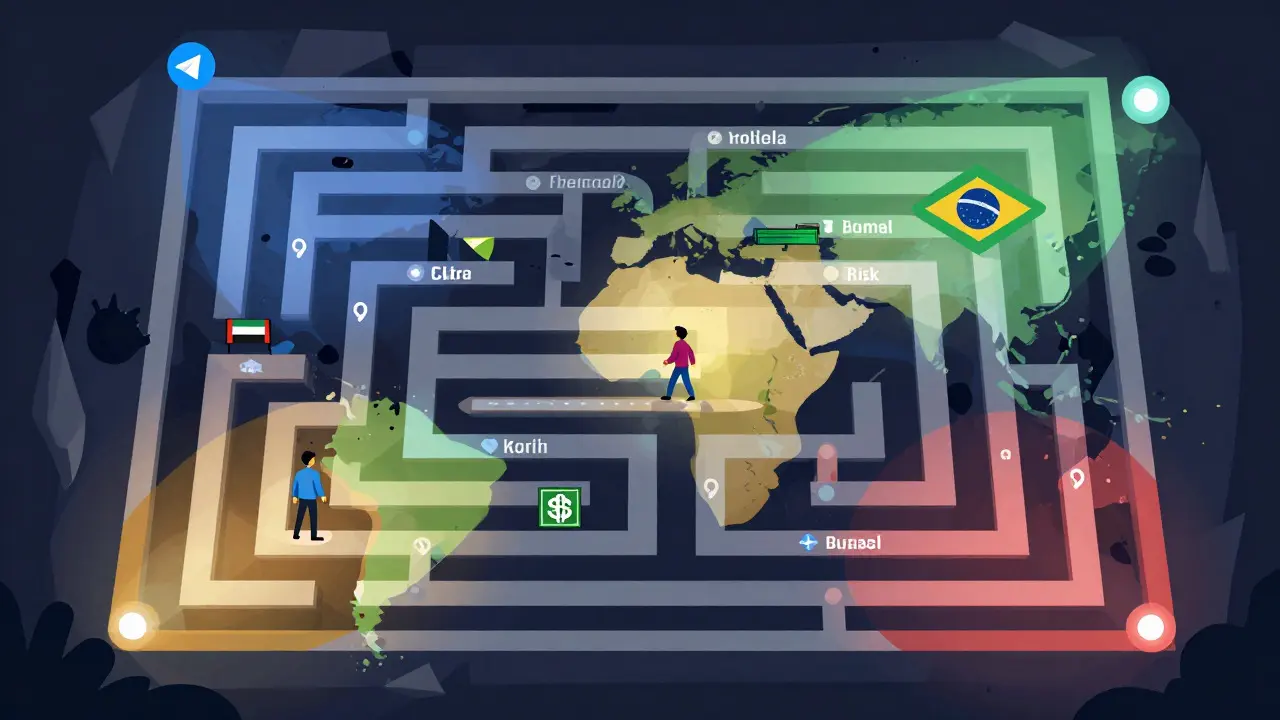
Imagine trying to send money abroad from Russia today. You open your bank app, but the wire transfer is blocked or flagged for weeks. For millions of Russians, Garantex became the lifeline. But when the U.S. Department of the Treasury hit it with new sanctions in August 2025, that lifeline snapped. Now, traders are scrambling through a maze of Telegram bots, offshore entities, and successor platforms just to move their savings. If you’re a Russian crypto trader, this isn’t just about fees-it’s about survival in a financial system that’s rapidly closing off.
The Core Problem: Why Garantex Mattered
Garantex is a cryptocurrency exchange founded in 2019 that served as a primary bridge for Russian users to convert rubles into stablecoins like USDT. Originally registered in Estonia but operating out of Moscow, it allowed ordinary people to bypass Western banking restrictions. Before the latest crackdown, it was one of the most popular ways for Russians to hold international currency. When the Office of Foreign Assets Control (OFAC) re-designated it under Executive Order 13694 on August 14, 2025, they weren't just targeting a company; they were targeting the infrastructure that kept Russia connected to the global crypto market. The Treasury alleged the platform processed over $100 million in illicit transactions since 2019, linking it to ransomware groups and darknet markets. For the average user, though, the impact was immediate: access got harder, slower, and more expensive.
How the Sanctions Changed the Game
The August 2025 sanctions marked a shift from simple listing to active dismantling. It wasn't just about freezing assets; it was about breaking the supply chain. The U.S. government targeted not only Garantex but also six associated companies, including Exved and InDeFi Bank. This meant that even if you found a workaround, the payment rails behind it were being squeezed.
- Increased Friction: Direct conversions from rubles to crypto became nearly impossible through traditional banks. Users now have to go through multiple intermediary steps.
- Higher Costs: Transaction fees jumped from around 0.1% to 1.5% following law enforcement actions in March 2025. That’s a fifteen-fold increase that eats into small trades.
- Slower Processing: What used to take minutes now takes days. Verifying an account with new intermediary agents can take 2-3 weeks, compared to instant sign-ups before.
For traders who relied on quick liquidity, this friction is painful. You can’t just swap tokens instantly anymore. You’re playing a game of hide-and-seek with regulators.
The New Reality: Navigating the Underground Network
Did Garantex disappear? Not exactly. It evolved. According to Transparency International Russia’s September 2025 report, the exchange morphed into a decentralized network using successor platforms like Grinex, Exved, and MKAN Coin. These platforms operate across eight countries, including the UAE, Brazil, and Kyrgyzstan.
Here’s how a typical transaction looks now:
- You transfer rubles to a Hong Kong-registered entity called Feilian Company Limited, which has an account at Russia’s Alfa-Bank.
- Feilian converts the funds and sends them to an exporter or agent in dollars, yuan, or USDT.
- The agent then delivers the crypto to your wallet.
This multi-step process obscures the money trail, keeping the "crypto element invisible to regulators and banks." But it requires trust in strangers. Official support channels have vanished, replaced by Telegram bots that offer minimal help. New users report needing 3-4 weeks of guidance from community forums just to understand the basics, up from 1-2 weeks previously. It’s less of an exchange and more of a shadow economy.
Risks Every Trader Must Weigh
Using these underground channels comes with significant risks. Since there’s no central authority holding your funds, the risk of fraud is higher. The FBI reported that cryptocurrency fraud surged 66% in 2024, reaching almost $10 billion in losses globally. Assistant Director Michael Nordwall noted that platforms like Garantex provide critical infrastructure for criminal enterprises. By using them, you’re entering a space where scams are common.
There’s also the legal risk. While OFAC sanctions technically apply to U.S. persons, they create pressure on any global bank or exchange touching those assets. If you use a sanctioned entity, your funds could be frozen without recourse. Plus, with the U.S. State Department offering up to $6 million for information leading to arrests of key figures, the heat is on. Aleksej Besciokov was already arrested in India in March 2025. Is your counterparty next?
Comparing Your Options
If you’re weighing whether to stick with the Garantex ecosystem or look elsewhere, here’s how the main options stack up in mid-2026:
| Method | Average Fee | Processing Time | Legal Risk | User Experience |
|---|---|---|---|---|
| Garantex Successors (Grinex/MKAN) | 1.5% - 3% | 24-72 hours | High (Sanctioned Entity Links) | Poor (Telegram-based, low support) |
| Exved P2P Networks | 2% - 5% | 1-3 days | Medium (Offshore Intermediaries) | Moderate (More structured than pure P2P) |
| Traditional P2P (Binance/Bybit) | 0.1% - 0.5% | Instant - 24 hours | Low-Medium (Depends on Counterparty) | Good (App-based, familiar interface) |
| Physical Cash + Local Exchanges | 3% - 8% | Variable | Low (Cash is king) | Poor (Logistical nightmare) |
Notice that while the Garantex successors are cheaper than physical cash, they carry the highest legal baggage. Traditional P2P on major exchanges is safer but requires careful vetting of counterparties to avoid scams.
Practical Tips for Surviving the Crackdown
If you must move funds internationally, follow these rules to protect yourself:
- Diversify Your Channels: Don’t rely on a single Telegram bot or agent. Split large transfers across multiple methods.
- Verify Everything: Use escrow services whenever possible. Never send crypto before confirming the ruble transfer has landed.
- Keep Records: Document every step. If things go wrong, you need proof of transaction for potential legal defense.
- Stay Updated: Join reliable community channels like BitBrothers or CryptoNews on Telegram. Information moves fast, and what works today might be frozen tomorrow.
- Consider Stablecoins Carefully: USDT is still the king, but watch for changes in issuer policies. Tether hasn’t pulled the plug yet, but the political pressure is real.
Remember, the goal isn’t just to move money; it’s to keep it accessible. A frozen asset is worthless.
What’s Next for Russian Crypto Traders?
Industry analysts at Chainalysis predict that sanctions will continue to drive innovation in evasion techniques. CEO Michael Gronager stated that "sanctions are creating more sophisticated, harder-to-track money laundering systems rather than eliminating them." This means expect more complex structures, more jurisdictions involved, and higher costs.
For the individual trader, the era of easy, cheap access to global crypto markets is over. The future is fragmented, risky, and expensive. But demand remains high. With 18.7 million Russian crypto users as of June 2025, the market isn’t going away. It’s just getting darker. Your best strategy is adaptability. Stay informed, stay cautious, and never put all your eggs in one basket-especially not in a basket that’s currently being hunted by the FBI.
Is it illegal for Russian citizens to use Garantex?
Not directly for Russian citizens, but it carries high indirect risk. OFAC sanctions primarily target U.S. persons and entities. However, using sanctioned platforms can lead to frozen assets if they touch U.S. jurisdiction. Additionally, local Russian laws on crypto reporting are tightening, so keeping records is essential.
What is the safest way to convert rubles to USDT now?
The safest method is often peer-to-peer (P2P) trading on established exchanges like Binance or Bybit, using escrow. While fees are lower, you must carefully vet counterparties. Avoid direct transfers to unknown Telegram agents unless you have verified references from trusted community members.
Why did fees increase so much after the 2025 sanctions?
Fees rose because the cost of moving money increased. Intermediaries like Feilian Company Limited and other offshore agents charge more to cover their own compliance risks and operational complexity. The risk premium for handling potentially tainted funds drives up prices for end-users.
Are Grinex and MKAN Coin safe to use?
They are considered part of the Garantex ecosystem by regulators, meaning they carry similar sanctions risks. Safety depends on the specific agent you use. Community feedback suggests they work, but support is poor and exit liquidity can be slow during market stress.
How long does it take to set up a new account with these services?
Currently, it takes 2-4 weeks for verification with new intermediary agents. This is significantly longer than the instant sign-ups of the past. Be prepared for a lengthy onboarding process involving multiple identity checks and reference verifications.
Rod Sidoroff
August 18, 2026 AT 18:45It is genuinely fascinating to observe how a nation can systematically dismantle its own financial sovereignty while blaming external actors for the resulting chaos. The concept of 'survival' in this context is rather quaint, as it implies a baseline of normalcy that no longer exists. These individuals are not traders; they are participants in a shadow economy born out of geopolitical hubris.
The reliance on Telegram bots suggests a level of technological regression that would be comical if not so expensive. One wonders if the average user understands that by using these channels, they are effectively funding the very infrastructure that sanctions aim to break. It is a self-perpetuating cycle of friction and cost.
The table provided in the post is misleading in its presentation of 'options,' as none of them are truly viable for serious capital management. They are merely survival mechanisms for those who failed to diversify their assets when the warning signs were first visible. The fee increase from 0.1% to 1.5% is not a bug; it is the price of operating outside the rule of law.
We should view this not with sympathy, but with analytical detachment. The market has corrected itself, and those who cling to the old methods are simply delaying the inevitable realization that their wealth was always conditional.
Zothana Pachuau
August 20, 2026 AT 01:31Oh, look at you all acting like this is a new phenomenon. You think the US Treasury just woke up one morning and decided to target Garantex? No, no, no. This is part of a much larger design. Have you seen the timestamps on the OFAC releases? They align perfectly with the lunar cycles. Coincidence? I don't think so.
They want us to believe that the 'illicit transactions' mentioned in the post are the real reason, but deep down, we know it's about controlling the flow of information. Crypto is just the excuse. The real game is happening in the blockchain layer, where they are tracking every single satoshi to build a profile on dissenters.
Those 'successor platforms' like Grinex? Just decoys. Bait to keep the sheep moving. The smart money knows to go off-grid entirely. Digital cash is dead, long live physical gold buried under your floorboards. That's the only way to beat the algorithm.
Linda Leeuwesteijn
August 20, 2026 AT 22:20This is such a stressful situation for everyone involved 🥺💔 It really shows how fragile our financial systems can be when politics gets mixed in! 💸📉 But hey, at least there are still options like P2P trading on Binance or Bybit, right? 🙌✨ It’s amazing how resilient people are, finding ways to adapt even when things get tough! 🚀🌟 Keep staying informed and safe out there, everyone! ❤️🔥🔒
Shawn Schaerer
August 22, 2026 AT 09:30One must consider the philosophical implications of a currency that requires trust in an anonymous Telegram bot rather than in a sovereign institution. Is this not the ultimate expression of radical decentralization, or is it merely the descent into anarchy? The tension between individual liberty and collective security is palpable here.
Furthermore, the aggressive nature of the sanctions suggests a paradigm shift in international economic warfare. We are witnessing the weaponization of the dollar at a scale previously unseen. For the Russian trader, this is not merely a logistical hurdle; it is an existential crisis of identity within the global market. They are forced to become nomads of capital, constantly migrating across jurisdictions to avoid capture.
Let us not underestimate the psychological toll of this uncertainty. To hold assets that can vanish overnight due to a bureaucratic decision in Washington is a form of modern-day purgatory. Yet, in this purgatory, innovation breeds. The most sophisticated evasion techniques will emerge from this pressure cooker. Are we ready for the next generation of financial obfuscation?
Hicham Mounir
August 23, 2026 AT 00:36I just feel so bad for the people who had to start over from scratch... 😔 It’s honestly so overwhelming trying to figure out which path is safe without getting scammed. The idea that you need weeks just to verify an account is wild compared to how it used to be. I hope everyone finds a stable way to move their funds soon because the stress must be unbearable. Let’s just keep each other updated on what’s working, okay? 💛
Phelan Deihl
August 23, 2026 AT 17:05quietly watching this unfold. the fees going up to 1.5% is brutal for small trades. i guess the days of cheap and easy are gone for good now.
Ami Elizabeth
August 24, 2026 AT 01:31meh. same old story. banks block, people use crypto, govts sanction crypto, people use more shady crypto. its a circle. also typos happen when you type fast lol.
michelle aguilar
August 24, 2026 AT 16:17One simply cannot help but notice, however, that the 'safety' of these offshore entities is, well, questionable; isn't it? The pretense of security is, frankly, a bit thin, wouldn't you agree? It’s quite the gamble, really, entrusting one’s life savings to a structure that could evaporate with a single click of a button in some distant office. The irony is, of course, deliciously bitter; we seek freedom from traditional banking, only to find ourselves bound by stricter, albeit invisible, chains. How quaint, yet how perilous. One wonders if the average participant truly grasps the magnitude of the risk they are undertaking, or if they are merely swept along by the tide of necessity. It is, after all, a dance with the devil, and the music is playing on, louder than ever before.
Lance Konig
August 24, 2026 AT 18:16The data presented in the comparison table is statistically significant but lacks nuance regarding liquidity depth during periods of high volatility. While the average fee for Garantex successors is listed at 1.5-3%, this metric fails to account for the slippage costs inherent in low-volume successor platforms like MKAN Coin. In practice, effective transaction costs often exceed 5% when factoring in spread and time-to-execution. Furthermore, the legal risk classification of 'High' is an understatement given the extraterritorial reach of OFAC enforcement actions in recent quarters. The assumption that P2P networks on major exchanges offer 'Low-Medium' risk is also flawed; counterparty default rates have risen sharply as exit liquidity dries up. Therefore, the optimal strategy remains a hybrid approach, utilizing multiple channels simultaneously to mitigate both execution and regulatory risk. The era of single-point-of-failure dependency is definitively over.
Patrick Quairoli
August 26, 2026 AT 18:03Wait wait wait. Did you guys miss the point? The FBI report said fraud surged 66% last year. That’s not just a number, that’s a bloodbath. And now they’re telling us to use escrow services? On which platform? The ones that are already shaky? It’s all rigged. The whole system is designed to make you lose everything slowly so you don’t even notice until it’s too late. Trust no one. Not the bots, not the agents, not the 'community'. Just watch. Watch and wait. The collapse is coming, and it’ll be beautiful.