How Staking Replaces Mining in Proof of Stake (PoS) Blockchains
 Jul, 31 2026
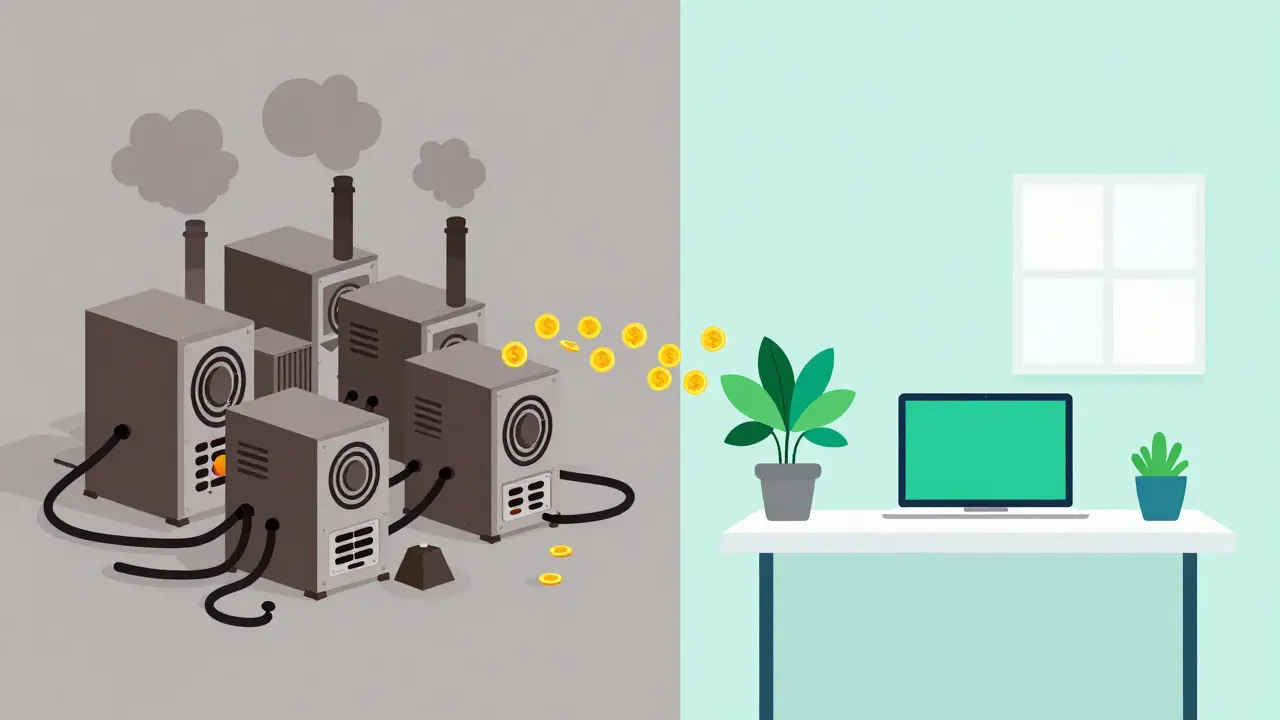
Imagine running a server that earns you money just by staying online. No noisy fans, no electric bills that look like rent payments, and no complex math puzzles to solve. This is the reality of Proof of Stake, a system where blockchain security relies on economic commitment rather than computational power. For years, we watched miners burn coal and gas to secure networks like Bitcoin. Today, staking has largely replaced that model for new and evolving blockchains, shifting the focus from hardware wars to financial stakes.
If you have been wondering why your favorite cryptocurrency stopped paying out to miners or how Ethereum changed overnight, the answer lies in this fundamental shift. Staking doesn't just tweak the old system; it replaces the core engine of trust. Let's break down exactly how this swap works, why it matters for your wallet, and what it means for the future of decentralized finance.
The Old Way: Why Mining Was Necessary
To understand how staking replaces mining, we first need to look at what mining actually did. In a Proof of Work (PoW) system, the network needs a way to agree on who gets to add the next page to the digital ledger. The solution? A race.
Miners use specialized computers called ASICs to guess random numbers billions of times per second. The first person to guess the right number wins the right to write the block and collect the reward. It’s a lottery where buying more tickets (more computing power) increases your odds. But those tickets cost electricity. Lots of it.
This method worked because attacking the network was expensive. To cheat, you’d need to own more than half of all the computing power in the world dedicated to that coin. That requires building massive data centers, which costs millions in hardware and energy. If you cheated, everyone would see it, and your investment would become worthless. So, greed kept the network honest. But as blockchains grew, so did the environmental footprint. We needed a different way to keep things secure without burning down the planet.
The New Engine: How Staking Works
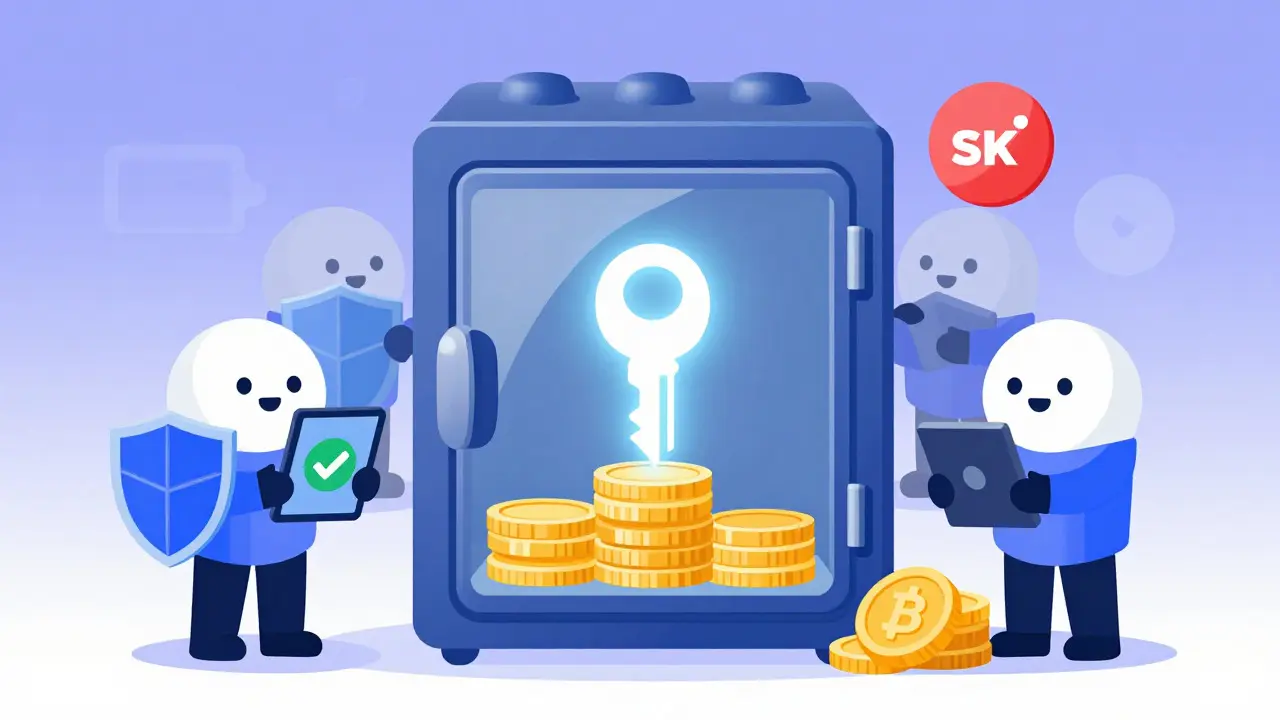
Staking is the process of locking up cryptocurrency to participate in validating transactions on a Proof of Stake network. Instead of competing with processors, participants compete with capital. You lock up your coins as collateral. The network then randomly selects you to validate the next batch of transactions based on how much you’ve locked and for how long.
Think of it like a bond payment. When you buy a government bond, you lend money and get interest. In staking, you "lend" your coins to the network’s security infrastructure. In return, you earn rewards. But here is the catch: if you act maliciously-say, by trying to approve a fake transaction-the network takes your money. This penalty is called slashing.
This simple swap changes everything. You don’t need a warehouse full of servers. You just need an internet connection and some crypto. The barrier to entry shifts from industrial engineering to financial access.
| Feature | Mining (Proof of Work) | Staking (Proof of Stake) |
|---|---|---|
| Resource Used | Computational Power (Hashrate) | Cryptocurrency Holdings (Stake) |
| Hardware Needed | ASICs, GPUs, High-End CPUs | Standard Computer or Smartphone |
| Energy Consumption | Very High (Industrial Scale) | Low (Minimal Server Usage) |
| Security Model | Economic Cost of Hardware + Energy | Economic Loss of Slashed Stake |
| Barrier to Entry | High Capital Expenditure | Ownership of Native Token |
Why Networks Are Switching Now
You might ask, if mining worked for Bitcoin for over a decade, why change? The short answer is scalability and sustainability. As blockchains moved beyond simple peer-to-peer cash transfers to host complex applications, smart contracts, and decentralized apps, they needed to process more transactions faster. Mining is slow and energy-heavy. Staking is fast and efficient.
Ethereum’s transition, known as "The Merge," is the biggest example. Before September 2022, Ethereum used mining. Afterward, it switched to staking. The result? Energy consumption dropped by roughly 99.95%. That’s not a typo. The network went from using as much electricity as a small country to using less than a household appliance.
But it’s not just about being green. It’s about economics. In a mining system, inflation is driven by the issuance of new coins to miners. In staking, rewards are often lower because the operational costs are lower. This can lead to a more stable token economy over time. Plus, without the need for constant hardware upgrades, the network becomes more accessible to everyday users, not just corporations with deep pockets.
Who Gets to Validate? The Selection Process
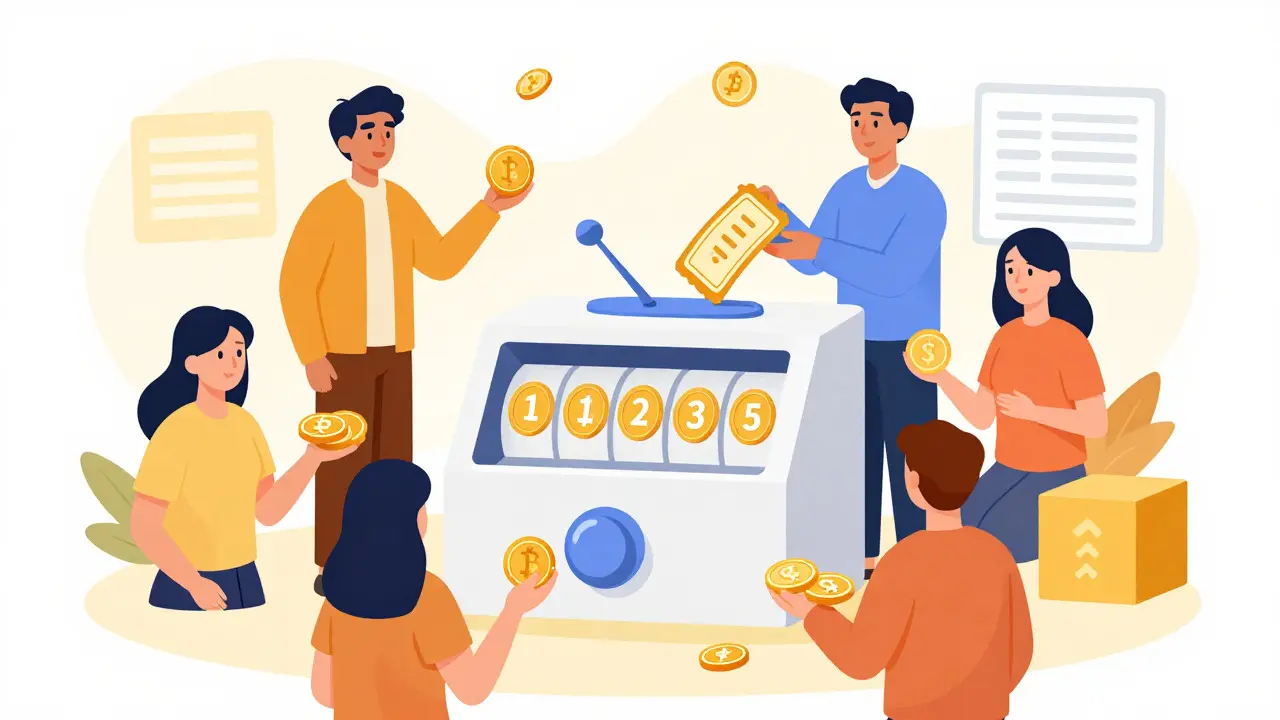
In mining, luck and power decide the winner. In staking, it’s a mix of wealth and randomness. But how does the network pick who validates the next block? It uses a cryptographic algorithm that weighs two main factors:
- Amount Staked: Generally, the more coins you lock up, the higher your chance of being selected. This makes sense-if you have more skin in the game, you’re less likely to cheat.
- Time Locked: Some systems also consider how long you’ve been staking. Long-term holders show commitment, so they might get a slight boost in selection probability.
However, pure randomness is key. If the network could predict who would be chosen next, attackers could bribe them. So, the selection is pseudo-random. It’s unpredictable until the moment it happens. Once selected, you have a short window to propose a block. If you miss it, someone else takes over. This keeps the network moving even if individual nodes fail.
For solo validators, this requires technical skill. You need to run a node, keep it updated, and ensure it stays online 24/7. If your node goes offline too often, you might get slashed. That’s why many people choose delegated staking. They send their coins to a validator pool managed by an exchange or a professional service. The pool handles the tech; you share the rewards. It’s easier, but you trust a third party.
Rewards and Penalties: The Economic Incentive
Money talks, especially in blockchain. In mining, rewards come from two sources: the newly minted coin (block subsidy) and transaction fees paid by users. Staking works similarly, but the distribution is different.
Validators earn rewards proportional to their stake. If you hold 1% of the total staked supply, you might earn roughly 1% of the rewards distributed in that epoch (a set period of time). These rewards are usually paid in the native token. On Ethereum, for example, validators currently earn an annual percentage yield (APY) that fluctuates based on network activity and the total amount of ETH staked. Historically, this has ranged between 3% and 6%, though it varies.
But there’s a flip side. Remember slashing? If a validator signs two conflicting blocks or acts dishonestly, the protocol automatically burns part of their stake. This isn’t a fine paid to the network; it’s destroyed forever. This harsh penalty ensures that honesty is the most profitable strategy. It aligns the validator’s interest with the health of the network. Cheating costs you your principal.
Is Staking Safer Than Mining?
This is a common debate. Mining security comes from physical reality-you can’t fake electricity usage. Staking security comes from economic theory. Critics argue that rich players could dominate staking, leading to centralization. After all, if you need 32 ETH to start a solo validator on Ethereum, that’s thousands of dollars. Not everyone has that.
However, history shows mining also centralized. Large mining pools with cheap electricity in places like Kazakhstan or Texas came to control significant portions of hash rate. Staking offers tools to fight this. Through liquid staking derivatives and smaller minimum requirements on newer chains, anyone with a few dollars can participate. The technology allows for broader distribution than mining ever did.
Furthermore, the attack vector is different. To attack a PoW chain, you need hardware. To attack a PoS chain, you need coins. But acquiring 51% of the coins on a major network like Ethereum would require spending tens of billions of dollars, driving up the price and making the attack economically irrational. You’d crash the value of your own holdings. It’s a self-correcting mechanism.
Getting Started: Practical Steps for Users
If you want to stop letting your crypto sit idle and start earning, here is how you begin. First, decide if you want to be a solo validator or delegate your stake.
- Choose Your Chain: Not all blockchains use staking. Stick to established ones like Ethereum, Cardano, Solana, or Polkadot. Research their specific mechanisms.
- Select a Method: For beginners, using a trusted exchange like Coinbase or Kraken is easiest. They handle the validation; you just click "stake." For more control, use a non-custodial wallet like Ledger or MetaMask and connect to a staking dApp.
- Check Lock-up Periods: Some chains let you unstake anytime. Others have cooldown periods. Know when you can access your funds again.
- Monitor Rewards: Rewards are often reinvested automatically (compounding), but sometimes you need to claim them manually. Set a reminder.
Remember, staking is not risk-free. Smart contract bugs, exchange failures, or market crashes can affect your principal. Always do your own research before locking up assets.
The Future of Consensus
As we move further into 2026, staking is becoming the standard for new blockchain projects. Developers see the benefits: lower energy costs, easier participation, and better scalability. While Bitcoin remains a fortress of Proof of Work due to its brand and security model, the rest of the ecosystem is rapidly adopting Proof of Stake.
We are also seeing hybrid models emerge, combining elements of both to maximize security and efficiency. But the trend is clear. The era of burning fossil fuels to secure digital ledgers is fading. Staking replaces mining not just by changing the code, but by changing the incentive structure entirely. It turns every holder into a potential guardian of the network, creating a more inclusive and sustainable web of trust.
Does staking consume less energy than mining?
Yes, significantly. Mining requires powerful computers running 24/7, consuming vast amounts of electricity. Staking only requires a standard computer or server to stay online, reducing energy usage by over 99% compared to Proof of Work systems.
Can I lose money while staking?
Yes. You can lose money through "slashing" if the validator you delegated to acts maliciously or goes offline frequently. Additionally, if the price of the cryptocurrency drops, the value of your staked assets decreases, even if you earn rewards.
What is the difference between solo staking and pooled staking?
Solo staking means you run your own validator node, requiring technical knowledge and a large initial stake (e.g., 32 ETH). Pooled staking allows you to combine your funds with others to meet the threshold, managed by a third party, making it accessible with smaller amounts but involving trust in the operator.
Why did Ethereum switch from mining to staking?
Ethereum switched to improve scalability, reduce energy consumption, and increase decentralization. The Merge allowed the network to process transactions more efficiently and opened participation to users without expensive mining hardware.
Is staking considered passive income?
Yes, staking is widely regarded as passive income because it generates returns without active trading or daily management. However, it requires initial setup and ongoing monitoring of network conditions and validator performance to mitigate risks.
Paul Smith
August 1, 2026 AT 05:21Love this breakdown! 🌱 It’s amazing how much the industry has evolved. I remember when everyone was complaining about the noise from their mining rigs, and now we just lock up assets and chill. The environmental angle is huge for me personally. Feels good to know my crypto isn’t burning down the planet anymore. 🌍✨
Rodmun Tarnowski
August 1, 2026 AT 12:13Indeed; the transition represents a significant paradigm shift in decentralized finance! One must consider the long-term implications of such efficiency gains. Furthermore, the reduction in energy consumption is not merely an environmental benefit but also an economic imperative for sustainable growth. We are witnessing history in real-time!
Matthew Smith
August 2, 2026 AT 13:29its all about skin in the game really. if you dont have money you dont have power. sounds like capitalism but with better marketing. the moral high ground of saving the earth while making passive income is ironic at best. who really controls the validators anyway?
Prudence Flemming
August 3, 2026 AT 12:17the epistemological shift from physical proof to financial commitment changes the ontology of trust entirely. slashing mechanisms act as a deterrent against Byzantine fault tolerance failures but introduce new vectors for centralization via liquid staking derivatives. it's a fascinating interplay of game theory and market dynamics that most retail investors fail to grasp due to cognitive biases regarding decentralization myths.
Carl Michaud
August 3, 2026 AT 22:22don't be fooled by the greenwashing narrative. the centralized exchange oligarchs are simply consolidating power under the guise of 'efficiency'. they want you to think you're part of the network but you're just liquidity for their proprietary algorithms. the true decentralization died with PoW because only the state-approved entities can afford the compliance overhead now. wake up sheeple.
Matt Kay
August 5, 2026 AT 04:38boring read. too much fluff. just tell me if i make money or not.