How to Trade Cryptocurrency Legally in Indonesia: 2026 Guide
 Apr, 9 2026
Key Takeaways for Traders
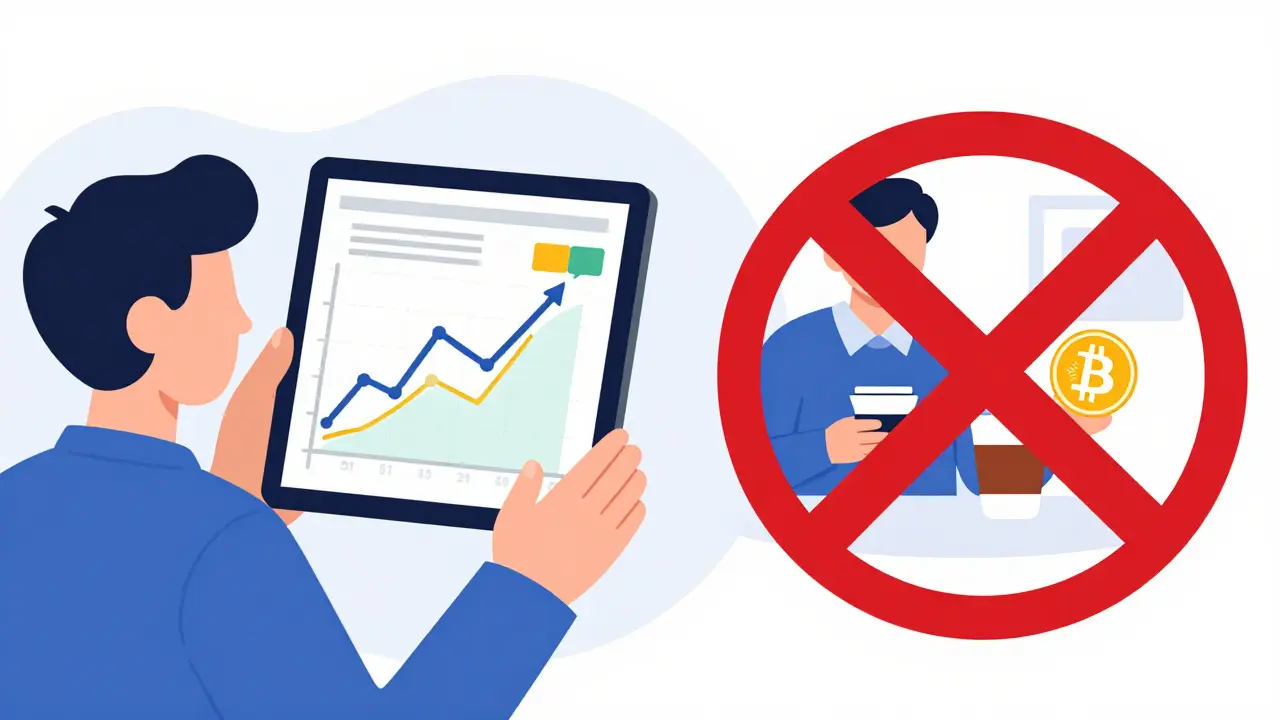
- Trading is Legal, Payments are Not: Crypto is for investment only; the Rupiah is the only legal tender for payments.
- Use Licensed Platforms: Trading on OJK-approved exchanges reduces your tax rate from 1% to 0.21%.
- Taxation is Final: Under PMK 50/2025, VAT is gone, replaced by a final Income Tax system.
- KYC is Stricter: Expect a multi-step verification process including a mandatory financial literacy test.
The Golden Rule: Investment vs. Payment
First, let's get the most important distinction out of the way. In Indonesia, cryptocurrency is legally recognized as a tradable financial instrument. This means you can buy, sell, and hold assets like Bitcoin or Ethereum to make a profit. However, using these assets as a means of payment is strictly prohibited. Bank Indonesia's Regulations and the 2023 Payment Systems Law are clear: only the Indonesian Rupiah is legal tender. If you start accepting crypto for services or goods, you're violating the law.
How to Get Started Legally
Getting into the market isn't as simple as downloading an app and linking a card. Since the OJK took over from BAPPEBTI, the onboarding process has become more rigorous to protect investors. To trade legally, you have to follow a specific sequence of steps.
- Choose a Licensed Exchange: Only use platforms licensed under OJK Regulation No. 27 of 2024. As of mid-2025, there are 22 approved platforms. Big names like Indodax is Indonesia's largest crypto exchange with millions of registered users and Tokocrypto is a major domestic exchange acquired by Huobi are the most common choices.
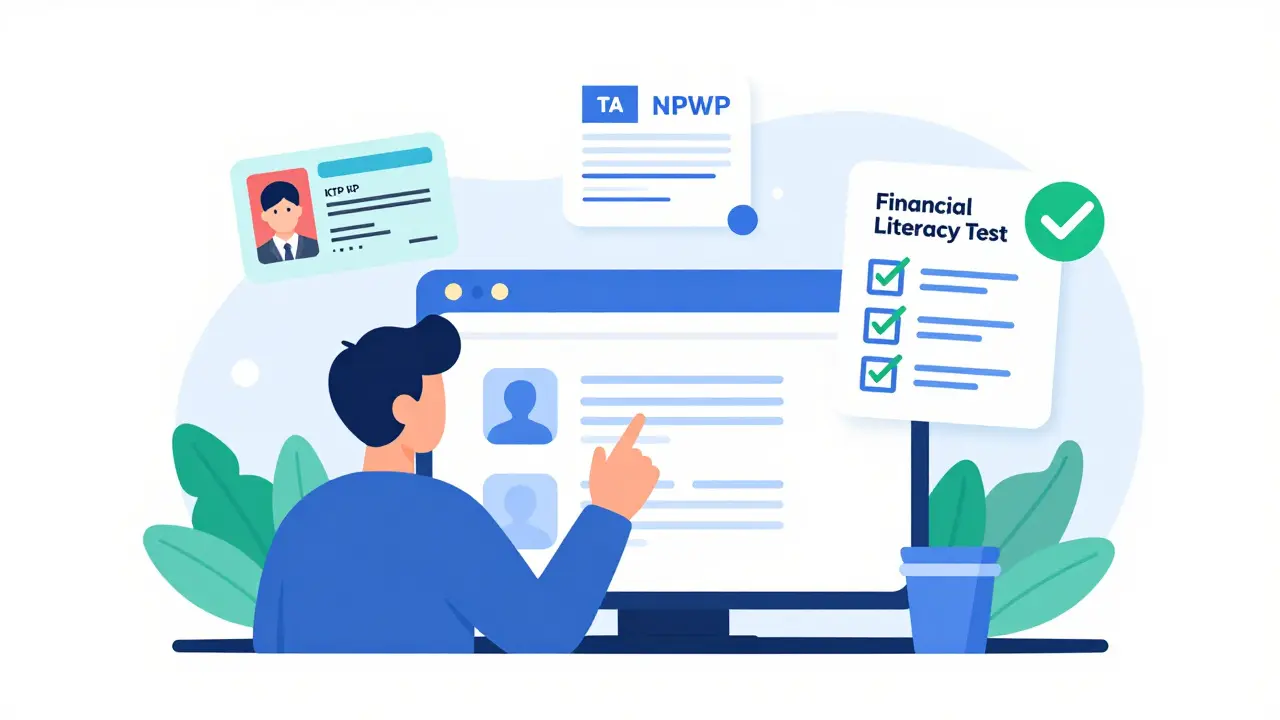
- Submit Your Documents: You'll need your National Identity Card (KTP) and your NPWP (Tax Identification Number). Without the NPWP, your tax situation becomes much more complicated.
- Pass the Literacy Test: This is a new hurdle. You must complete a 15-question financial literacy test on crypto risks. You need a score of at least 80% to proceed. It's designed to ensure you actually understand the volatility you're stepping into.
- Link a Local Bank Account: For your fiat on-ramps and off-ramps, you must use a bank account registered with Bank Indonesia.
Be patient with this process. While it used to take a day or two, the new OJK requirements mean it now typically takes 3 to 7 business days to get fully verified. If you try to skip these steps by using an offshore exchange, you're entering a high-risk zone regarding taxes and legal protection.
Navigating the New Tax Landscape (PMK 50/2025)
Taxes used to be a confusing mess, but the introduction of PMK 50/2025 is a Ministry of Finance regulation that eliminated VAT on crypto and implemented a final Income Tax system on August 1, 2025, simplified things-provided you stay domestic. The most significant change is that Value Added Tax (VAT) has been removed entirely because crypto is now viewed similarly to securities.
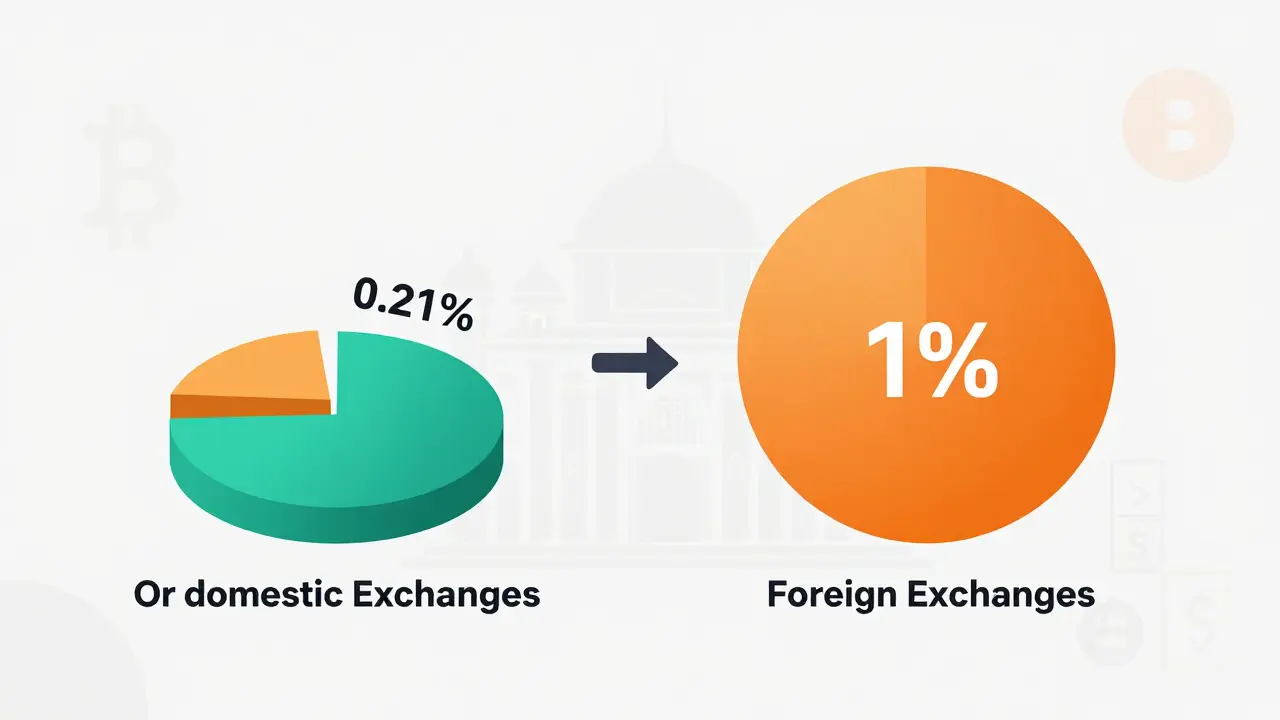
Now, it's all about the Income Tax Article 22. The rate you pay depends entirely on where you trade. If you use a licensed domestic exchange or a local Payment Service Enabler, you pay a final tax of 0.21%. If you use a foreign platform or self-report your gains, that rate jumps to 1%. That's a massive difference that can eat into your profits over time.
| Feature | OJK-Licensed Domestic Exchange | Foreign / Unregulated Platform |
|---|---|---|
| Income Tax Rate | 0.21% (Final) | 1% (Final) |
| VAT | 0% (Eliminated) | 0% (Eliminated) |
| Reporting | Automatic via Exchange | Manual Self-Reporting |
| Compliance Risk | Low (Regulated) | High (Potential OJK issues) |
Common Pitfalls and How to Avoid Them
Even experienced traders are hitting some bumps with the new rules. One of the biggest issues is the "tax gap." Many traders mistakenly believe the 1% tax for foreign exchanges is a suggestion or can be ignored. It isn't. The OJK and the Directorate General of Taxes (DGT) have integrated systems to track large flows of capital. If you're moving significant amounts of money, they will notice.
Another headache is the limit on cross-border remittances. If you're trying to move more than IDR 100 million (roughly USD 6,500), you can't just hit 'send.' Under OJK Circular Letter No. 15/SEOJK.04/2025, these transactions require special approval. If you ignore this, your bank account could be flagged for suspicious activity, leading to a long and tedious audit process.
Lastly, be careful with DeFi. While centralized exchanges are clearly regulated, Decentralized Finance is financial services like lending or swapping that operate on blockchain without central intermediaries still exists in a legal gray area in Indonesia. While not explicitly banned, they don't have the same legal protections as OJK-licensed platforms. If a DeFi protocol rugs you, don't expect the OJK to help you get your money back.
The Future of Trading in Indonesia
The market is maturing quickly. By early 2026, we're seeing more consolidation. The OJK's high capital requirements (minimum IDR 5 billion) are weeding out the smaller, less secure players. Starting January 1, 2026, all licensed exchanges must provide proof-of-reserves audits. This is great news for us-it means the exchange can't just say they have your coins; they have to prove it mathematically.
There's also talk about stablecoins. The OJK and Bank Indonesia are discussing whether certain stablecoins could be used for cross-border remittances. If that happens, it could bridge the gap between the "investment only" rule and actual utility, making it easier for businesses to handle international payments without the volatility of Bitcoin.
Is it illegal to use Binance or Bybit in Indonesia?
It is not strictly illegal to own an account on a foreign exchange, but it is significantly more expensive and risky. You are required to self-report your transactions and pay a 1% final income tax, compared to 0.21% on licensed domestic platforms. Furthermore, you don't have the legal protections offered by the OJK if the platform fails.
Do I have to pay VAT on my crypto trades?
No. As of August 1, 2025, under PMK 50/2025, VAT has been eliminated for crypto asset trading. Crypto is now classified as a digital financial asset, similar to securities, which are exempt from VAT.
What happens if I fail the OJK financial literacy test?
If you don't score at least 80%, you won't be able to complete your registration on a licensed exchange. You'll typically be allowed to retake the test after reviewing the provided educational materials on crypto risks and volatility.
Can I use crypto to pay for a hotel or a meal in Bali?
No. This is strictly prohibited. Bank Indonesia regulations mandate that only the Indonesian Rupiah can be used for payments within the country. Using crypto for payments is a violation of the Payment Systems Law.
How is the tax collected on domestic exchanges?
Domestic exchanges automate this process. They remit the 0.21% tax to the government within 72 hours of your transaction and provide you with quarterly tax statements by the 10th business day of the next quarter.
Next Steps and Troubleshooting
If you're a beginner, your first move should be to visit the official OJK Crypto Asset Trading Portal to verify that your chosen exchange is actually on the licensed list. Don't take a website's word for it; check the government source.
For high-volume traders, if you've been using foreign platforms, it's time to audit your self-reporting. The DGT is becoming more aggressive with the implementation of PMK-504 guidelines. Switching to a domestic platform like Indodax or Tokocrypto not only lowers your tax bill by 0.79% but also removes the stress of manual reporting.
If you're experiencing delays in withdrawals, check your KYC status. The new OJK Regulation 27 has added several verification steps. If you're stuck, the OJK maintains a 24/7 compliance hotline at +62 21 157 8900, though be prepared for a few hours of wait time during peak periods.