Iceland Crypto Mining Energy Allocation: Why Growth Is Halted
 Sep, 20 2026
You might think that a country powered entirely by volcanoes and glaciers would have an endless supply of electricity. For the first decade of the cryptocurrency boom, Iceland seemed like the perfect playground for miners. Cheap, green energy? Check. Cold air for cooling rigs? Check. Political stability? Double check. But as we move through 2026, the party is effectively over for new entrants. The Iceland grid is tapped out, and the days of grabbing a megawatt contract with a handshake are long gone.
The core issue isn't that Iceland lacks renewable resources; it’s that they’ve hit a physical ceiling on infrastructure. While the nation generates roughly 8% of its total energy consumption toward crypto mining, this figure represents a massive strain on a system designed primarily for aluminum smelting and residential use. If you’re looking to deploy ASICs in Reykjavik today, you aren’t just fighting for price-you’re fighting for existence. Here’s why the energy allocation landscape in Iceland has shifted from open arms to closed doors.
The Grid Capacity Paradox
Iceland produces about 75% of its electricity from hydroelectric plants and 25% from geothermal sources. Sounds great, right? The problem is that these plants are running at near-maximum capacity. There is very little "stranded" energy left to grab. In the early 2010s, miners could snap up surplus power generated during off-peak seasons or from smaller, underutilized sites. Today, the National Energy Authority reports that the grid is saturated.
This saturation creates a zero-sum game. Every kilowatt-hour allocated to a Bitcoin miner is a kilowatt-hour denied to a new data center, a hydrogen production facility, or an expanding aluminum smelter. The government has realized that while crypto brings foreign currency, it doesn't bring much in the way of local jobs or stable tax revenue compared to traditional heavy industry. Consequently, new connections are rare. If you don't already have a Power Purchase Agreement (PPA) signed before 2024, your chances of getting one now are slim to none.
Policy Shifts and Government Stance
The political wind has changed noticeably. Back in 2024, Prime Minister Katrín Jakobsdóttir publicly expressed a desire to reduce the footprint of cryptocurrency mining. This wasn't just rhetoric; it signaled a strategic pivot. The Icelandic government is no longer viewing crypto mining as a golden goose but rather as a competitor for scarce national resources.
Officials are increasingly favoring "less energy-intensive" digital economy applications. Think blockchain development, fintech startups, and AI research labs that need high-speed connectivity more than raw power. The government’s push toward a Central Bank Digital Currency (CBDC) also reflects this preference-they want blockchain utility without the massive energy overhead of Proof-of-Work mining. For miners, this means regulatory uncertainty is rising. You might not get banned outright, but you will face higher scrutiny, stricter environmental impact assessments, and potentially punitive tariffs if your operation is seen as hogging resources needed for domestic priorities.
Economic Trade-offs: Who Gets the Power?
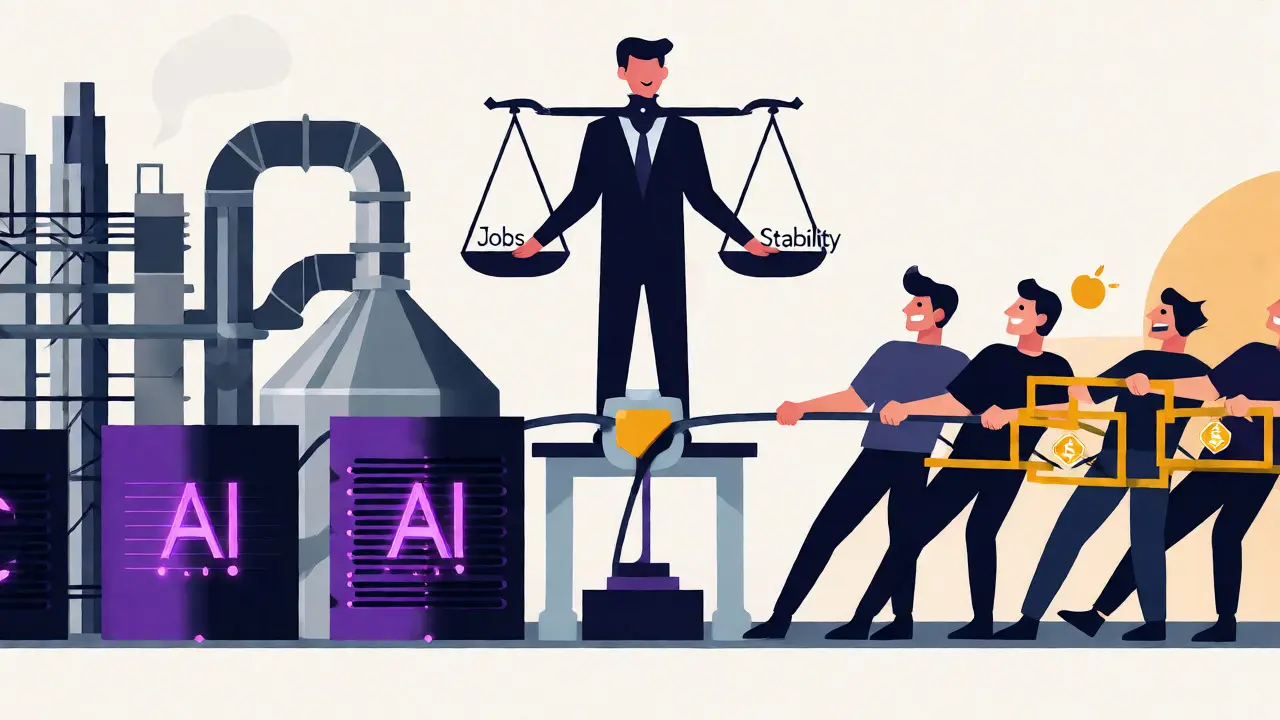
Let’s look at the numbers. The crypto sector contributes roughly 2% to Iceland's GDP. That sounds decent until you compare it to the opportunity cost. Aluminum smelting, which has dominated Iceland's industrial landscape for decades, provides stable, high-paying jobs and consistent export revenue. Crypto mining, by contrast, is volatile. When Bitcoin prices drop, miners can throttle down or shut off instantly. While this flexibility helps grid stability during crises, it makes economic planning difficult for the state.
Furthermore, the rise of Artificial Intelligence (AI) has created a new, hungrier competitor. Data centers for AI training require both massive power and sophisticated cooling-exactly what Iceland offers. However, AI companies often pay premium rates for reliability and low-latency fiber connections, something many older crypto facilities lack. As a result, some existing mining leases are being renegotiated or sold to tech giants who can afford higher tariffs. The era of cheap wholesale power for miners is ending because the market has found buyers willing to pay more.
Infrastructure Bottlenecks and Expansion Limits
Building new power plants in Iceland is slow. It involves complex environmental permits, geological surveys, and significant capital expenditure. Current infrastructure development timelines suggest that any major increase in generation capacity won't happen before 2030. Until then, the pie isn't getting bigger; slices are just being redistributed.
For established players like Genesis Mining or Verne Global, this is manageable. They secured their allocations years ago when regulations were laxer. But for new operators, the barrier to entry is insurmountable. You cannot simply buy land and plug in. You need a grid connection, and those are currently rationed. Many miners report waiting lists that stretch into years, if they even get on the list. Some have tried deploying mobile container farms to bypass fixed infrastructure, but even these require grid tie-ins that are hard to secure.
| Sector | Priority Level | Growth Potential | Job Creation Impact |
|---|---|---|---|
| Aluminum Smelting | High (Legacy) | Low/Stable | High (Direct Employment) |
| Crypto Mining | Medium (Under Review) | Negative/Flat | Low (Automated) |
| AI Data Centers | High (Strategic) | High | Medium (Tech Talent) |
| Hydrogen Production | High (Export Focus) | Medium | Medium (Industrial Jobs) |
What This Means for Miners
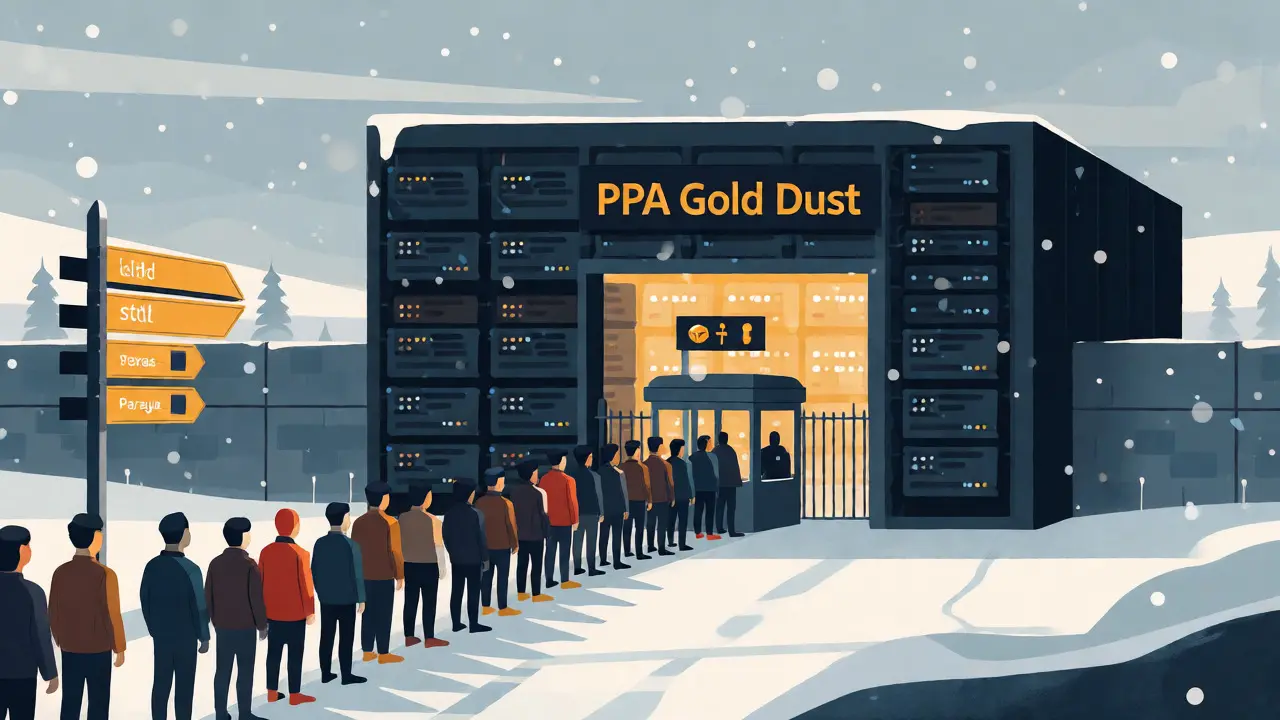
If you are already operating in Iceland, you are sitting on a valuable asset: your PPA. These contracts are becoming gold dust. Hold onto them tightly. The secondary market for mining operations in Iceland is active, with buyers paying premiums specifically for access to existing power allocations. Do not expect to expand easily. Most expansion requests are met with indefinite delays due to grid constraints.
If you are a new entrant, Iceland might be the wrong choice. Look at regions with growing grid capacity, such as parts of Texas, Paraguay, or Ethiopia, where governments are actively building infrastructure to attract industrial load. Iceland offers unbeatable political stability and 100% renewable certification, which is crucial for ESG reporting. But if your strategy relies on scaling hash rate aggressively, the frozen north is no longer the frontier-it’s a fortress with limited gates.
The sentiment among community members on forums like Bitcoin Talk reflects this reality. Veterans speak fondly of the early days but acknowledge that the window for easy growth has slammed shut. The consensus is clear: Iceland remains a safe harbor for existing capital, but it is no longer a launchpad for new ventures.
Is crypto mining banned in Iceland?
No, it is not banned. Existing operations continue to run legally. However, new grid connections are extremely difficult to obtain, and the government is actively discouraging further expansion by prioritizing other industries for limited energy resources.
Why did Iceland stop welcoming new miners?
The primary reason is grid saturation. Despite abundant renewable sources, Iceland’s transmission and distribution infrastructure cannot handle unlimited industrial load. Additionally, the government seeks to balance economic benefits against environmental concerns and prioritize sectors that offer greater job creation, such as tourism and tech.
Can I still buy electricity for mining in Iceland?
You can buy electricity if you have an existing contract or acquire a facility with a secured Power Purchase Agreement (PPA). New direct connections to the grid are subject to strict rationing and long waiting periods, making it impractical for most new startups.
How does Iceland's energy mix affect mining?
Iceland uses approximately 75% hydroelectric and 25% geothermal power. Both are renewable, allowing miners to claim a low carbon footprint. However, hydro output fluctuates with rainfall, and geothermal plants have fixed capacities, limiting the ability to scale power supply dynamically.
Are there alternatives to Iceland for green mining?
Yes. Regions like Quebec (Canada), Norway, and certain US states with excess renewable capacity (like Washington State) offer similar green credentials. Some African nations are also emerging as hubs for stranded hydropower utilization, offering lower costs and fewer regulatory hurdles than Iceland.