IPFS vs Centralized NFT Storage: Which One Actually Keeps Your Digital Art Safe?
 Feb, 3 2026
Imagine buying an NFT of a digital artwork for $10,000. You’re excited. You show it off. Then, one day, the image vanishes. Not because someone stole it - but because the website hosting it shut down. This isn’t science fiction. It’s happened to thousands of NFTs already.
The problem isn’t the blockchain. It’s where the art, video, or audio file lives. Most NFTs don’t store the actual file on-chain. They store a link. And that link? It’s often pointing to a single server somewhere. If that server goes dark, your NFT becomes a digital ghost - a token with nothing behind it.
How IPFS Actually Works (And Why It’s Different)
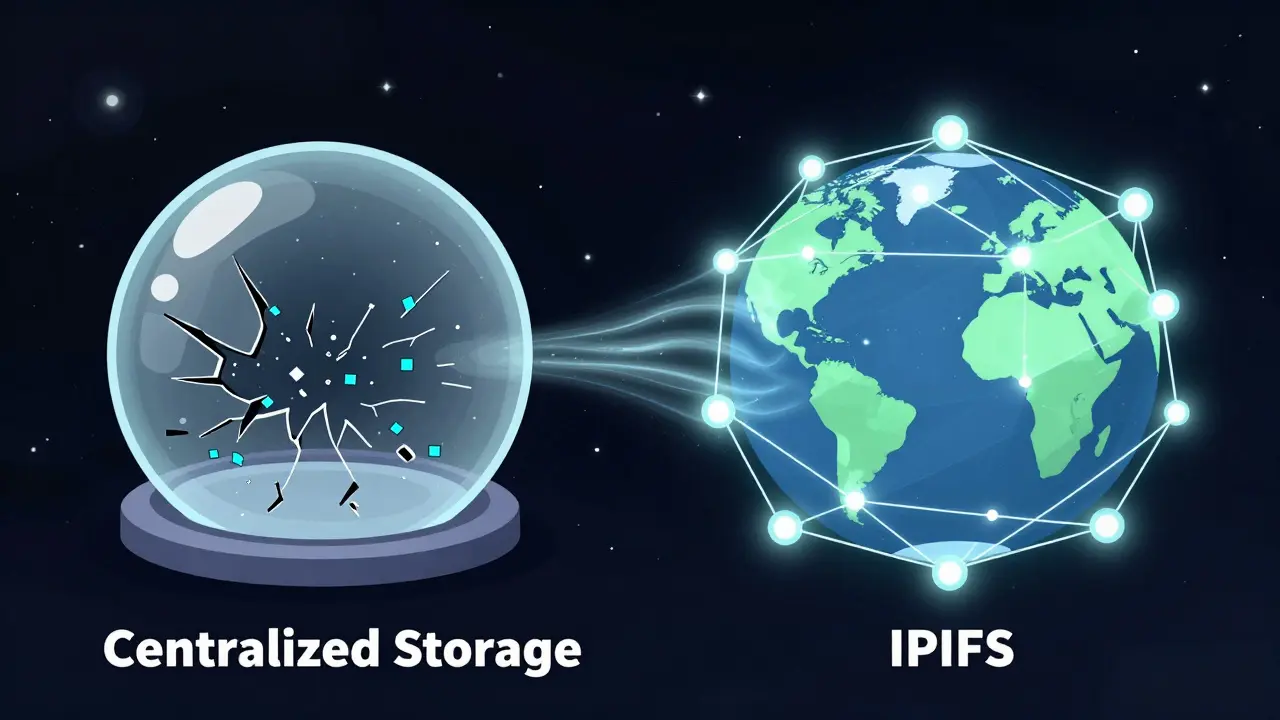
IPFS - the InterPlanetary File System - doesn’t store files in one place. It doesn’t even use web addresses like https://example.com/art.jpg. Instead, it gives every file a unique fingerprint called a CID - a long string of letters and numbers that acts like a DNA code for that exact file. If even one pixel changes, the CID changes too.
When you upload a file to IPFS, it gets split into pieces and spread across hundreds or thousands of computers worldwide. These computers - called nodes - don’t work for one company. They’re run by volunteers, developers, or organizations who choose to host the data. To retrieve the file, your device asks the network: "Who has this CID?" The closest node sends it back. No central server. No single point of failure.
This is why IPFS is called decentralized. If one node crashes, another has the file. If a company shuts down, the data lives on. If someone tries to censor it, they’d need to take down every copy globally - which is practically impossible.
How Centralized Storage Fails You
Most NFTs today use centralized storage - think Amazon S3, Google Cloud, or even specialized NFT hosting services like Pinata or nft.storage. These platforms look easy. Upload a file. Get a link. Done.
But here’s the catch: you’re trusting a company to keep your art alive forever. What happens if:
- The company goes bankrupt?
- Their servers get hacked?
- They change their pricing and you can’t afford it?
- They decide to delete content that violates their new terms?
All of these have happened. In 2022, a major NFT marketplace stopped supporting a popular collection. Thousands of NFTs suddenly showed blank images. Collectors lost everything - not because the token was stolen, but because the file it pointed to disappeared.
Even worse: many NFT projects claim they use "IPFS" - but they’re actually using Pinata or nft.storage as a middleman. That’s not decentralization. That’s centralized storage with a fancy name. You’re still at the mercy of one company’s uptime, budget, and decisions.
The Myth of "Decentralized" Hosting Services
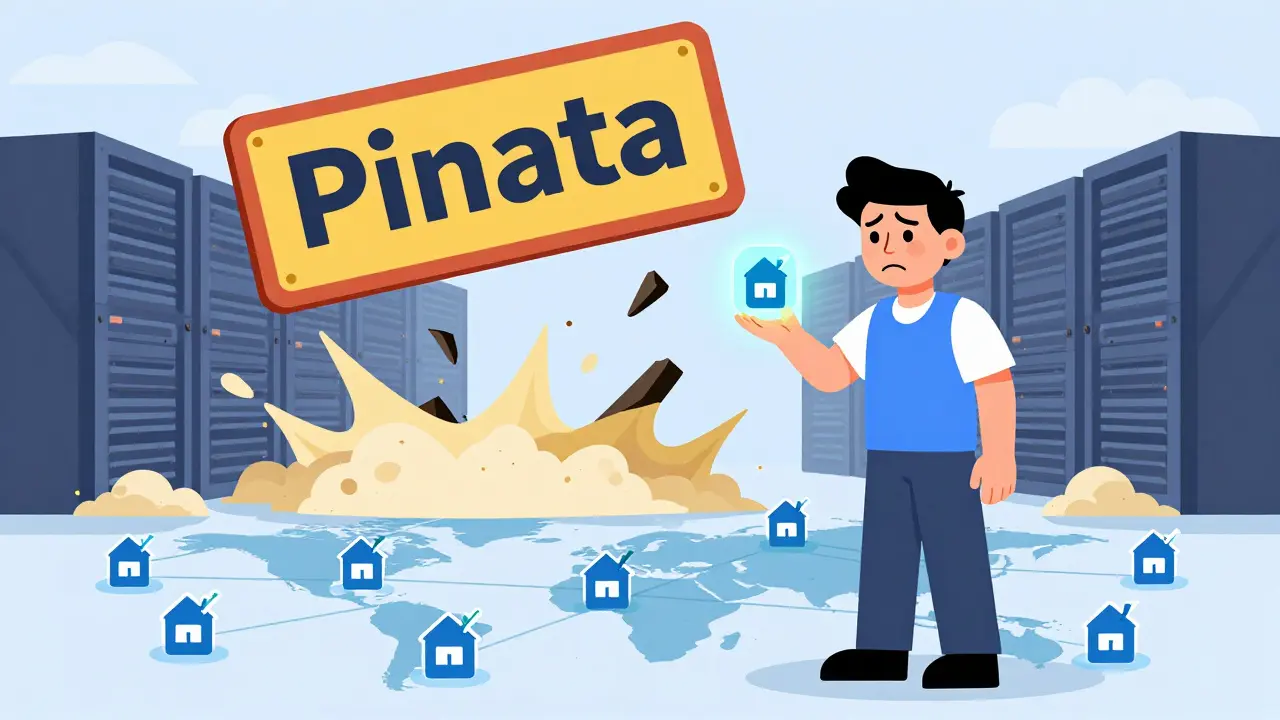
Pinata, nft.storage, Filebase - these are not decentralized. They’re businesses. They run their own servers. They control the nodes. They can shut down. They can change policies. They can disappear tomorrow.
Using them feels like using IPFS, but it’s not the same. True IPFS means you or your community is running the nodes. Or you’re using a network like Filecoin, where people get paid to store your data long-term. Most NFT projects don’t do that. They just upload to Pinata, copy the CID, and call it "on IPFS." That’s like saying your house is "decentralized" because you used a third-party moving company.
According to blockchain research from arXiv, this false sense of security is one of the biggest risks in the NFT market. Projects think they’re safe. Collectors think they own something permanent. But if the hosting company dies, so does your NFT’s value.
What Happens to Your NFT in 10 Years?
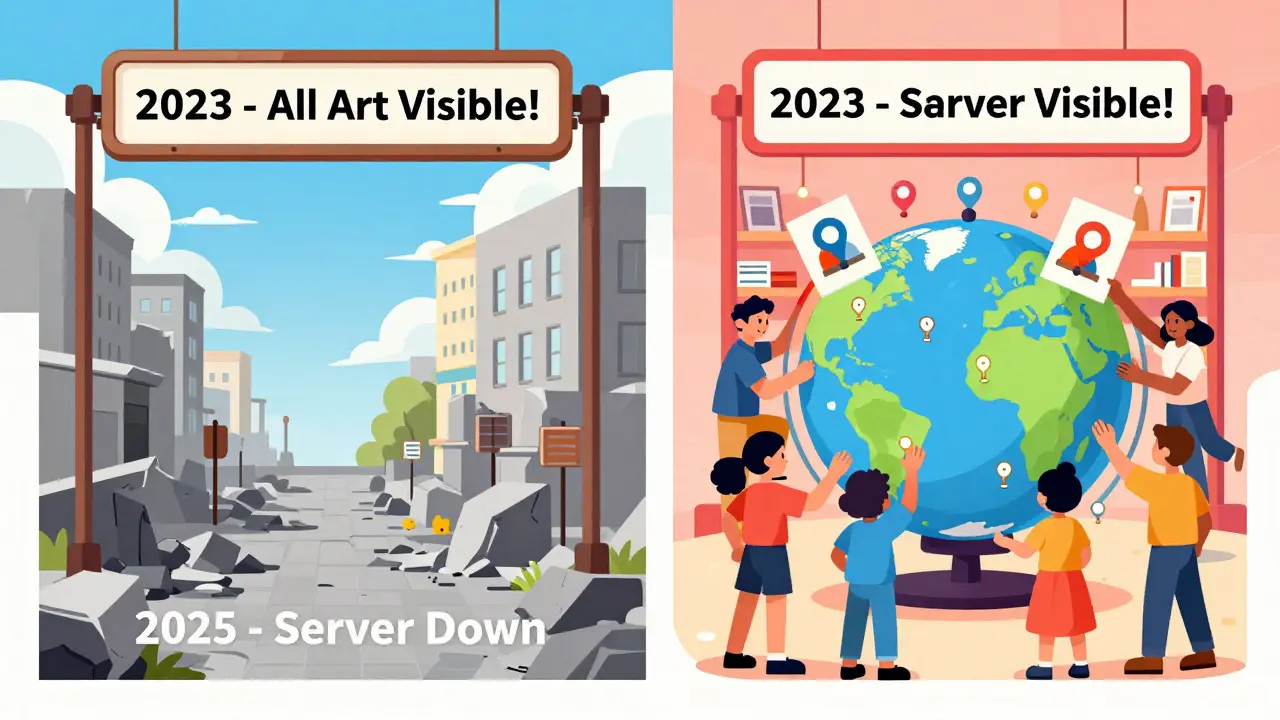
Think long-term. NFTs are sold as permanent digital assets. But centralized storage is built for short-term use. Cloud services change pricing. Companies pivot. Startups fail. Data centers get shut down.
IPFS doesn’t guarantee permanence either - but it gives you a fighting chance. If a file is pinned by even one node, it’s still accessible. There are communities that archive NFTs. Researchers who preserve digital culture. Libraries that want to keep NFT art for future generations.
On centralized storage? Your art lives as long as the company’s bank account. That’s not ownership. That’s a lease.
Cost, Ease, and Real-World Trade-Offs
Let’s be honest: IPFS is harder. Setting up your own node. Managing pinning. Making sure your data stays alive - it takes time. Centralized services? You click a button. It works. That’s why 80% of NFTs still use them.
But here’s the thing: if you’re serious about owning something that lasts, convenience isn’t enough. You need durability. You need control. You need to know that even if OpenSea shuts down, even if your wallet provider disappears, your NFT’s art still exists.
Some projects are starting to solve this. A few use Arweave - a blockchain-based storage system where you pay once, and your data is stored forever. Others run their own IPFS clusters. A handful even put small versions of their art on-chain (though that’s expensive and only works for tiny files).
But most? They’re still gambling. Hoping the hosting company won’t go under. Praying their link doesn’t break.
What Should You Do?
If you’re an NFT creator:
- Don’t just use Pinata or nft.storage as your final solution. Use them as a stepping stone, then migrate to a truly decentralized setup.
- Use Filecoin or Arweave for permanent storage. They charge a small fee upfront - but your data lasts forever.
- Encourage your community to pin your NFTs. The more nodes that hold your data, the safer it is.
If you’re a collector:
- Check where your NFT’s metadata is stored. Look up the CID. Search it on ipfs.io or Pinata - if it loads, it’s still alive.
- Download a copy of the file. Save it on your hard drive. Store it offline.
- Support NFT projects that use truly decentralized storage. Vote with your wallet.
The future of NFTs isn’t about flashy art or hype. It’s about infrastructure. And right now, most of it is built on sand.
IPFS isn’t perfect. But it’s the only system that gives digital ownership a real shot at lasting. Centralized storage? It’s a time bomb.
Is IPFS truly decentralized if I use Pinata or nft.storage?
No. Pinata, nft.storage, and similar services are centralized companies that run their own servers. Even though they use the IPFS protocol underneath, you’re still relying on one company to keep your data alive. True decentralization means your data is stored across many independent nodes, not controlled by a single business. If Pinata shuts down, your NFT’s file could disappear - just like with any centralized host.
Can I lose my NFT if I use IPFS?
Yes - but only if no one is pinning your data. IPFS doesn’t automatically save files forever. Someone (a node) has to actively store (or "pin") your file. If no one does, the data gets deleted over time. That’s why projects using IPFS often pay pinning services or run their own nodes. Without active pinning, your NFT’s link will eventually break.
Why don’t all NFTs use on-chain storage?
Because it’s expensive. Storing large files like images or videos directly on Ethereum or Solana costs hundreds or even thousands of dollars per NFT. Most creators can’t afford that. So they use off-chain storage instead - which is why the storage layer has become the weakest link in the NFT chain.
What’s the difference between IPFS and Arweave?
IPFS is a peer-to-peer network that stores files temporarily unless someone pins them. Arweave pays miners once to store data forever using a "permanent storage" model. With Arweave, you pay a one-time fee (usually under $10 per NFT), and your data is guaranteed to exist as long as the Arweave blockchain runs. It’s more expensive upfront than IPFS, but you never pay again - making it ideal for long-term NFT storage.
Are there any NFT projects using truly decentralized storage?
Yes. Projects like Mirror, SuperRare, and some CryptoPunks variants use Arweave or self-hosted IPFS clusters. A few even combine both: they store metadata on IPFS and use Filecoin for economic incentives. These projects are rare but growing. They’re the ones that will survive if centralized platforms collapse.
Deeksha Sharma
February 4, 2026 AT 04:55It’s wild how we treat digital art like it’s immune to decay. We buy NFTs like they’re heirlooms, but forget that if the server hosting it dies, it’s just a fancy URL pointing to nothing. IPFS isn’t magic-it’s just better than relying on a single company’s goodwill. The real win? When communities pin each other’s art. That’s ownership, not just a transaction.
And yeah, Pinata isn’t decentralization. It’s a nice wrapper. Like buying a house and thinking the realtor owns it. We need to stop being lazy and start caring about the infrastructure behind the pixels.
mahikshith reddy
February 4, 2026 AT 13:15Stop pretending IPFS is safe. It’s just a fancy dumpster fire with more nodes. If no one pins your file, it vanishes. And 99% of NFT buyers don’t even know what a CID is. You think your $10k Bored Ape is safe? Nah. It’s hosted on a startup’s free tier. This whole ecosystem is built on delusion. Wake up.
Nathaniel Okubule
February 4, 2026 AT 17:34Thanks for laying this out clearly. The biggest issue isn’t technology-it’s expectation. People think buying an NFT means owning the art. But ownership requires persistence. If you want your digital asset to last, you have to invest in its survival. That means paying for Arweave, running a node, or supporting projects that do. Convenience kills permanence.
Shruti Sharma
February 6, 2026 AT 14:24omg i just checked my nft and it’s gone?? like literally just a blank space?? i spent my rent money on this 😭 i thought ipfs meant forever?? someone help me i feel so stupid
also pinata is trash i’m so mad now
Robin Ødis
February 7, 2026 AT 12:36Look, I’ve been in crypto since 2017 and I’ve seen this exact thing happen three times now. People get seduced by the idea of decentralization but then they use Pinata because it’s ‘easy’ and then they cry when it breaks. It’s not the protocol’s fault-it’s the user’s laziness. True decentralization requires effort. You don’t get to have blockchain benefits without doing blockchain work. You can’t just click ‘upload’ and call it a day and then act surprised when your NFT becomes a ghost. The blockchain stores the token, not the file. That’s Lesson One. And yet, here we are, five years later, still having this conversation because people refuse to read the docs. Arweave exists for a reason. Filecoin exists for a reason. Stop being a sheep and start being a participant. Or stop complaining when your digital art disappears. It’s not a mystery. It’s a consequence.
sabeer ibrahim
February 9, 2026 AT 02:46Bro, why are we even talking about this? In India, we don’t even have stable internet. You think some guy in Berlin is gonna pin your NFT forever? This whole ‘decentralized’ thing is a Western fantasy. If you want your art to survive, pay for Arweave. Or just download the damn JPEG and save it on a USB. Stop overcomplicating it. The blockchain doesn’t care if your art loads. It just records the transaction. The rest? That’s your problem. And no, Pinata isn’t ‘on IPFS’-it’s just a middleman with a marketing team. Real decentralization means you’re hosting it. Or you’re paying someone who actually runs nodes. Not a startup that uses AWS under the hood. Get real.