Kanga Exchange Review 2026: Is This Hybrid Crypto Platform Worth Your Trust?
 May, 20 2026
Kanga Exchange is a Poland-based cryptocurrency trading platform that combines online digital trading with a unique network of physical brick-and-mortar exchange points across Europe. Founded in September 2018 by Slawomir Zawadzki and a team of business professionals, it aims to bridge the gap between traditional finance and digital assets. But here is the hard truth you need to know before depositing your money: while Kanga offers something no major competitor does-face-to-face cash transactions-it struggles significantly with user trust and technical reliability compared to industry giants.
If you are looking for a simple way to buy Bitcoin with cash in person or trade within the Polish market, Kanga might catch your eye. However, if you are an active trader seeking deep liquidity, advanced charting tools, or rock-solid customer support, you need to look closer at the cracks in its foundation. This review breaks down exactly what works, what doesn’t, and whether this hybrid model is a smart move for your portfolio in 2026.
The Unique Selling Point: Physical Crypto ATMs & OTC Points
Most exchanges exist entirely on the internet. You send bank transfers, you click buttons, you wait for confirmations. Kanga Exchange flips this script. Its biggest differentiator is its extensive network of over 250 physical crypto exchange points (often referred to as OTC points) across more than 12 countries. As of 2025, this network has expanded to include over 800 locations, primarily concentrated in Central and Eastern Europe.
Why does this matter? For many users, especially those who distrust banks or want immediate anonymity in their initial purchase, walking into a store and handing over cash for Bitcoin feels safer than wiring funds from a bank account that might freeze due to regulatory flags. In Poland, Czech Republic, and Baltic states, this service is invaluable. It solves the "cold start" problem where new users don't have fiat-to-crypto ramps easily available through local banking systems.
- Convenience: No need to wait for SEPA transfer delays if you use cash at a partner location.
- Accessibility: Ideal for older demographics or tech-averse users who prefer human interaction.
- Regional Focus: Strong presence in markets where global giants like Binance face regulatory hurdles.
However, convenience comes with a cost. These physical points often charge higher spreads than pure online platforms. You are paying for the privilege of privacy and speed. If you are buying large amounts, the fees at these kiosks will eat into your investment faster than standard wire transfers on competitors like Coinbase or Kraken.
Trading Features: What Can You Actually Do?
Beyond the physical stores, Kanga operates a standard web-based trading platform and mobile apps for iOS and Android. The interface is designed to be beginner-friendly, which is good for novices but frustrating for pros.
Here is what the platform supports:
| Feature | Details | Limitation |
|---|---|---|
| Cryptocurrencies | Over 140 coins | Fewer options than Binance (1000+) |
| Trading Pairs | 200+ pairs | Limited altcoin variety |
| Futures Trading | Up to 100x leverage | High risk; lower liquidity depth |
| Spot Trading Fees | 0.2% maker/taker | Average rate, not competitive |
| Minimum Deposit | PLN 100 (~$25 USD) | Low barrier to entry |
The futures trading feature, updated in mobile version 1.26.0 in 2025, allows experienced traders to bet on price movements with leverage. While 100x leverage matches industry standards set by ByBit or BitMEX, the underlying liquidity on Kanga is significantly thinner. This means during high-volatility events, slippage can be severe. You might enter a trade expecting one price and get another because there aren't enough buyers or sellers in the order book.
Additionally, the platform lacks modern features that have become table stakes in 2026. There is no copy trading, no NFT marketplace, and limited API access for algorithmic traders. If you rely on automated bots or social trading signals, Kanga is not the place for you.
The Red Flag: Trust Scores and User Experience
This is the section that should make you pause. When evaluating any financial platform, reputation is everything. Kanga Exchange’s trust score is concerning.
On Trustpilot, the platform holds a rating of just 2.8 out of 5 stars. Compare this to established competitors: Coinbase and Kraken typically maintain ratings above 4.0. A 2.8 rating indicates systemic issues, not just bad luck. Users frequently cite two main problems:
- Customer Service Responsiveness: Many reviews mention long wait times or unhelpful responses when trying to resolve account issues. Phone support is available (+48 58 573 36 33 for Poland), but users report it is difficult to reach during peak hours.
- Mobile App Bugs: A critical flaw reported by multiple users involves limit orders. One reviewer noted, "when setting a limit sell order, you cannot enter the order to edit or cancel it." This is a significant usability failure. In fast-moving markets, being unable to adjust or cancel a pending order can lead to substantial losses.
While the iOS app receives praise for its simplicity, the backend functionality clearly lags behind. If you plan to trade actively via mobile, these bugs could cost you real money. Always test with small amounts first.

Security and Regulation: Are Your Funds Safe?
Kanga Exchange operates under a license from the Republic of Seychelles and claims backing from the Polish Financial Supervision Authority (KNF). This regulatory positioning is stronger than many offshore exchanges but weaker than EU-wide MiCA compliance held by larger entities like Bitstamp or Coinbase Europe.
Security measures include:
- Two-Factor Authentication (2FA): Mandatory for account protection.
- Multi-chain Wallets: Supports storage across various blockchain networks.
- Cold Storage: Industry-standard practice for keeping the majority of funds offline.
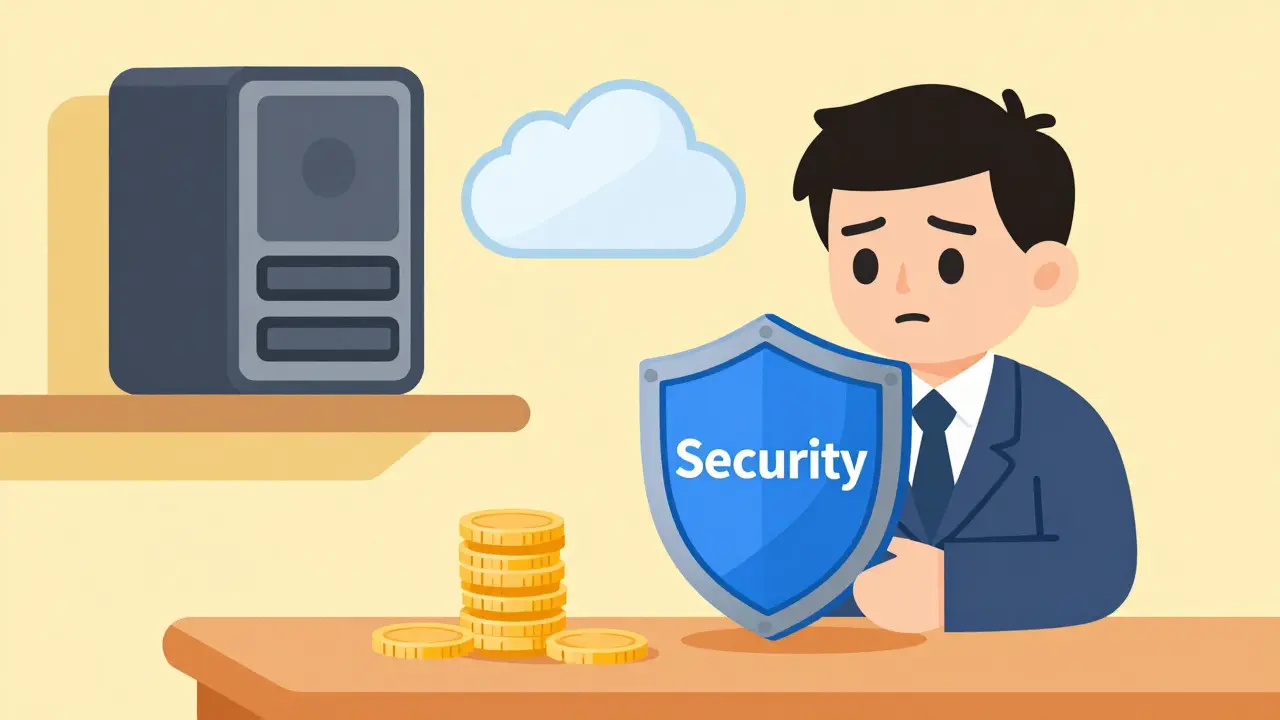
However, "backed by" is a vague term. It is crucial to understand that KNF supervision applies to specific activities, not necessarily full insurance coverage for all digital assets. Unlike banks, your crypto deposits are not insured by government schemes if the exchange goes bankrupt. Given the lower liquidity and smaller scale of Kanga compared to tier-1 exchanges, the risk profile is inherently higher. Always keep only what you intend to trade on the exchange; move long-term holdings to a hardware wallet like Ledger or Trezor.
Fees and Costs: The Hidden Drains
Trading fees on Kanga are straightforward but not cheap. Spot trading fees sit at 0.2% for both makers and takers. This is average. Platforms like Binance offer lower rates for high-volume traders, while others provide fee discounts for holding native tokens.
Withdrawal fees vary by cryptocurrency. Deposits are free for crypto transfers, but fiat withdrawals may incur bank charges. The real cost lies in the spread at physical OTC points. If you buy Bitcoin for cash at a kiosk, you might pay 2-5% more than the market rate. Over time, these costs compound. For serious investors, using bank transfers to fund the account and trading online is far more economical than relying on the physical network for large purchases.
Who Should Use Kanga Exchange?
Kanga Exchange is not for everyone. It serves a very specific niche.
It IS suitable for:
- Residents of Poland, Czech Republic, and surrounding European countries who need cash-to-crypto services.
- Beginners who find complex interfaces overwhelming and prefer a simplified UI.
- Users who prioritize physical accessibility over low fees or advanced features.
It is NOT suitable for:
- Active day traders requiring deep liquidity and instant order execution.
- Users who demand 24/7 responsive customer support.
- Investors looking for a wide variety of altcoins or DeFi integrations.
- Anyone uncomfortable with a platform that has below-average trust scores.
Final Verdict: Proceed with Caution
Kanga Exchange fills a genuine gap in the European market by offering physical access to cryptocurrencies. Its hybrid model is innovative and useful for specific regional needs. However, innovation does not equal reliability. The combination of poor Trustpilot ratings, buggy mobile functionality, and limited liquidity makes it a risky choice for primary trading activity.
If you decide to use Kanga, treat it as a utility for specific tasks-like converting cash to crypto locally-not as your main brokerage. Keep balances low, verify every transaction, and consider diversifying your trading activity across more established platforms like Kraken or Coinbase for better security and feature sets. In the world of crypto, trust is earned, and right now, Kanga still has work to do.
Is Kanga Exchange regulated?
Yes, Kanga Exchange operates under a license from the Republic of Seychelles and claims oversight from the Polish Financial Supervision Authority (KNF). However, it does not currently hold full EU-wide MiCA licensing, which limits its regulatory protections compared to larger exchanges.
What are the fees on Kanga Exchange?
Spot trading fees are 0.2% for both makers and takers. Withdrawal fees vary by coin. Using physical OTC points for cash transactions often incurs higher spreads (2-5%) compared to standard market rates.
Can I use Kanga Exchange outside of Europe?
The online platform is accessible globally, but its primary value proposition-the physical OTC network-is concentrated in Central and Eastern Europe. Users outside this region may find limited benefits compared to global competitors.
Why is Kanga Exchange's Trustpilot rating low?
The 2.8/5 rating stems from user complaints about slow customer support, inability to edit/cancel limit orders on the mobile app, and occasional platform instability during high-volume trading periods.
Does Kanga Exchange support staking?
Yes, users can participate in proof-of-stake staking mechanisms through the native KNG token and other supported assets, though the selection is limited compared to dedicated staking platforms.
Shelby Cantu
May 21, 2026 AT 13:20Just tried the app today and yeah, the limit order bug is real.
Tobias Gjerlufsen
May 23, 2026 AT 09:20you guys are so naive thinking a platform with a 2.8 trust score is safe for anything other than gambling your rent money away
i mean look at the data liquidity is thin fees are high and support is non existent its not even close to being a viable option for serious trading
people who use this are basically walking into a trap designed by people who dont care about user experience or security protocols
the whole brick and mortar thing is just a gimmick to lure in grandmas who dont know how blockchain works
if you want actual crypto exposure go to binance or kraken stop wasting time on these regional startups that cant even keep their mobile apps functional
Ellie Riddell
May 25, 2026 AT 03:15I suppose there is something poetic about handing over physical cash for digital ghosts in a cold Polish winter.
It really highlights the absurdity of our current financial landscape where we still need middlemen to validate value that exists nowhere but in code.
That said I am not judging those who find comfort in the tangible transaction it speaks to a deep human desire for certainty in an uncertain world.
The fact that Kanga struggles with basic app functionality while charging premium rates for this convenience is almost tragicomic.
We are building the future of finance one buggy interface at a time.
Caique Muniz
May 26, 2026 AT 17:11lol another review telling us what we already knew
kanga is trash and everyone knows it why do u even bother writing all this stuff
just use binance or whatever ur favorite exchange is
also the phone number in the article is probably fake or goes to voicemail like every other scammy exchange support line
dont waste ur time here
Jerry CUNNINGHAM SR
May 26, 2026 AT 23:47It is important to acknowledge that different users have different needs and risk tolerances when engaging with financial platforms.
While the technical limitations mentioned in this review are significant they may not be dealbreakers for individuals living in regions with limited banking infrastructure.
The ability to convert fiat currency to cryptocurrency without relying on traditional banking channels provides a valuable service to many communities across Central Europe.
We should approach such platforms with caution but also with an understanding of the broader economic context in which they operate.
Responsible usage involves keeping balances low and utilizing hardware wallets for long-term storage as suggested in the article.
Jan Gilmore
May 27, 2026 AT 05:21Let me explain something to you about liquidity depth because clearly you don't understand market mechanics
When you trade on an exchange with low volume you are essentially picking up pennies in front of a steamroller
Kanga's order book is so shallow that any decent sized sell order will crash the price locally before matching with buyers
This is why slippage happens and why you lose money on every trade compared to using a tier one exchange
The physical stores are irrelevant if you cannot execute trades efficiently online
I have been trading since 2013 and I can tell you that anyone recommending this platform is either paid to say so or completely ignorant of how professional trading works
Stick to exchanges with high volume and tight spreads if you actually care about preserving your capital