Legal Considerations for Crypto Mining: A 2026 Compliance Guide
 Apr, 22 2026
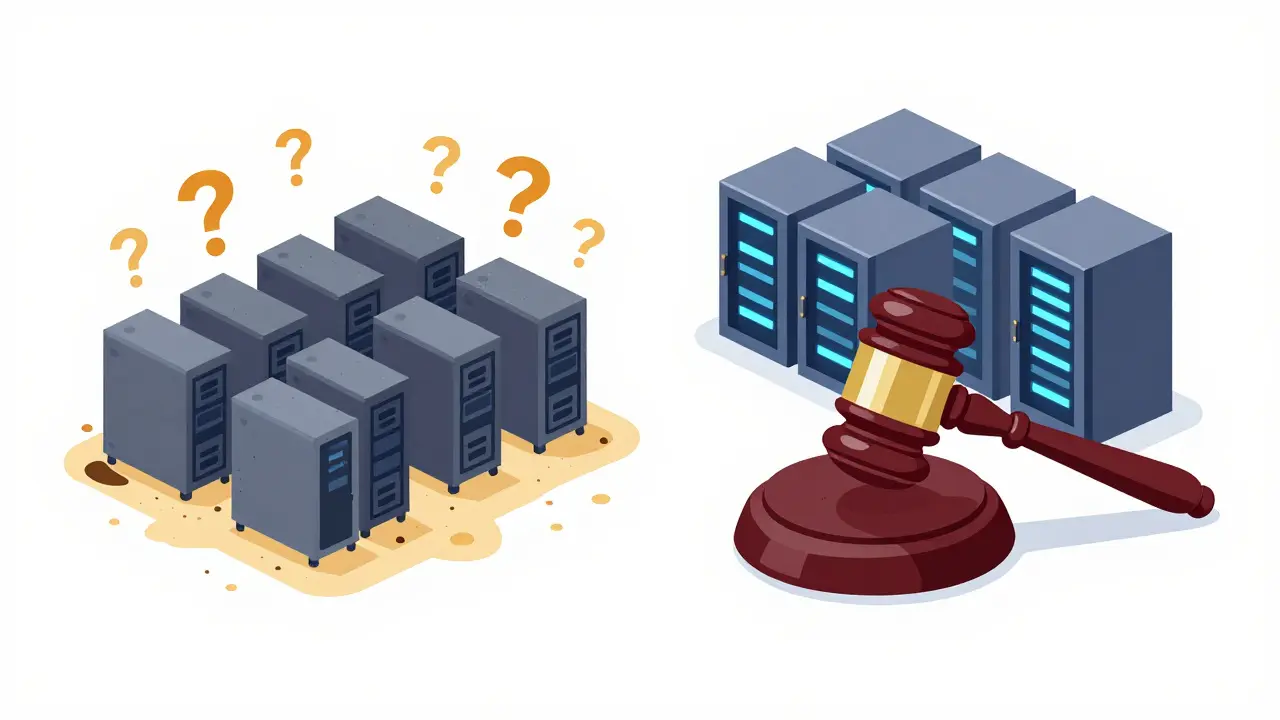
Mining cryptocurrency used to feel like a digital wild west. For years, operators worked in a grey area, guessing whether their hardware setups were accidentally violating securities laws or if they needed a banking license just to collect rewards. That changed dramatically in 2025. We've moved from an era of "regulation by enforcement"-where the government sued people to explain the rules-to a framework of actual laws. If you're running rigs today, the question isn't "is this legal?" but rather "which specific rules apply to my setup?"
The End of the Securities Debate
For a long time, the biggest fear for miners was the Securities and Exchange Commission (SEC) and whether mining rewards counted as unregistered securities. That cloud finally cleared on March 20, 2025. The SEC officially stated that Proof-of-Work mining does not implicate securities laws.
This is a massive win for anyone mining Bitcoin, Dogecoin, or Litecoin. The SEC's logic is simple: if the coins are used for the programmatic functioning of a public, permissionless network-meaning they are earned for keeping the network secure-they aren't investment contracts. However, don't get complacent. This clarity specifically applies to Proof-of-Work. If you're involved in Proof-of-Stake (PoS) systems, where power is tied to how many coins you own rather than how much electricity you burn, the regulatory treatment is different and often stricter.
Navigating US Federal Laws: The GENIUS Act
If you're operating in the States, you're now playing by the rules of the GENIUS Act. This was the first comprehensive federal crypto law signed into action during the historic "Crypto Week" of 2025. It finally replaced the confusing patchwork of agency interpretations with a set of standardized rules.
While the GENIUS Act provides a foundation, you still have to answer to the Financial Crimes Enforcement Network (FinCEN). Under the Bank Secrecy Act, many crypto operations are classified as financial institutions. This means you aren't just a hobbyist with a loud computer; you're potentially a regulated entity with strict Anti-Money Laundering (AML) and Countering the Financing of Terrorism (CFT) obligations.
| Agency | Primary Focus | Key Requirement |
|---|---|---|
| FinCEN | Money Laundering & Terrorism | AML/KYC Compliance |
| SEC | Investor Protection | Securities Classification (Non-PoW) |
| CFTC | Commodities & Derivatives | Futures & Swap Regulation |
The $3,000 Hurdle: Understanding the Travel Rule
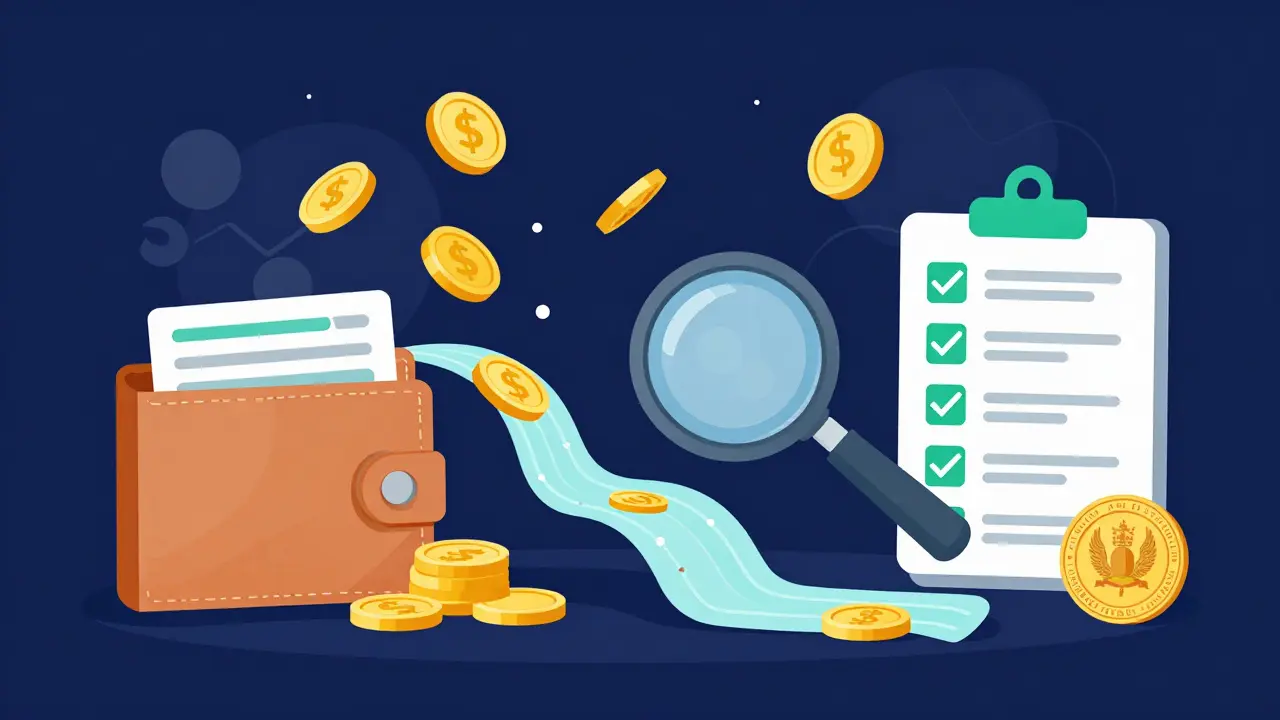
One of the most practical legal headaches for modern miners is the Travel Rule. Enforced by FinCEN, this rule requires Virtual Asset Service Providers (VASPs)-which can include mining pools and custodians-to collect and share customer information for transactions that hit a certain threshold.
In the US, that threshold is $3,000. If a transaction meets or exceeds this amount, you must store and transmit personally identifiable information (PII). We're talking about names, addresses, and the financial institutions involved for both the sender and the receiver. If you're running a professional mining pool, you need a robust system to track these transaction hashes and wallet addresses. Ignoring this isn't just a minor mistake; it's a violation of federal law that can lead to heavy penalties.
European Operations and MiCAR
If your mining operation has a footprint in Europe, you're dealing with MiCAR (Markets in Crypto-Assets Regulation). Fully implemented in December 2024, MiCAR creates a single regulatory umbrella across the EU. Unlike the US, where you deal with different agencies, MiCAR provides a more unified licensing process.
A unique challenge in the EU is the intersection of crypto and the "Green Deal." The European Commission has integrated crypto-asset mining into the EU taxonomy regulation. This means if you're seeking funding from European banks, your energy source matters. Banks must reconcile their sustainability goals with the energy consumption of the coins they support. If you're using coal power, you'll find it nearly impossible to get institutional backing in the EU.
Practical Compliance for Mining Pool Operators
Running a solo rig is one thing, but operating a mining pool adds layers of legal liability. Pool operators act as coordinators, meaning they handle the distribution of rewards and the management of hardware resources. This puts them squarely in the crosshairs of VASP regulations.
- Fee Management: Clearly disclosing how fees are deducted from reward shares to avoid "unfair practice" claims.
- Cybersecurity Liability: Maintaining high-level security to prevent theft, as operators can be held liable for negligence in protecting miner assets.
- KYC Onboarding: Implementing "Know Your Customer" (KYC) checks to ensure the pool isn't being used to wash illicit funds.

Common Legal Pitfalls to Avoid
Even with the new laws, it's easy to trip up. Many miners forget that federal law is only half the battle. State-level regulations in the US still vary wildly. Some states offer tax incentives for mining using renewable energy, while others have strict zoning laws that can get your facility shut down if you're causing too much noise or power grid instability.
Another mistake is confusing Proof-of-Work with Proof-of-Stake. Remember, the SEC's 2025 clarification is a shield for PoW miners. If you start "staking" or participating in governance tokens that promise a return on investment, you might be stepping back into the world of securities laws.
Does the SEC still consider Bitcoin mining a security?
No. As of March 20, 2025, the SEC explicitly clarified that Proof-of-Work mining, which includes Bitcoin, does not implicate securities laws because the assets are linked to the programmatic functioning of the network.
What is the Travel Rule threshold in the US?
The threshold is $3,000. For any transaction at or above this amount, Virtual Asset Service Providers must collect and transmit the PII of both the originator and the beneficiary.
How does the GENIUS Act affect individual miners?
The GENIUS Act provides the first comprehensive federal framework for crypto, reducing the ambiguity that previously existed. While it streamlines high-level rules, miners must still comply with FinCEN's AML and KYC requirements if they are classified as financial institutions.
Is mining legal in the EU under MiCAR?
Yes, but it is highly regulated. MiCAR provides a licensing framework for service providers. Additionally, mining is subject to EU taxonomy regulations, meaning energy efficiency and sustainability are critical for legal and financial viability.
Do I need a license to start a mining pool?
In most jurisdictions, yes. Because pool operators handle third-party funds and coordinate resources, they are often classified as Virtual Asset Service Providers (VASPs) and must register with authorities like FinCEN in the US or obtain MiCAR licenses in the EU.
Next Steps for Operators
If you're just starting, your first move should be a jurisdictional audit. Don't assume that because you're in one state, you're safe from federal reach-especially if you're using a cloud mining service based in another country. Document your energy sources, especially if you're operating in Europe, and set up a basic record-keeping system for any transactions exceeding the $3,000 mark.
For those scaling up, consider a compliance officer or a legal consultant who specializes in the 2025 legislative updates. The shift from enforcement to rulemaking means the rules are finally written down; now you just need to make sure you're reading the right page.
Kyle Bush
April 23, 2026 AT 19:35USA ALL THE WAY! 🇺🇸 Finally getting some real laws to crush the competition and let American miners dominate the globe! 🚀💰 Let's get this bread and show the world how we do it in the land of the free! 🦅💥
Caiaphas Konkol
April 24, 2026 AT 14:56The "GENIUS Act" is a laughably transparent attempt to bring every single wallet under the thumb of the surveillance state. Anyone with a shred of intellectual rigor can see that the $3,000 threshold is merely a psychological anchor to make us feel safe while they build the infrastructure for a total financial panopticon.
They tell us the SEC is "clear" now, but the ambiguity is where the real power lies. It's a classic honey-trap: give a little freedom to the PoW crowd just to lure them into using centralized pools that are essentially government informants. The MiCAR framework in Europe is even more insidious, masking state control as "environmental sustainability." It's a race to the bottom where the only winners are the bureaucrats who write the definitions of "compliance." We are witnessing the death of privacy in real-time, draped in the language of regulatory clarity.
Jason M
April 25, 2026 AT 06:32This is a total game-changer for the community! 🌟 For anyone feeling overwhelmed by the Travel Rule or the GENIUS Act, just remember that you don't have to walk this path alone. The transition from a "wild west" to a structured environment is absolutely terrifying for some, but it's actually the golden ticket to mainstream adoption! If you're struggling to organize your PII records, start small and be consistent. Your future self will thank you for the discipline you build today! Let's all level up together and turn these regulations into a competitive advantage! 🚀🔥
Liz Ariza
April 26, 2026 AT 23:51Such a sparkling clear breakdown of the new rules! ✨ It's a bit of a whirlwind for the hobbyists, but staying cozy with the law is always the vibiest way to grow. 🌈 Keep those rigs humming safely, everyone! 🌸
Matthew Morse
April 28, 2026 AT 21:53too much reading but the travel rule is basically just more paperwork for a payout that's shrinking anyway