Loop Finance Crypto Exchange Review: Is It Legit or a Scam?
 Aug, 25 2026
Walking into the world of crypto exchanges can feel like navigating a maze with no exit sign. You see names that sound similar, tokens with identical tickers, and marketing claims that promise the moon. If you are looking for a "Loop Finance" exchange, you might be hitting a wall of confusion right now. Why? Because there isn't one single, dominant platform known simply as "Loop Finance" in the same way Binance or Coinbase is. Instead, you are likely dealing with a mix of DeFi protocols, token projects, and potentially mislabeled search results.
This review cuts through the noise to help you understand what Loop Finance actually is, how it differs from other "Loop" projects, and whether it fits your trading needs. We will look at the facts, the risks, and the practical steps you need to take before moving any money.
What Is Loop Finance?
Loop Finance is a decentralized finance (DeFi) protocol and token project rather than a traditional centralized exchange (CEX). Unlike major players such as Binance or Coinbase, which act as intermediaries holding your assets, Loop Finance operates on blockchain infrastructure where users maintain custody of their funds via smart contracts.
The primary focus of the project revolves around its native token, often referred to as LOOP. This token serves specific functions within the ecosystem, including governance rights and fee payments. However, because the name "Loop" is common in the crypto space, many users confuse this project with others. For instance, Loopring (ticker LRC) is a Layer-2 scaling solution for Ethereum, completely separate from Loop Finance. Similarly, Loop Network is another distinct entity. Confusing these three can lead to buying the wrong asset or using the wrong wallet interface.
So, is it an exchange? Technically, yes, if you use decentralized exchanges (DEXs) integrated with the protocol. But it lacks the user-friendly dashboard, customer support team, and fiat currency on-ramps that define a standard exchange experience. You are interacting directly with code, not a company.
Key Features and Functionality
When evaluating any platform, you need to know what it actually does. Here is what Loop Finance offers compared to traditional venues:
- Decentralized Trading: Users trade tokens directly through smart contracts. There is no order book managed by a central authority. Prices are determined by liquidity pools.
- Token Utility: The LOOP token is used for staking to earn rewards and voting on protocol upgrades. This creates a direct link between holding the asset and influencing the project's direction.
- Low Fees: Since there is no middleman taking a cut, transaction costs are generally lower than on centralized exchanges, though you still pay network gas fees depending on the blockchain used.
- No KYC Required: One of the main draws for DeFi users is privacy. You don't need to upload a passport or ID card to start trading, unlike on regulated CEXs.
However, the lack of features is just as important. There is no built-in spot margin trading, no futures market, and no simple "Buy Bitcoin with Credit Card" button. If you want to move large amounts of fiat currency quickly, Loop Finance is not the tool for that job. It is designed for those who already hold crypto and want to swap assets without giving up control.
Security and Risk Assessment
In the crypto world, security is not binary; it's a spectrum. With centralized exchanges, your biggest risk is the company going bankrupt or getting hacked (think FTX). With Loop Finance, your risk profile changes entirely.
The primary risks here are smart contract vulnerabilities and liquidity depth. Smart contracts are code that runs automatically. If there is a bug in that code, hackers can exploit it to drain funds. While audits help mitigate this, they don't eliminate it. Always check if the latest version of the protocol has been audited by reputable firms like OpenZeppelin or Trail of Bits.
Liquidity is another critical factor. On a major exchange, you can sell $10,000 worth of a token instantly with minimal price impact. On a smaller DeFi protocol like Loop Finance, selling a large amount might cause the price to drop significantly because you are depleting the local liquidity pool. This is known as slippage. Before making a large trade, always simulate the transaction to see the actual output price.
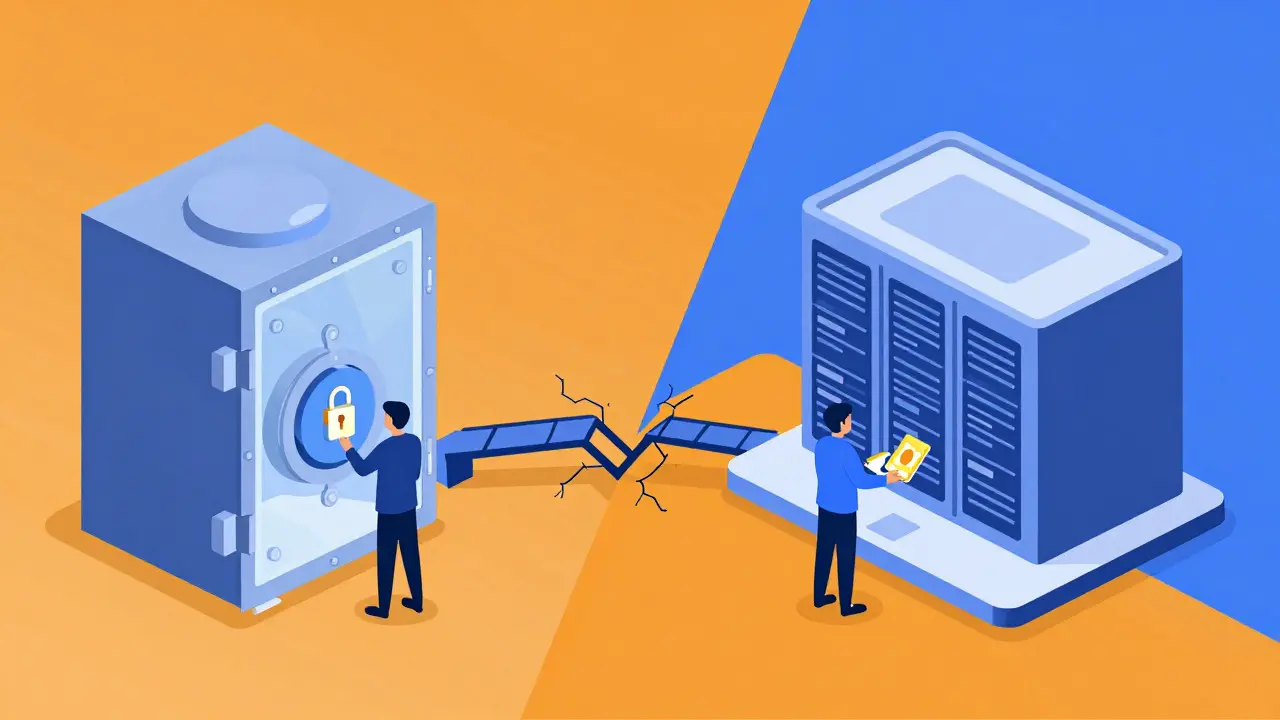
| Feature | Loop Finance (DeFi) | Centralized Exchanges (e.g., Coinbase) |
|---|---|---|
| Custody | User-controlled (Wallet) | Exchange-controlled |
| KYC Requirement | None | Mandatory |
| Fiat On-Ramp | Indirect (via third-party DEXs) | Direct (Card/Bank) |
| Primary Risk | Smart Contract Bugs | Platform Insolvency/Hacks |
| Trading Pairs | Limited to Protocol Liquidity | Hundreds/Thousands |
Token Analysis: What Does LOOP Do?
If you are considering investing in the LOOP token, you need to understand its value proposition. According to recent market data, the token has seen significant volatility. Price predictions vary wildly among analysts. Some forecasts suggest potential growth of over 79% in certain periods, while others remain skeptical due to low trading volume.
It is crucial to distinguish this from Loopring (LRC), which has a much larger market cap and established use case in Ethereum Layer-2 solutions. LRC has processed billions in volume and has a circulating supply of over 1.3 billion tokens. In contrast, Loop Finance's LOOP token operates in a niche market. High volatility means high reward potential but also high risk of loss.
Before buying, check the following metrics on a reliable aggregator like CoinGecko or CoinMarketCap:
- Daily Volume: Is it enough to enter and exit positions easily?
- Market Cap: A low market cap makes the price easier to manipulate.
- Holder Distribution: Are too many tokens held by a few wallets? This indicates centralization risk.
How to Get Started Safely
If you decide to try Loop Finance, follow these steps to minimize risk:
- Set Up a Non-Custodial Wallet: You will need a wallet compatible with the blockchain Loop Finance operates on (often Ethereum-compatible networks). Popular choices include MetaMask or Rabby.
- Bridge Your Funds Carefully: If you are coming from a centralized exchange, withdraw to your wallet first. Never deposit directly from a CEX to a DeFi protocol unless supported natively.
- Verify the Official Website: Phishing sites are rampant. Bookmark the official URL from the project's Twitter or Discord channel. Double-check the domain spelling.
- Start Small: Test the interface with a small amount of money. Make a tiny swap to ensure everything works as expected.
- Check Gas Fees: Network congestion can make transactions expensive. Use tools like Etherscan to check current gas prices before transacting.
Common Mistakes to Avoid
Many new users lose money not because the platform failed, but because of user error. Here are the top pitfalls:
- Confusing Tickers: Buying LRC thinking it is LOOP, or vice versa. Always check the contract address, not just the name.
- Ignoring Slippage Settings: Setting slippage too low can cause transactions to fail during volatile markets. Setting it too high exposes you to bad prices. Aim for 1-2% for stable pairs, higher for volatile ones.
- Forgetting Approval Limits: When you approve a token for spending, you give permission to a contract. If that contract is malicious, it can drain your balance. Revoke unused approvals regularly using tools like Revoke.cash.
- Assuming Customer Support Exists: In DeFi, if you send funds to the wrong address, they are gone forever. There is no support line to call.
Is Loop Finance Right for You?
Loop Finance is not for everyone. It suits experienced traders who value privacy, low fees, and self-custody. It is not suitable for beginners who want a simple app to buy Bitcoin with a credit card. If you are new to crypto, stick to established centralized exchanges until you understand how wallets, gas fees, and smart contracts work.
For the seasoned investor, Loop Finance offers a slice of the DeFi pie. The key is to treat it as one part of a diversified portfolio, not the whole basket. Monitor the project's development roadmap, audit reports, and community sentiment. If the team goes silent or the TVL (Total Value Locked) drops sharply, it may be time to exit.
The crypto landscape moves fast. What is true today about Loop Finance might change next quarter. Stay informed, verify independently, and never invest more than you can afford to lose.
Is Loop Finance a safe place to store my crypto?
Loop Finance is a protocol, not a storage vault. Your safety depends on your personal wallet security. Keep your private keys offline when not in use, use hardware wallets for large amounts, and always verify contract addresses before interacting.
What is the difference between Loop Finance and Loopring?
They are completely different projects. Loopring (LRC) is a Layer-2 scaling solution for Ethereum focused on reducing gas fees and increasing speed. Loop Finance (LOOP) is a DeFi protocol with its own token utility. Do not confuse their tickers or contract addresses.
Do I need to complete KYC to use Loop Finance?
No, Loop Finance is decentralized and does not require identity verification. However, if you use a third-party service to buy crypto with fiat currency first, that service may require KYC.
How do I check if the Loop Finance website is real?
Always access the site via links shared on the official Twitter or Discord channels. Check for HTTPS, verify the domain spelling carefully, and look for recent updates. If the site looks outdated or asks for your seed phrase, it is likely a scam.
Can I buy LOOP token on Coinbase or Binance?
As of 2026, LOOP may not be listed on all major centralized exchanges. You often need to use decentralized exchanges (DEXs) like Uniswap or PancakeSwap to acquire the token. Check the official documentation for the recommended swap path.