Lynex Fusion Crypto Exchange Review: Is This Linea DEX Worth Your Time?
 Aug, 29 2026
If you’ve been hunting for yield on the Linea blockchain, you’ve likely stumbled upon Lynex Fusion. It promises high capital efficiency and privacy features that sound too good to be true. But is it a solid trading venue or just another ghost town in the vast DeFi landscape? As of August 2026, the numbers tell a mixed story. While some aggregators report millions in daily volume, others show activity dwindling to mere hundreds of dollars. This review cuts through the noise to help you decide if Lynex Fusion deserves your liquidity or if you should look elsewhere.
What Exactly Is Lynex Fusion?
First things first: let’s clear up the branding confusion. Lynex is the underlying protocol-a decentralized exchange (DEX) and liquidity marketplace built on Linea, Ethereum’s leading zkEVM Layer 2 network. Launched in late 2023, it operates out of Zug, Switzerland, leveraging a jurisdiction known for its crypto-friendly regulations. Lynex Fusion is essentially the branded front-end or specific trading interface associated with this ecosystem, often appearing as a distinct entry on data aggregators like CoinMarketCap.
The platform isn’t trying to be everything to everyone. Instead, it focuses heavily on Liquid Staking Tokens (LSTs). Think of it as a specialized hub for assets like staked ETH derivatives. By integrating design elements from industry giants like Curve, Convex, and Velodrome, Lynex aims to offer more than just simple swaps. It acts as an Automated Liquidity Manager (ALM), using algorithms to rebalance pools automatically. This means you don’t have to manually adjust your positions every time the market swings; the protocol handles the heavy lifting.
Key Features and Technology Stack
Why would anyone choose Lynex over larger competitors like Uniswap or Aerodrome? The answer lies in its tech stack. Lynex employs ZK Dark Pools. In plain English, this uses zero-knowledge proofs to obscure trade details while keeping settlement on-chain. For traders worried about MEV (Maximal Extractable Value) attacks or front-running, this is a significant advantage. You get privacy without sacrificing transparency of the final result.
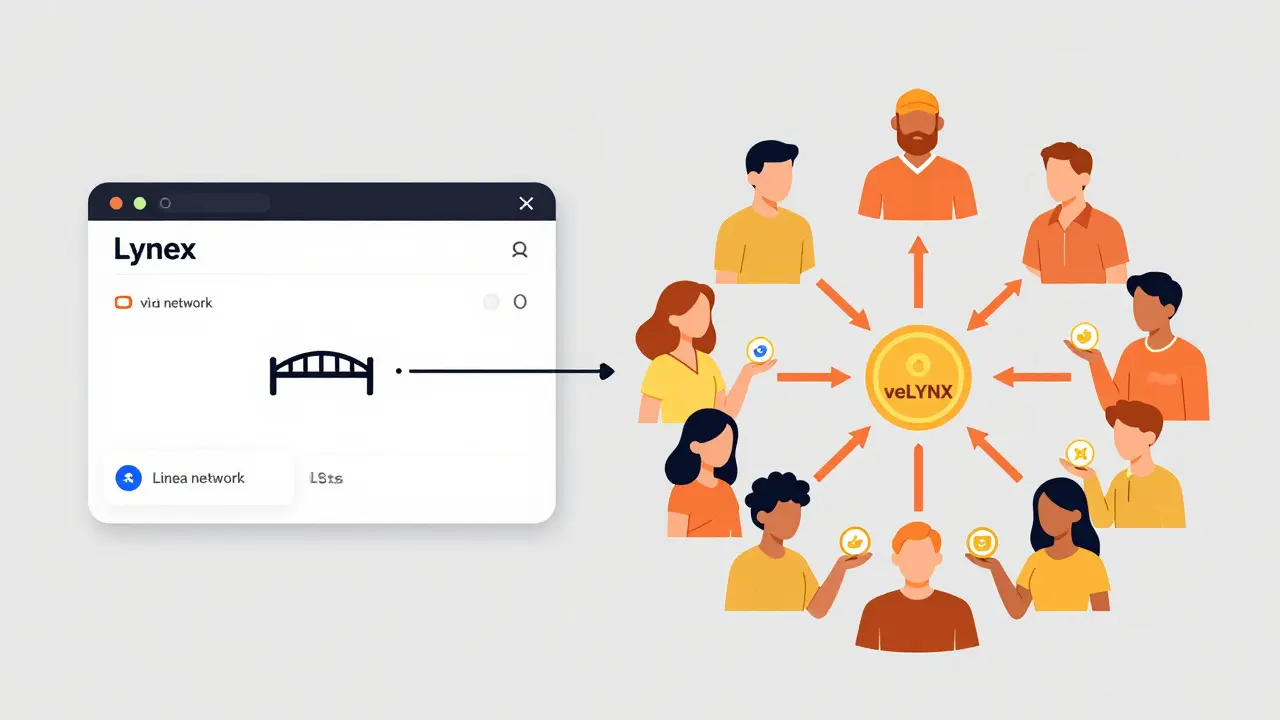
Governance is handled via veLYNX. If you’re familiar with veCRV, the concept is similar. You lock your LYNX tokens to gain voting power. This power directs where emission rewards go. Want more incentives for LST pairs? Vote for them. Want to boost fees for stablecoins? Do that instead. This creates a dynamic ecosystem where users directly influence profitability.
- Capital Efficiency: Advanced AMM curves reduce slippage for large trades.
- Automated Management: ALMs optimize liquidity ranges so providers earn more fees.
- Privacy: ZK technology hides order flow from bots.
- Governance: veLYNX allows stakeholders to steer emissions and bribes.
Volumes, Liquidity, and Market Reality
Here is where the review gets tricky. Data sources disagree, sometimes wildly. On one hand, CoinMarketCap has reported 24-hour volumes exceeding $2.5 million for Lynex Fusion entries. On the other hand, CoinGecko showed figures closer to $133,000 in late August 2026. What gives?
It likely comes down to how different aggregators count volume and which specific pool or interface they are tracking. Some metrics might include synthetic order-book activity or cross-chain bridges, while others only count direct on-chain swaps. Regardless of the exact number, the trend shows a concentration in a small number of pairs-roughly 11 markets and 17 trading pairs. This isn’t a massive exchange with thousands of coins. It’s a niche player. If you’re looking to trade obscure altcoins, you won’t find them here. But if you’re trading major Linea assets and LSTs, the liquidity is sufficient for moderate-sized trades.
| Metric | Lynex Fusion Status (Aug 2026) | Implication for Traders |
|---|---|---|
| Daily Volume Range | $130k - $3.3M (Varies by source) | High volatility in reported activity; check live dashboards before big trades. |
| Trading Pairs | ~17 Active Pairs | Focused selection; limited choice compared to global CEXs. |
| Token Price (LYNX) | ~$0.00059 USD | Significant drawdown from early 2025 highs (~$0.028). |
| Circulating Supply | ~91 Million LYNX | Low float can lead to higher price volatility. |

The LYNX Token: Risks and Rewards
You cannot review an exchange without looking at its native token. LYNX serves as both the governance key and the utility asset for paying fees. However, investors need to tread carefully. The price history tells a cautionary tale. In early 2025, LYNX traded around $0.028. By August 2026, it had dropped to approximately $0.00059. That is a decline of over 95%.
Several factors contributed to this slide. First, there were discrepancies in supply data. Early reports cited a max supply of ~218 million, while later updates indicated a max supply of ~303 million. This dilution shock likely spooked holders. Second, the broader DeFi sector cooled off, reducing demand for new LST products. Third, centralized exchanges like MEXC listed LYNX, fragmenting liquidity. Sometimes, trading on a CEX offers better depth than the native DEX itself.
Does this mean LYNX is dead? Not necessarily. A low price can attract speculative buyers hoping for a rebound. Plus, the veLYNX mechanism still offers yield opportunities for those willing to lock their tokens. Just be aware that holding LYNX is currently a high-risk play based on recent performance.
User Experience and Accessibility
Since Lynex is a DEX, there is no customer support hotline. You connect your wallet-typically MetaMask or Rabby-to the Linea network. The interface is clean but sparse. Because the number of pairs is limited, navigation is straightforward. You won’t get lost in a sea of scam tokens. However, this simplicity comes at a cost. Documentation is decent, thanks to third-party guides from Gate Learn and official site resources, but it lacks the extensive tutorials found on older platforms like Uniswap.
One pain point for beginners is bridging assets to Linea. If you are coming from Ethereum Mainnet, you’ll need to use a bridge. This adds friction and gas costs. Once you are on Linea, however, transactions are cheap and fast. The integration of ALMs helps hide some complexity, but understanding how to maximize your LP position still requires some learning curve.
Security and Compliance
Lynex is registered in Zug, Switzerland, which is a positive signal regarding regulatory seriousness. They aren’t operating from a random island with no legal framework. However, being in Switzerland doesn’t mean they hold a full banking license or operate under strict KYC/AML protocols like Coinbase. It’s still a permissionless DEX.
Regarding smart contract security, public audits are mentioned in passing, but detailed reports are not prominently displayed on aggregator pages. Always check the project’s GitHub and audit repositories before depositing significant funds. The use of ZK technology adds a layer of cryptographic assurance, but code bugs remain a risk in any DeFi protocol. Treat your deposits as experimental until proven otherwise.
Verdict: Who Should Use Lynex Fusion?
Lynex Fusion isn’t for everyone. If you want to buy Bitcoin with a credit card or trade meme coins, skip it. Go to Binance or Kraken. But if you are already deep in the Linea ecosystem, holding liquid staking tokens, and want to earn extra yield through automated liquidity management, Lynex offers a compelling toolset.
The ZK dark pool feature is genuinely innovative for privacy-conscious traders. The veLYNX governance model gives long-term believers a voice. However, the declining token price and fragmented volume data require skepticism. Start small. Test the waters with a modest amount of capital. See how the ALMs perform during volatile periods. If the yields justify the risks, then scale up.
Is Lynex Fusion a centralized or decentralized exchange?
Lynex Fusion is a decentralized exchange (DEX). It operates on the Linea blockchain, allowing users to trade directly from their wallets without custodial control by the platform.
What makes Lynex different from other DEXs?
Lynex focuses specifically on Liquid Staking Tokens (LSTs) and utilizes Automated Liquidity Managers (ALMs) to optimize positions. It also features ZK Dark Pools for enhanced privacy against MEV attacks.
How do I get started with Lynex Fusion?
Connect a Web3 wallet like MetaMask to the Linea network. Bridge assets from Ethereum if necessary. Then, navigate to the swap or liquidity tab to begin trading or providing liquidity.
Is the LYNX token a good investment?
The LYNX token has experienced significant price declines since 2025. While it offers governance rights and potential yield through locking, it carries high volatility and risk due to past supply discrepancies and lower trading volumes.
Are there hidden fees on Lynex Fusion?
Standard trading fees apply per pair, typically ranging between 0.05% and 0.3%. Additionally, you will pay Linea network gas fees, though these are generally much lower than Ethereum Mainnet costs.