Mangata Finance Review: The Polkadot DEX That Kills Gas Fees
 Sep, 15 2026
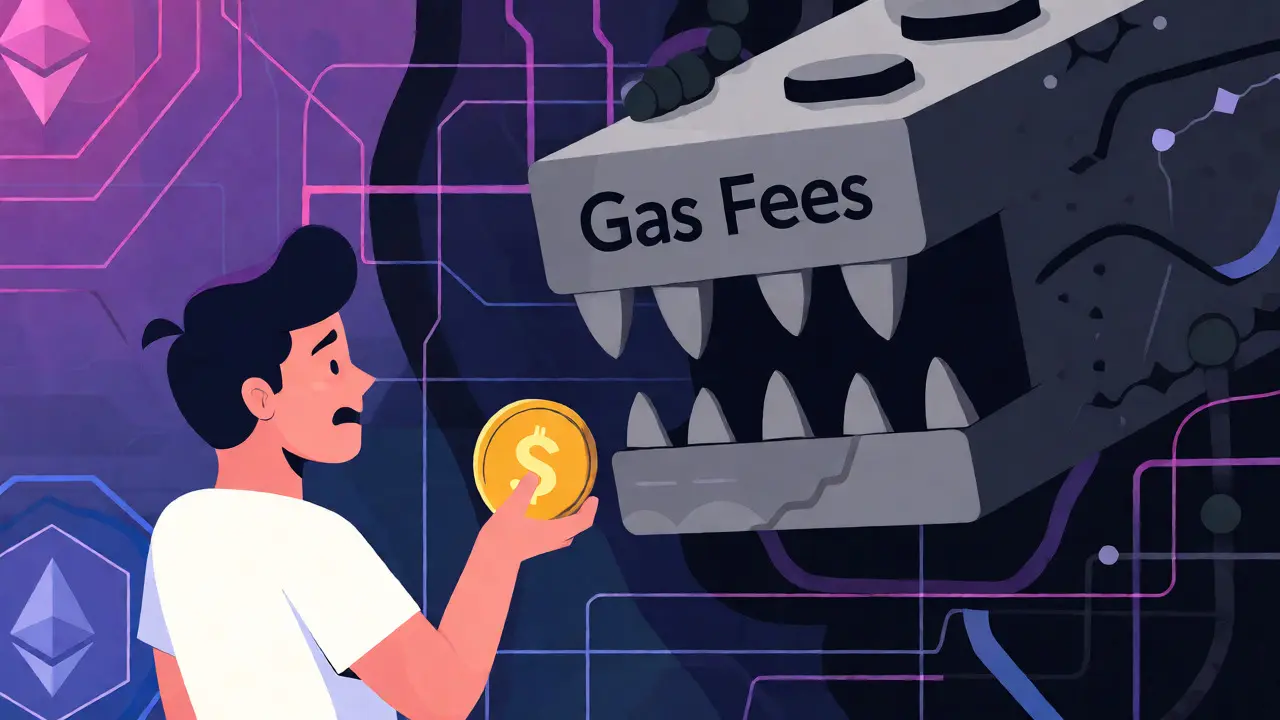
You know that feeling when you want to swap a small amount of tokens on Ethereum, but the gas fee costs more than the trade itself? It’s frustrating. You’re paying $50 to move $10 worth of assets. Mangata Finance is a decentralized exchange (DEX) built on the Polkadot network that eliminates gas fees for traders while using a unique consensus mechanism called Proof-of-Liquidity. Founded in 2020 by Mangata Labs, it promises a "no-gas economy" where your trading profits stay in your pocket.
This isn’t just another copy-paste Uniswap fork. Mangata tries to solve two massive headaches in DeFi: expensive transactions and front-running (where bots jump ahead of your order). But does it actually work? And should you trust your funds with a platform that raised $4.2 million from backers like Altonomy and Polychain Capital? Let’s break down how it works, what makes it different, and whether it’s ready for your portfolio.
The Core Problem: Why Traditional DEXs Hurt Your Wallet
Most decentralized exchanges operate on networks like Ethereum or Binance Smart Chain. These networks are congested. When thousands of people try to trade at once, they bid up the price of block space. This is "gas." If you’re a whale moving millions, a $20 fee is negligible. If you’re a regular user swapping $100, that fee eats 20% of your capital instantly.
Mangata attacks this directly. By running as a parachain on Polkadot, it leverages shared security and high throughput without forcing users to pay variable gas fees for every swap. Instead, the cost structure is fixed and low. This lowers the barrier to entry significantly. You don’t need a large balance to justify trading. It also means smaller trades become viable strategies again, which adds depth to the market rather than concentrating activity among big players who can absorb fees.
How Proof-of-Liquidity Works (And Why It Matters)
Here is where Mangata gets interesting technically. Most blockchains use Proof-of-Work (miners solving puzzles) or Proof-of-Stake (validators locking coins). Mangata uses Proof-of-Liquidity. In simple terms, instead of just staking tokens to secure the chain, participants provide liquidity to the exchange pools. This liquidity then secures the network.
Why is this clever? Because it aligns incentives. On other chains, you might stake tokens but keep them idle. On Mangata, your tokens are working twice: securing the blockchain and facilitating trades. This creates a sustainable yield model. Liquidity providers (LPs) earn rewards not just from trading fees, but from the consensus participation itself. It reduces reliance on inflationary token emissions to pay validators, which often dilutes value over time.
The mechanism also helps combat front-running. Since the system manages transaction ordering differently than standard EVM-based chains, it reduces the ability for sophisticated bots to see your pending transaction and jump in front of it to buy lower and sell higher at your expense. While not perfectly immune to all forms of MEV (Maximal Extractable Value), the architecture significantly dampens these predatory practices compared to public mempool environments.
Funding and Backing: Who Is Behind Mangata?
In crypto, who backs you matters. It signals confidence. Mangata Finance secured a $4.2 million funding round. This isn't billions like some mega-cap protocols, but it's substantial for a niche Polkadot-focused project. Key investors included Altonomy, Polychain Capital, and TRGC.
These aren’t random angels. Polychain, for instance, has a track record in early-stage infrastructure plays. Their involvement suggests they believe in the technical thesis of combining liquidity provision with consensus security. The funds were earmarked for development and expanding partnerships within the Polkadot ecosystem. This indicates a strategy of deep integration rather than broad, shallow expansion. They want Mangata to be the go-to DEX for DOT holders, not necessarily to compete head-on with Uniswap globally immediately.

User Experience and Accessibility Gaps
Here is the tricky part. While the tech sounds promising, real-world data on user experience is sparse. Unlike Uniswap or PancakeSwap, which have millions of daily users and countless YouTube tutorials, Mangata operates in a quieter corner of the market. There are few accessible user reviews on Reddit or Twitter detailing specific bugs, UI glitches, or support response times.
If you plan to use it, expect a learning curve. You will likely need a wallet compatible with Polkadot ecosystems, such as Talisman or SubWallet. Connecting to a parachain DEX can feel less seamless than clicking a button on MetaMask. You might encounter slower confirmation times if the parachain is congested, though typically faster than Ethereum mainnet. Always test with a small amount first. The interface may lack the polished polish of major centralized exchanges, focusing more on functionality than aesthetics.
| Feature | Mangata Finance | Typical Ethereum DEX (e.g., Uniswap V3) |
|---|---|---|
| Network | Polkadot Parachain | Ethereum Mainnet/L2s |
| Gas Fees for Traders | Fixed, Low (No-Gas Economy) | Variable, High (Congestion Dependent) |
| Consensus Mechanism | Proof-of-Liquidity | Proof-of-Stake / Proof-of-Work |
| Liquidity Provider Role | Secures Chain + Trades | Trades Only |
| Front-Running Risk | Reduced via Architecture | High (Public Mempool) |
| Ecosystem Focus | Polkadot Specific | Cross-Chain/Ethereum Centric |
Risks and Limitations You Must Know
No platform is perfect. Mangata’s biggest limitation is its addressable market. By anchoring itself to Polkadot, it excludes the massive liquidity pools found on Ethereum, Solana, or BSC. If you hold ETH, you cannot easily trade it here without bridging, which introduces bridge risk and additional steps. Liquidity depth is generally lower than on giant exchanges, meaning slippage can be higher for large orders.
Security audits are critical. While the concept of Proof-of-Liquidity is sound, any custom consensus mechanism carries code risk. Ensure you check for recent third-party audit reports before depositing significant capital. Smart contract bugs remain the primary threat in DeFi, regardless of the underlying blockchain theory.
Also, consider the tokenomics. How does MNGA (the native token) capture value? Does it accrue fees? Is it inflationary? Without clear, transparent economic models, long-term sustainability remains a question mark. Many DEXs struggle to retain users after initial incentive farming ends. Mangata needs to prove that its low-fee, high-security model attracts organic, non-incentivized volume.

Who Should Use Mangata Finance?
Mangata is ideal for Polkadot enthusiasts who already hold DOT or related assets. If you are tired of paying high gas fees on Ethereum and want to participate in a novel consensus model, this is a strong candidate. It suits active traders who execute many small swaps, as the fixed-cost model shines there.
It is less suitable for beginners looking for the easiest possible interface or those who primarily trade ERC-20 tokens. If you need deep liquidity for exotic altcoins outside the Polkadot ecosystem, you will likely find better options elsewhere. Think of Mangata as a specialized tool for a specific community, not a universal replacement for Coinbase or Binance.
Frequently Asked Questions
Is Mangata Finance safe to use?
Safety depends on smart contract audits and operational history. As a relatively new protocol, it carries inherent risks common to all DeFi platforms. Always verify recent audit reports and start with small amounts. Its backing by reputable firms like Polychain adds a layer of credibility, but never invest more than you can afford to lose.
Do I really pay zero gas fees on Mangata?
The term "no-gas" refers to eliminating variable, unpredictable gas fees for traders. You still pay fixed, low trading fees. The distinction is crucial: you won't see your transaction fail due to insufficient gas, nor will you face sudden spikes during network congestion. Costs are predictable and minimal.
What wallets work with Mangata Finance?
Since Mangata runs on Polkadot, you need wallets that support Substrate-based chains. Popular choices include Talisman, SubWallet, and sometimes extensions like Polkadot.js. Standard Ethereum wallets like MetaMask do not natively connect without bridge interfaces or specific configurations.
How does Proof-of-Liquidity differ from Staking?
In traditional staking, you lock tokens to validate blocks. In Proof-of-Liquidity, providing liquidity to trading pools simultaneously contributes to chain security. Your assets are actively used in the market while securing the network, potentially offering dual revenue streams from trading fees and consensus rewards.
Can I trade Bitcoin or Ethereum on Mangata?
You can trade wrapped versions of major assets (like wBTC or wETH) if they are supported on the Polkadot ecosystem and listed on Mangata. However, native BTC and ETH are not directly tradable without bridging mechanisms, which add complexity and potential points of failure.
Prince Johny
September 15, 2026 AT 17:31Stop pretending this is some revolutionary tech that solves everything. Polkadot is already a mess of interoperability issues and you think adding another parachain DEX fixes the fundamental liquidity fragmentation problem? It does not. You are just moving your problems from one congested highway to a different, slightly less congested side street. The "no-gas" narrative is marketing fluff designed to distract from the fact that you still pay fees, they are just hidden in the spread or fixed costs. If you have ever tried to bridge assets into the Polkadot ecosystem you know the friction is real. This platform is not for the average user who wants simplicity. It is for people who enjoy configuring wallets and dealing with Substrate-specific quirks. Do not fall for the hype cycle just because a few VCs threw money at it. The liquidity depth here is laughable compared to what exists on Ethereum L2s right now. You will get hit by slippage on any trade larger than a few hundred dollars. That is not a feature; that is a bug in the adoption curve. They need organic volume before they can claim sustainability. Until then this is just a playground for speculators chasing yield.
Deke Parrott
September 15, 2026 AT 19:49I appreciate the detailed breakdown of the consensus mechanism. The alignment of incentives through Proof-of-Liquidity is genuinely interesting from an economic design perspective. It seems like a more sustainable model than pure inflationary rewards which often plague newer chains.
Bhanu Rokkam
September 16, 2026 AT 15:40You are missing the point entirely if you think this competes with Uniswap directly. It does not. It serves a specific niche within the Polkadot ecosystem that has been underserved for years. The argument about bridging risk is valid but overstated for users who already hold DOT. For those users, this is the most logical place to trade without leaving the native environment. The technical implementation of PoL is superior to standard AMMs in terms of capital efficiency for LPs. Critics always focus on the surface level UI while ignoring the underlying structural advantages. If you understand DeFi mechanics you see why this matters long term. Short term volatility does not invalidate the architectural thesis. People want low fees and they get them here. Simple as that.
Katherine Rosales Maza
September 17, 2026 AT 15:46To add to the discussion on accessibility: I found the learning curve steeper than expected when I first tested it. While Talisman works well, the documentation for connecting via other Substrate wallets can be inconsistent. It is worth noting that the "no-gas" claim specifically refers to transaction execution costs on the chain itself. Users should still budget for potential bridge fees if their assets originate outside the Polkadot ecosystem. From a security standpoint, verifying the audit reports linked on their GitHub is crucial before committing significant capital. The codebase is complex due to the custom consensus logic so extra caution is warranted. Overall, it is a solid tool for DOT holders but requires patience for newcomers.
John Morgan
September 19, 2026 AT 07:43American innovation is being overshadowed by these foreign blockchain experiments. We built the internet and we should be leading the financial revolution too. These Polkadot projects feel like over-engineered solutions looking for a problem. Why complicate things when our existing infrastructure works fine? It is just another layer of complexity added by developers who love to hear themselves talk. Keep your money in US-based exchanges where regulation protects you. Don't gamble on experimental tech from overseas teams.
dillon wright
September 20, 2026 AT 19:26Hey everyone, just wanted to chime in that the community support on Discord has been pretty chill and helpful for me. Not every interaction is hostile or confusing. If you take it slow and test small amounts it isn't as scary as the comments make it seem. Good vibes only.
Matthew Alunni
September 22, 2026 AT 16:44We observe the illusion of decentralization while validators extract rent from the labor of liquidity providers. The moral hazard inherent in Proof-of-Liquidity is that it conflates economic contribution with political power in the governance structure. This creates an oligarchy of whales rather than a true democracy of users. We must question whether convenience justifies the erosion of sovereign control over one's assets. The system rewards those who already possess capital thus reinforcing existing hierarchies. True freedom in finance requires breaking free from these new forms of feudalism disguised as technological progress. We must remain vigilant against the seduction of ease.
Diego Alamir
September 23, 2026 AT 10:22They are hiding something. Why do we never hear about the actual daily active users? Because there aren't many. The VC money is gone and now they are pumping the token to exit. Watch out for the rug pull. Everything is connected.
Charlotte Owen
September 23, 2026 AT 12:59The analysis lacks rigor regarding the tokenomics. Without a clear burn mechanism or fee capture strategy MNGA will struggle to maintain value during bear markets. Most investors ignore this until it is too late. It is a classic case of promising utility without delivering economic scarcity. Be skeptical of the yield projections.
Marc Kennedy
September 25, 2026 AT 09:11I think the key takeaway here is that Mangata is a specialized tool for a specific user base. It is not trying to be everything to everyone and that is actually a strength. If you are deep in the Polkadot ecosystem it offers a great experience. Just remember to start small and learn the ropes. The future looks bright for those who stick with it.