Mining Crypto in Iran: Law and Restrictions in 2025
 Nov, 2 2025
Iran Crypto Mining Profit Calculator
Mining Parameters
Results Summary
Daily Electricity Cost
$0.00
Daily Profit/Loss
$0.00
Annual Profit/Loss
$0.00
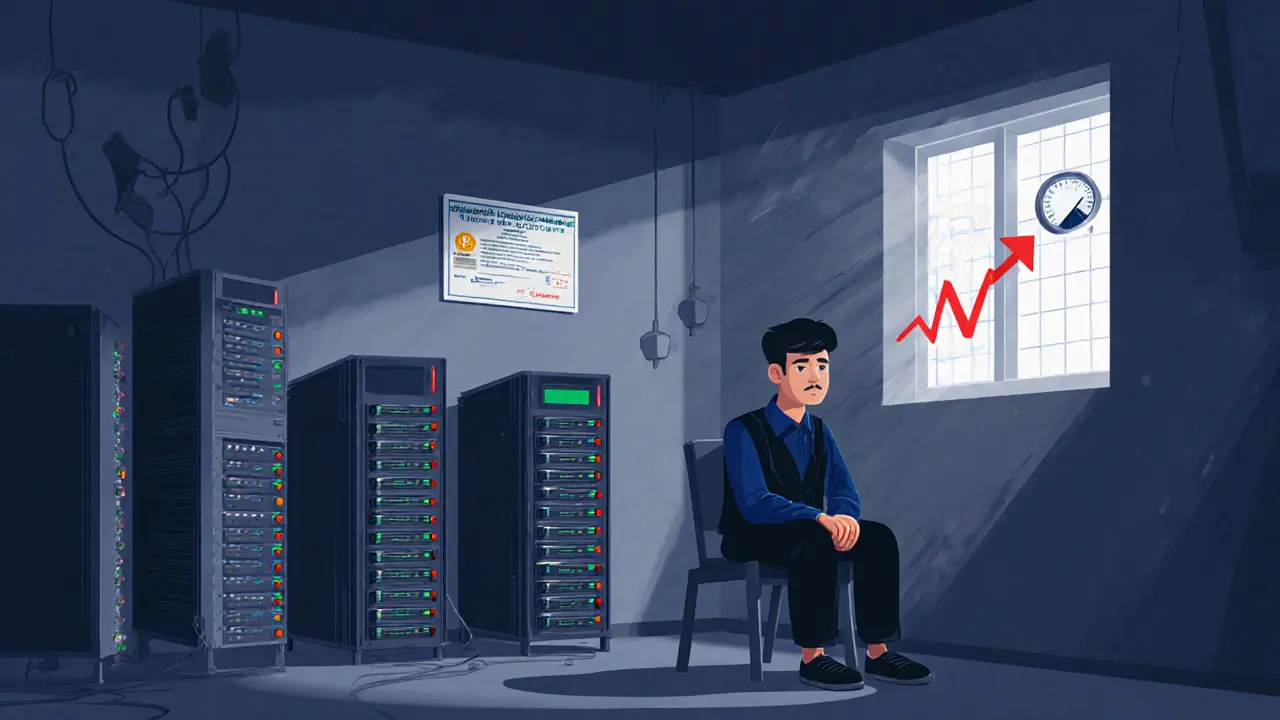
Iran allows cryptocurrency mining-but only if you play by rules that change every few months. In 2025, it’s not about whether you can mine. It’s about whether you’ll still be allowed to when the next power outage hits.
Legal, but Under Heavy Watch
As of early 2025, crypto mining in Iran is legal, but only for those who get a license from the Central Bank of Iran (CBI). This wasn’t always the case. Back in 2018, the government quietly approved mining to help control the flood of unregulated operations. But by 2024, the situation had spiraled. Power grids were collapsing under the weight of illegal miners siphoning off electricity. So in summer 2024, the government shut down all mining for four months. When it reopened, the rules changed completely. Now, every miner-individual or company-must apply for a license. You need approval from both the Ministry of Industry, Mine and Trade and the CBI. You must prove your hardware is government-approved. You must show exactly how much power you’ll use. And you must do all transactions in Iranian rials through bank accounts the CBI monitors.The Electricity Trap
Iran’s biggest draw for miners has always been cheap electricity. Industrial users pay as little as $0.004 per kWh-among the lowest in the world. That’s why, in 2021, Iran was responsible for nearly 5% of all Bitcoin mining globally. But that’s also why the government keeps cracking down. In December 2024, state power provider Tavanir estimated that illegal miners were stealing 2,000 megawatts of electricity-enough to power a small country. That’s when the real restrictions kicked in. Legal miners now pay the highest electricity rates in Iran for industrial users. Not because they’re being punished. But because the government wants to make sure only serious operators stay. The idea is simple: if you’re going to use that much power, pay for it. And don’t expect special treatment.The Double Standard: Who Gets Away With It?
Here’s the catch: not everyone pays. The Islamic Revolutionary Guard Corps (IRGC) and other state-linked entities run massive mining farms-some as large as 175 megawatts-in places like Rafsanjan. These operations don’t pay electricity bills. They use subsidized power meant for public services. They don’t need licenses. They don’t report anything. And they’re protected by political influence. This creates a two-tier system. On one side, private miners scramble to comply with paperwork, power limits, and bank reporting. On the other, state-backed miners run unchecked, using the same grid that’s supposed to power homes and hospitals. It’s no surprise that experts estimate IRGC-linked operations control about 65% of Iran’s total mining capacity. Legal miners? They’re left fighting over scraps.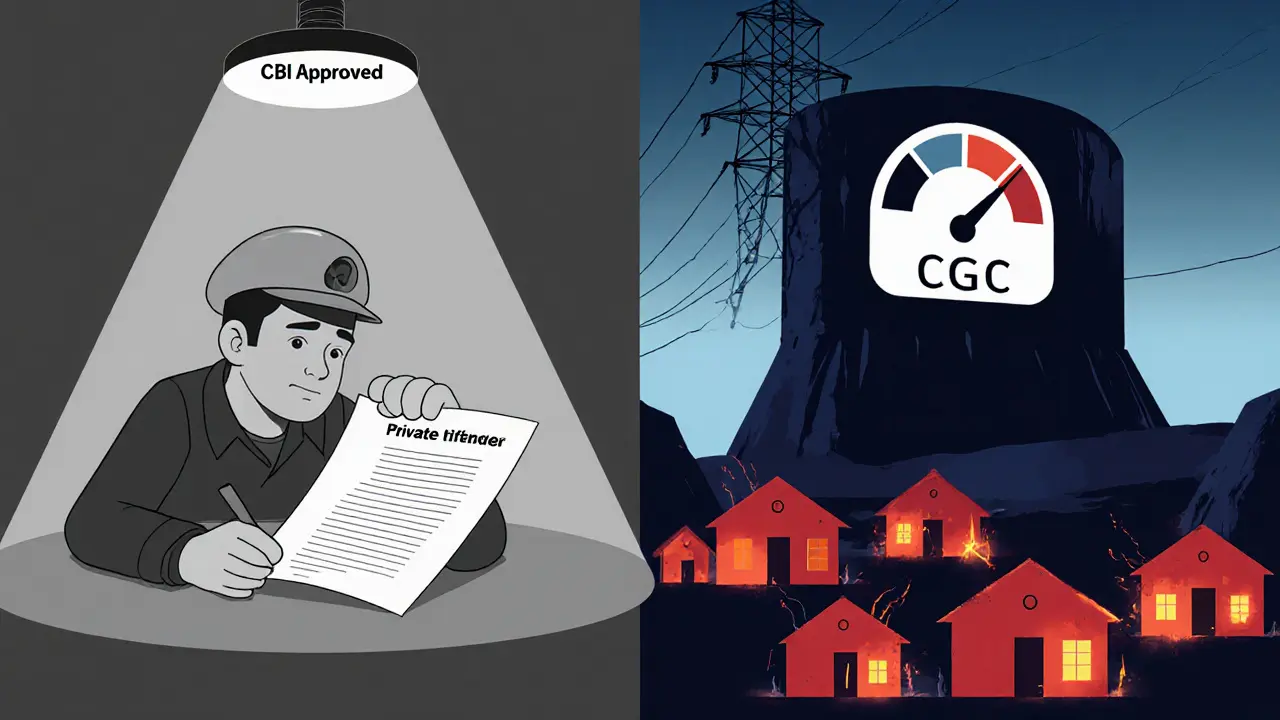
What You Can’t Do
Even if you’re licensed, there are hard limits:- You can’t advertise crypto mining or trading online or in public. A February 2025 ban killed all ads-billboards, social media, even YouTube videos.
- You can’t trade crypto for rials through regular websites. All exchanges must use a government-controlled API, which gives authorities full access to your transactions.
- You can’t use unapproved mining hardware. If your rig isn’t on the government’s list, it’s illegal.
- You can’t mine during peak demand hours. Tavanir now prioritizes homes and factories. Miners get cut off first when the grid is stressed.
Why It’s Still Tempting
Despite the chaos, mining in Iran still makes sense for some. The electricity is still dirt cheap-even for licensed miners. Foreign investors are explicitly invited to apply for licenses. The government sees crypto mining as a way to earn hard currency, especially under U.S. sanctions. In 2022, Iran’s Bitcoin mining output was worth around $1 billion annually. And there’s a workaround: some miners set up operations inside mosques or religious centers. These institutions get free power from the state. So even if you’re a private miner, you can rent space in a mosque and avoid the high tariffs. It’s not legal. But it’s common. And the government turns a blind eye-as long as it doesn’t cause a blackout.The Bigger Picture: Sanctions and the Digital Rial
Iran’s crypto experiment was never really about decentralization. When President Rouhani first backed mining in 2018, the goal was to bypass U.S. sanctions by creating a national cryptocurrency. That idea failed. Crypto inflows into Iran dropped 11% in the first half of 2025, according to TRM Labs. The dream of crypto as a financial lifeline didn’t work. Now, the government is pushing something else: the Rial Currency, a state-controlled digital currency that can’t be mined and is fully monitored. It’s not Bitcoin. It’s not Ethereum. It’s just the Iranian rial, but digital-and under total government control. The message is clear: if you want to use digital money in Iran, it has to be ours. Not yours.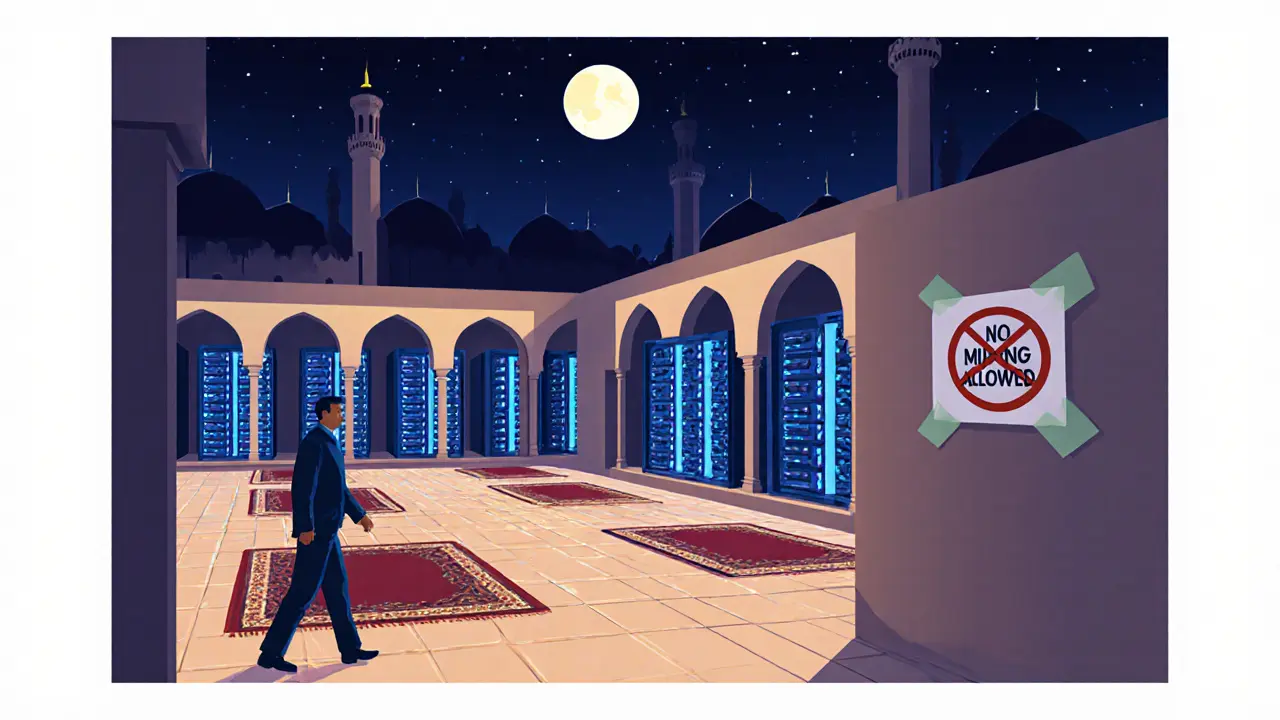
What Happens If You Get Caught Breaking the Rules?
Unlicensed mining? Fines. Equipment seizure. Maybe even jail time. The government doesn’t just shut down rigs. They track them. Power companies monitor grid usage in real time. If a neighborhood suddenly spikes in energy use-especially at night-they send inspectors. In 2024, dozens of illegal mining farms were raided in Tehran, Isfahan, and Kerman. Miners lost everything. And if you’re a foreign investor? You’re at higher risk. Iran has no legal protections for foreign crypto businesses. If the government decides to ban mining again-like it did in 2024-you won’t get your money back. You won’t get your hardware returned. You’ll just be out.Who Should Try It? Who Should Avoid It?
Don’t try this if:- You’re a foreigner expecting stable regulations.
- You can’t afford to lose your equipment overnight.
- You rely on consistent access to crypto for payments or income.
- You’re uncomfortable with political risk.
- You’re an Iranian citizen with access to subsidized power (like through a mosque).
- You have connections to state-affiliated entities.
- You’re willing to monitor government announcements daily-because the rules change without warning.
- You treat mining as a short-term gamble, not a business.
The Bottom Line
Crypto mining in Iran isn’t illegal. But it’s not safe, either. The government lets you mine-until it doesn’t. The electricity is cheap-but you’re always one blackout away from losing everything. The rules are written, but they’re ignored by those with power. If you’re thinking of mining in Iran, ask yourself this: Are you prepared to be a pawn in a game where the rules are written by the state-and changed whenever the lights go out?For most people, the answer is no.
Is crypto mining legal in Iran in 2025?
Yes, but only if you have a license from the Central Bank of Iran and the Ministry of Industry, Mine and Trade. Unlicensed mining is illegal and can lead to equipment seizure or jail time.
Can foreigners mine crypto in Iran?
Technically yes-the government invites foreign investors to apply for licenses. But in practice, it’s extremely risky. Regulations change suddenly, there’s no legal protection for foreign assets, and state-backed miners dominate the best power access. Most foreign operators lose money or get shut down.
Why does Iran keep banning crypto mining?
Iran’s power grid is fragile and overburdened. Illegal mining operations have been blamed for causing nationwide blackouts, especially in summer. The government bans mining during energy crises to protect homes and hospitals. But it never fixes the underlying problem-poor infrastructure and favoritism toward state-linked miners.
How much does electricity cost for crypto miners in Iran?
Legal miners pay the highest industrial electricity rates in Iran-significantly more than the $0.004 per kWh offered to unlicensed operators. The exact rate varies by region and demand, but it’s designed to discourage excessive use. Still, it’s far cheaper than in most countries.
What happens if I mine without a license?
Your mining equipment will be confiscated. You may face fines or criminal charges. Authorities use power usage data to detect illegal operations. In 2024, dozens of unlicensed farms were raided across major cities. There is no appeal process for foreigners.
Can I use crypto to pay for things in Iran?
It’s extremely difficult. Since January 2025, all crypto-to-rial exchanges must go through a government-controlled API. Many domestic platforms stopped supporting direct payments. In January 2025, about one million Iranians couldn’t buy crypto for 23 days, disrupting essential purchases. Peer-to-peer trading is the only reliable option left.
Is Iran’s government using crypto to bypass U.S. sanctions?
No. Despite early hopes in 2018, crypto hasn’t helped Iran evade sanctions. In fact, inflows dropped 11% in early 2025. The government now focuses on its own digital currency, the Rial Currency, which is fully controlled and can’t be mined. Crypto mining is treated as an energy drain, not a financial tool.
What’s the future of crypto mining in Iran?
It’s shrinking. The government is moving toward total control. Private mining is being squeezed by regulations, power cuts, and competition from state-backed operations. The long-term goal is to replace decentralized crypto with the state’s own digital currency. Mining may become a relic within a few years.
Devon Bishop
November 21, 2025 AT 09:03Man, this post is wild. I knew Iran had cheap power but damn, they’re basically running a crypto mafia with state-backed rigs while regular folks get shut off during blackouts. The fact that mosques are being used as mining hubs is both genius and terrifying. And no legal recourse for foreigners? That’s not a business, that’s a gamble with your life savings.
Also, the Rial Currency thing? Classic authoritarian move. They don’t want crypto-they want control. Digital rials are just surveillance with a blockchain veneer.
sammy su
November 23, 2025 AT 07:18so like... if you’re iranian and you got a cousin who works at tavanir, you just plug in your rigs in the garage and call it a day? lol. the whole system is rigged. private miners are paying 10x the rate and still getting cut off during peak hours. meanwhile, the irgc is running 175mw farms like it’s a public utility. no wonder people are turning to mosques. at least there’s no audit trail there.
Khalil Nooh
November 23, 2025 AT 12:32Let me be clear: this isn’t about crypto. This is about power. This is about survival. This is about a government that sees its citizens as liabilities and its military as the only legitimate users of infrastructure.
Iran didn’t ban mining because it’s dangerous-it banned it because it couldn’t control it. Now they’ve built a velvet cage: licenses, APIs, monitoring, and mandatory rial transactions. They want your hash power, but not your freedom.
Foreigners? You’re not investors. You’re cannon fodder. They’ll take your ASICs, your capital, your hope-and when the next blackout hits, they’ll blame you for the grid failure.
This isn’t mining. It’s a tax on desperation.
And the mosques? That’s the only real innovation here. A spiritual loophole in a system designed to crush the little guy. Brilliant. And tragic.
jack leon
November 23, 2025 AT 13:27OH MY GOD. THIS IS THE MOST DYSTOPIAN THING I’VE EVER READ.
Imagine being a miner in Tehran. You spend $50k on rigs. You jump through every bureaucratic hoop. You pay top dollar for electricity. You avoid peak hours. You use only approved hardware. You report every damn transaction to the CBI.
And then you find out the IRGC is running a 175-megawatt farm inside a military base using power meant for hospitals.
They don’t even have to pay a bill. They don’t need a license. They don’t even have to say ‘thank you.’
Meanwhile, you’re getting raided at 3 a.m. because your neighbor’s lights flickered.
This isn’t capitalism. This isn’t communism. This is… crypto feudalism.
And the Rial Currency? That’s not a digital currency. That’s a digital leash.
I’m not mining in Iran. I’m not even visiting. I’m sending prayers to the miners. And their families. And the doctors whose hospitals are losing power because the state is running ASICs in the basement of a mosque.
Chris G
November 24, 2025 AT 23:41Iran allows mining but only if you comply with rules that change every few months and you pay more for power than the military does and you can’t advertise or trade freely and your hardware must be approved and you can’t mine during peak hours and your transactions are monitored and your equipment gets seized and you have zero legal recourse as a foreigner and the government runs 65 percent of the mining via IRGC using free power and the whole system is designed to fail for everyone except the regime and the digital rial is just a surveillance tool so don’t even think about it unless you want to lose everything and also the mosques are being used as mining hubs because they get free power and the government pretends not to notice as long as the grid doesn’t collapse which it will anyway because the infrastructure is 40 years old and the only reason anyone mines there is because electricity is still cheaper than anywhere else in the world even at the high rate and even then it’s barely profitable and the only people who make money are the ones who don’t have to pay anything and the whole thing is a scam wrapped in bureaucracy and powered by corruption
Phil Taylor
November 26, 2025 AT 19:45Typical western naivety. You think Iran is some lawless chaos? It’s not. It’s strategic. The IRGC runs mining because it’s a national security operation. The grid isn’t ‘failing’-it’s being managed. Foreigners get screwed because they don’t understand the rules of the game. You don’t come into a sanctioned state and expect fair play. You adapt or you leave. The fact you’re shocked by state-backed mining shows how clueless you are. The government isn’t corrupt-it’s protecting its sovereignty. The ‘mosque loophole’? That’s local ingenuity. The digital rial? It’s the only way to keep the economy from collapsing under sanctions. You want decentralization? Go to Switzerland. In Iran, power belongs to the state. Deal with it.