Monetary Authority of Singapore Crypto Oversight: Strict Rules, No New Licenses
 Mar, 19 2026
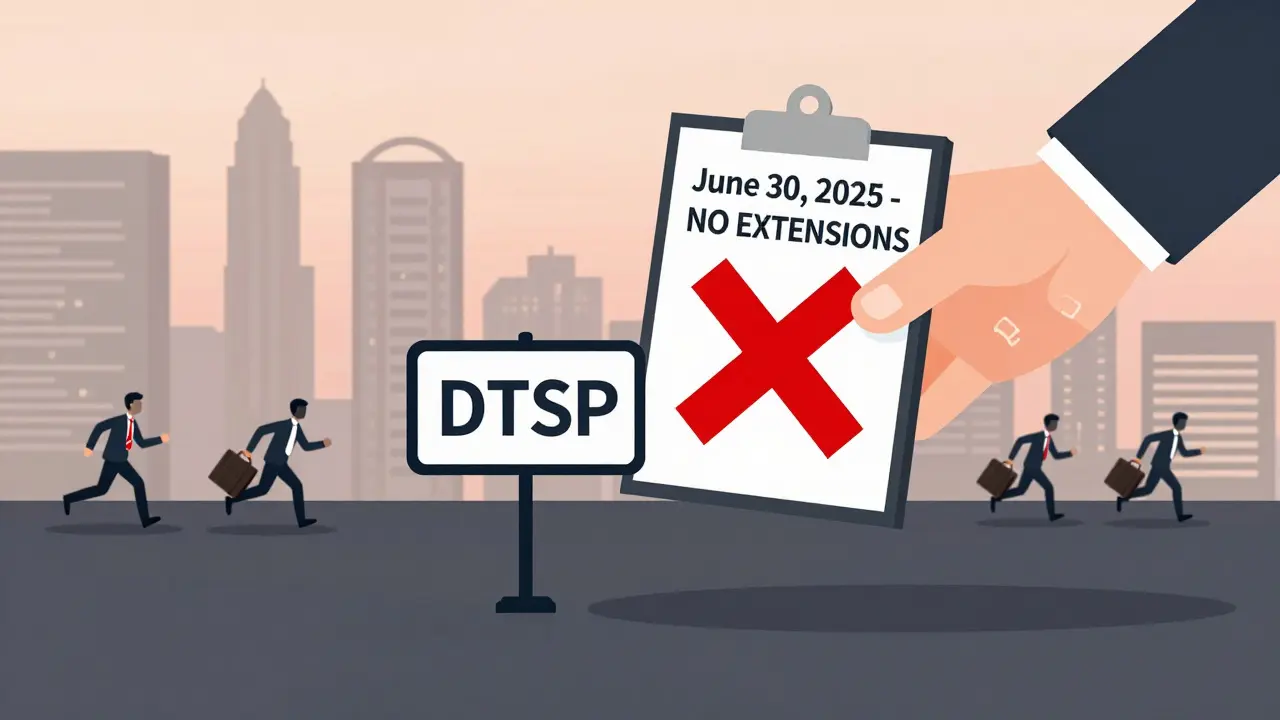
When Singapore once welcomed crypto companies with open arms, it now draws a hard line. The Monetary Authority of Singapore (MAS) has changed course completely - not by accident, but by design. In June 2025, MAS made it official: it will issue new licenses to digital token service providers (DTSPs) only in extremely limited circumstances. That’s not a gray area. It’s a shutdown. And the deadline? June 30, 2025. No extensions. No grace period. If you weren’t compliant by then, you’re done.
Why the Sudden Shift?
Singapore used to be one of the friendliest places in the world for crypto firms. Low taxes, strong legal system, global connectivity. But MAS saw a problem: companies were using Singapore’s reputation as a financial hub to look legit - while their real business happened overseas, with little oversight. Think of it like a company registering in Delaware to appear trustworthy, then operating entirely in a country with no rules. MAS called it regulatory arbitrage. And they weren’t going to let it continue. The trigger? Section 137 of the Financial Services and Markets Act 2022 (FSMA). This law gives MAS power over any Singapore-based company - no matter where its customers live, where its servers sit, or where its money flows. If you’re incorporated in Singapore, MAS owns your crypto operations. Full stop. That’s not common. Most regulators only care about local users. MAS cares about everything you do, everywhere.What Does a DTSP License Actually Require?
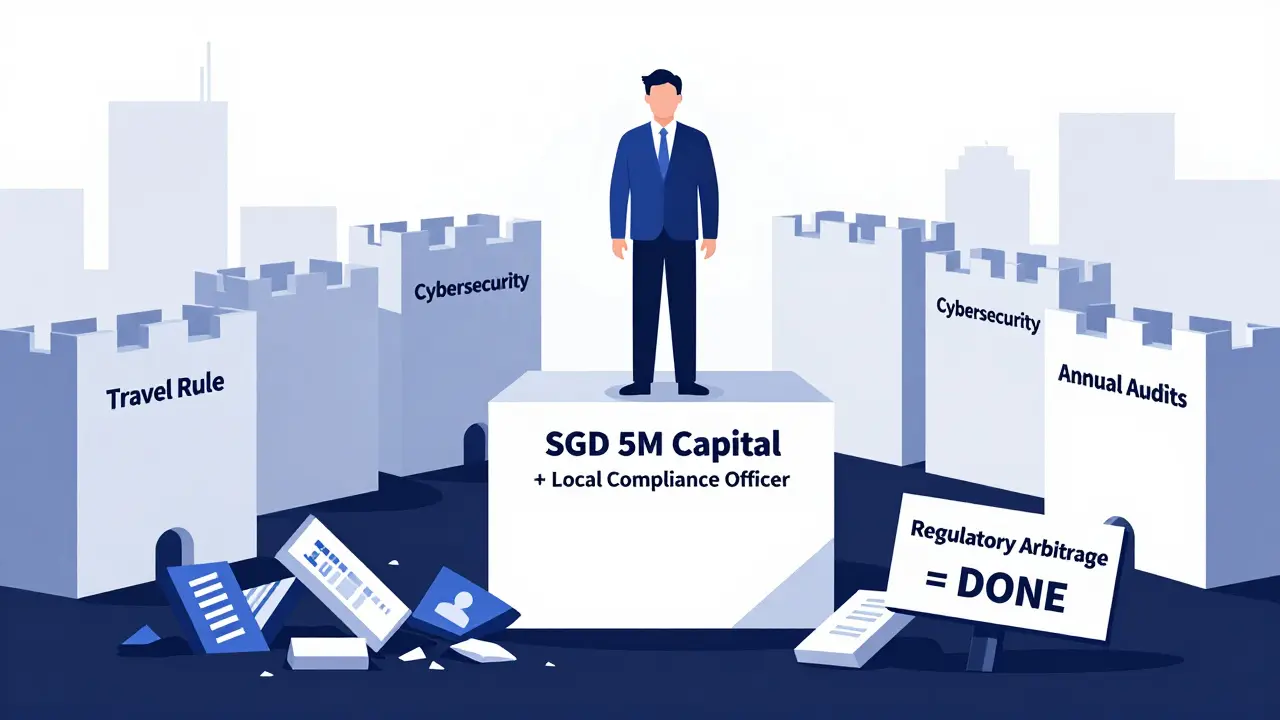
Getting a license now isn’t about applying. It’s about proving you’re one of the few who can handle the weight of MAS’s rules. Here’s what you need:- Minimum capital: At least SGD 5 million (around USD 3.7 million) in liquid assets. No exceptions.
- Local compliance officer: You must hire a full-time, Singapore-based compliance officer with proven AML/CFT experience. This isn’t a contractor. This is a senior executive on your payroll, physically in Singapore. Salaries for this role? Between SGD 150,000 and SGD 250,000 a year.
- Annual audits: Independent auditors must review your systems every year - and submit reports directly to MAS.
- Travel Rule compliance: For any transaction over SGD 1,500, you must collect and send the sender’s and receiver’s full name, ID number, and account details. This requires real-time integration with specialized software. Implementation costs? SGD 50,000 to SGD 200,000 depending on volume.
- Cybersecurity standards: You must meet MAS’s strict framework for data protection, access controls, and incident reporting - modeled after banking-grade security.
Consumer Protection Rules Are Now Locked In
It’s not just about the company. MAS also protects users - and they’re not playing nice. Since September 2024, all licensed platforms must:- Clearly warn customers that crypto is high-risk and not backed by any government.
- Assess whether each customer is financially suitable to trade crypto - no more letting someone with SGD 2,000 in savings buy Bitcoin with a credit card.
- Block credit card purchases entirely. No exceptions.
- Provide real-time, plain-language risk disclosures before any trade.
Penalties Are Severe - And Immediate
MAS doesn’t warn. It enforces. Non-compliance can mean:- Fines up to SGD 200,000 (USD 147,000)
- Imprisonment for executives
- Forced shutdown of operations
What’s Happening to the Industry?
The numbers tell the story. Before June 2025, around 200 firms had applied for or held provisional DTSP licenses. Today, industry analysts estimate only 15 to 20 remain fully compliant. The rest either shut down, moved headquarters, or stopped serving Singapore-based customers entirely. Job postings in Singapore’s crypto sector dropped 37% in Q1 2025 compared to Q4 2024, according to LinkedIn data. That’s not a slowdown. That’s a collapse. Companies that once hired engineers, marketers, and compliance staff are now downsizing or relocating to places like Dubai or Switzerland - where licensing is still active. The cost of compliance is crushing smaller players. A mid-sized crypto exchange told Bloomberg in February 2026 that its annual regulatory cost jumped from SGD 300,000 to over SGD 1.2 million - mostly due to hiring local staff and upgrading systems. That’s not sustainable for most startups.How Does Singapore Compare to the Rest of the World?
Switzerland lets firms apply for licenses with clear guidelines. The UAE has a thriving crypto corridor in Dubai. Even Japan, known for strict rules, still grants licenses to hundreds of firms. Singapore? It’s the outlier. MAS isn’t trying to be a crypto hub anymore. It’s trying to be a financial integrity hub. That means fewer players, but higher standards. MAS officials say they’d rather have 10 rock-solid companies than 200 risky ones. And they’re willing to lose business to prove it. This approach has trade-offs. Singapore’s reputation as a safe, reliable financial center is intact - maybe even strengthened. But its role as a global crypto innovation center? That’s over. Investors and developers are looking elsewhere.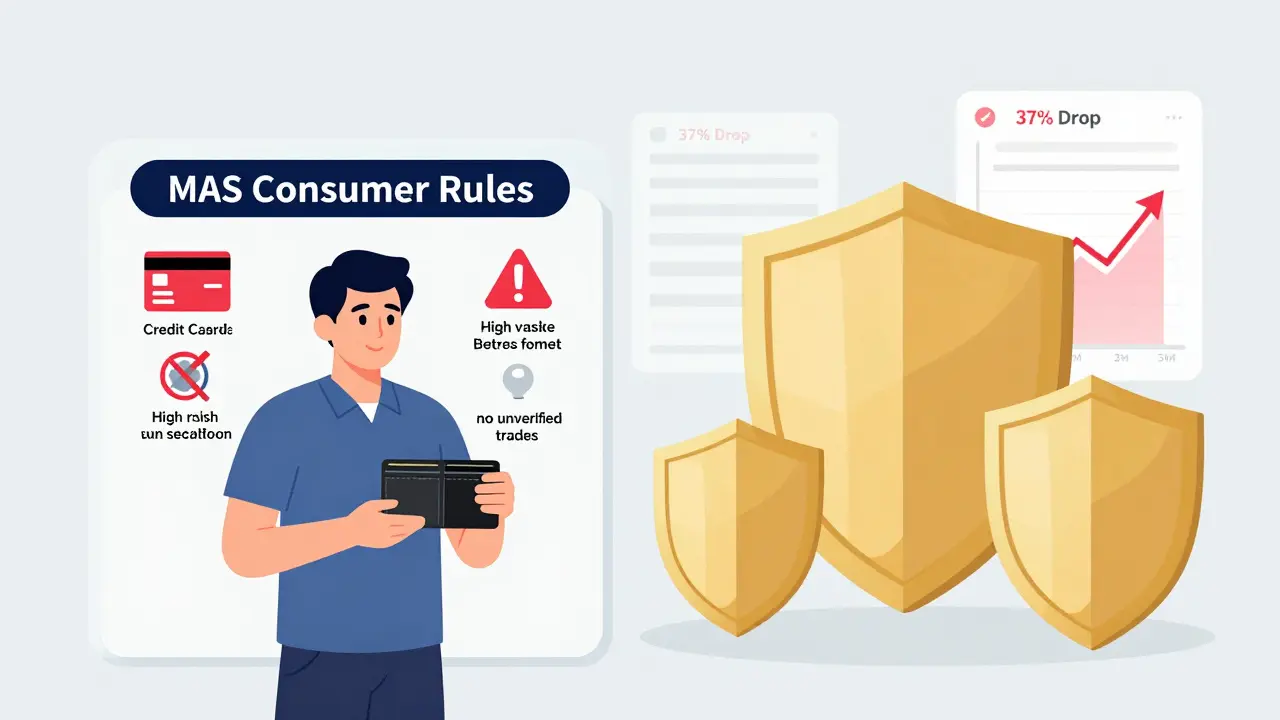
What’s Next?
MAS has hinted that more rules are coming. In its May 2025 parliamentary reply, it mentioned plans to clarify how decentralized finance (DeFi) protocols and stablecoin issuers will be regulated. Stablecoins, especially, are under scrutiny. MAS wants them to be backed 1:1 by safe, liquid assets - no algorithmic magic, no unregulated reserves. The message is clear: if you want to operate in Singapore, you must be a financial institution first - and a crypto company second. No shortcuts. No loopholes. No exceptions.What This Means for You
If you’re a crypto company: If you’re not already licensed, you can’t get one. Period. Your only option is to leave Singapore or stop serving any users connected to it. If you’re an investor: Be cautious. Any crypto platform claiming to be "MAS-regulated" after July 1, 2025 is either lying or operating illegally. Verify licenses directly through MAS’s official registry - not through marketing materials. If you’re a user: Understand that your access to crypto services in Singapore is now extremely limited. The platforms left are big, old, and tightly controlled. You’ll see fewer tokens, fewer trading pairs, and more restrictions. That’s by design.Frequently Asked Questions
Can I still trade crypto in Singapore?
Yes, but only through a few licensed platforms. MAS has approved only a handful of firms to operate after June 30, 2025. Most international exchanges (like Binance or Coinbase) no longer serve Singapore users directly. You can still use decentralized exchanges (DeFi), but those aren’t regulated by MAS and carry no consumer protections.
Is it illegal to hold crypto in Singapore?
No, holding crypto is not illegal. MAS only regulates service providers - exchanges, custodians, and trading platforms. You can buy, hold, and transfer crypto privately. But if you use a platform that isn’t licensed by MAS, you have no legal recourse if something goes wrong.
Why did MAS stop issuing licenses?
MAS concluded that crypto’s inherent risks - especially around money laundering and offshore operations - couldn’t be managed without sacrificing Singapore’s reputation as a trusted financial center. They decided that a small, highly regulated industry was better than a large, risky one. The June 2025 announcement was the final step in a two-year regulatory review.
Can foreign companies operate in Singapore without a license?
No. Under Section 137 of the FSMA, any company incorporated in Singapore - even if it serves only overseas clients - must have a DTSP license. Foreign companies that don’t have a Singapore entity can operate without a license, but they cannot advertise, market, or solicit customers in Singapore.
Are stablecoins banned in Singapore?
No, but they’re tightly controlled. MAS requires stablecoin issuers to hold 100% reserves in cash or highly liquid assets like government bonds. They must also submit monthly reports proving reserves match circulating supply. Only a few issuers have met these standards so far.
Robert Kunze
March 19, 2026 AT 23:01so mas just killed crypto in sg?? lmao i thought they were cool with it before. now all the devs are leaving for dubai and switzerland and we’re stuck with like 5 overpriced companies that charge 500 bucks to send 100 usd. what a joke. also why do i need a full time compliance officer just to buy dogecoin?? this is insane. also typo: its not 'dtsp' its 'dtsP' lol
Sarah Zakareckis
March 20, 2026 AT 04:26This is actually a masterclass in regulatory foresight. MAS isn’t just playing defense-they’re architecting a financial ecosystem where integrity precedes innovation. The capital requirements, Travel Rule enforcement, and cybersecurity benchmarks? That’s not overreach-it’s baseline institutional-grade hygiene. The firms that can’t scale into this model weren’t building infrastructure; they were building sandcastles. And honestly? The market will thank them. Real value emerges when the noise is filtered out. We’re not losing crypto-we’re upgrading it.
Heather James
March 21, 2026 AT 16:53They didn’t ban crypto. They banned chaos.
Graham Smith
March 22, 2026 AT 03:41Let’s be clear: MAS has enacted a sovereign-grade anti-money laundering protocol with systemic resilience. The fact that you’re still using terms like ‘crypto hub’ reveals a fundamental misunderstanding of modern financial architecture. Singapore isn’t a jurisdiction-it’s a fiduciary enclave. The 15 compliant DTSPs aren’t ‘survivors’-they’re the vanguard of a new paradigm where tokenization is subordinated to capital adequacy, not the other way around. If you think this is punitive, you’ve never worked in a Tier-1 financial institution. This is what professionalism looks like.
Jerry Panson
March 22, 2026 AT 21:43While I recognize the intent behind MAS’s regulatory posture, I must respectfully note that the abrupt cessation of new licenses, coupled with the absence of transitional mechanisms, may constitute an undue burden on small-to-medium enterprises operating in good faith. The financial and operational thresholds, while laudable in theory, may inadvertently entrench monopolistic structures and discourage competitive innovation. A phased, risk-proportionate licensing framework might better align with both regulatory objectives and economic dynamism.
Marie Vernon
March 24, 2026 AT 14:20I get why MAS did this. I really do. But I also know people in Thailand, Vietnam, and the Philippines who used to send money home via crypto platforms based in Singapore. Now those channels are gone. It’s not just about big firms. It’s about real people trying to move money without fees or delays. Maybe next time, regulators could ask the users before they pull the plug?
Ross McLeod
March 25, 2026 AT 11:30The entire narrative around this is a fantasy. MAS didn’t ‘clean up’ crypto-they panicked. The $5 million capital requirement? That’s not a compliance standard-it’s a barrier to entry designed to protect incumbents. The compliance officer salary range? That’s a consulting gig for ex-Big Four auditors, not a functional role. And let’s not pretend that the Travel Rule implementation costs are anything but a cash grab for software vendors. The real story here isn’t integrity-it’s consolidation. MAS didn’t want fewer risky players. They wanted fewer competitors. And now the only platforms left are the ones with venture capital backing and legal teams bigger than their engineering departments. Innovation? Dead. Competition? Gone. Singapore’s not a financial hub anymore-it’s a gated community for oligarchs.
Tony Weaver
March 26, 2026 AT 05:42Let’s cut through the PR spin. MAS didn’t ‘raise standards.’ They killed an entire industry to preserve their own institutional ego. The fact that 90% of firms vanished overnight proves one thing: most of them were never serious. They were shell companies with offshore servers and LinkedIn profiles full of ‘blockchain gurus.’ But here’s the ugly truth: the 15 that remain? They’re not ‘compliant’-they’re bought. The audits, the officers, the systems? All outsourced to the same three firms that have contracts with MAS. This isn’t regulation. It’s a cartel. And now the only way to access crypto in Singapore is through a handful of overpriced, under-innovative banks with crypto logos slapped on their websites. Congratulations-you’ve turned innovation into a licensed monopoly.