Nama Finance NAMA Protocol Airdrop: Details, Eligibility & Tokenomics
 Jul, 27 2026
Confusion in the crypto space is expensive. If you are searching for information on the Nama Finance airdrop, you might have stumbled upon news about a massive distribution of tokens called NAM. Before you connect your wallet or spend hours verifying eligibility, there is a critical distinction you need to make. The major airdrop headlines belong to Namada, a privacy-focused blockchain project by the Anoma Foundation, not Nama Finance.
Nama Finance and Namada share similar names but operate in completely different sectors with distinct goals. Mixing them up can lead to missed opportunities or, worse, interacting with the wrong contract. This guide clarifies exactly what the Nama Finance NAMA Protocol is, how its tokenomics work, and whether there is an active airdrop for you to claim.
The Critical Distinction: Nama Finance vs. Namada
The first step in navigating this landscape is separating two projects that often appear together in search results due to their phonetic similarity. Understanding this difference protects your assets and sets realistic expectations for potential rewards.
| Feature | Nama Finance (NAMA) | Namada (NAM) |
|---|---|---|
| Primary Focus | NFT Liquidity & Lending | Privacy & Interchain Technology |
| Core Product | Decentralized NFT Loan Protocol | Shielded Asset Hub (MASP) |
| Recent Major Airdrop | No large-scale public airdrop identified | 65 million NAM tokens (RPGF Program) |
| Token Utility | Lending/Borrowing Rewards, Governance | Staking, Fees, Governance |
| Key Technology | Cross-chain NFT Collateralization | Zero-Knowledge Proofs, Cubic PoS |
Namada’s recent Retroactive Public Goods Funding (RPGF) airdrop distributed 65 million NAM tokens to developers, Zcash contributors, and specific NFT holders. That window closed in late 2024. In contrast, Nama Finance focuses on providing liquidity for Non-Fungible Tokens (NFTs). While they distribute NAMA tokens as incentives within their platform, they do not currently have a widely publicized, standalone "claim" airdrop event comparable to Namada’s RPGF initiative.
What Is the Nama Finance NAMA Protocol?
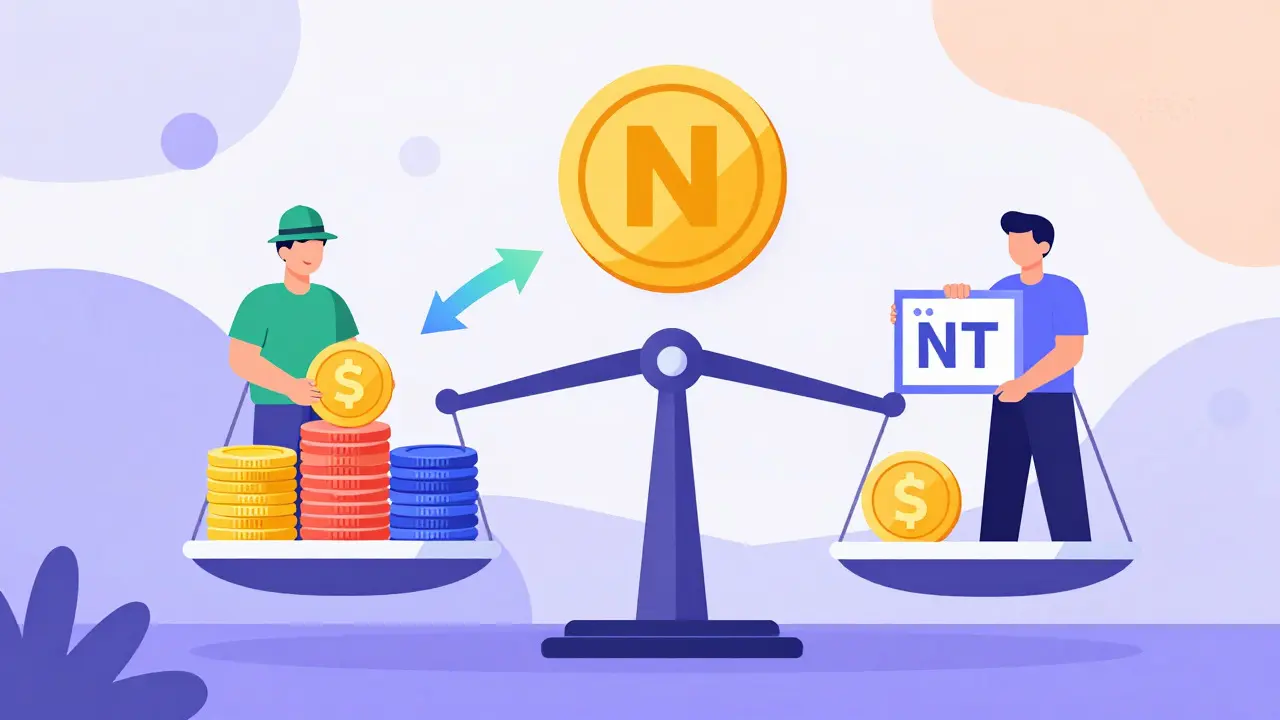
Nama Finance is a fully decentralized, community-driven NFT liquidity protocol built natively across multiple blockchains. It solves a common problem in the digital asset world: NFTs are illiquid. You own a valuable Bored Ape Yacht Club (BAYC) or NBA Top Shot moment, but if you need cash without selling the asset, traditional markets offer limited options.
The NAMA Protocol allows NFT owners to use their digital collectibles as collateral to secure loans. Unlike centralized lenders, Nama Finance operates across chains. This means you can hold an NFT minted on Ethereum and borrow stablecoins on Binance Smart Chain or Solana. For lenders, the protocol offers a way to earn yield by providing stablecoin liquidity to these borrowing pools.
The system relies on smart contracts to manage the risk. If a borrower fails to repay the loan plus interest by the due date, the NFT collateral is liquidated. This mechanism ensures that lenders are protected while borrowers retain ownership of their assets as long as they meet their repayment obligations.
Tokenomics: How the NAMA Token Works
The NAMA token is the economic engine of the Nama Finance ecosystem. With a maximum supply of 1 billion tokens, it serves several functions for both borrowers and lenders. However, current market data indicates low trading volume and limited circulation, suggesting the project may still be in early stages of widespread adoption or token distribution.
For lenders, staking stablecoins like USDT, USDC, or DAI into Nama Finance’s lending pools generates returns. Users can earn up to 35% APY when lending against high-value NFTs. These yields come from the interest paid by borrowers and additional NAMA token rewards distributed to incentivize liquidity provision. This model is often referred to as "lossless stablecoin liquidity farming" because the principal amount remains intact unless a default occurs and the collateral value is insufficient.
For borrowers, the NAMA token reduces costs. By locking NAMA tokens alongside their NFT collateral, users can access lower interest rates, sometimes starting as low as 5% per year. The minimum loan amount is typically set at $500, making it accessible for mid-tier NFT collections rather than just blue-chip assets. Borrowers also receive NAMA rewards for participating in the lending market, creating a dual incentive structure.
Is There an Active Nama Finance Airdrop?
As of July 2026, there is no evidence of a major, retroactive public airdrop for the NAMA token similar to those seen in Layer-1 blockchain launches. Instead, Nama Finance distributes tokens through operational incentives. This means you don’t "claim" a static allocation based on past activity; you earn tokens by actively using the protocol.
If you are looking to acquire NAMA tokens, the primary methods are:
- Liquidity Provision: Stake stablecoins in lending pools to earn NAMA rewards alongside interest income.
- Borrowing Participation: Engage in the lending market by taking out loans against eligible NFTs, which may include NAMA reward multipliers.
- Governance: Hold NAMA tokens to vote on protocol parameters, potentially earning future incentives for active governance participation.
Be cautious of third-party websites claiming to offer "free NAMA airdrops." Since the token has limited circulating supply and trading volume, many scams target users searching for easy claims. Always verify addresses through official Nama Finance channels.
Eligible Assets and Supported Chains
Nama Finance supports a wide range of ERC721 and ERC1155 tokens. Popular collections such as BAYC, CryptoPunks, and NBA Top Shot are commonly accepted as collateral. Additionally, Uniswap V3 LP tokens can be used, allowing DeFi participants to unlock liquidity from their position shares without exiting the pool.
The multi-chain architecture is a key differentiator. While many NFT lending platforms are restricted to a single blockchain, Nama Finance enables cross-chain operations. A user holding an Ethereum-based NFT can borrow USDC on Polygon or Solana, depending on the available liquidity pools. This flexibility reduces friction for global users who may prefer one chain for storage and another for spending.

Risks and Considerations for Participants
Participating in any decentralized finance (DeFi) protocol carries inherent risks. For Nama Finance, the primary concerns include smart contract risk, liquidation volatility, and token price instability.
Liquidation Risk: NFT valuations can be highly volatile. If the floor price of your collateral collection drops significantly during the loan period, your asset may be liquidated even if you intended to repay the loan. It is crucial to monitor health factors and maintain sufficient over-collateralization.
Smart Contract Risk: As with all DeFi protocols, bugs in the code can lead to fund loss. Audit reports should be reviewed regularly. Nama Finance being community-driven implies continuous development, but new features introduce new attack surfaces.
Token Volatility: With a max supply of 1 billion and limited current trading volume, the NAMA token price can experience significant swings. Earning 35% APY in NAMA tokens does not guarantee profit if the token’s USD value depreciates faster than the accrued interest.
How to Get Started Safely
If you decide to engage with the Nama Finance protocol, follow these steps to ensure security and efficiency:
- Verify Official Channels: Only interact with contracts listed on the official Nama Finance website or verified aggregators like DefiLlama. Beware of lookalike domains.
- Assess Your NFT Portfolio: Check if your NFTs are supported as collateral. Blue-chip collections generally offer better loan-to-value (LTV) ratios.
- Calculate Costs: Compare the borrowing interest rate against potential earnings from liquidity provision. Factor in gas fees for cross-chain transactions.
- Start Small: Test the platform with smaller amounts to understand the user interface and withdrawal processes before committing significant capital.
- Monitor Positions: Use dashboard tools to track your loan health factor and adjust collateral or repayments as needed to avoid liquidation.
Is the Nama Finance airdrop the same as the Namada airdrop?
No. They are two separate projects. Namada (NAM) had a major 65 million token airdrop for privacy tech contributors. Nama Finance (NAMA) is an NFT lending protocol that distributes tokens as usage incentives, not through a large retroactive airdrop.
Can I get free NAMA tokens without using the protocol?
Currently, there is no public record of a free, no-action-required airdrop for NAMA tokens. Most distributions require active participation, such as providing liquidity or borrowing against NFTs.
What NFTs can I use as collateral on Nama Finance?
Nama Finance supports various ERC721 and ERC1155 tokens, including popular collections like BAYC, NBA Top Shot, and CryptoPunks, as well as Uniswap V3 LP tokens.
How much APY can lenders earn on Nama Finance?
Lenders can earn up to 35% APY by staking stablecoins like USDT, USDC, or DAI. Returns vary based on demand, risk profile of the collateral, and NAMA token reward rates.
Is Nama Finance available on multiple blockchains?
Yes. Nama Finance is built as a multi-chain native protocol, allowing users to borrow and lend across networks like Ethereum, Binance Smart Chain, and Solana.