No Capital Gains Tax on Crypto in Singapore: What You Need to Know in 2025
 Dec, 10 2025
Singapore Crypto Tax Calculator
How much tax could you save?
Singapore has no capital gains tax on cryptocurrency for individual investors. Calculate your potential tax savings when selling crypto in Singapore.
Potential Tax Savings
Based on Singapore's capital gains tax policy
In Singapore, you pay 0% capital gains tax on cryptocurrency for individual investors. Your potential tax savings: SGD 0.00
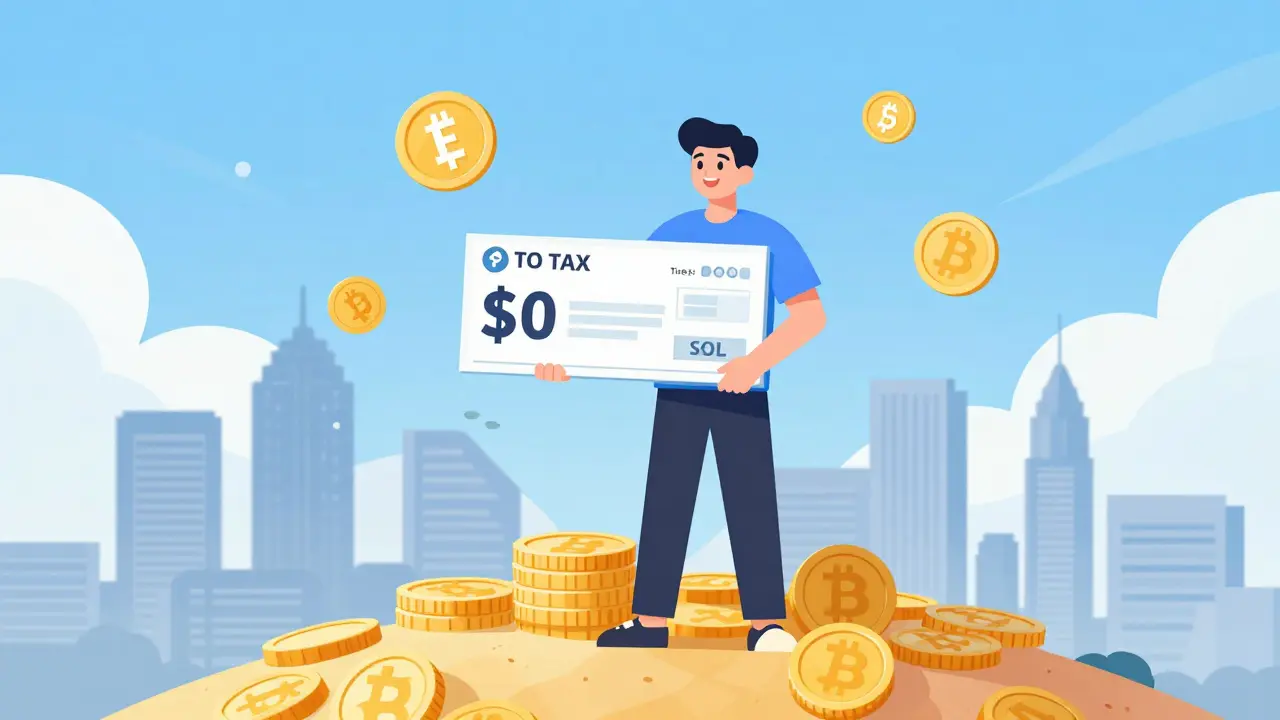
Want to trade Bitcoin, Ethereum, or any other crypto without paying a cent in capital gains tax? Singapore is one of the few places in the world where that’s not just possible - it’s the law. If you’re an individual investor, the government doesn’t care how much profit you make from selling your crypto. No matter if you turned $1,000 into $1 million, you keep it all. No forms. No filings. No surprise tax bills. That’s not a loophole. It’s policy.
Why Singapore Doesn’t Tax Crypto Gains
Singapore doesn’t have a capital gains tax at all - not for stocks, not for real estate, and not for cryptocurrency. That’s not an accident. It’s intentional. The government decided decades ago that taxing investment gains stifles innovation and drives capital away. Crypto was just the next logical step. The Monetary Authority of Singapore (MAS) treats digital assets as intangible property, not currency. That classification matters. It means crypto isn’t treated like cash you earn from a job - it’s treated like a collectible or an asset you hold.This rule applies to everyone who isn’t running a crypto business. If you bought Bitcoin in 2020, held it through the bull run, sold it in 2025 for a 500% profit, and deposited the cash into your bank account - congratulations. You owe Singapore $0 in taxes. Same if you swapped Ethereum for Solana, then sold Solana for USD. No tax. No reporting. No questions asked.
Where the Tax Rules Change: Businesses and Traders
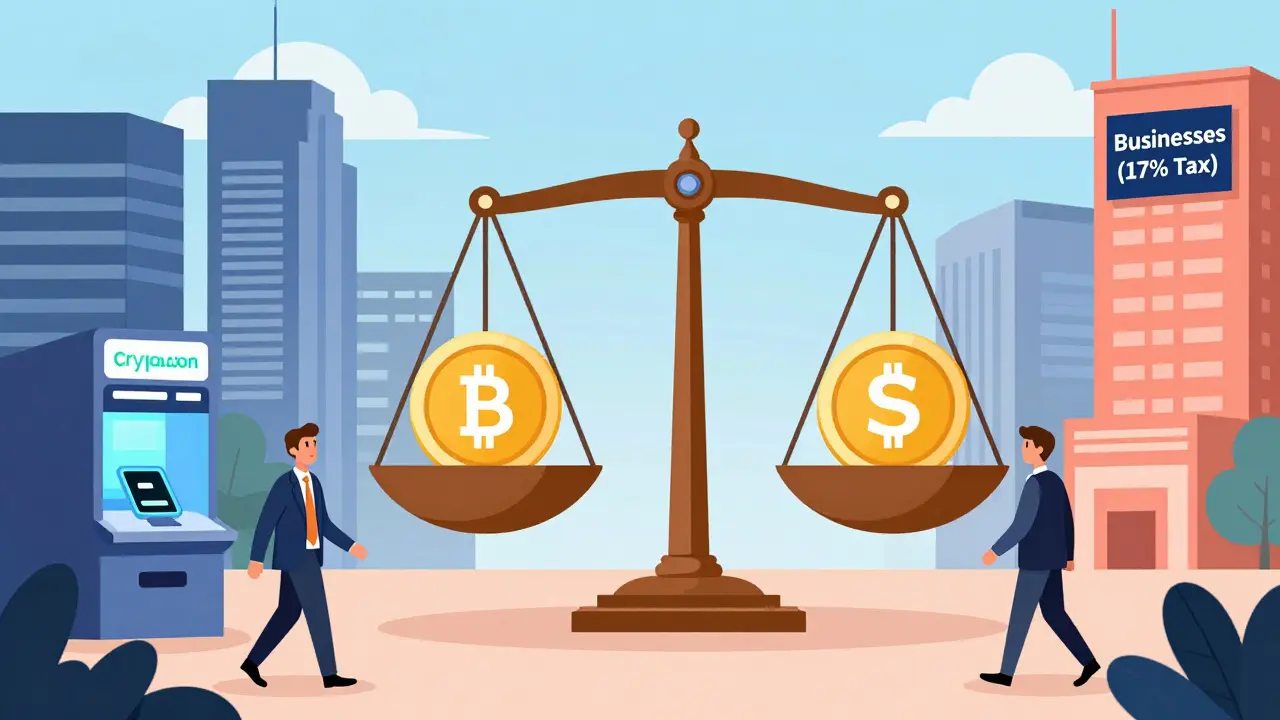
But here’s the catch: if you’re running a business that trades crypto as part of your core operation, the rules change. If your company buys and sells crypto to make a profit - like a hedge fund or a trading firm - you pay corporate income tax. Singapore’s corporate tax rate is 17%, which is still low compared to the U.S. (21%) or Germany (29.8%). But it’s not zero.Same goes for crypto businesses that accept crypto as payment. If you run a store in Singapore and someone pays you in Bitcoin for a laptop, that Bitcoin’s value at the time of the sale counts as business income. You report it. You pay tax on it. But again - only if you’re operating as a business. For individuals, it’s completely different.
Even if you’re a professional trader who lives off crypto gains, as long as you’re not registered as a business entity, you’re still considered an investor. The MAS doesn’t care how often you trade. You can buy and sell 10 times a day. You can make $500,000 in a month. As long as you’re not incorporated as a company, you pay no capital gains tax.
How Singapore Stays Safe Without Taxing Crypto
You might wonder: if no one pays tax on crypto gains, how does Singapore stop criminals from using it for money laundering or scams? The answer is regulation - not taxation.All crypto exchanges and service providers operating in Singapore must be licensed by MAS under the Payment Services Act. That means they need to verify every customer’s identity (KYC), monitor every transaction for suspicious activity, report fraud, and keep records for at least five years. Companies like Binance, Crypto.com, and KuCoin didn’t set up shop in Singapore because of the tax break. They came because they knew they could operate legally, predictably, and without fear of sudden regulatory crackdowns.
There’s also a strict anti-scam framework. Digital wallet providers must implement fraud detection tools. If someone reports a scam, the platform has to freeze funds and notify authorities. In 2024 alone, MAS revoked licenses from three unlicensed crypto platforms and fined two others over $1.2 million for failing KYC checks. The message is clear: you can make money trading crypto, but you can’t hide behind it.
How Singapore Compares to Other Crypto Havens
Portugal doesn’t tax long-term crypto gains, but short-term trades are taxed at 28%. Germany lets you avoid capital gains tax only if you hold crypto for over a year. The Cayman Islands has zero tax on anything - but it’s an offshore island with limited infrastructure. Thailand just announced a five-year exemption, but it’s temporary.Singapore is different. It’s not just tax-free - it’s structured. You get the benefits of a tax haven without the instability. You get the legitimacy of a global financial hub. You get access to banks, legal systems, and international payment networks. That’s why over 600 fintech companies have moved there since 2020. It’s not just about avoiding taxes - it’s about building something that lasts.
What You Need to Do to Benefit
If you’re outside Singapore and want to take advantage of this, you need to become a tax resident. That means either spending at least 183 days a year in Singapore, or proving you have strong economic ties - like a job, a home, or a business registered there. You can’t just fly in for a week, trade crypto, and claim tax exemption.There’s no special visa for crypto investors, but many people use the Tech.Pass or the Global Investor Programme to relocate. The process takes time - usually 3 to 6 months - and requires proof of income, assets, or business experience. It’s not easy, but it’s possible. And once you’re a resident, your crypto gains are yours, no matter how big they get.
What About GST? Is Crypto Spending Taxed?
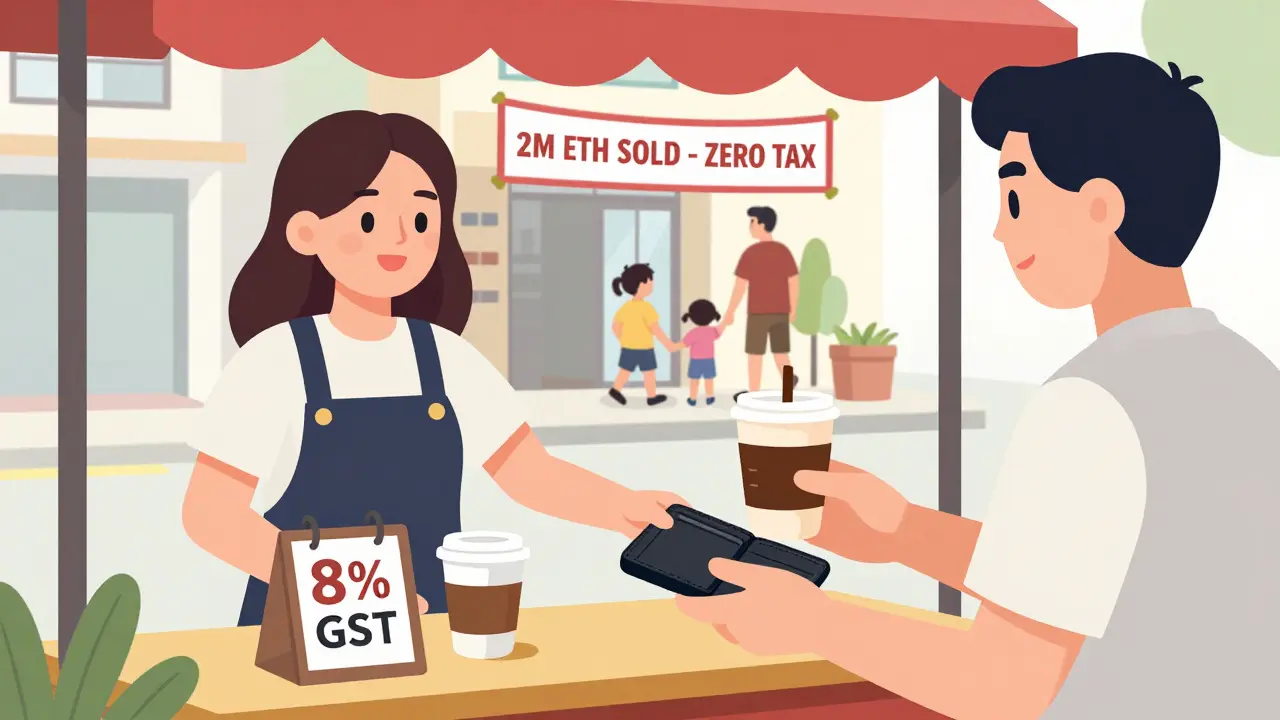
Yes - but only in one specific case. If you use crypto to buy something - like a coffee, a laptop, or a flight - the merchant has to charge you 8% GST on the value of the goods or services. But the crypto you used to pay? That part isn’t taxed. You’re not paying tax on your crypto gain. You’re paying tax on the item you bought. It’s like paying with cash, but the cash was crypto.So if you bought a $500 phone using Bitcoin you originally bought for $100, you don’t pay tax on the $400 profit. But the store charges you $40 in GST on the phone’s price. That’s the only time you’ll ever pay tax on crypto in Singapore - and it’s not on your gain. It’s on the purchase.
Who’s Really Winning in Singapore’s Crypto Scene?
The biggest winners? Individual investors who move there. High-net-worth traders, early crypto adopters, and founders who want to cash out without losing half their profits to taxes. Reddit threads from Singapore-based crypto traders are full of people saying things like, “I sold my ETH for $2M last year. Zero tax. Bought a condo. No paperwork.”Businesses win too - but only the ones that can afford compliance. Setting up a licensed crypto exchange in Singapore costs between $50,000 and $200,000 in legal and operational fees. It takes 6 to 12 months. You need local staff, auditors, cybersecurity systems, and AML officers. So while the tax rate is low, the cost of entry is high. That’s why only serious players make it through.
For the average person? It’s simple. Buy. Hold. Trade. Sell. No taxes. No stress. No accountant needed.
What Could Change in the Future?
Nothing is forever. But right now, Singapore has no plans to change its crypto tax policy. The MAS has publicly stated that it sees crypto as part of the future of finance - not something to punish. In 2025, they launched a new regulatory sandbox to test blockchain-based securities trading. They’re not slowing down. They’re accelerating.Other countries are catching up. Thailand’s five-year exemption ends in 2030. The Cayman Islands just passed its own Virtual Asset Service Providers Act. But Singapore has something they don’t: a fully functioning financial system, a stable government, and a reputation for fairness. That’s why it’s still the top choice for crypto investors who want freedom without chaos.
If you’re tired of tracking every trade, calculating cost basis, and worrying about IRS audits - Singapore offers a rare escape. It’s not magic. It’s policy. And right now, it’s working.
Do I pay capital gains tax on crypto in Singapore if I’m not a resident?
No - but only if you’re not a tax resident. Singapore only taxes people who are residents. If you’re visiting or living abroad, your crypto gains aren’t subject to Singapore tax, regardless of where you trade. However, your home country may still tax you. For example, if you’re a U.S. citizen, you still owe capital gains tax to the IRS, even if you live in Singapore. Singapore doesn’t tax you, but your own country might.
Can I use crypto to pay bills in Singapore without paying tax?
Yes - as long as you’re not a business. If you pay your rent or utility bills with Bitcoin, you don’t pay tax on the profit you made from buying that Bitcoin. The biller might charge 8% GST on the service, but your crypto gain remains untaxed. The tax applies to the service, not your crypto transaction.
Is staking or earning crypto rewards taxable in Singapore?
Yes - but only when you sell or trade the rewards. If you earn 0.5 ETH from staking Ethereum, that’s not taxed when you receive it. But if you later sell that 0.5 ETH for SGD, you still don’t pay capital gains tax. Singapore doesn’t tax crypto gains at all for individuals. The same applies to airdrops, yield farming, or mining rewards. No tax on receipt. No tax on sale.
What if I trade crypto on a foreign exchange while living in Singapore?
It doesn’t matter. Whether you trade on Binance, Coinbase, or a decentralized exchange, as long as you’re a tax resident of Singapore, your gains are tax-free. The location of the exchange is irrelevant. Singapore taxes based on residency, not where the trade happens.
Do I need to report crypto transactions to Singapore’s tax authority?
No - not if you’re an individual investor. The Inland Revenue Authority of Singapore (IRAS) doesn’t require individuals to report crypto trades, profits, or losses. You don’t need to file any forms. You don’t need to keep detailed records unless you’re running a business. The burden is on exchanges and service providers to comply, not you.
Can I move my crypto to Singapore without paying tax on the transfer?
Yes. Moving crypto from one wallet to another - even if you’re transferring it from the U.S. to a Singapore-based wallet - is not a taxable event. There’s no sale, no exchange, no realization of gain. Singapore treats transfers between wallets as non-events. Only when you sell or trade for something else does it become relevant - and even then, no tax applies for individuals.
Heath OBrien
December 12, 2025 AT 06:46This is why America is falling behind. We tax everything even your dreams. 🇸🇬 all the way.
Sarah Luttrell
December 13, 2025 AT 09:10Oh wow, another crypto utopia for rich Americans to flee to. Meanwhile, real people here are still paying taxes on their coffee. 😂
Kathryn Flanagan
December 14, 2025 AT 08:54Let me break this down simply for anyone confused. If you're just buying and selling crypto as a person, not a company, Singapore says: 'Do your thing, no taxes.' That includes staking, airdrops, swapping tokens, even if you make millions. No forms. No reporting. Just pure profit. It's not magic, it's policy. And honestly? It's smart. They want smart money to stay, not run away. The government doesn't care how much you make - they care that you're building, investing, and staying in their ecosystem. They regulate the platforms, not the people. That's the key difference. Most countries punish success. Singapore rewards it - quietly, efficiently, and without drama.
Joey Cacace
December 15, 2025 AT 23:54Thank you for this incredibly clear breakdown. It’s rare to find such a well-structured explanation of a complex topic. The distinction between individual investors and business entities is absolutely critical, and I appreciate how thoroughly you’ve outlined the regulatory safeguards in place. Singapore’s approach truly reflects foresight and maturity in financial policy.
Toni Marucco
December 16, 2025 AT 03:27What’s fascinating is how Singapore flips the script: instead of chasing tax revenue from individuals, they’re building a financial infrastructure so robust that capital flows in organically. The licensing requirements for exchanges? That’s not red tape - it’s a moat. It filters out the sketchy operators and keeps the legit players. And yes, the $200k setup cost keeps out the amateurs, which ironically makes the whole system more trustworthy. Meanwhile, the U.S. is still arguing whether crypto is a currency or a commodity. Singapore already moved on. They’re not just avoiding taxes - they’re designing the future of finance. And it’s not even close to being a tax haven. It’s a governance haven.
Alex Warren
December 16, 2025 AT 05:15Just to clarify: if I’m a U.S. citizen living in Singapore and sell BTC for $2M, I still owe the IRS. Singapore doesn’t tax me, but the IRS does. Residency matters for Singapore’s rules, not mine. Important distinction.
Taylor Farano
December 16, 2025 AT 14:38Oh so now we’re supposed to be impressed because Singapore lets rich people avoid taxes? Congrats, they’ve created a luxury tax loophole for billionaires. Meanwhile, your local barista pays 8% GST on your latte while you pocket $1.5M tax-free. What a fair system. 🤡
Steven Ellis
December 18, 2025 AT 13:41One thing people overlook: the real win here isn’t the tax exemption - it’s the stability. You can open a bank account, get a mortgage, buy property, and legally hold crypto without fear of sudden policy shifts. Compare that to Thailand’s five-year exemption or Portugal’s gray areas. Singapore’s framework is built to last. The MAS doesn’t just say ‘no tax’ - they say ‘here’s how it works, here’s what’s regulated, and here’s what you can count on.’ That’s why institutions trust it. It’s not a loophole. It’s a blueprint.
Taylor Fallon
December 18, 2025 AT 15:51Imagine a world where your success isn’t punished with paperwork… where your hard-earned gains aren’t seized because someone in a suit thinks you ‘should’ pay more. 🌱 That’s what Singapore is doing. Not just with crypto - with vision. They’re not scared of innovation. They’re betting on it. And honestly? Maybe we’re all just too scared to let people thrive without asking for a cut. I used to think tax avoidance was shady… now I think tax avoidance is just what happens when a government stops trying to control everything. Maybe the real question isn’t ‘why doesn’t Singapore tax crypto?’… but ‘why does everywhere else?’
Patricia Whitaker
December 19, 2025 AT 22:22So… I just need to move to Singapore and I can ignore the IRS? 😏