OFAC Sanctions on North Korean Crypto Networks: How the US is Fighting Digital Theft
 Apr, 14 2026
Imagine hiring a brilliant remote developer who nails every sprint, only to find out months later they aren't just writing code-they're mapping your internal network for a state-sponsored heist. This isn't a movie plot; it's a reality for dozens of U.S. tech firms. The OFAC sanctions is the primary tool used by the U.S. Department of the Treasury's Office of Foreign Assets Control to freeze assets and block transactions with sanctioned entities, including those linked to North Korea. In 2025, this tool became the frontline defense against a massive surge in digital theft that has seen billions of dollars vanish into the pockets of the DPRK regime.
The Scale of the Digital Heist
The numbers are staggering. According to analysis from TRM Labs, a blockchain intelligence firm, North Korean threat actors stole over $2.1 billion in cryptocurrency in the first half of 2025 alone. This isn't just petty crime; it's a systematic state operation designed to fund weapons programs and ballistic missiles. The regime has pivoted from traditional bank heists to the wild west of Web3 and decentralized finance, where anonymity is a feature, not a bug.
To counter this, the U.S. government has shifted to a "whole-of-government" approach. This means the Treasury doesn't just work alone; they coordinate with the FBI and the Department of Justice to track funds from the moment they are stolen until they hit an off-ramp into cash. When OFAC designates a wallet address or a front company as sanctioned, it effectively turns that asset into "toxic waste"-no legitimate exchange or business will touch it without risking massive federal penalties.
The Trojan Horse: Fraudulent IT Workers
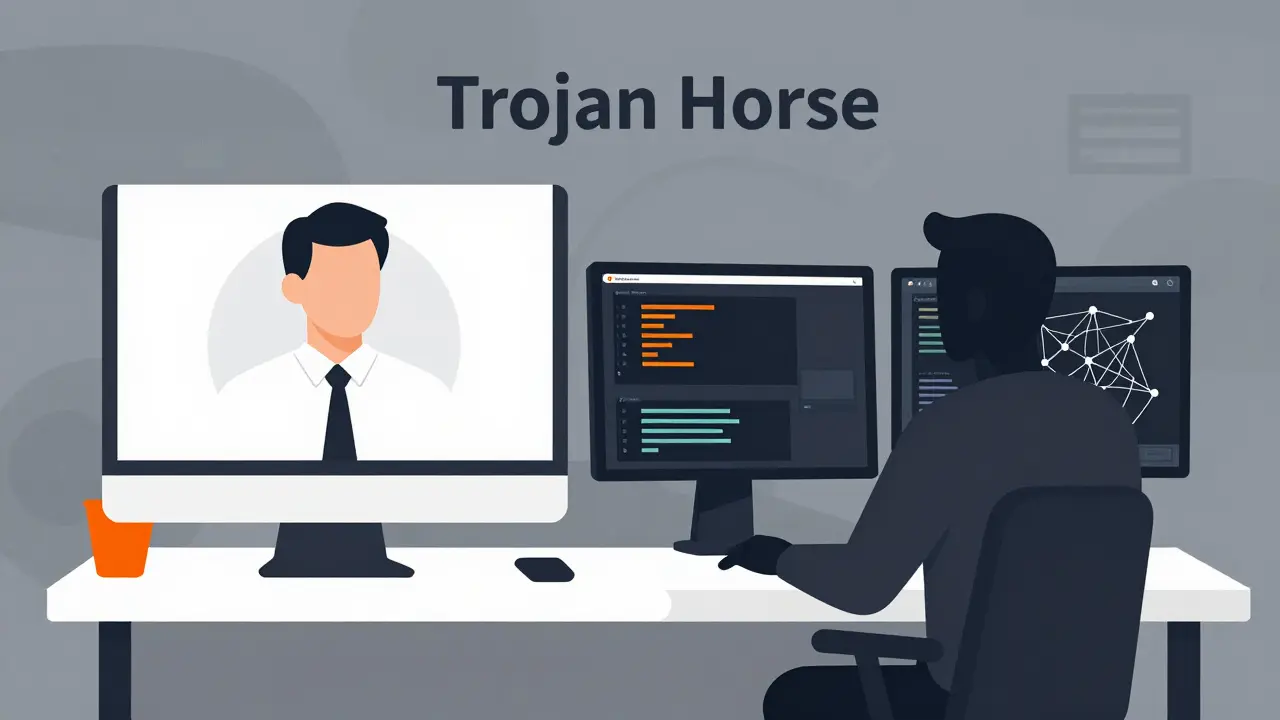
One of the most alarming tactics isn't a hack, but a job application. The DPRK has deployed a sophisticated scheme where IT workers embed themselves in U.S. companies. These workers target firms with remote-first cultures, especially those in the crypto space. They don't just steal salaries; they conduct reconnaissance, stealing sensitive data and demanding ransoms.
These operatives are masters of disguise. They use fake identities and curated personas on professional platforms to look legitimate. If you see a candidate with a polished GitHub profile but inconsistent background checks, you might be looking at a state agent. They often use platforms like Freelancer, Medium, and RemoteHub to build credibility. Security researchers track these groups under names like Famous Chollima and Jasper Sleet, noting that they operate under the direct affiliation of the Workers' Party of Korea.
How the Money Laundering Works
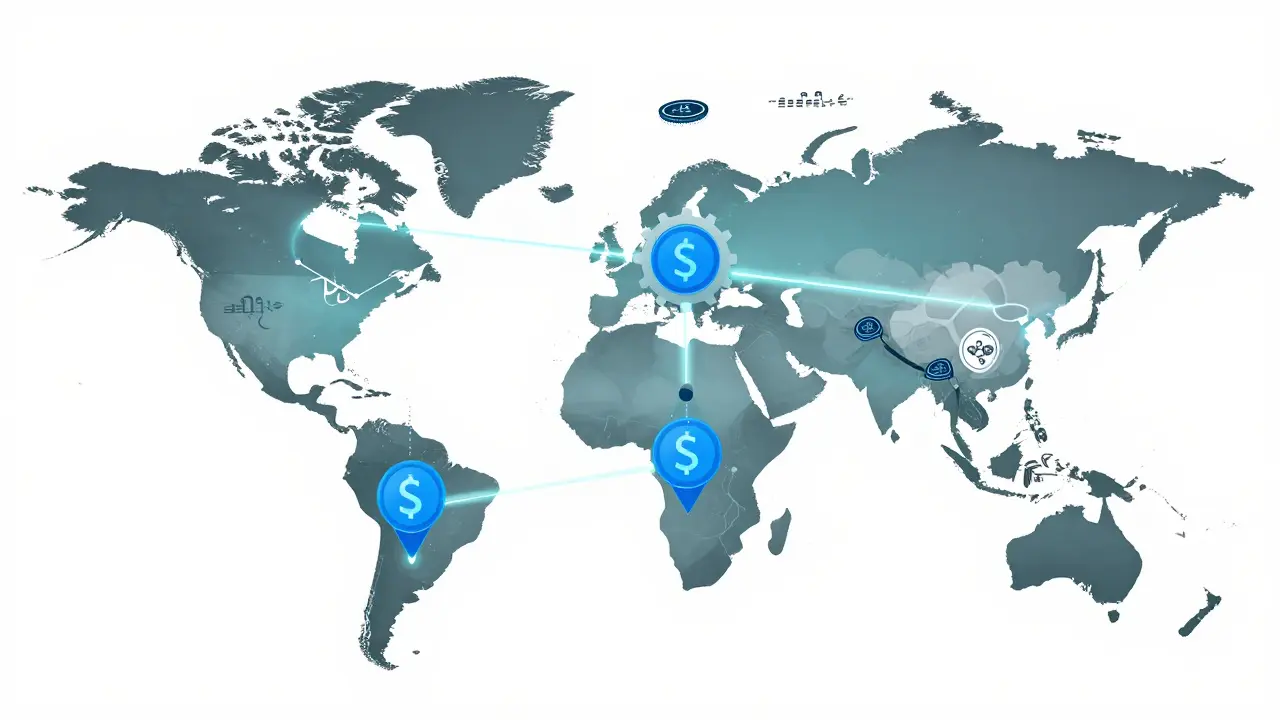
Stealing $2 billion in ETH or USDC is one thing; spending it without getting caught is another. The laundering infrastructure is a global web involving Russia, the UAE, and Southeast Asia. The process usually follows a specific path to hide the "blood trail" of the funds.
First, the funds are fragmented across thousands of self-hosted wallets to avoid detection. Then, they are routed through centralized exchanges or specialized over-the-counter (OTC) brokers. For example, a specific laundering network used aliases like 'Joshua Palmer' and 'Alex Hong' to collect stablecoin payments. These funds were eventually consolidated and transferred to senior operatives like Kim Sang Man and Sim Hyon Sop. In June 2025, the Department of Justice sought to forfeit over $7.7 million in digital assets tied to these exact schemes, including high-value NFTs used as vehicles for moving wealth.
| Feature | Traditional Hacking | IT Worker Embedding |
|---|---|---|
| Entry Point | Software vulnerabilities / Phishing | Employment contracts / Freelance gigs |
| Primary Goal | Immediate theft of assets | Long-term reconnaissance & salary theft |
| Detection Difficulty | Medium (detected by security software) | High (looks like a productive employee) |
| Funding Target | External wallets | Internal company payroll & stablecoins |
The Global Network of Front Companies
OFAC doesn't just target individuals; it goes after the corporate shells that make these operations possible. Companies like Shenyang Geumpungri Network Technology Co., Ltd and Korea Sinjin Trading Corporation have been designated for their roles in facilitating IT fraud. These entities often act as a layer of separation between the DPRK government and the money.
Many of these operations are managed through IT firms that maintain offices in China, Laos, and Russia. A prime example is the Chinyong Information Technology Cooperation Company, which has been identified as a hub for deploying workers who double as cryptocurrency thieves. By the time the U.S. Treasury identifies these links, the money has often moved through multiple jurisdictions, highlighting why international cooperation with Japan and South Korea is critical.
Protecting Your Business from State-Sponsored Fraud
If you're running a tech startup or a Web3 project, the risk isn't just "out there"-it could be on your Slack channel. The key is to move beyond basic background checks. Since these actors use stolen identities, a passport scan isn't always enough. You need to look for behavioral red flags: workers who insist on using specific, non-standard communication tools or those who exhibit unusual patterns in how they handle company data.
Moreover, screening for indirect exposure is vital. You might not be dealing with a sanctioned individual directly, but your vendor or a third-party contractor might be. Using blockchain analysis tools to screen the wallets you interact with can prevent your company from accidentally facilitating a sanctions-evasion scheme. As of late 2025, enforcement agencies are increasingly focusing on these "facilitator networks"-the people who provide the IP addresses and fake documents that make the fraud possible.
What happens if a company accidentally hires a sanctioned North Korean worker?
While OFAC generally looks for "willful" violations, companies can still face strict liability. If a business is found to have ignored clear red flags or failed to perform due diligence, they could face heavy fines. The best course of action is to immediately freeze any associated accounts and report the incident to the Department of the Treasury and the FBI.
How does North Korea convert crypto into usable cash?
They typically use a combination of high-volume mixing services and Over-the-Counter (OTC) brokers. These brokers act as middlemen who trade cryptocurrency for fiat currency (like USD or EUR) outside of regulated exchanges, often operating in jurisdictions with lax financial oversight like the UAE or Russia.
Why is Web3 particularly targeted by the DPRK?
Web3 companies often have decentralized structures and remote-first hiring practices, which make it easier for fraudsters to hide their true identity. Additionally, the high value of digital assets and the relative novelty of the regulatory environment create more opportunities for large-scale theft with less immediate oversight.
What are the 'red flags' for fraudulent IT workers?
Common red flags include candidates who use reused identities across different platforms, inconsistencies between their stated location and their IP address, and a refusal to engage in live video interviews. They also frequently use fraudulent documentation to bypass standard KYC (Know Your Customer) processes.
Can OFAC really track cryptocurrency if it is anonymous?
Cryptocurrency is pseudonymous, not anonymous. Every transaction is recorded on a public ledger. By using blockchain forensics and monitoring "off-ramps" (where crypto is turned into cash), OFAC and agencies like the FBI can trace the flow of funds back to specific wallets and individuals.
Mark Pfeifer
April 15, 2026 AT 01:24The part about fraudulent IT workers is the most concerning aspect here. It highlights a massive gap in how we handle remote onboarding and the danger of relying solely on digital credentials that can be easily forged by a state entity. We really need more standardized, secure ways to verify identity without compromising privacy too much
Shantal Sanjur
April 16, 2026 AT 07:19Oh sure, let's just trust the government to "track" the money. Because they're so famously honest and efficient with our taxes. I'm sure the OFAC sanctions are just about national security and not about consolidating control over every single digital transaction we make. It's almost like they want a total surveillance state and crypto was the only thing standing in their way. Give me a break
John and Lauren Busch
April 17, 2026 AT 10:57Wild that people actually fall for the fake GitHub profile thing
Thomas Jewett
April 17, 2026 AT 14:57This is absolutely disgusting that we even allow these foreign threats to apply for jobs in our great nation in the first place!! The goverment needs to stop playing nice and just shut down every single gateway that lets these North Korean rats even think about touching our systems. Its a total disgrace to the american worker that we have to worry about this kind of stuff while the elites just watch it happen from their ivory towers. We need total dominance in cyber warfare and we need it now or we are just inviting the enemy into our own living rooms and letting them rob us blind while we sleep!!
Sandeep Bhoir
April 18, 2026 AT 08:24The irony of using "decentralized" finance to fund a highly centralized totalitarian regime is truly poetic. I'm sure the OTC brokers in the UAE are just doing it for the love of the craft and not because they're getting paid obscene amounts of money to wash blood-stained coins
Sean Mitchell
April 19, 2026 AT 23:37The sheer audacity of a state-sponsored group pretending to be a freelance developer is almost impressive. It's a tragedy that the corporate world is so blinded by the need for cheap, remote labor that they ignore the most obvious red flags. Truly, the height of capitalist negligence
Luke George
April 21, 2026 AT 16:59It's not just about the DPRK though. This is a blueprint for how all these agencies are going to flag anyone who doesn't use a government-approved wallet. Once they set the precedent that "toxic waste" can be defined by a Treasury list, they can apply that to anyone they don't like. It's all connected to the larger push for a global digital ID and the death of financial anonymity as we know it
Michael Harms
April 22, 2026 AT 00:59This is a great wake-up call for the Web3 community to get better at vetting. We can still keep the spirit of remote work alive by just being a bit more diligent with our interviews. Let's use this as a chance to build better, more secure communities where we actually know who we're collaborating with. It's all about growth and learning from these mistakes
Keri Pommerenk
April 22, 2026 AT 18:41I think focusing on behavioral red flags like mentioned is a really supportive way to help small teams stay safe. It's about being mindful of the patterns rather than just ticking a box on a background check. Definitely a good approach for anyone managing remote developers