Operation Final Exchange: How Germany Crushed Russian Crypto Laundering
 Sep, 5 2026
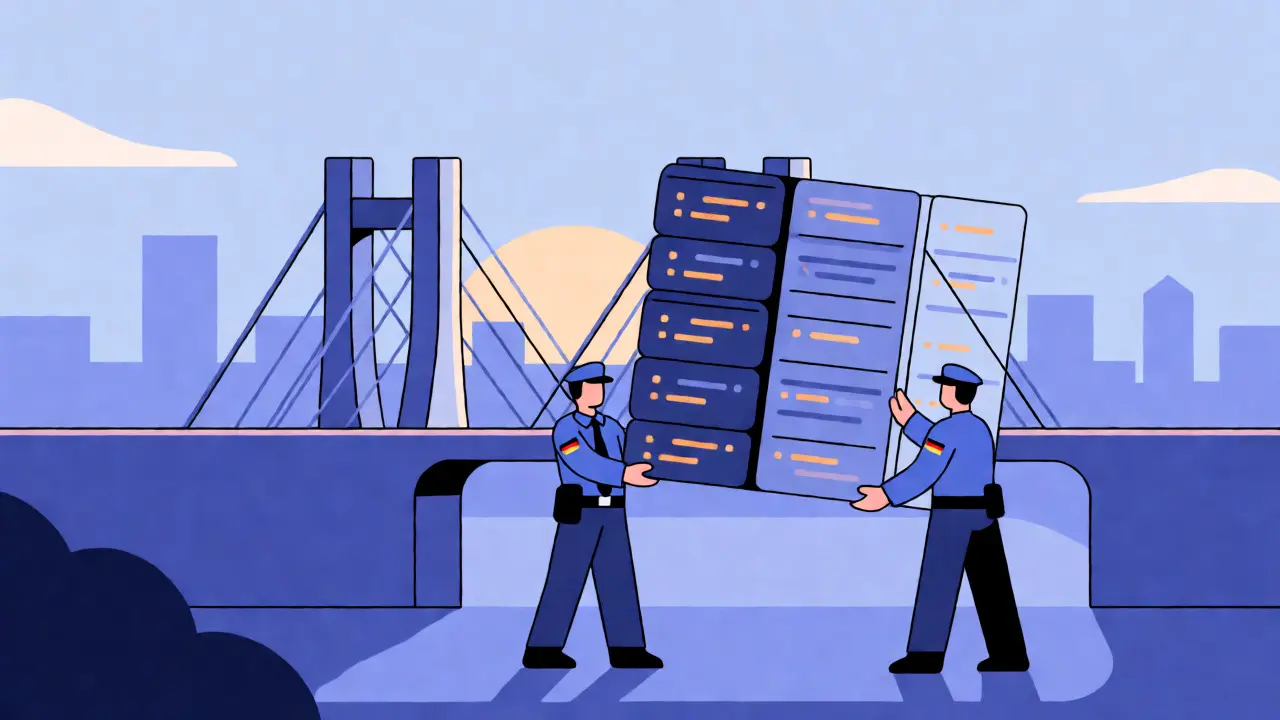
Imagine waking up to find that the anonymous exchange you used to swap your Bitcoin for cash has vanished. Not just offline, but completely seized. Every transaction record, every IP address, and every registration detail is now in the hands of federal investigators. This isn't a hypothetical scenario from a dystopian novel; it happened on September 19, 2024, when German authorities launched Operation Final Exchange. It was a coordinated strike by the Federal Criminal Police Office (BKA) against 47 Russian-language cryptocurrency exchanges that operated without Know Your Customer (KYC) checks.
The message left behind by the BKA was chillingly direct: "We have found their servers and seized them - development servers, production servers, backup servers. We have their data - and therefore we have your data." For many users, this marked the end of an era where anonymity was assumed to be absolute. But what exactly did this operation achieve, and why does it matter for the future of crypto privacy?
What Was Operation Final Exchange?
At its core, Operation Final Exchange was a massive law enforcement sweep targeting infrastructure rather than just individuals. The BKA, working alongside Frankfurt's Public Prosecutor's Office, identified 47 specific platforms. These weren't major global players like Binance or Coinbase. Instead, they were niche services catering primarily to Russian-speaking users who wanted to move money quickly without showing ID.
These platforms offered instant swaps between cryptocurrencies and fiat currencies. Crucially, they required no verification-no names, no phone numbers, no emails. You could walk in with digital currency and walk out with euros or rubles, leaving almost no paper trail. This made them perfect conduits for money laundering, ransomware payouts, and darknet drug sales. By seizing the servers, German authorities didn't just shut down websites; they captured the entire operational backbone of these businesses.
| Feature | Targeted Platforms | Regulated Exchanges |
|---|---|---|
| KYC Requirements | None (Anonymous) | Mandatory (ID, Proof of Address) |
| Primary User Base | Russian-speaking, Privacy-focused | Global, Retail & Institutional |
| Transaction Speed | Instant Swap | Varies (Bank transfers slow) |
| Compliance Status | Unregulated / Grey Market | Licensed (BaFin, FCA, etc.) |
| Risk Profile | High (Sanctions Evasion, ML) | Low (Monitored) |
The Technical Takedown: More Than Just Turning Off Lights
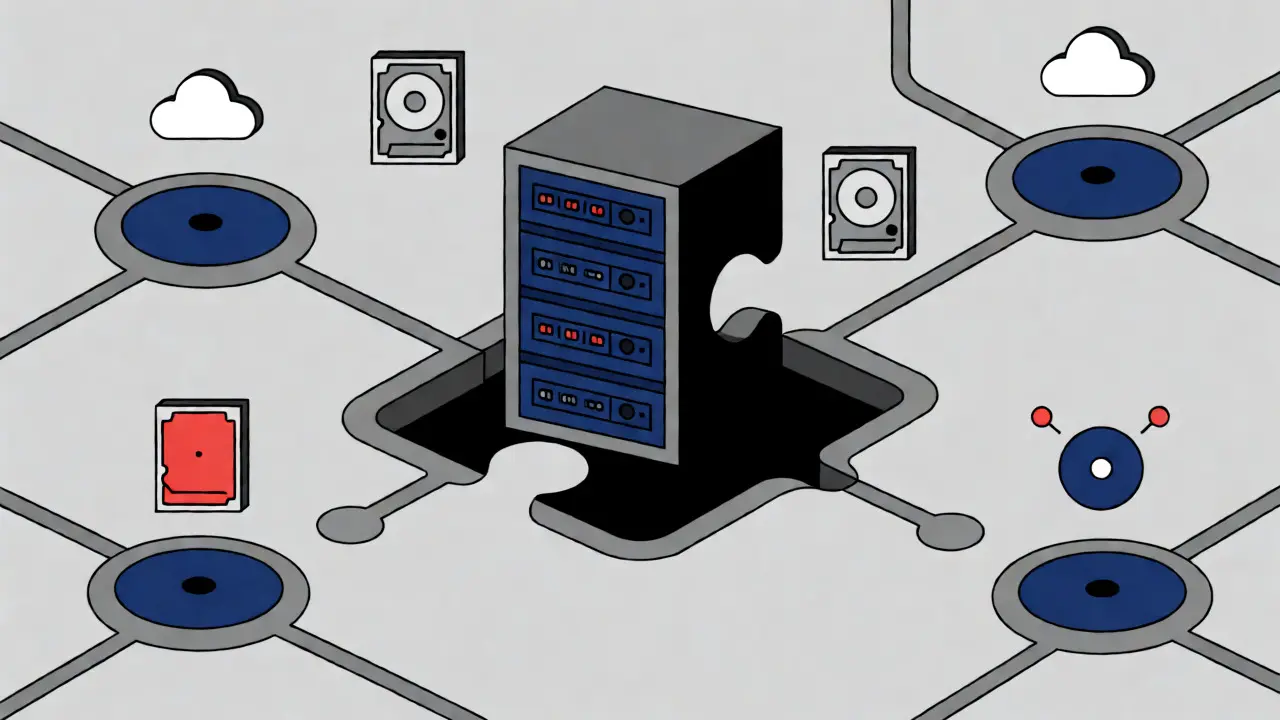
Most people think shutting down a website means flipping a switch. Law enforcement knows better. If you only take down the production server, the operators can spin up a new one within hours using backup code and databases. Operation Final Exchange avoided this trap through comprehensive seizure tactics.
The BKA secured over 8 terabytes of data. This wasn't just empty space; it contained complete user registration records, detailed transaction logs, and crucial IP addresses. By grabbing development servers too, investigators ensured that the technical blueprints of how these exchanges worked were preserved. This level of thoroughness prevents the "whack-a-mole" game often seen in cybercrime enforcement, where bad actors simply relaunch under a new domain name.
This approach highlights a shift in how police handle digital assets. They are no longer chasing individual suspects one by one. Instead, they are dismantling the infrastructure that allows crime to scale. When you remove the plumbing, the water stops flowing, regardless of how many people turn on the tap.
Why Target Russian-Language No-KYC Services?
You might wonder why Germany focused specifically on Russian-language exchanges. The answer lies in geopolitics and financial flow. Since the escalation of conflicts involving Russia, Western nations imposed strict sanctions on Russian banks and financial institutions. However, money still needs to move. Cryptocurrencies became a primary channel for circumventing these restrictions.
These no-KYC exchanges provided a bridge. They allowed sanctioned entities to convert fiat currency into crypto, move it across borders, and then convert it back into fiat in different jurisdictions. Because there was no KYC, it was difficult for regulators to trace the ultimate beneficiary of the funds. This created systematic channels for sanctions circumvention that traditional banking oversight couldn't easily detect.
Chainalysis, a leading blockchain analytics firm, noted that these instant-swap style exchanges play a central role in facilitating on-chain cybercrime. Ransomware groups, for instance, need to cash out quickly without drawing attention. A regulated exchange would flag large, sudden withdrawals from unknown wallets. An anonymous exchange wouldn't. That lack of friction is exactly what criminals pay for.
The Psychological Impact: "We Have Your Data"
One of the most striking aspects of Operation Final Exchange was the communication strategy. The BKA didn't just issue a press release. They posted a direct warning to users: "Our search for traces begins. See you soon."
This moves beyond legal enforcement into psychological warfare. In the past, users of privacy tools assumed that if they weren't caught immediately, they were safe. This operation shattered that illusion. It signaled that data retention is permanent and that law enforcement has the patience and resources to mine through terabytes of information months or even years later.
For legitimate privacy advocates, this raises concerns about surveillance creep. Are all users guilty until proven innocent? Critics argue that broad seizures infringe on financial privacy rights. However, supporters point out that the vast majority of volume on these platforms was linked to illicit activities. The trade-off, they argue, is worth it to clean up the ecosystem.
Broader Implications for Crypto Enforcement
Operation Final Exchange isn't an isolated incident. It fits into a broader trend of aggressive European enforcement. Germany has previously targeted ChipMixer, another major mixer service involved in laundering €90 million. The success of these operations has emboldened agencies across the EU to expand their capabilities.
The market for blockchain analytics has exploded as a result. Services that help trace crypto flows grew by over 300% annually around the time of these raids. The global cryptocurrency compliance market hit $1.2 billion in 2024, driven largely by the need for tools that can keep up with sophisticated laundering techniques.
Law enforcement agencies are learning fast. They are developing specialized units capable of understanding smart contracts, mixing protocols, and cross-chain bridges. This technical sophistication allows them to compete with criminals who have historically held the advantage in speed and innovation.
What Happens Next for Users and Operators?
As of late 2024, investigations based on the seized data are ongoing. Authorities haven't announced mass arrests yet, but they have promised substantive financial intelligence will follow. This means we should expect a wave of subpoenas, asset freezes, and prosecutions targeting not just the exchange owners, but potentially high-volume users.
For operators of similar services, the lesson is clear: hiding behind a simple web interface is no longer enough. Jurisdiction matters. Server location matters. And having backups in the same jurisdiction as your main servers is a single point of failure.
For users, the landscape is shifting. The era of truly anonymous, frictionless crypto-to-fiat conversion is closing. While decentralized exchanges (DEXs) offer more privacy, they often lack easy fiat on-ramps. Centralized services are tightening regulations, forcing users to accept some level of transparency in exchange for liquidity and ease of use.
Frequently Asked Questions
What exactly is a no-KYC exchange?
A no-KYC exchange is a platform that allows users to buy, sell, or swap cryptocurrencies without undergoing identity verification processes like providing government-issued IDs or proof of address. This makes transactions faster and more private but increases the risk of being used for money laundering.
Why did Germany target these specific exchanges?
Germany targeted these exchanges because they were heavily used for sanctions evasion and money laundering related to Russian financial networks. Their lack of regulatory oversight made them ideal channels for moving illicit funds across borders without detection by traditional banking systems.
Can I get my money back if I used one of these exchanges?
It depends on whether your funds were frozen due to suspicion of illicit activity or if the exchange held custody of your assets. If the exchange held your funds and was seized, recovery may require navigating complex legal proceedings. Users who completed transactions before the seizure generally retain ownership of their outgoing funds.
Does this mean crypto privacy is dead?
Not entirely, but centralized privacy options are shrinking. Decentralized finance (DeFi) and peer-to-peer trading still offer privacy avenues, though they come with higher complexity and lower liquidity compared to the centralized exchanges that were shut down.
How do police actually seize crypto servers?
Police work with hosting providers and data centers to physically or remotely access servers. In Operation Final Exchange, they coordinated simultaneous raids to secure development, production, and backup servers to prevent data loss or tampering before analysis could begin.
Rishi Mehta
September 5, 2026 AT 21:08its just another excuse for the state to spy on us and take our money without asking
they say its for crime but really its about control and fear
we are all guilty until proven innocent now i guess
the privacy we fought for is gone because they decided it was inconvenient for their databases
so sad that we have to live in a world where using your own money feels like a crime
Charlotte Richardson
September 6, 2026 AT 02:28I appreciate you sharing this perspective, Rishi. It is completely valid to feel concerned when financial privacy intersects with state surveillance.
However, I would gently encourage us to look at the broader context here. For many individuals who were victims of ransomware or darknet scams, these no-KYC exchanges represented a significant barrier to justice and recovery.
The seizure of data allows investigators to trace funds back to perpetrators, which can provide closure for those affected by illicit activities.
It is a complex balance between individual liberty and collective security, and both sides deserve empathy and understanding as we navigate this new regulatory landscape.
Courtney Parker
September 7, 2026 AT 01:27lol nice try Charlotte but nobody cares about your feelings 😒
this whole thing is just big brother watching everything anyway so why pretend it matters 🙄
if they wanted to stop crime theyd actually do something instead of seizing servers 🤷♀️
Saket Kulkarni
September 8, 2026 AT 15:36It is indeed a fascinating philosophical dilemma that presents itself here. We must consider the nature of anonymity versus accountability in a digital society.
If one argues that freedom requires privacy then the state intervention seems excessive. Yet if one argues that community requires trust then transparency becomes essential.
Perhaps the true issue lies not in the technology itself but in how human institutions choose to wield power over it.
We should strive for a middle ground where innovation thrives alongside necessary safeguards against abuse.
Eliza Stein-Dodd
September 8, 2026 AT 16:03Actually, the tech stack used here is standard enterprise-grade infrastructure. 🛠️
Seizing dev + prod + backup servers prevents any 'whack-a-mole' relaunches. 🚫🐁
This is exactly what Chainalysis has been pushing for years. 📈
Smart move by the BKA. 👏
Rachel Aldaco
September 9, 2026 AT 00:41you guys are missing the point entirely!!!
what if the real criminals are the ones running the banks??? 🤯
these crypto people are just trying to be free from the system that exploits them every single day!!!
why does everyone assume the user is dirty??? maybe the government is the dirty one??? 🧟♂️💀