Pakistan Crypto Adoption: Why It Ranks 3rd Globally Despite Restrictions
 Oct, 12 2026
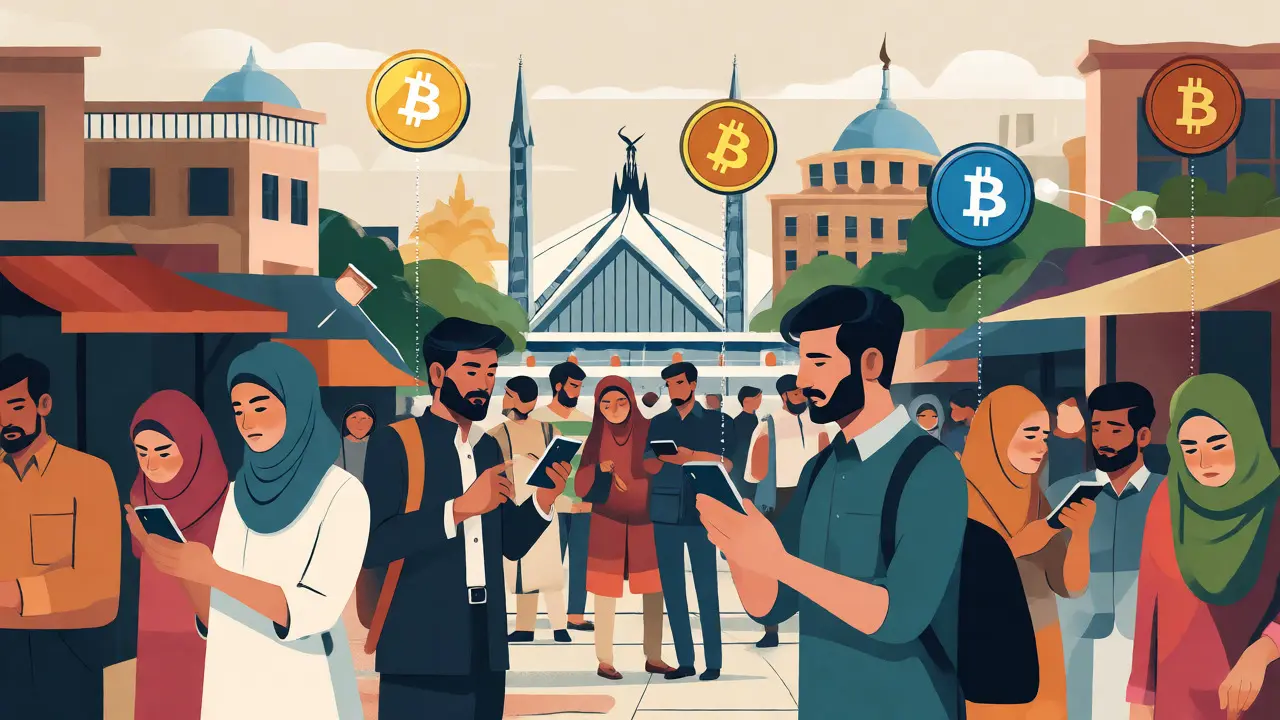
Imagine a country where the central bank once banned digital currencies outright, yet today its citizens hold billions in Bitcoin and stablecoins. That is Pakistan. In October 2025, the Chainalysis Global Adoption Index placed Pakistan at number 3 worldwide, trailing only India and the United States. This jump of six positions isn't just a statistical anomaly; it reflects a massive shift from prohibition to pragmatic integration.
You might wonder how a nation with strict financial controls and historical skepticism toward digital assets became a global leader in crypto adoption. The answer lies in necessity. For millions of Pakistanis, cryptocurrency isn't about getting rich quick on meme coins. It's about survival, savings protection against inflation, and cheaper ways to send money home from abroad. This article breaks down exactly why Pakistan ranks so high, what changed in the regulatory landscape, and what this means for the future of finance in South Asia.
The Ranking Reality Check: Which Number Is Right?
Before we celebrate the third-place finish, let's look at the data. Rankings vary because they measure different things. The Chainalysis index, which is widely respected in the industry, uses four subindexes: retail value received, institutional value received, centralized service usage, and decentralized service usage. By this metric, Pakistan secured the 3rd spot in 2025.
However, other methodologies yield different results. A separate analysis from May 2025 placed Pakistan at 9th globally. Why the gap? Some rankings focus heavily on ownership rates per capita, while others weigh transaction volume adjusted for purchasing power parity (PPP). When you adjust for PPP, Pakistan’s economic reality makes its crypto activity appear much more significant relative to its GDP. So, while the exact number fluctuates between 3rd and 9th depending on who is counting, the trend is undeniable: Pakistan is a top-tier crypto market.
| Country | Chainalysis Rank | Primary Driver | Regulatory Status |
|---|---|---|---|
| India | 1st | High-volume trading & DeFi | Taxed but permitted |
| United States | 2nd | Institutional ETFs & Tech Hub | Mixed federal/state clarity |
| Pakistan | 3rd | Remittances & Inflation Hedge | New Regulatory Framework (PVRA) |
| Vietnam | 4th-6th | Gaming & Speculation | Gray area |
From Ban to Boom: The Regulatory U-Turn
To appreciate how far Pakistan has come, you need to remember where it started. Back in 2018, the State Bank of Pakistan declared that digital currencies were not legal tender. They prohibited exchange companies from facilitating any crypto transactions. For years, operating a crypto business was a legal minefield. Banks could freeze accounts if they suspected crypto-related activity.
Fast forward to 2024 and 2025, and the narrative flipped completely. The government realized that banning crypto wasn't stopping people from using it; it was just pushing activity into the shadows. In July 2025, Pakistan took a historic step by establishing the Pakistan Virtual Assets Regulatory Authority (PVRA). This body is tasked with creating clear rules for exchanges, custody services, and token issuers.
Alongside the PVRA, the creation of the Pakistan Crypto Council, led by CEO Bin Saqib, signaled high-level political commitment. This council acts as a bridge between the government, the private sector, and international partners. It’s no longer about whether crypto will be regulated, but how efficiently it can be integrated into the national economy.
Why Regular People Are Using Crypto
It’s easy to assume that crypto adoption is driven by tech-savvy millennials trying to get rich. In Pakistan, the drivers are far more practical. Kim Grauer, the chief economist at Chainalysis, noted that adoption accelerates in emerging markets where stablecoins transform how people manage money. Here is what is actually happening on the ground:
- Remittance Savings: Pakistan receives one of the highest volumes of remittances in the world. Traditional channels like Western Union or banks charge high fees and take days. Stablecoins allow workers in the Gulf or Europe to send money home almost instantly for a fraction of the cost.
- Inflation Hedge: With the Pakistani Rupee facing volatility and inflation eating away at savings, many citizens turn to US Dollar-pegged stablecoins (like USDT) to preserve their wealth. It’s a digital version of buying gold, but easier to store and transfer.
- Access to Global Markets: Young entrepreneurs use crypto to access international payment gateways that might otherwise reject them due to local banking restrictions.
This utility-driven approach suggests sustainable growth. Unlike speculative bubbles that burst when hype dies down, these use cases solve real problems. As long as inflation persists and remittance costs remain high, demand for crypto in Pakistan will likely stay robust.

The Geopolitical Angle: US Ties and Private Partnerships
Crypto policy in Pakistan isn't happening in a vacuum. There are significant geopolitical currents at play. In August 2025, an agreement was signed between the Pakistan Crypto Council and World Liberty Financial, a venture associated with the Trump family. This partnership aims to accelerate blockchain adoption in the region.
These connections raise eyebrows among critics who worry about conflicts of interest. Zach Witkoff, co-founder of World Liberty Financial and son of Steve Witkoff (Trump’s Special Envoy to the Middle East), secured direct access to high-ranking Pakistani officials, including Army Chief Asim Munir and Prime Minister Shehbaz Sharif. While some see this as strategic positioning to curry favor with potential US leadership changes, others view it as a necessary move to attract foreign capital and technical expertise.
Regardless of the politics, the result is tangible investment and infrastructure development. High-profile figures like Michael Saylor, whose firm MicroStrategy holds over $62 billion in Bitcoin reserves, have engaged in discussions with Pakistani leaders. These interactions signal that Pakistan is serious about becoming a regional hub for digital asset innovation.
Key Takeaways
- Top 3 Status: According to Chainalysis, Pakistan is the 3rd largest crypto adopter globally, driven by high transaction volumes and broad user base.
- Utility Over Speculation: Adoption is fueled by practical needs like remittances and inflation hedging, not just gambling on price swings.
- Regulatory Clarity: The new PVRA and Crypto Council provide a legal framework that was previously missing, encouraging institutional participation.
- Geopolitical Strategy: Partnerships with US-based entities indicate a strategic effort to align with global financial trends and attract investment.

Frequently Asked Questions
Is cryptocurrency legal in Pakistan now?
Yes, the stance has shifted significantly. While it is not yet "legal tender" for everyday purchases like groceries, the establishment of the Pakistan Virtual Assets Regulatory Authority (PVRA) in 2025 provides a legal framework for trading and holding crypto. Previous bans on banking relationships have been relaxed to accommodate regulated exchanges.
Why does Pakistan rank higher than European countries in crypto adoption?
Rankings often use Purchasing Power Parity (PPP) adjustments. Because the cost of living and average income in Pakistan are lower, the same amount of crypto transaction value represents a larger share of economic activity compared to wealthy nations. Additionally, the lack of traditional financial infrastructure in rural areas makes mobile-first crypto solutions more attractive.
What role do stablecoins play in Pakistan's crypto market?
Stablecoins like USDT and USDC are crucial. They serve as a hedge against the devaluation of the Pakistani Rupee and offer a low-cost method for receiving remittances. Many users prefer holding stablecoins rather than volatile assets like Bitcoin for short-term savings.
How many Pakistanis own cryptocurrency?
Estimates suggest approximately 20 million citizens hold digital currencies. Given a population of around 230 million, this represents a penetration rate significantly higher than the global average of roughly 6.9% reported in 2024.
Did the ranking change affect crypto prices in Pakistan?
Directly, no. Crypto prices are global. However, increased legitimacy and regulatory clarity reduce the risk premium. Local exchanges may offer better liquidity and tighter spreads as institutional confidence grows, making it cheaper for regular users to buy and sell.
Next Steps for Investors and Users
If you are looking to enter the Pakistani crypto market or expand your existing portfolio, here is what you should consider:
- Choose Regulated Exchanges: Stick to platforms registered with the new PVRA to ensure your funds are protected under emerging consumer laws.
- Monitor Regulatory Updates: The framework is new. Rules regarding taxes and reporting requirements are still being finalized. Stay updated via official announcements from the State Bank and the Crypto Council.
- Leverage Stablecoins: If you are sending money to Pakistan, explore stablecoin rails. They often beat traditional wire transfers on speed and cost.
- Diversify Beyond Hype: Look at projects solving local problems-such as supply chain tracking or agricultural finance-rather than just chasing the latest trending token.
Pakistan’s rise to the top tier of global crypto adoption is a testament to the resilience of its people and the adaptability of modern finance. While challenges remain, particularly regarding geopolitical ties and regulatory enforcement, the momentum is clearly pointing upward. For investors and observers alike, keeping an eye on this market offers valuable insights into how digital assets function in emerging economies.