Peer-to-Peer Crypto Trading in China After the 2021 Ban: How It Still Works
 Jan, 15 2025
P2P Crypto Trading Fee Calculator
Estimate Your P2P Trading Fees in China
After China's 2021 crypto ban, P2P trading fees increased significantly. This calculator estimates the fees based on current market conditions.
Estimated Fees
Note: Fees may vary based on trader trust level and market conditions. Current fee rates: 3% for lower risk, 5% for higher risk.
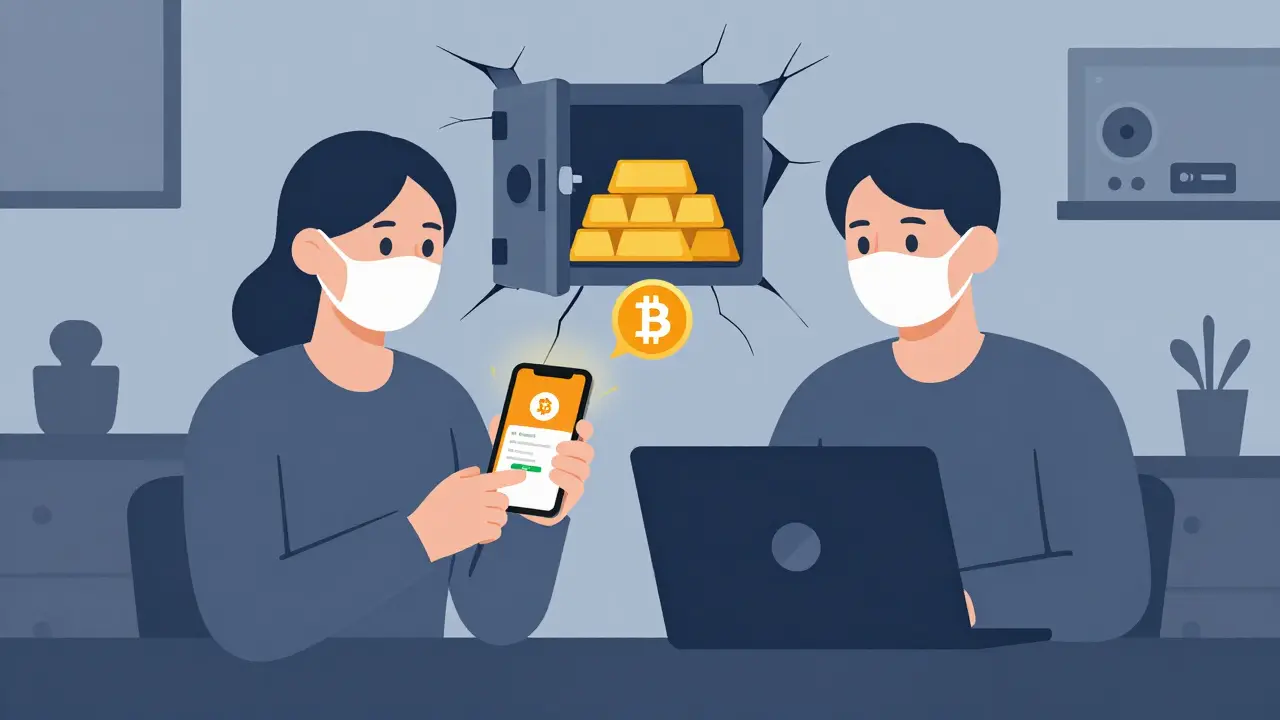
China banned cryptocurrency exchanges in September 2021. Banks were told to cut off services. Mining rigs were shut down. The government said crypto was a threat to financial stability. But if you look at the data, crypto didn’t disappear-it just went underground. Today, peer-to-peer crypto trading in China is still alive, quiet, and surprisingly active.
Why the Ban Didn’t Kill Crypto
The People’s Bank of China didn’t just ban exchanges. They banned all crypto-related financial services. That meant no more Huobi, no more OKX, no more local platforms. But here’s the catch: the ban didn’t say you couldn’t own crypto. Chinese courts had already ruled in 2018 that cryptocurrencies were legal as virtual property. That tiny loophole became the lifeline for millions. People didn’t stop wanting crypto. They just stopped using exchanges. Instead, they started trading directly with each other-person to person. No middleman. No government oversight. Just two people, a bank transfer, and a WhatsApp message saying, “I sent the money, send me the BTC.”How It Actually Works
It’s not as simple as buying Bitcoin on Coinbase. In China, P2P trading is a high-risk, high-skill operation. Here’s how most people do it:- Use a VPN to access international platforms like LocalBitcoins, Paxful, or Bisq. Without a VPN, most of these sites are blocked by China’s Great Firewall.
- Trade mostly in USDT (Tether). It’s stable, easy to move, and doesn’t swing like Bitcoin. Traders prefer it because it’s like digital cash-no price swings, just value transfer.
- Use WeChat or Telegram to communicate. These apps are encrypted and widely used. Trading groups operate under code names like “Dragon Wallet” or “Sky Bridge.”
- Send money through Alipay or WeChat Pay. But not big amounts. Most traders keep transactions under 50,000 RMB ($7,000) to avoid triggering bank alerts.
- Verify the other person. Scams are common. People send fake screenshots of bank transfers. Others freeze accounts after receiving crypto. Experienced traders ask for multiple verification steps: phone call, ID photo, past trade history.
One trader in Shanghai told a journalist he completed 147 deals over two years. His rule? Never do more than $10,000 in one go. Always split payments. Always use a new email. Always use a burner phone for communication.
The Rise of the Risk Premium
Before the ban, P2P crypto trades in China carried a 0.5% to 1% fee. Today? It’s 3% to 5%. Why? Because the risk went up. Banks now monitor transactions for keywords like “BTC,” “USDT,” or “crypto.” If you send $15,000 to someone in one day, your account might get frozen. You could be called in for questioning. Your phone number could be flagged. And scams? They’re everywhere. In 2022, one user lost $25,000 after trusting a seller who sent a fake bank receipt. The seller disappeared. The bank reversed the payment. The crypto was gone. There’s no customer support. No chargeback. No recourse. Paxful’s rating in China dropped from 4.3 stars to 2.7 stars in under two years. Users stopped trusting the platform. The same thing happened on Reddit’s r/CryptoChina. The subreddit was archived in 2022 because too many people were getting scammed.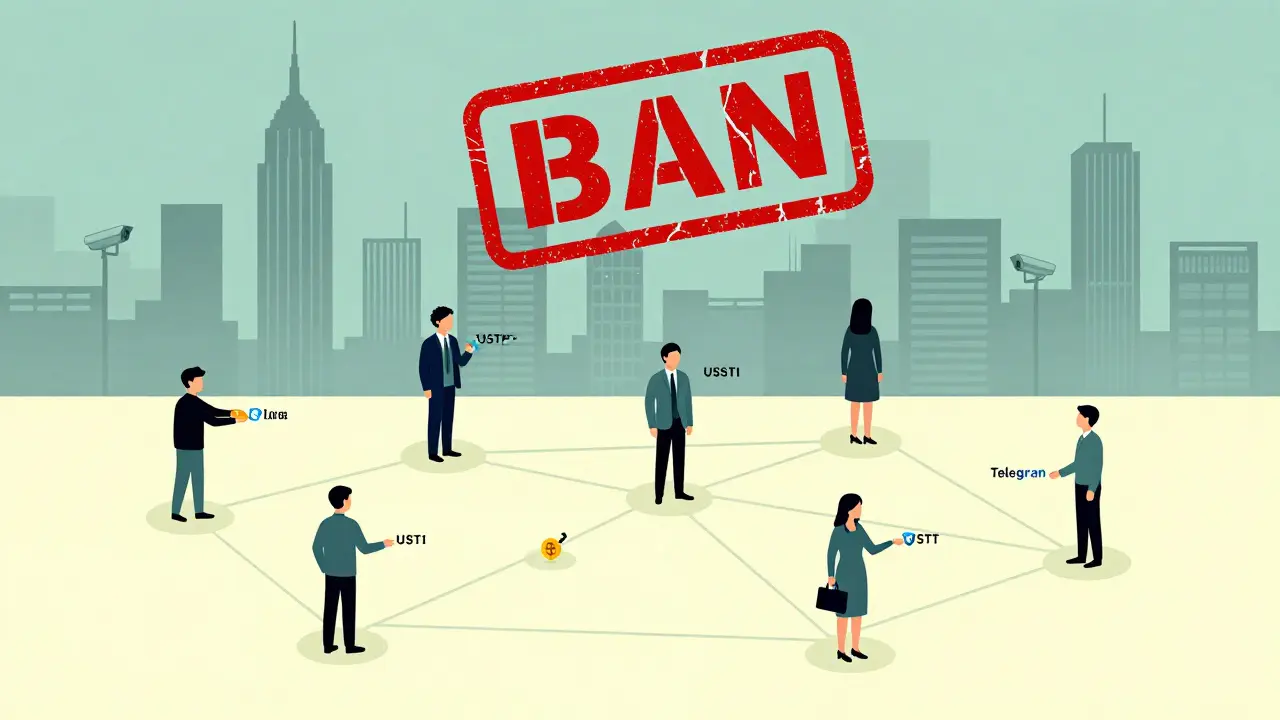
Who’s Still Trading?
It’s not students or retirees. It’s not random people. It’s a specific group:- Professionals aged 25 to 45
- People with international connections-family abroad, business partners overseas
- Those with savings they want to move out of China
- People who’ve seen how fast the yuan can lose value
A 2022 study from Peking University found that 78% of active P2P traders had at least one family member living outside China. For them, crypto isn’t speculation-it’s a way to protect wealth. They’re not trying to get rich off Bitcoin. They’re trying to keep what they already have.
How the Government Is Fighting Back
China didn’t stop at the 2021 ban. In January 2023, they issued new rules: any form of decentralized transaction is now under surveillance. That includes direct crypto swaps, NFT trades, even bartering crypto for goods. The State Administration of Foreign Exchange (SAFE) reported 1,247 crypto-related cases in 2022. 895 people were convicted. Fines totaled over $150 million. But here’s the twist: enforcement is inconsistent. A trader in Chengdu got a warning after sending $8,000 in USDT. A trader in Shenzhen got a prison sentence for the same thing. There’s no clear rulebook. That uncertainty is part of what keeps people cautious.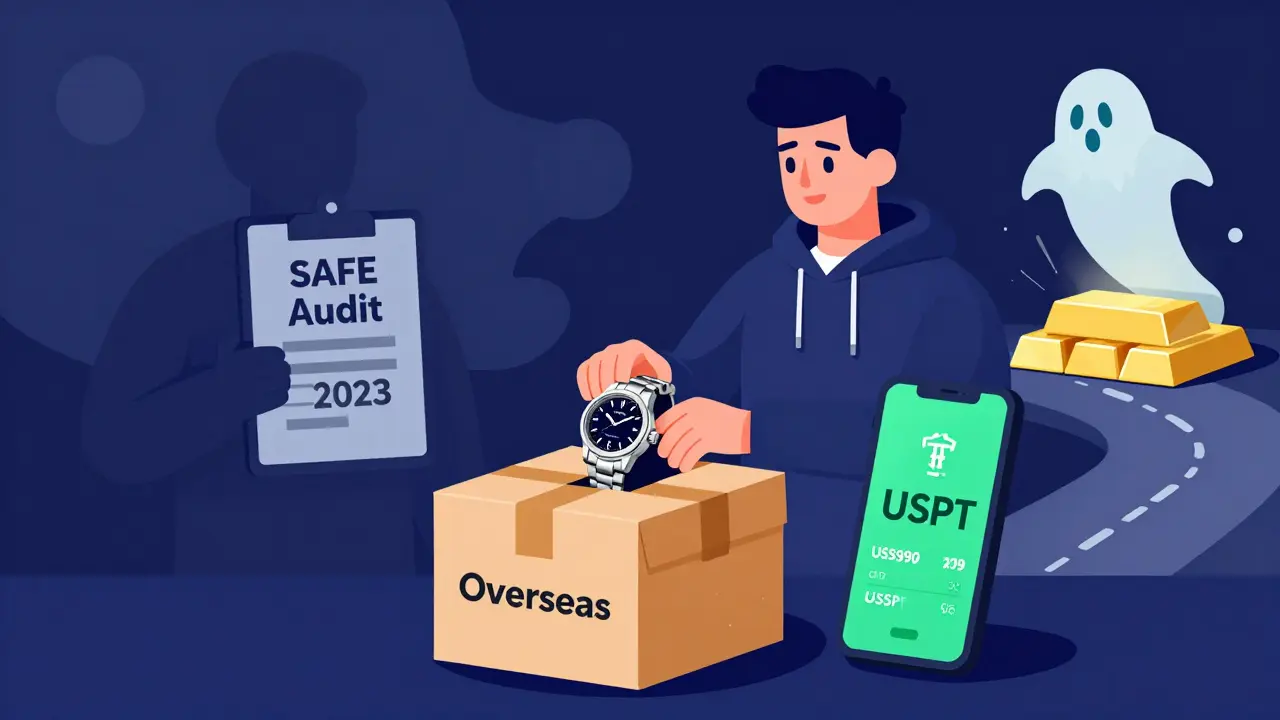
What’s New in 2025?
Traders aren’t sitting still. They’ve adapted again.- Crypto barter: Some are trading USDT for physical goods-electronics, luxury watches, even gold bars. The goods are shipped overseas. No bank transfer. No digital trail.
- NFTs as money: People are buying NFTs with crypto, then selling them overseas for fiat. The NFT is just a carrier. The value is in the asset.
- Transaction splitting: Instead of one $50,000 transfer, traders do five $9,000 transfers over five days. Each one flies under the radar.
- Trust bridges: A third person holds the crypto temporarily. You send money to them. They release the crypto to the buyer. They take a small cut. It’s risky, but safer than direct trade.
Chainalysis says China still accounts for 4.2% of global crypto transaction volume-down from 23% in 2020, but far from zero. And in Q1 2022, P2P volume through Chinese IP addresses jumped 300% year-over-year.
Is It Worth It?
Ask a trader. They’ll tell you: it’s dangerous. It’s exhausting. It takes hours to learn how to avoid getting caught. But ask someone who lost savings to inflation or couldn’t move money out of China legally. They’ll say: it’s the only option. The Chinese government wants crypto gone. But crypto doesn’t need a bank. It doesn’t need a license. It just needs two people who trust each other-even a little.What’s Next?
Binance Research predicts P2P trading in China will stay between 3% and 5% of global volume through 2025. HSBC says the cat’s out of the bag. You can’t stop decentralized networks with laws alone. China’s experiment proved something: when people have a strong enough reason to move money, they’ll find a way-even if it’s risky, even if it’s illegal, even if it’s done in the dark. The ban didn’t kill crypto. It just made it harder. And harder doesn’t mean impossible.Is peer-to-peer crypto trading legal in China?
No, it’s not legal. The Chinese government banned all cryptocurrency exchanges and financial services related to crypto in 2021. While owning crypto isn’t explicitly illegal-courts have recognized it as virtual property-trading it peer-to-peer violates financial regulations. Users risk account freezes, fines, or even criminal charges if caught.
How are people still trading crypto in China?
People use international P2P platforms like LocalBitcoins or Paxful, accessed through VPNs. They communicate via encrypted apps like Telegram or WeChat. Most trades are done in USDT, using small bank transfers under 50,000 RMB to avoid detection. Many use burner phones, fake emails, and multi-step verification to reduce risk. Some even trade crypto for physical goods like electronics or gold to bypass digital trails.
Why do people use USDT instead of Bitcoin for P2P trading?
USDT is a stablecoin pegged to the U.S. dollar, so its value doesn’t swing like Bitcoin. That makes it ideal for trading-people aren’t betting on price changes, they’re moving value. It’s easier to agree on a price: $1 USDT = 1 USD. Bitcoin’s volatility makes it risky for everyday trades, especially when you’re trying to send money quickly without losing half your value in minutes.
What are the biggest risks of P2P crypto trading in China?
The biggest risks are scams, bank account freezes, and legal consequences. Scammers send fake payment screenshots, then disappear. Banks automatically freeze accounts flagged for crypto activity. In some cases, people are investigated or fined by the State Administration of Foreign Exchange. There’s no customer support or dispute resolution. Once you send crypto, it’s gone for good.
How much does it cost to trade crypto P2P in China now?
Before the 2021 ban, fees were around 0.5% to 1%. Today, due to higher risk and scarcity of trusted traders, fees have jumped to 3% to 5%. Some sellers charge even more if they’re offering faster delivery or guaranteed payment. These fees cover the risk of getting scammed, frozen, or reported.
Can the Chinese government shut down P2P crypto trading completely?
It’s unlikely. P2P trading doesn’t rely on centralized servers or platforms-it’s direct between individuals. Even if all apps are blocked, people can still trade via personal networks, encrypted messages, or even barter systems. The International Monetary Fund called it a "fundamental challenge" for any nation trying to control decentralized finance. China can make it harder, but not impossible.
Manish Yadav
December 5, 2025 AT 02:21This is just chaos and lawlessness. People think they can just break rules because they want to? China’s trying to protect its people from financial ruin, and you’re cheering on criminals? Wake up.
Vincent Cameron
December 5, 2025 AT 20:36It’s fascinating how human nature outsmarts bureaucracy. The state can ban exchanges, monitor banks, and jail people-but it can’t un-invent trust between two individuals. Crypto isn’t money here; it’s a silent rebellion against control. The real question isn’t whether it works-it’s why we’re so surprised it does.
Krista Hewes
December 5, 2025 AT 21:18i just read this and my heart aches for the people doing this. imagine having to use burner phones and split payments just to keep your savings from disappearing. it’s not about speculation-it’s survival. god, that’s heavy.
Noriko Robinson
December 6, 2025 AT 21:46What strikes me most is how adaptive humans are. The government bans one path, and people build ten new ones-bartering watches for USDT, using NFTs as carriers, trust bridges. It’s not tech that’s revolutionary here. It’s desperation meeting creativity. And honestly? That’s beautiful, even if it’s dangerous. We’re not just trading crypto-we’re trading hope.
Mairead Stiùbhart
December 7, 2025 AT 12:06Oh wow, so now trading crypto in China is like playing Russian roulette with your bank account and your freedom? And you call that ‘innovation’? Maybe next they’ll start bartering with smoke signals and hope. Brilliant. Truly. The 3-5% fee? That’s just the ‘convenience surcharge’ for living under a surveillance state. Congrats, you’re all tiny entrepreneurs of paranoia.
ronald dayrit
December 8, 2025 AT 03:52Consider the deeper metaphysics here: the state seeks to impose a monolithic, centralized model of value-fiat, controlled, regulated, predictable. But crypto, in its essence, is a decentralized social contract. It doesn’t require permission. It doesn’t need legitimacy from institutions. It only requires two people who agree on the value of a number. The ban didn’t target technology-it targeted human autonomy. And autonomy, once awakened, cannot be legislated back into dormancy. The 4.2% global volume? That’s not a footnote. It’s a manifesto written in blockchain, whispered across WeChat, encrypted in silence. The state may freeze accounts, but it cannot freeze the will to be free. This isn’t evasion. It’s evolution.
jonathan dunlow
December 9, 2025 AT 09:56Look, I get the fear. I get the risk. But let’s be real-when your savings are evaporating because your currency is losing value faster than your phone battery, what are you supposed to do? Sit around waiting for a government that won’t let you move your own money? The fact that people are still doing this, after all the crackdowns, after the prison sentences, after the account freezes-it’s not about Bitcoin. It’s about dignity. It’s about saying, ‘I still have control over something.’ And that’s worth the 5% fee, the burner phone, the sleepless nights. Don’t call them criminals. Call them survivors. And if you think this will stop? You don’t know how stubborn humans can be when they’ve got nothing left to lose.