Polkaswap Crypto Exchange Review: Is This Niche DEX Worth Your Time?
 Nov, 8 2026
Imagine trying to trade crypto on a platform that promises the speed of a race car but occasionally forgets to install the wheels. That’s the current reality for Polkaswap. It is a non-custodial, cross-chain automated-market-maker decentralized exchange (DEX) built on the SORA Network, designed to let you swap assets without trusting a middleman with your keys. But here is the catch: while its architecture looks impressive on paper, real-world data suggests it operates in a shadow compared to giants like Uniswap or PancakeSwap. If you are wondering whether this niche player deserves a spot in your portfolio or if it’s just another ghost town on the blockchain, we need to look past the marketing hype and at the cold, hard numbers.
What Exactly Is Polkaswap?
At its core, Polkaswap is not just another Ethereum clone. It runs on Substrate, the same framework powering Polkadot, which means it avoids the congested gas fees of Ethereum mainnet. Launched by Soramitsu in 2021 with backing from the Web3 Foundation, it aims to be the first Polkadot-ecosystem DEX with true on-chain liquidity aggregation. Unlike basic exchanges that route trades through a single pool, Polkaswap uses a "liquidity proxy" algorithm. Think of it as a smart broker that scans multiple sources-like XYK pools, order books, and bonding curves-to find you the best price before executing the trade.
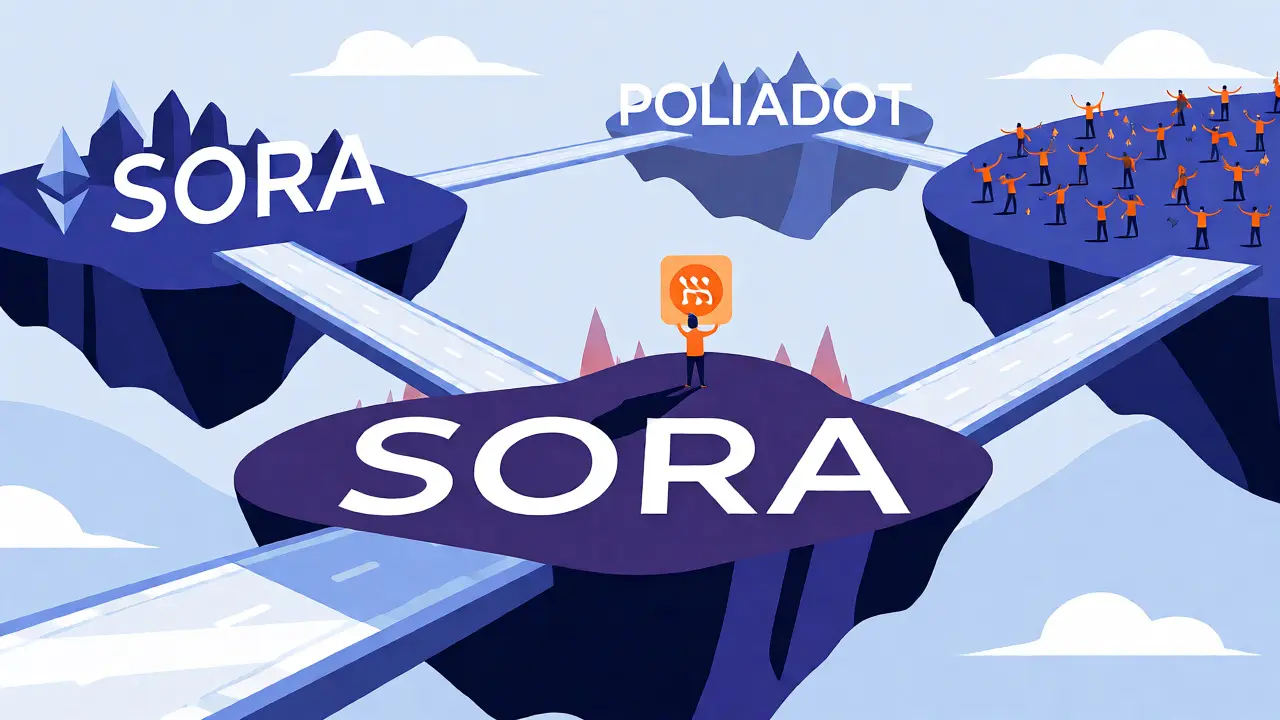
The platform targets assets across SORA, Polkadot, Kusama, and even Ethereum. The goal is interoperability. You can bridge assets from one chain to another without leaving the interface. However, remember that "cross-chain" often introduces complexity. While the tech stack is robust, the user experience depends heavily on the stability of those bridges. As of late 2026, Polkaswap remains active, but its footprint is small. CoinGecko data from mid-2025 showed daily volumes hovering around $177,000, a drop in the ocean compared to billions seen on major venues. This low volume isn’t just a stat; it impacts every trade you make.
The Good: Self-Custody and Low Fees
Why would anyone use Polkaswap? First, you keep control. It is non-custodial, meaning your private keys stay with you. No bank freezes your account, no exchange goes bankrupt overnight with your funds. Second, the fee structure is competitive. The standard swap fee is 0.3%, paid in XOR (the native asset). This is comparable to Uniswap V2 rates. Because it runs on Substrate, network transaction costs are significantly lower than Ethereum. Community estimates from earlier years suggested average transaction costs of roughly $0.07, though this fluctuates with network congestion.
There is also an incentive layer. When you provide liquidity, you earn a share of trading fees plus rewards in PSWAP, the governance and reward token. The model burns a portion of fees, theoretically reducing supply over time. For users who believe in the long-term value of the SORA ecosystem, this deflationary mechanism combined with yield farming offers a potential upside. Plus, the open-source nature means anyone can audit the code, adding a layer of transparency that centralized exchanges often lack.
The Bad: Liquidity Depth and Bridge Risks
Here is where the shine fades. Low trading volume creates a vicious cycle. Thin liquidity leads to high slippage. Slippage scares away large traders. Fewer traders mean less volume. If you try to swap a significant amount of tokens, you might move the market against yourself, paying far more than the advertised 0.3% fee due to price impact. In June 2025, Polkaswap reported zero listed coins on some aggregators, hinting at indexing issues or simply a lack of depth in many pairs.
Bridging is the other major hurdle. Moving assets between Ethereum and SORA requires trustless bridges, which are historically prone to bugs and delays. A Trail of Bits audit in 2021 flagged 24 security issues, including seven high-severity findings related to signature reuse and replay attacks. While audits are good, they don’t guarantee safety, especially if patches aren’t applied immediately. User reports from launch periods described funds getting stuck in transit for hours or days. If you are new to DeFi, troubleshooting a stuck bridge transfer without customer support can be a nightmare.

Tokenomics: The PSWAP Puzzle
PSWAP is the utility token of the protocol. Its maximum supply is capped at 10 billion, but the circulating supply decreases through fee burns. The distribution plan allocates about 35% to liquidity providers, 25% to bonding curve rewards, and 30% to initial developers. This heavy developer allocation has raised eyebrows among community members who feel retail investors got a raw deal initially.
The reward mechanism is complex. Fees burned are partly reminted to LPs. Documentation varies slightly on the exact decay rate of these rewards, with some sources citing a decline from 100% to 35% over five years, while others say 90% to 35%. Regardless of the precise number, the key takeaway is that incentives are designed to attract early adopters. However, if the underlying asset value drops, earning more PSWAP doesn’t necessarily mean making money. Impermanent loss-the risk that holding two volatile assets loses value compared to holding them separately-is a real threat here, especially in low-volume pools where price discovery is erratic.
| Feature | Polkaswap | Uniswap | PancakeSwap |
|---|---|---|---|
| Blockchain | SORA (Substrate) | Ethereum, L2s | Binance Smart Chain |
| Custody | Non-custodial | Non-custodial | Non-custodial |
| Avg. Daily Volume (Est.) | <$1M | $7B+ | $1.4B+ |
| Primary Fee | 0.3% | 0.3% - 1% | 0.2% - 0.4% |
| Best For | SORA Ecosystem Users | High-Liquidity ETH Pairs | BSC Token Swaps |
User Experience and Support
If you decide to dive in, expect a steep learning curve. Polkaswap does not hold your hand. There is no phone number to call when your transaction hangs. You need to understand how to connect a compatible wallet, manage XOR for gas fees, and set appropriate slippage tolerances. The interface calculates routes, but you must verify the details yourself. Independent verification of on-chain records is crucial because third-party indexers sometimes lag or fail to display correct pairings.
Community sentiment reflects this friction. Reddit threads from 2021 and beyond show a mix of frustration and cautious optimism. Some users praised the low costs and responsive admins during critical bug fixes. Others complained about locked funds and slow vesting schedules for rewards. A recurring theme is the feeling that the project’s ambitious roadmap outpaced its adoption. Questions like "Is Polkaswap done?" have appeared, signaling anxiety about whether the team will continue to build or if the project is stagnating. Without a massive influx of new users, the ecosystem risks becoming a closed loop for existing holders.

Who Should Use Polkaswap?
Polkaswap is not for everyone. If you are a beginner looking for a simple way to buy Bitcoin with a credit card, look elsewhere. Centralized exchanges offer better on-ramps and easier recovery options. If you are a whale moving millions, the thin liquidity here will eat your profits through slippage.
However, if you are already invested in the SORA ecosystem, hold XOR, and want to maximize your exposure to Polkadot-related assets, Polkaswap is a logical tool. It allows you to rotate positions within the ecosystem without bridging back to Ethereum repeatedly. It suits technically savvy users who understand bridge mechanics, accept the risk of smart contract vulnerabilities, and are willing to tolerate lower liquidity for the sake of self-custody and potentially higher yields on smaller capital bases. It is a specialized instrument, not a general-purpose trading desk.
Frequently Asked Questions
Is Polkaswap safe to use?
Polkaswap is a legitimate, open-source protocol audited by firms like Trail of Bits. However, "safe" is relative in DeFi. Bridges carry inherent risks, and past audits identified several issues. Always start with small amounts to test the system before committing significant funds.
How do I pay for transactions on Polkaswap?
You need XOR, the native token of the SORA Network, to pay for network fees. Additionally, swapping incurs a 0.3% protocol fee, which is deducted from the trade amount or converted to PSWAP depending on settings.
Can I withdraw my funds anytime?
Yes, since it is non-custodial, you retain control of your assets. However, withdrawing involves bridging assets back to their original chains (e.g., Ethereum), which can take time and incur external gas fees.
What is the PSWAP token used for?
PSWAP serves as a reward token for liquidity providers and participates in governance. It is minted based on fee burns and helps incentivize participation in the ecosystem.
Why is the trading volume so low?
Polkaswap is a niche DEX focused on the SORA and Polkadot ecosystems. It competes against much larger platforms like Uniswap and PancakeSwap, which have broader user bases and deeper liquidity pools, drawing most of the market's attention.
Final Verdict
Polkaswap is a fascinating experiment in cross-chain liquidity aggregation that hasn’t quite captured the mainstream imagination. It offers genuine advantages for SORA loyalists, such as low fees and self-custody, but suffers from the classic chicken-and-egg problem of low liquidity. For the average trader, the risks of bridge failures and slippage outweigh the benefits. But for the dedicated explorer willing to navigate Substrate’s complexities, it remains a unique gateway into the Polkadot world. Proceed with caution, verify everything on-chain, and never invest more than you can afford to lock up for a while.