QuantaEx Crypto Exchange Review: What You Need to Know in 2026
 Feb, 26 2026
When you're looking for a crypto exchange in 2026, you don't just want another name on a list. You want to know if it’s safe, fast, and actually used by real traders. That’s why QuantaEx stands out-not because it’s popular, but because it’s hard to find any real information about it.
QuantaEx is a centralized cryptocurrency exchange that started in April 2019. It’s based in Bangladesh with operations in Malaysia. That alone tells you something: this isn’t a global giant like Binance or Kraken. It’s a regional player, quietly operating in parts of Asia. But in 2026, when most traders expect instant access, low fees, and clear security details, QuantaEx feels like a ghost in the machine.
Here’s the hard truth: if you search for QuantaEx on YouTube, Reddit, or even CoinMarketCap, you won’t find much. No in-depth reviews. No user testimonials. No comparison guides. Major platforms like Binance, Bybit, and Kraken dominate search results. They offer bonuses, mobile apps, 24/7 support, and dozens of trading pairs. QuantaEx? You’ll get a website. Maybe. And that’s about it.
How QuantaEx Works (And What It Doesn’t Tell You)
QuantaEx operates as a traditional centralized exchange. That means when you deposit Bitcoin or Ethereum, the exchange holds your coins in its wallet. You don’t control the private keys. That’s fine if you’re new-less responsibility, less risk of losing keys. But it also means if something goes wrong, you’re at their mercy.
Compare that to non-custodial platforms like Quantex (formerly CryptiSwap). These platforms don’t hold your funds. They connect you directly to other users. Swaps happen in under 10 minutes. No registration. No KYC. No waiting. QuantaEx doesn’t offer that. It’s old-school: sign up, deposit, trade, withdraw. That’s it.
And here’s where it gets worse: there’s no public data on trading fees. No clear list of supported coins. No details on withdrawal limits. You can’t even find minimum deposit amounts. That’s not just incomplete-it’s suspicious. In 2026, even small exchanges publish their fee structures openly. QuantaEx doesn’t. Why?
Security: No Transparency, No Trust
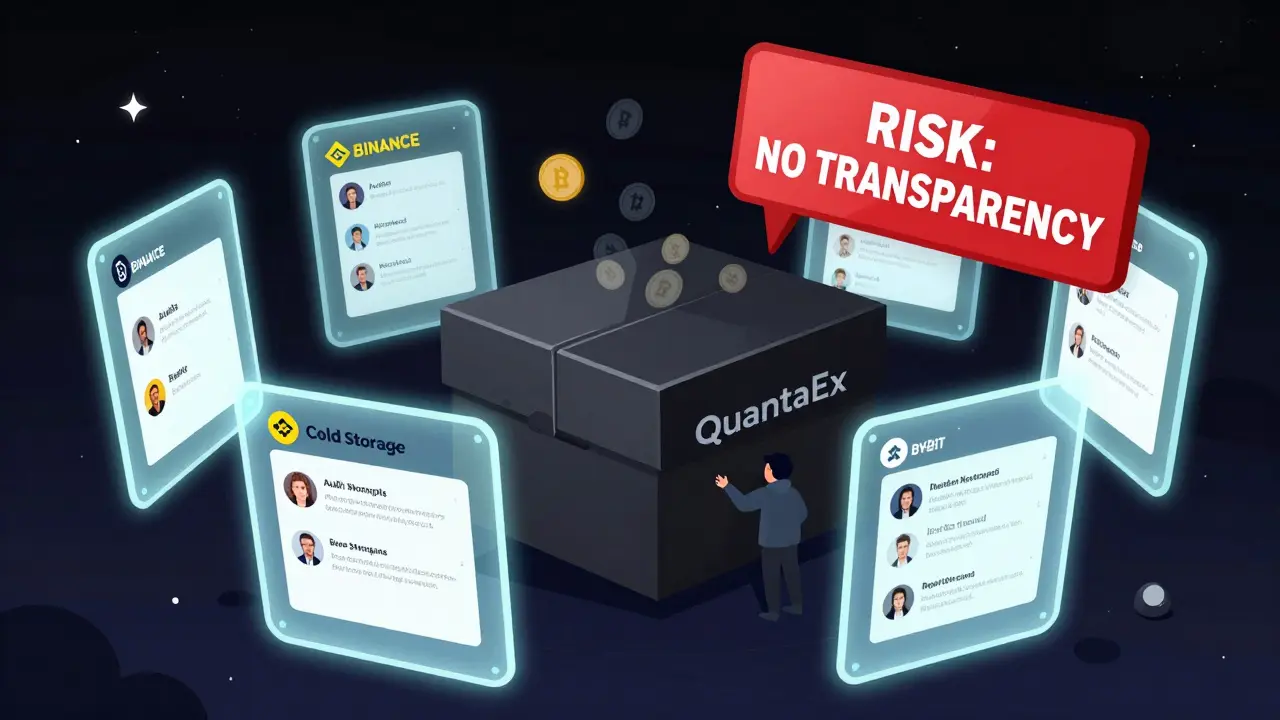
Security is the #1 concern for crypto traders. Where’s QuantaEx’s audit report? Its cold storage details? Its insurance fund? Nothing. Zero. Nada.
Major exchanges like Binance and Kraken publish regular proof-of-reserves reports. They use multi-sig wallets. They’ve been hacked before-and learned. QuantaEx? No public record of any security measures. No mentions of two-factor authentication (2FA) beyond what’s assumed. No bug bounty program. No third-party security certification.
If you’re trading small amounts and you’re okay with risk, maybe that’s fine. But if you’re holding more than a few hundred dollars in crypto, you’re playing Russian roulette. And in 2026, there’s no excuse for that.
Trading Features: Barebones at Best
What can you actually do on QuantaEx? The answer: not much.
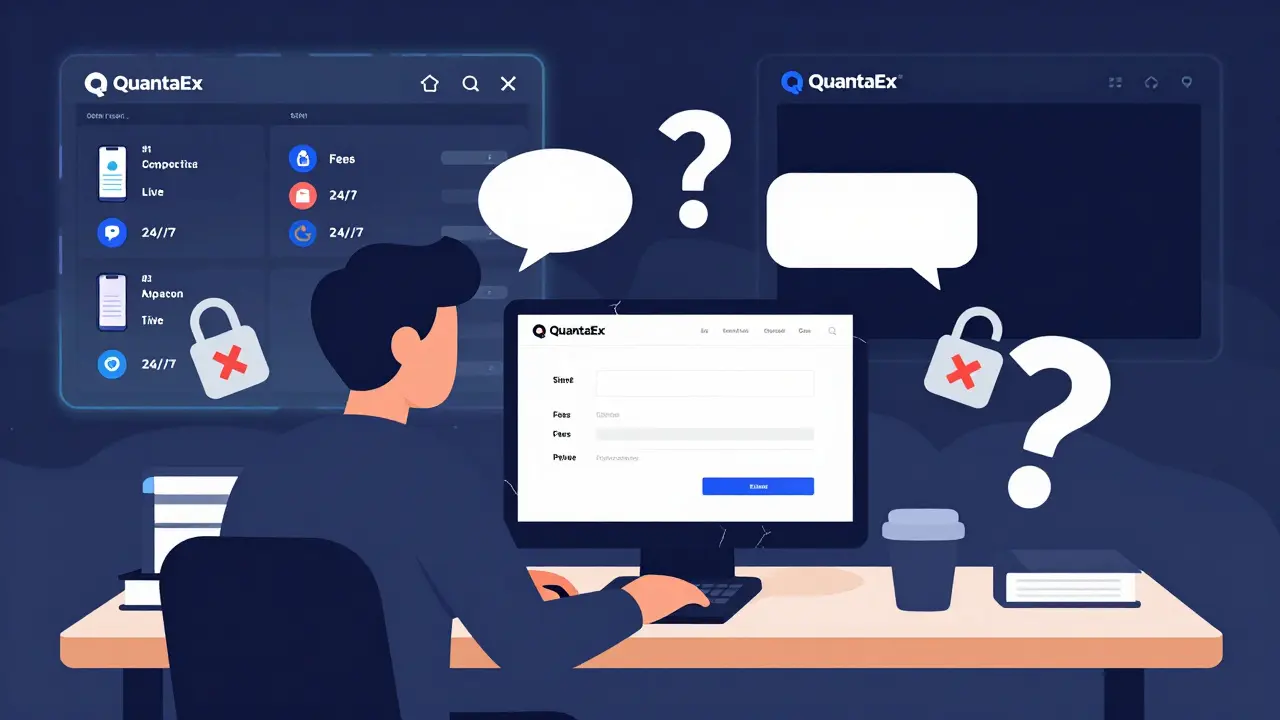
There’s no sign of margin trading. No futures contracts. No staking rewards. No API access for automated traders. No mobile app. No dedicated support team. You won’t find any live chat, no ticket system, no email response time listed.
Compare that to Bybit, which offers up to $30,000 in bonuses and 100x leverage. Or Binance, which gives new users $600 just to sign up. Or Kraken, which supports over 200 cryptocurrencies and has a dedicated institutional trading desk.
QuantaEx doesn’t compete on features. It doesn’t compete on price. It doesn’t compete on user experience. It just… exists.
Why QuantaEx Still Has a Place (Maybe)
Is QuantaEx completely useless? Not necessarily.
If you live in Bangladesh or Malaysia and you’re looking for a local exchange that accepts bank transfers in your local currency, it might be one of the few options. It could be useful for small, low-volume trades-say, swapping a few hundred dollars worth of crypto without attracting attention.
But even then, there are better alternatives. Platforms like Quantex (the non-custodial one) let you swap crypto instantly without ever creating an account. No KYC. No waiting. No risk of the exchange freezing your funds. And it’s faster than QuantaEx’s withdrawal process-which, again, we can’t even confirm exists.
And if you’re looking for AI-powered trading tools? Forget QuantaEx. Quantex Finrevo offers AI-generated trading signals, demo accounts, and automated strategies-all for free, with a $250 minimum. QuantaEx doesn’t even have a trading bot.
Who Should Use QuantaEx? (Spoiler: Almost No One)
Here’s who should avoid QuantaEx:
- Anyone holding more than $500 in crypto
- Traders who want low fees or fast withdrawals
- Users who need customer support
- Anyone outside Bangladesh or Malaysia
- People who care about security or transparency
Here’s who *might* use it:
- Someone in Dhaka with a local bank account and no other options
- A beginner testing the waters with under $100
- A person who found a referral link and doesn’t mind the risk
That’s it. No one else.
The Bigger Picture: Why QuantaEx Matters
QuantaEx isn’t just a bad exchange. It’s a warning sign.
In 2026, the crypto market rewards transparency. Users don’t just want to trade-they want to understand how their money is protected. They want to know who’s behind the platform. They want to see audits, support logs, uptime stats, and community feedback.
QuantaEx gives none of that. And in a world where even tiny exchanges like MEXC or Gate.io publish detailed documentation, QuantaEx’s silence speaks louder than any review.
If you’re considering QuantaEx, ask yourself: why is there so little information? Is it because no one uses it? Or because they don’t want you to know what’s going on?
There’s a reason Binance, Bybit, and Kraken dominate. They’re not perfect-but they’re open. QuantaEx? It’s a black box. And in crypto, black boxes are dangerous.
Stick with platforms that show their work. Your crypto will thank you.
Is QuantaEx a safe crypto exchange?
There’s no verifiable evidence that QuantaEx is safe. It doesn’t publish security audits, cold storage details, insurance policies, or proof-of-reserves. Unlike major exchanges like Binance or Kraken, which regularly release transparency reports, QuantaEx offers zero public information on its security practices. If you’re holding more than a small amount of crypto, it’s too risky to use.
Does QuantaEx have a mobile app?
No, QuantaEx does not have a dedicated mobile application. There are no official apps on the Apple App Store or Google Play Store. Trading is only possible through its website, which may not be optimized for mobile use. This puts it far behind competitors like Binance and Crypto.com, which offer full-featured mobile apps with push notifications, live charts, and one-tap trading.
What cryptocurrencies does QuantaEx support?
There is no official or publicly available list of supported cryptocurrencies on QuantaEx. No documentation, no trading pairs page, and no user reports confirm which coins are available. This lack of transparency makes it impossible to know if your preferred crypto-like Solana, Cardano, or even Bitcoin-is even tradable on the platform.
Are there trading fees on QuantaEx?
QuantaEx does not disclose its trading fee structure anywhere online. You won’t find maker-taker fees, withdrawal fees, or deposit fees listed on its site or in any public documentation. This absence is unusual-even small exchanges publish their fee schedules. Without this info, you can’t calculate your costs or compare it to platforms like Bybit (0.1% spot fees) or Kraken (as low as 0.16%).
Can I withdraw my funds from QuantaEx?
There is no verified information on withdrawal processes for QuantaEx. No details on processing times, minimum withdrawal amounts, or supported networks (like ERC-20 or TRC-20). User reports are nonexistent. While the platform claims to allow withdrawals, there’s no proof that users have successfully done so. This lack of transparency raises serious red flags about liquidity and operational reliability.
Is QuantaEx regulated?
QuantaEx does not claim to be regulated by any financial authority. It operates from Bangladesh and Malaysia-two countries without strong, transparent crypto licensing frameworks. Unlike exchanges like Kraken (regulated in the U.S.) or Bybit (licensed in Dubai), QuantaEx offers no regulatory disclosures, compliance reports, or licensing numbers. This means your funds have no legal protection if something goes wrong.
If you’re looking for a reliable exchange in 2026, don’t waste time on QuantaEx. Go with platforms that show their work, not ones that hide behind silence.
Ifeanyi Uche
February 26, 2026 AT 21:54stop giving these ghost exchanges oxygen.
Jeff French
February 27, 2026 AT 23:14if you're not in bangladesh or malaysia you shouldn't care. if you are, you already know the tradeoffs. stop acting like this is a global failure when it's a local solution.
Elana Vorspan
March 1, 2026 AT 11:21thank you for highlighting how much we take for granted-clear fees, support, mobile apps, audits. these aren't luxuries, they're basic expectations. i'm gonna share this with my cousin who's new to crypto and considering quantaex. she needs to see this before she sends any funds. 💙
Kenneth Genodiala
March 3, 2026 AT 07:10you didn't analyze quantaex. you performed a necropsy on a corpse that never lived. the absence of data is the data. the silence is the signal. the lack of a mobile app isn't a feature gap-it's ontological.
in a world where every exchange is a symphony of transparency, quantaex is the one note that never sounded. and yet, somehow, you gave it a paragraph. how quaint.
Michael Teague
March 4, 2026 AT 16:17