Ruby.Exchange Review: Is It Safe or a Scam? (2026 Analysis)
 Jun, 9 2026
Imagine finding a new cryptocurrency platform that promises "unbreakable" security and "straightforward" trading. It sounds perfect, right? But in the world of digital assets, if something sounds too good to be true, it usually is. You might have stumbled upon Ruby.Exchange, also known as Ruby-X. Before you connect your wallet or deposit a single cent, we need to look at the facts. The short answer? There is almost no verifiable information about this platform, which makes it incredibly risky.
In this review, we aren't just skimming the surface. We are digging into what little exists publicly about Ruby.Exchange, comparing it to established giants like Kraken and Crypto.com, and helping you decide whether this is a hidden gem or a potential trap. Your money is hard-earned; let’s make sure you don’t lose it to a platform that doesn’t exist in the mainstream consciousness.
The Mystery of Ruby.Exchange
When you evaluate a financial institution, transparency is non-negotiable. Banks show their licenses. Established exchanges publish their audit reports. So, what do we know about Ruby.Exchange?
Very little. According to fragmented data from early 2024, Ruby-X positioned itself as a comprehensive solution for buying, selling, and trading digital assets. The marketing language uses buzzwords like "Straightforward," "Extensible," and "Unbreakable." They claim to offer cold wallet functionality and easy trade account management. However, there is a massive gap between these claims and reality.
- Founding Team: Unknown. No public profiles on LinkedIn or industry directories.
- Regulatory Status: No evidence of registration with major bodies like the SEC (USA), FCA (UK), or ASIC (Australia).
- Security Audits: None found from reputable firms like CertiK or Hacken.
- User Base: No significant presence on Trustpilot, Reddit, or major crypto forums.
This silence is deafening. In an industry where trust is built through community feedback and third-party verification, Ruby.Exchange operates in a vacuum. If a platform is truly "world-class," as they claim, why can’t we find independent reviews? Why are there no success stories? This lack of digital footprint is a major red flag.
Red Flags: Why You Should Be Cautious
Let’s talk about the warning signs that experienced traders look for. These aren't just minor inconveniences; they are structural risks that could cost you everything.
1. The "Too Good to Be True" Marketing
Ruby-X describes its technology as "unbreakable." In cybersecurity, nothing is unbreakable. Even the most secure banks suffer breaches. When a platform uses absolute terms like this without technical proof, it’s often a tactic to lure inexperienced investors. Real security comes from multi-signature wallets, cold storage percentages, and regular penetration testing-not marketing slogans.
2. Lack of Liquidity Data
Liquidity determines how easily you can buy or sell an asset without affecting its price. Major exchanges like Binance or Coinbase display real-time order books. For Ruby.Exchange, there is no public data on trading volume or liquidity depth. If you deposit funds and suddenly want to withdraw, can you? Without visible liquidity, you might find yourself locked out during market volatility.
3. Absence from Regulatory Databases
Crypto regulations are tightening globally in 2025 and 2026. Legitimate exchanges comply with Anti-Money Laundering (AML) and Know Your Customer (KYC) laws. A quick search reveals no regulatory filings for Ruby.Exchange. Operating without oversight means there is no recourse if the platform disappears. Your funds would likely be gone forever.
How Ruby.Exchange Compares to Established Platforms
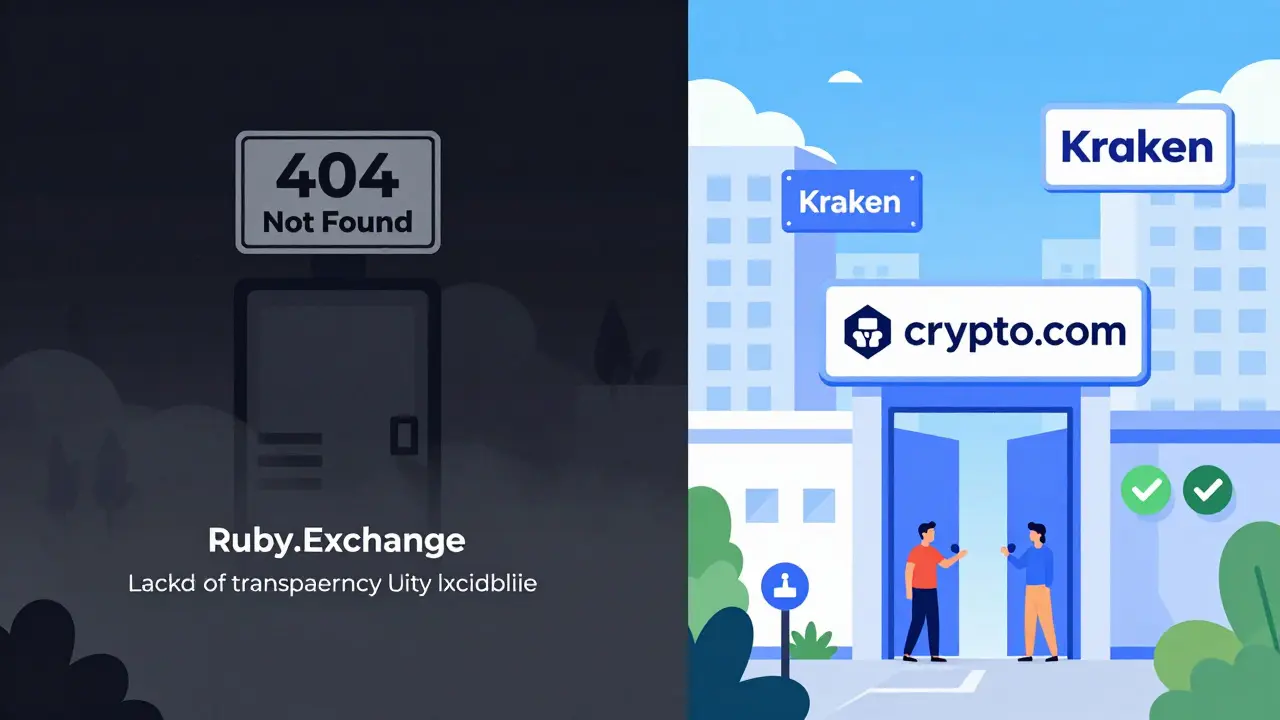
To understand the risk, we need a baseline. Let’s compare Ruby.Exchange against two well-known entities: Kraken and Crypto.com. These platforms have years of operational history, millions of users, and transparent fee structures.
| Feature | Ruby.Exchange (Ruby-X) | Kraken | Crypto.com |
|---|---|---|---|
| Regulatory Compliance | Unknown / Likely None | Registered in multiple jurisdictions (US, EU, etc.) | Global licensing with strict KYC/AML |
| Security Audits | No public records | Regular third-party audits | Multi-layer security with insurance coverage |
| Fee Structure | Not disclosed | Maker: 0.00%-0.25% | Taker: 0.01%-0.40% | Varies by tier; low fees for high-volume traders |
| User Reviews | None found on Trustpilot/Reddit | Thousands of verified reviews | Millions of active users, extensive feedback |
| Asset Selection | Unclear | 466+ supported coins | 250+ cryptocurrencies |
Look at the difference. Kraken offers deep liquidity and a clear fee schedule. Crypto.com provides a structured ecosystem with rewards tied to their CRO token. Ruby.Exchange offers... vague promises. When you choose an exchange, you are choosing a partner. Would you partner with someone who won’t tell you their name, address, or business plan?
The Risk of "Cold Wallet" Claims
Ruby.Exchange mentions "portable use of cold wallet functionality." Cold wallets are hardware devices that store keys offline, protecting them from hackers. However, exchanges rarely provide true cold wallets directly in their interface. Instead, they hold your funds in custodial cold storage.
If Ruby.Exchange claims to offer this but lacks technical documentation, it raises questions. Are they actually using secure hardware? Or is this just another buzzword? In 2026, sophisticated phishing attacks and smart contract exploits are common. Without a proven security track record, trusting an unknown platform with your private keys or seed phrases is gambling, not investing.
What Happens If You Deposit Funds?
Let’s walk through a hypothetical scenario. You sign up for Ruby.Exchange. The process seems easy-no rigorous ID verification, which might feel convenient. You deposit $1,000 worth of Bitcoin. The balance shows up. You feel excited.
Then, you try to withdraw. Suddenly, "maintenance mode" kicks in. Support tickets go unanswered. The website loads slowly, then stops entirely. This is the classic exit scam pattern. Because there is no regulatory body overseeing Ruby.Exchange, you cannot file a complaint with a financial authority. Your money is simply gone.
Contrast this with Kraken or Coinbase. If there is an issue, they have customer support teams, legal departments, and insurance policies. Yes, even they have glitches, but they have accountability. Ruby.Exchange has none.
Alternatives That Actually Work
You don’t need a mysterious platform to trade crypto. Here are three safer alternatives depending on your needs:
- For Beginners: Coinbase. User-friendly interface, strong regulatory compliance, and insured deposits. Perfect if you are just starting out.
- For Traders: Kraken. Low fees, high liquidity, and excellent security. Ideal if you want to trade actively without paying excessive spreads.
- For Rewards: Crypto.com. Great if you want to earn interest on idle crypto or use a debit card linked to your holdings. Their tiered system rewards loyalty.
Each of these platforms has been vetted by thousands of users and security experts. They pay taxes, follow laws, and have survived market crashes. That is the kind of stability you should seek.
How to Spot a Crypto Scam in 2026
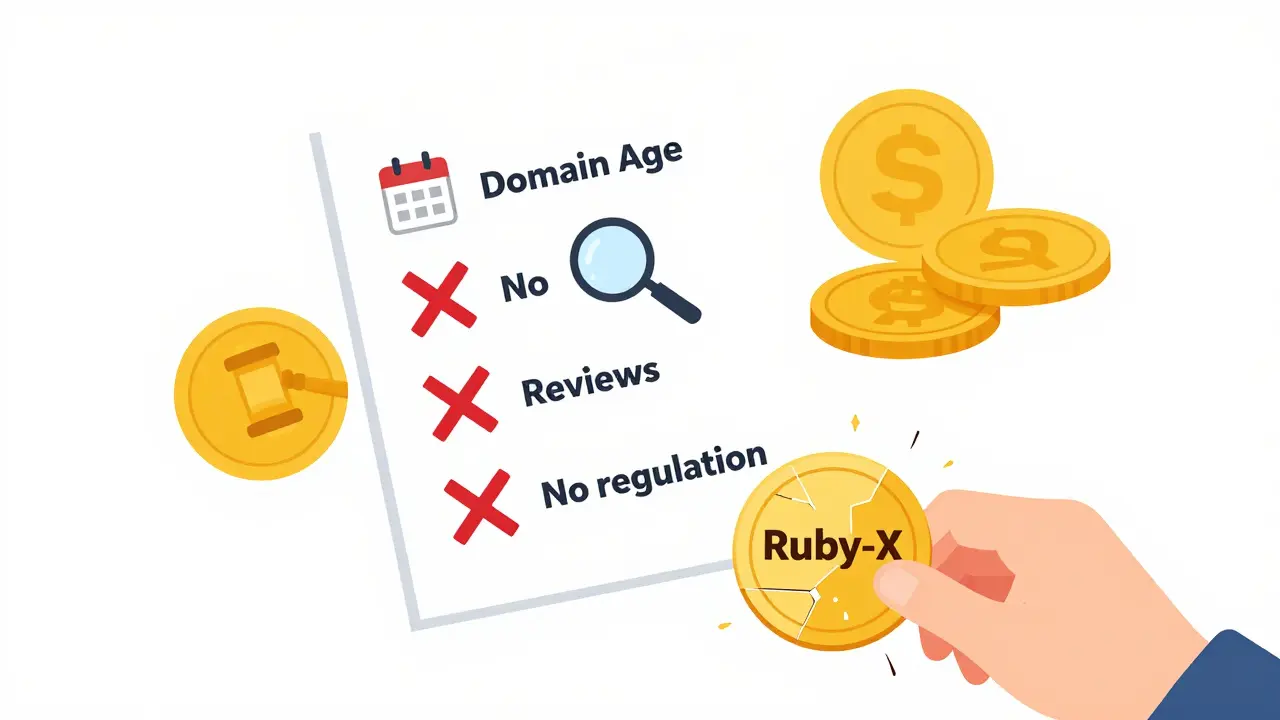
Learning to identify bad actors protects you long-term. Use this checklist before joining any new platform:
- Check the Domain Age: Use tools like Whois. If the domain was registered last month, be skeptical.
- Search for Independent Reviews: Look beyond the site’s own testimonials. Check Reddit, Twitter, and Trustpilot. Silence is suspicious.
- Verify Regulatory Licenses: Does the site list a license number? Verify it on the regulator’s official website.
- Test Customer Support: Ask a simple question before depositing. If they ignore you or give generic answers, walk away.
- Beware of Guaranteed Returns: No legitimate exchange guarantees profits. Only scammers promise "risk-free" gains.
Ruby.Exchange fails most of these checks. The absence of data is not neutral; it is negative. In finance, opacity equals danger.
Final Verdict: Stay Away
After analyzing every available fragment of information, the conclusion is clear. Ruby.Exchange does not meet the basic standards of a trustworthy cryptocurrency platform. There is no proof of security, no regulatory backing, and no user community to vouch for its reliability. The claims of being "unbreakable" and "world-class" are unsupported by evidence.
Your capital is valuable. Protect it by sticking to platforms with transparent operations and proven track records. Don’t let curiosity lead to catastrophe. Choose Kraken, Coinbase, or Crypto.com instead. They may not be flashy, but they are safe.
Is Ruby.Exchange a scam?
While we cannot definitively label it a scam without proof of fraud, Ruby.Exchange exhibits all the hallmarks of a high-risk or fraudulent platform. The lack of regulatory registration, absent security audits, and zero user reviews strongly suggest it is unsafe for trading.
Can I withdraw my money from Ruby.Exchange?
There is no reliable information confirming successful withdrawals. Many unregulated platforms allow small initial withdrawals to build trust before blocking larger amounts. Given the lack of support channels, withdrawing funds is highly uncertain.
Who owns Ruby.Exchange?
The ownership and founding team of Ruby.Exchange are not publicly disclosed. This anonymity is a major red flag, as legitimate financial institutions require transparency regarding their leadership and corporate structure.
Is Ruby.Exchange regulated?
No. There is no evidence that Ruby.Exchange holds licenses from major financial regulators such as the SEC, FCA, or MAS. Operating without regulation means users have no legal protection if funds are lost.
What are the best alternatives to Ruby.Exchange?
Safe and reputable alternatives include Kraken (for low fees and high security), Coinbase (for beginners), and Crypto.com (for rewards and ecosystem features). These platforms are regulated, audited, and widely used.
Why are there no reviews for Ruby.Exchange?
The absence of reviews on major platforms like Trustpilot or Reddit suggests either very recent launch or extremely low adoption. In the crypto space, lack of community feedback often indicates a lack of legitimacy or user trust.
Does Ruby.Exchange offer cold wallets?
They claim to offer "portable cold wallet functionality," but there is no technical documentation or third-party verification to support this. Be cautious of platforms that use security jargon without providing proof of implementation.
How much does it cost to trade on Ruby.Exchange?
Fee structures are not publicly disclosed. Hidden fees are common among unregulated exchanges. Always verify trading, withdrawal, and deposit costs before committing funds.