Spintop SPIN Airdrop Details: How It Worked, Who Got Tokens, and Why It Faded
 Jan, 5 2026
The Spintop SPIN airdrop was one of the more structured crypto giveaways of late 2021, targeting early adopters in the booming GameFi space. It wasn’t just a free token drop-it was a community-building engine designed to fuel a blockchain gaming hub. But here’s the thing: most people who got the tokens never used them again. If you’re wondering whether you missed out, or why this airdrop faded into obscurity, here’s exactly how it worked, who benefited, and what went wrong.
How the Spintop SPIN Airdrop Actually Worked
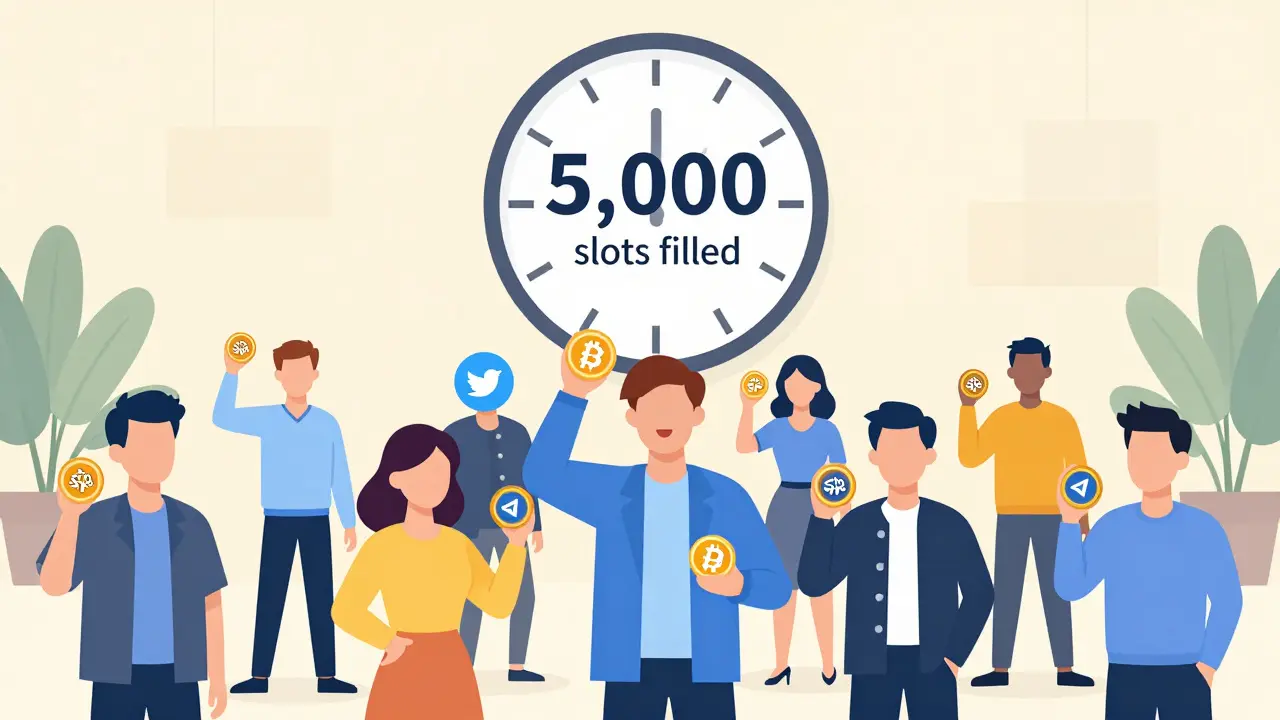
The main airdrop launched on November 23, 2021, and capped out at 5,000 participants. That’s it. Only 5,000 people got tokens. Each got exactly 500 SPIN, worth about $5 at the time. It sounds small, but in late 2021, $5 was a common airdrop reward for minimal effort. What made Spintop different was the setup.
You had to do three things to qualify:
- Join the official Spintop Telegram group and channel
- Follow Spintop on Twitter and retweet their airdrop post (you needed at least 10 followers on your account)
- Fill out the human-verified airdrop form
Those 10 Twitter followers? That was the first real barrier. New crypto users with no social following were automatically locked out. The human verification quiz was another hurdle-it wasn’t just a CAPTCHA. It asked questions about blockchain basics and Spintop’s mission, designed to filter out bots and casual takers.
There were optional bonus tasks: follow them on Medium, join Discord, subscribe to the newsletter. But those didn’t increase your token amount. They just kept you in the loop. The system ran on a first-come, first-served basis. Once the 5,000 slots filled up, the form shut down. No exceptions.
Who Got the Tokens-and Who Didn’t
Most recipients were active crypto Twitter users, early GameFi enthusiasts, and people who already had Telegram and Discord accounts set up. Many were part of existing crypto communities that shared airdrop alerts. The ones who succeeded were the ones who acted fast-within the first 24 hours.
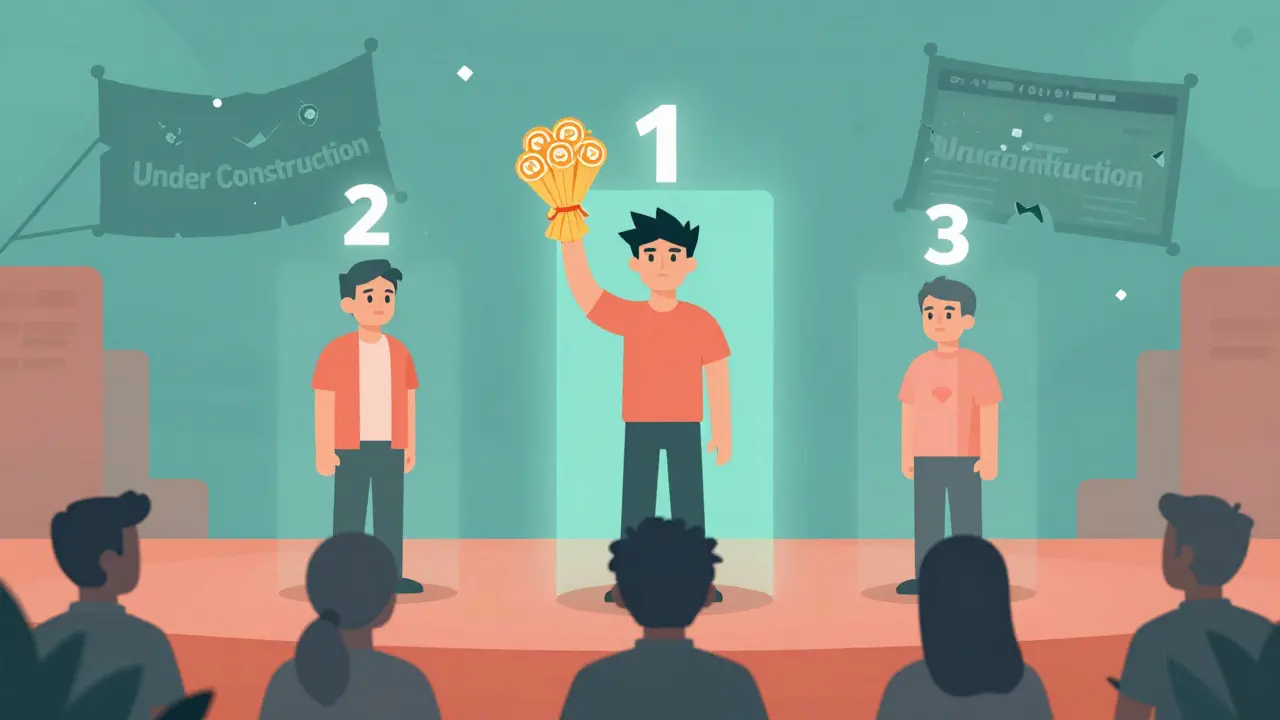
But there was another group: guilds. Spintop didn’t just give tokens to individuals. They created a tiered reward system for gaming guilds-groups of players who teamed up to play P2E games together. The top three guilds got extra allocations:
- 1st place: 2.5% of the total airdrop pool
- 2nd place: 1.5%
- 3rd place: 1%
That meant a single top guild could get thousands of extra SPIN tokens. Some guilds organized Discord servers with hundreds of members, all coordinating to complete tasks, boost Spintop’s social stats, and climb the leaderboard. It turned the airdrop into a mini-competition. For those guilds, the airdrop wasn’t just free money-it was a recruitment tool.
But here’s the catch: most regular users didn’t join guilds. They just wanted free tokens. And for them, the effort didn’t match the reward.
The CoinMarketCap Airdrop: A Second Chance
Spintop didn’t stop at one airdrop. In December 2021, they partnered with CoinMarketCap to run a second wave. This one gave out 900,000 SPIN tokens across 5,000 winners. But the prize structure changed. Instead of 500 tokens each, winners got between 100 and 180 tokens. It was less per person, but more people could enter.
This wasn’t just a copy-paste. CoinMarketCap’s audience was broader-more casual crypto users who didn’t follow niche GameFi projects. This was Spintop’s attempt to reach beyond their bubble. You had to sign up through CoinMarketCap’s platform, which meant a separate registration process. Many people didn’t realize there were two airdrops. Some claimed both. Others missed one entirely.
The CoinMarketCap campaign extended Spintop’s reach, but it didn’t fix the core problem: the tokens had nowhere to go.
Why SPIN Tokens Lost Value Fast
The SPIN token launched on December 3, 2021, on Binance Smart Chain. Total supply was 13.5 million. The airdrop accounted for 2.5 million tokens-18.5% of the total. That’s a big chunk. But here’s the real issue: the token had no clear use case beyond speculation.
Spintop promised a gaming hub called Gamepedia-a platform where you could browse, review, and play play-to-earn games. They talked about staking, yield farming, and NFT trading. But by early 2022, the platform was barely functional. No major games integrated. No real users logged in. The ecosystem didn’t materialize.
Tokenomics didn’t help. Only 20% of the airdropped tokens unlocked at launch. The rest came out slowly over months. That was meant to prevent dumping, but it also meant people couldn’t sell right away. By the time they could, the hype was gone. The market cap hovered around $97,000 shortly after launch. Today, it’s negligible.
Compare that to other 2021 airdrops-like Axie Infinity’s AXS or The Sandbox’s SAND. Those had working games, real players, and clear utility. Spintop had a vision, but no execution.
What Happened to the Community?
At its peak, Spintop’s Telegram group had over 20,000 members. Discord had 15,000. But after the airdrop ended, engagement crashed. The moderators stopped posting updates. The official blog went silent. The website still loads, but the links to Gamepedia lead to blank pages.
Some former participants still hold SPIN tokens as collectibles. A few traded them for pennies on decentralized exchanges. Most just forgot about them. The guilds that once competed for top rankings dissolved. The Twitter account hasn’t posted since 2022.
The airdrop worked exactly as designed: it built a community. But it didn’t build a product. And in crypto, a community without a product is just noise.
Was It Worth It?
If you got 500 SPIN tokens in 2021, you got $5 worth of free crypto. You did some social media work. You joined a few groups. You filled out a form. For many, that was a net win-especially if you didn’t pay for gas or fees.
But if you spent hours organizing a guild, recruiting members, and chasing leaderboard rankings for a shot at extra tokens? You didn’t get paid. You got a digital trophy that’s now worthless.
The Spintop airdrop was a textbook example of how not to build a sustainable crypto project. It focused on distribution, not retention. On marketing, not utility. On attracting users, not keeping them.
It’s not a cautionary tale about airdrops. It’s a lesson about what happens when a project confuses attention with adoption.
What You Can Learn from the Spintop Airdrop
Even though Spintop faded, its airdrop model still has lessons for anyone participating in crypto giveaways today:
- Check if the project has a working product-not just a whitepaper.
- Don’t spend hours on airdrops unless you believe in the long-term vision.
- Airdrops with strict social media requirements often target influencers, not regular users.
- If a project relies on guilds or competitions to distribute tokens, ask: what happens after the competition ends?
- Always verify the official links. Fake airdrop sites are everywhere.
The crypto space moves fast. Airdrops are still a common way to launch new projects. But the ones that survive are the ones that give you something real to do with the tokens-not just a chance to sell them later.
Did the Spintop airdrop still give out tokens after 2022?
No. The main airdrop ended in December 2021 after reaching its 5,000-participant cap. The CoinMarketCap campaign ended shortly after in early 2022. All token distributions were completed by March 2022. No new airdrops have been announced since.
Can I still claim SPIN tokens from the Spintop airdrop?
No. The claiming period ended over two years ago. The official airdrop form is offline, and the smart contract no longer accepts new claims. Any website claiming to still distribute SPIN tokens is a scam.
What blockchain was SPIN on?
SPIN was launched on the Binance Smart Chain (BSC). This was chosen for lower transaction fees compared to Ethereum, making it easier for users to interact with the token and any future dApps.
How many SPIN tokens were distributed in total?
A total of 2.5 million SPIN tokens were distributed in the main airdrop to 5,000 participants (500 each). An additional 900,000 tokens were distributed through the CoinMarketCap campaign. Combined, these made up 3.4 million tokens-roughly 25% of the total 13.5 million supply.
Why did Spintop fail when other GameFi projects succeeded?
Spintop focused on airdrop marketing instead of building a real product. Other successful GameFi projects like Axie Infinity and Illuvium had playable games with strong economies from day one. Spintop’s Gamepedia platform never launched properly. Without users playing actual games, the token had no utility. No ecosystem = no long-term value.