SteakBank Finance (SBF) Airdrop: Complete Guide, Risks & How to Participate
 Aug, 14 2026
It is August 2026, and the hunt for the next big crypto airdrop is fiercer than ever. You have likely seen whispers about SteakBank Finance and its native token, SBF. The promise? Free tokens for interacting with a platform that claims to revolutionize how you stake assets on the Binance Smart Chain. But here is the hard truth: in the world of decentralized finance, "free" often comes with hidden costs or scams. Before you connect your wallet, you need to know exactly what SteakBank Finance is, whether an official airdrop actually exists, and how to protect your capital from phishing attempts disguised as rewards.
This guide cuts through the noise. We will break down the mechanics of SteakBank Finance, analyze the current status of the SBF token distribution, and provide a step-by-step safety checklist for anyone looking to participate in early-stage DeFi projects. If you are looking for a get-rich-quick scheme, this might not be it. If you want to understand liquid staking on BSC while minimizing risk, keep reading.
What Is SteakBank Finance?
To understand the potential value of an airdrop, you first need to understand the product behind it. SteakBank Finance is a liquid staking protocol built on the Binance Smart Chain (BSC). In simple terms, it solves a specific problem in crypto: when you stake your coins to support a blockchain network, those coins are usually locked up. You can't sell them, trade them, or use them elsewhere until you unstake, which can take days or weeks.
SteakBank changes this dynamic. When you deposit your assets into their system, you receive a derivative token. This token represents your staked position but remains liquid. You can trade it, lend it out, or use it as collateral in other DeFi protocols while still earning staking rewards from the underlying asset. This concept, known as liquid staking, allows users to double-dip: earning validator rewards plus yield from secondary DeFi activities.
The platform operates via smart contracts deployed on BSC. The primary contract address associated with the project is identified as 0xBb53...b01734. However, because this is an early-stage project, understanding its infrastructure is crucial before trusting it with any funds.
The SBF Tokenomics: What Do We Know?
Every airdrop revolves around the token. For SteakBank Finance, that token is SBF. Here are the concrete facts available as of mid-2026:
- Token Ticker: SBF
- Maximum Supply: 10 billion tokens
- Circulating Supply: Currently reported as zero or near-zero in major aggregators
- Blockchain: Binance Smart Chain (BEP-20)
The fact that the circulating supply is effectively zero suggests that SteakBank Finance is likely in a pre-launch phase, a private sale phase, or has not yet initiated public trading. This is a critical detail for airdrop hunters. If no tokens are circulating, there is no market price, and no established liquidity pool. An airdrop in this context would likely be a way to distribute initial liquidity or reward early testers before a public exchange listing.
| Attribute | Value / Status |
|---|---|
| Protocol Type | Liquid Staking Derivative (LSD) |
| Network | Binance Smart Chain (BSC) |
| Total Supply Cap | 10,000,000,000 SBF |
| Current Circulation | Minimal / Pre-Launch |
| Primary Use Case | Collateral, Governance, Yield Farming |
Is There an Official SteakBank Finance Airdrop?
Here is where most users make mistakes. They assume an airdrop exists because they see posts on social media. As of August 2026, comprehensive, verified documentation confirming a public airdrop program for SBF is scarce. The lack of confirmed allocation mechanisms, eligibility criteria, or distribution schedules means you should treat any claim of an "active airdrop" with extreme skepticism.
However, early-stage DeFi projects often run "testnet" phases or "interaction campaigns" that lead to retroactive airdrops. These are not always advertised loudly. Instead, they reward users who:
- Deposit small amounts of test tokens into the staking contract.
- Provide liquidity to beta pools.
- Participate in governance voting during the development phase.
If SteakBank Finance follows this pattern, the "airdrop" isn't a button you click; it's a snapshot of your activity taken at a specific block height. Without official confirmation, farming these interactions is speculative. You are betting that the team will reward early adopters. Given the zero circulating supply, the project is still finding its feet.
How to Safely Hunt for the SBF Airdrop
If you decide to take the risk and interact with SteakBank Finance hoping for future rewards, follow this strict safety protocol. Scammers monitor Telegram groups and Twitter spaces for new projects like SteakBank to launch fake airdrop sites.
Step 1: Verify the Contract Address
Never trust a link from a DM or a random comment. Go directly to the official SteakBank Finance website (ensure the URL is correct). Look for the "Contract" or "Docs" section. Copy the primary contract address: 0xBb53...b01734. Paste this into a block explorer like BscScan to verify it matches the one on the site. If the addresses differ, disconnect immediately.
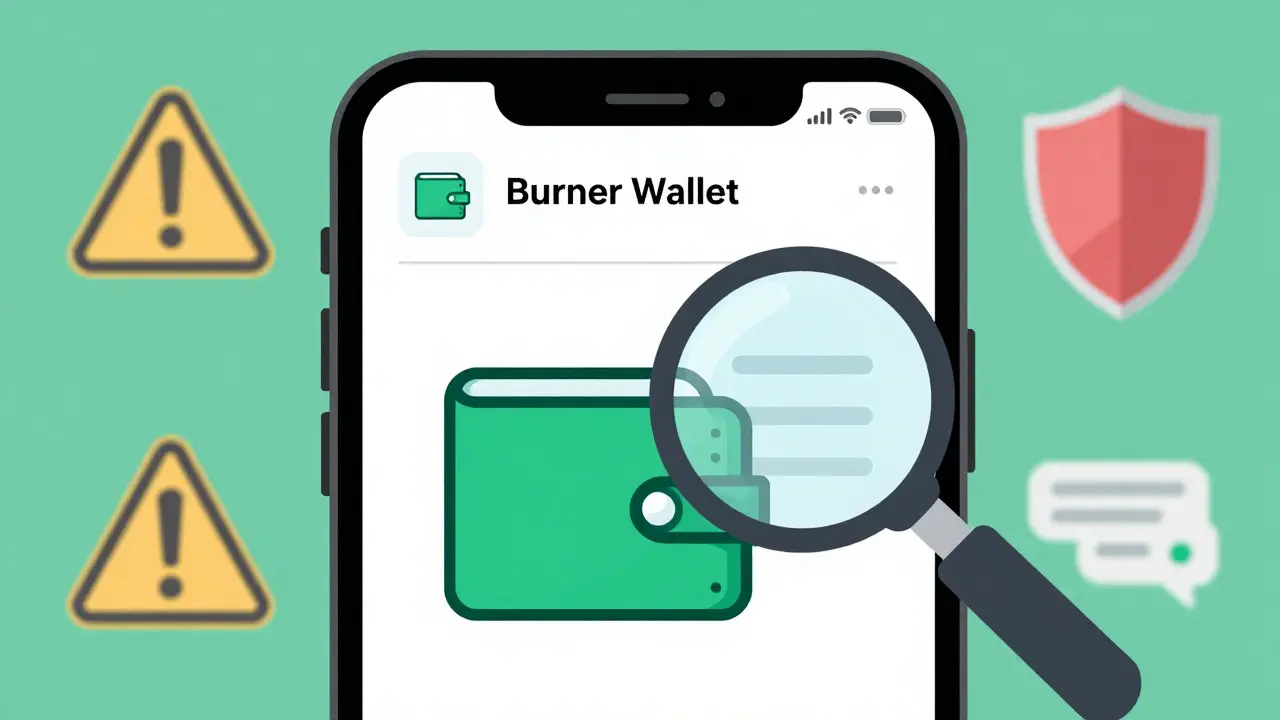
Step 2: Use a Burner Wallet
Do not connect your main wallet holding your life savings to an unproven protocol. Create a separate MetaMask or Trust Wallet instance specifically for airdrop hunting. Fund it with only the minimum amount of BNB needed for gas fees and a tiny amount of BNB or BUSD for testing deposits. If the contract is malicious, your loss is limited to that small amount.
Step 3: Check for Audits
Liquid staking involves complex math. If the smart contract has a bug, funds can be drained. Check if SteakBank Finance has been audited by reputable firms like CertiK, Hacken, or PeckShield. If no audit report is publicly available on their website or GitHub, consider the risk level "High."
Step 4: Monitor Official Channels
Follow the official SteakBank Finance Twitter and join their verified Discord or Telegram. Turn on notifications. Official airdrop announcements will come here first. Beware of impersonators; check for the blue checkmark or consistent branding history.
Risks Involved in Early-Stage Liquid Staking
Participating in a project with zero circulating supply carries unique risks beyond standard market volatility.
- Smart Contract Risk: Since the code is relatively new, undiscovered vulnerabilities may exist. A hacker could exploit the staking mechanism.
- Impermanent Loss: If you use your liquid staking tokens in liquidity pools, you face impermanent loss. If the price of SBF diverges significantly from the underlying asset, you may end up with less value than if you had just held the original asset.
- Validator Slashing: In proof-of-stake systems, validators can be penalized (slashed) for downtime or misbehavior. Depending on SteakBank's insurance model, this could reduce the value of your derivative tokens.
- Liquidity Risk: With zero circulation, there may be no buyers for your SBF tokens when you try to sell. You could be stuck with tokens you cannot offload.
Alternatives to Consider
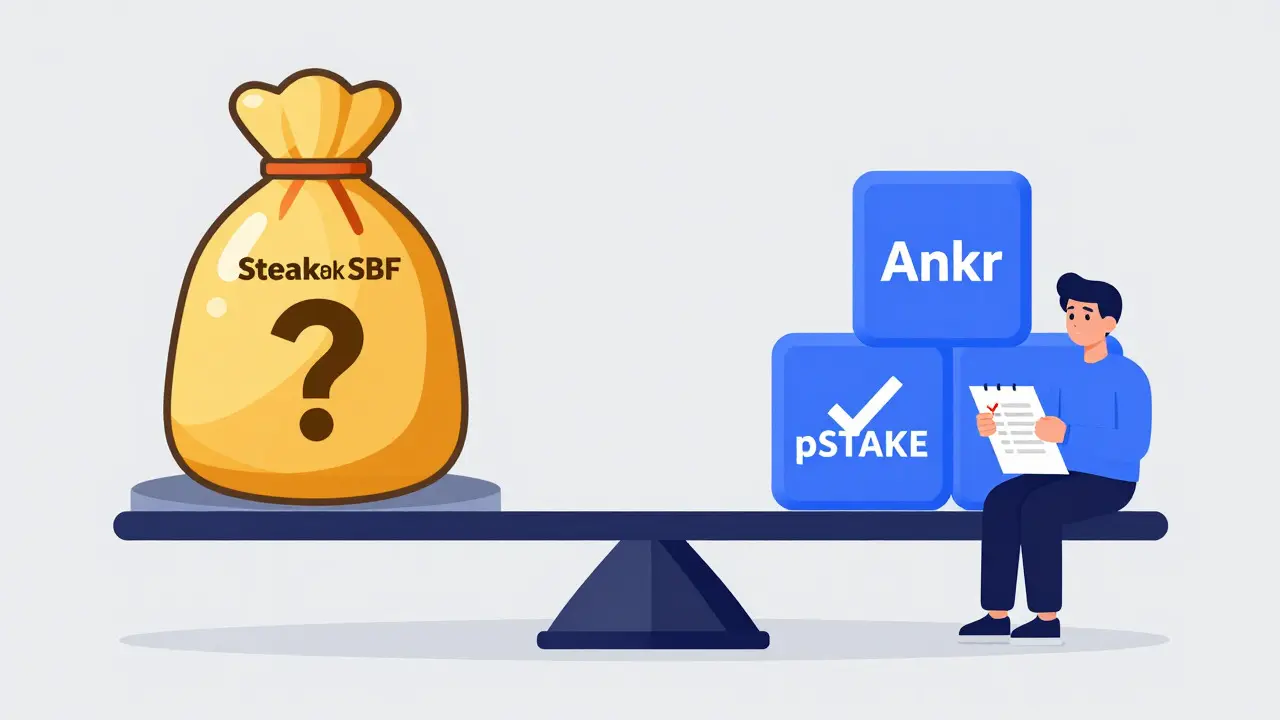
If SteakBank Finance feels too risky or unclear, you are not alone. The liquid staking sector on Binance Smart Chain is competitive. Established players offer more transparency and proven track records. Comparing SteakBank to these alternatives helps put the risk in perspective.
| Platform | Maturity | Audited? | TVL Estimate |
|---|---|---|---|
| SteakBank Finance | Early Stage / Pre-Launch | Unknown / Pending | Low / Minimal |
| Ankr Staking | Established | Yes (Multiple) | High ($100M+) |
| pSTAKE Finance | Established | Yes | Medium-High |
Projects like Ankr and pSTAKE have years of operational history. While their upside potential for a massive airdrop multiplier might be lower than a brand-new project, the risk of losing your principal investment is significantly reduced. For many users, the peace of mind is worth the difference.
Conclusion: Proceed with Caution
The SteakBank Finance airdrop remains largely speculative as of August 2026. With a 10 billion token cap and zero circulation, the project is in its infancy. There is potential for high rewards if you identify and interact with the protocol correctly before the public launch. However, the absence of clear official documentation means you are operating in the dark.
Your best strategy is patience and verification. Do not rush to deposit large sums. Use a burner wallet, verify every contract address against official sources, and wait for concrete announcements regarding the airdrop timeline. In DeFi, the money is made in the waiting room, not in the panic buy.
Is the SteakBank Finance airdrop real?
As of August 2026, there is no widely confirmed, official public airdrop announcement with clear eligibility criteria. While the project exists and has a defined tokenomics structure (10B SBF supply), the lack of circulating supply suggests it is in a pre-launch phase. Any claims of active airdrops should be verified directly through SteakBank's official website and social channels to avoid scams.
What is the SBF token used for?
The SBF token is the native utility token of SteakBank Finance. It is designed to represent staked positions in a liquid format. Users can hold SBF to earn staking rewards, use it as collateral in lending protocols, provide liquidity in DEX pools, and potentially participate in governance decisions for the platform.
How do I get SBF tokens safely?
To safely acquire SBF tokens, first verify the official contract address (0xBb53...b01734) on the SteakBank website. Connect a burner wallet with minimal funds. Interact with the staking interface only after confirming the site is legitimate. Avoid clicking links from unofficial Telegram groups. Once the token launches or trades begin, you can also purchase it on supported decentralized exchanges on the Binance Smart Chain.
What are the risks of using SteakBank Finance?
Key risks include smart contract vulnerabilities (bugs that could allow hackers to drain funds), impermanent loss if you provide liquidity, validator slashing penalties, and high liquidity risk due to the low circulating supply. Additionally, as an early-stage project, there is a risk that the token may never gain significant market traction or exchange listings.
Are there better alternatives to SteakBank Finance?
If you prioritize security over speculative airdrop gains, established platforms like Ankr Staking and pSTAKE Finance are safer alternatives. They have undergone multiple audits, have higher Total Value Locked (TVL), and have proven track records on the Binance Smart Chain ecosystem. SteakBank may offer higher potential rewards for early adopters but comes with proportionally higher risk.
When will the SBF token launch?
There is currently no confirmed public date for the SBF token launch or exchange listing. The zero circulating supply indicates the project is likely in private sales or final development stages. Users should monitor official SteakBank Finance communication channels for updates on roadmap milestones and token generation events (TGE).
Sarah Hafner
August 14, 2026 AT 17:33Hey everyone! Just wanted to add a little extra safety tip since this guide is so thorough. :) Always double-check the URL before connecting your wallet, even if it looks right. Scammers are getting really good at typosquatting these days. I lost some gas fees last year because of a single missing letter in the domain name. It’s frustrating, but using a burner wallet like the article suggests really saves your sanity. Don’t be afraid to ask questions in the official Discord too; the community there is usually pretty helpful if you’re stuck on how to verify the contract address. Stay safe out there!
Susan Kiley
August 16, 2026 AT 02:58Oh, please. Another generic 'guide' for retail investors who clearly don't understand the first thing about DeFi mechanics. 🙄 The idea that you need a 'step-by-step checklist' to avoid scams is insulting to anyone with actual financial literacy. If you can't distinguish between a legitimate protocol and a honeypot without holding your hand, maybe crypto isn't for you. SteakBank is obviously a pre-launch speculative play, and anyone thinking they're going to get rich quick from a zero-supply token is living in a fantasy world. Real alpha hunters know where to look; they don't read blog posts written by people who think 'burner wallets' are a revolutionary concept. Pathetic.
Gary Straiton
August 16, 2026 AT 22:15This whole liquid staking trend is just another way for foreign devs to bleed American capital dry while we do all the heavy lifting in the real economy. 🇺🇸 Why should we trust a random BSC project when our own institutions are failing us? It’s always the same story: buy high, sell low, and blame the market. These projects have no oversight, no accountability, and zero respect for the hardworking folks funding their lavish lifestyles. We need stricter regulations here in the US to stop this digital gold rush nonsense. Until then, keep your money in cash or gold, not some imaginary token controlled by anonymous coders overseas. Wake up, people!
alex fordy
August 16, 2026 AT 22:20I find it fascinating how fear often drives more engagement than excitement in these communities. 😊 While Gary makes some passionate points about regulation, it’s worth remembering that innovation rarely happens within rigid boundaries. The concept of liquid staking itself is quite philosophical-it represents a shift from static ownership to dynamic utility. However, Sarah is absolutely right about the importance of verification. In an ecosystem built on code, trust must be verified, not assumed. Perhaps the middle ground lies in cautious optimism: engaging with new protocols like SteakBank but maintaining the intellectual humility to accept losses as tuition for learning. After all, every expert was once a beginner who didn’t know better. 🌱
Nia Franklin
August 17, 2026 AT 07:05OMG!! This post is SO helpful!!! I’ve been waiting for something like this!! 😍✨ The part about the burner wallet is genius!! I always forget to separate my main funds!! And thank you Alex for being so thoughtful!! It’s nice to see some calm vibes in here!! 🌈💖 Also, does anyone else think the name SteakBank is kinda funny?? Like, steak + bank?? 🥩🏦 Anyway, I’m gonna try interacting with the testnet soon!! Wish me luck!! 🍀🎉
Mohamed Shoaeb
August 19, 2026 AT 01:30good points all around. i think the key takeaway here is patience. most people rush in and lose everything. if you take your time and verify each step like sarah said you will be fine. the tech is cool but the risk is real. i prefer established platforms like ankr myself but its fun to watch new projects grow. just dont put in money you cant afford to lose. simple as that.