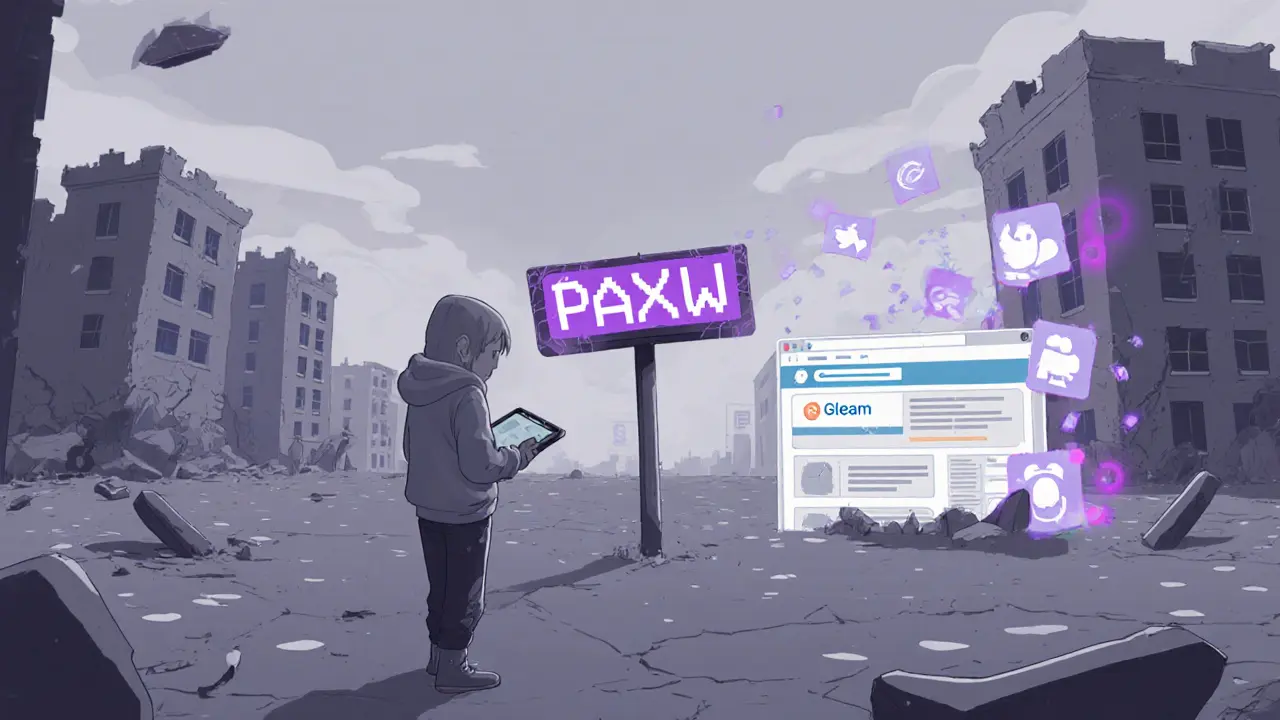
Pax.World's PAXW NFT airdrop promised free tokens and NFTs but delivered nothing. The project vanished in 2023, the token crashed 98.5%, and users never received rewards. Learn why it's a confirmed scam and how to avoid similar crypto traps.
Abandoned Crypto Project: What Happens When a Coin Dies
When a crypto project gets abandoned, it doesn’t just fade away—it becomes a dead crypto token, a digital asset with no team, no updates, and no real users. These aren’t just low-price coins. They’re ghosts. No development. No community. No roadmap. Just a ticker symbol floating in the void, often still listed on shady exchanges, waiting for someone to mistake it for a bargain. You’ve probably seen them: tokens with $0 trading volume, tweets from 2021, and Discord servers full of bots. These are the abandoned crypto project, a blockchain initiative that lost funding, interest, or both—and they’re more common than you think.
Why do they die? Usually, it’s because the team vanished after the airdrop. Take the failed crypto airdrop, a promotional giveaway that never led to real product development. Projects like FEAR, CYT, and TopGoal gave away free tokens to build hype. But when the marketing budget ran out, so did the will to build. No one showed up to use the app. No devs pushed code. No liquidity was added. And suddenly, the token was just a number on a chart with no meaning. These aren’t failures—they’re scams in slow motion. And now, new investors keep stumbling into them, thinking a low price means a good deal. It doesn’t. A $0.0001 coin with zero volume isn’t cheap—it’s worthless. Even worse, fake airdrops like Sonar Holiday or Position Exchange billboard scams use the name of dead projects to lure people into phishing sites. They know you’re searching for old tokens. They know you’re hoping for a second chance. That’s how they trap you.
Some abandoned projects aren’t even scams—they’re just forgotten. Like Boys Club (BOYS) or Built Different (BUILT). No team ever claimed responsibility. No whitepaper explained the tech. No one ever traded them in real volume. They’re not dead because they failed. They’re dead because they never really lived. These are the zombie crypto, a token that still appears on exchanges but has no function, no users, and no future. They’re digital ghosts haunting CoinMarketCap lists, feeding off the hope of newbies who don’t know how to check for active development. If a project hasn’t updated in two years, doesn’t have a working website, and its Twitter is silent, it’s not a hidden gem. It’s a tombstone.
What you’ll find below isn’t a list of comeback stories. It’s a graveyard tour. Each post exposes how a project died, who got hurt, and what to watch for next time. You’ll see how fake airdrops mimic real ones. How scams reuse old names. How even legitimate tokens like Serum DEX barely survived after their parent company collapsed. You’ll learn how to spot the red flags before you click "Claim Now" on a dead project’s website. And you’ll see why the only safe bet is to avoid anything that smells like a ghost story.