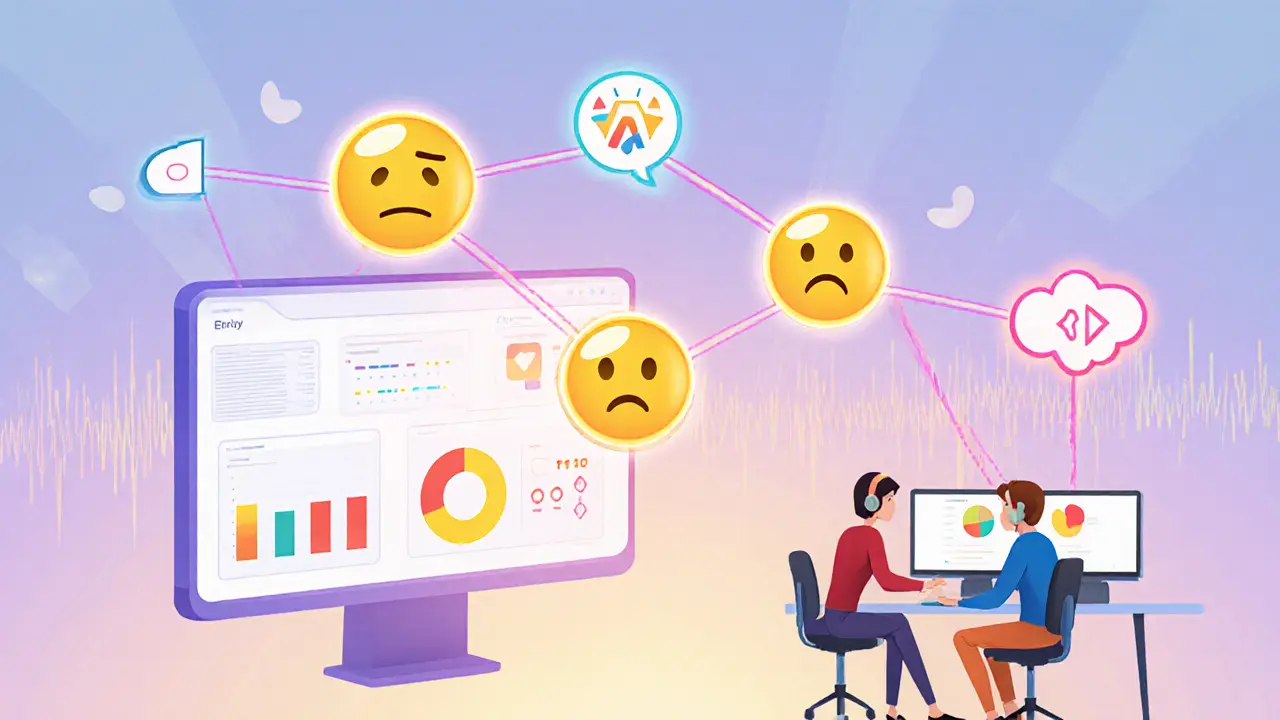
Sentiment analysis tools use AI to detect customer emotions in real time, helping businesses reduce churn, improve support, and predict behavior. Learn which tools work best in 2025 and how to use them without overcomplicating things.
AI Sentiment Indicators: What They Are and How They Really Work in Crypto
When you hear about AI sentiment indicators, machine learning tools that scan social media, forums, and news to guess if crypto prices will go up or down. Also known as crypto sentiment analysis, it’s not magic—it’s just math tracking human behavior. These tools watch Twitter rants, Reddit threads, Telegram group panic, and even YouTube comments to spot when excitement or fear is spiking. But here’s the catch: most of them don’t predict prices. They just tell you what people are saying—and often, what people say has nothing to do with what happens next.
Think about it. When Elon Musk tweets about Dogecoin, sentiment tools go wild. But if he doesn’t follow up, the price crashes anyway. Or when a new token launches and 10,000 people flood Discord saying "1000x," the AI sees bullish sentiment—but the token has no team, no code, and no liquidity. That’s why some traders ignore sentiment entirely. It’s not useless—it’s just noisy. The real value isn’t in the signal. It’s in spotting when the signal is fake. You’ll find posts here that break down exactly how scams use fake sentiment to trick new traders, like the Sonar Holiday airdrop or Position Exchange billboard scams. These aren’t just rumors—they’re engineered illusions built to look like real hype.
And it’s not just about scams. Even legit projects get twisted by sentiment. The FEAR token airdrop in 2021 looked like a goldmine on Twitter—until the token dropped 95% in a week. The AI saw "massive interest," but no one checked if the project had a working product. That’s why the best traders use sentiment as a warning light, not a compass. It tells you when the crowd is going crazy—not when to buy. You’ll also see posts here that explain how real sentiment tools are built, what data sources actually matter, and why most free dashboards are just pretty graphs with no edge. Some platforms track Discord activity. Others scan Telegram bots. A few even monitor coinbase.com search trends. But none of them work unless you know how to filter out the noise. And that’s what this collection is for: cutting through the fluff to show you what’s real, what’s rigged, and what you can actually use before you lose money.