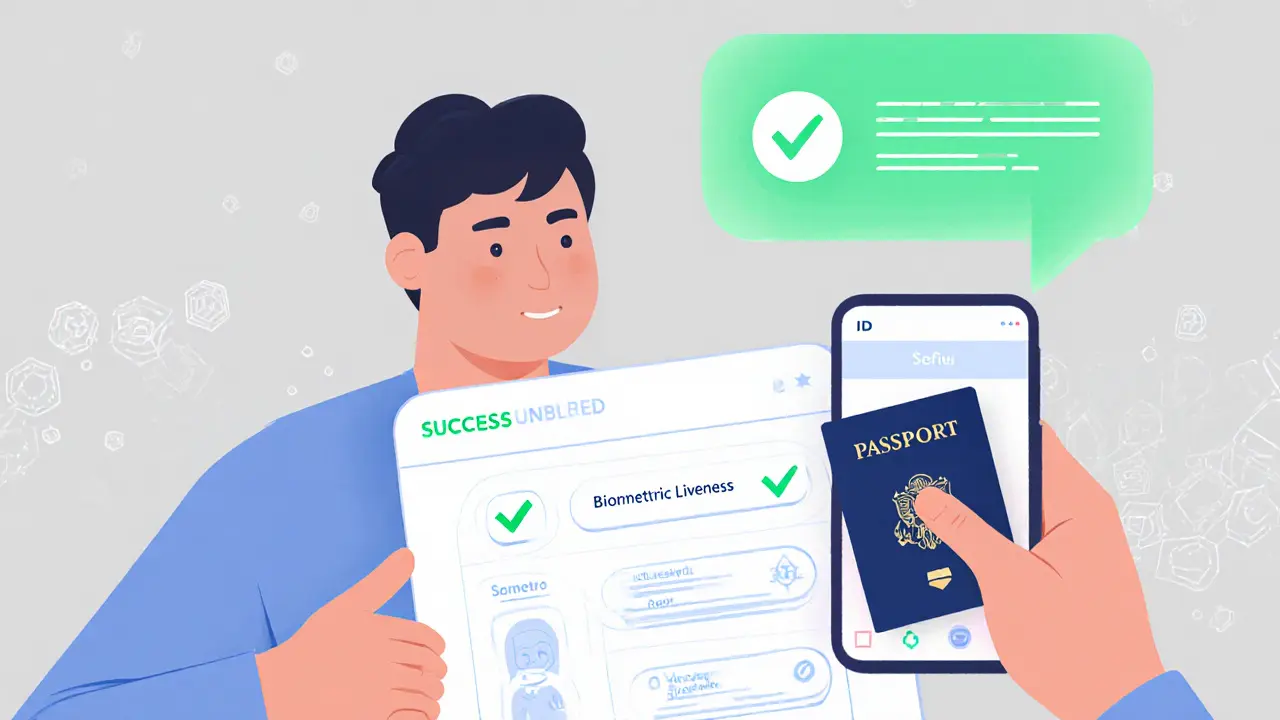
Learn how to complete KYC verification for crypto platforms quickly and successfully. Understand the required documents, common rejection reasons, and how to avoid delays. Essential for anyone using blockchain exchanges.
AML Compliance in Crypto: What It Means and Why It Matters
When you hear AML compliance, Anti-Money Laundering rules that require crypto platforms to verify users and track suspicious transactions. Also known as know your customer (KYC) rules, it’s the backbone of legal crypto trading today. This isn’t just paperwork—it’s what stops criminals from washing dirty money through Bitcoin, Ethereum, or any new token. If an exchange doesn’t follow AML rules, it gets shut down. If you use one that doesn’t, your funds could vanish overnight.
Look at the posts here. You’ll see Coincall, a crypto derivatives exchange built with U.S. compliance in mind, and Bitpin, a platform designed for Iranian users that still follows local financial laws. Both know that trust starts with following the rules. Even automatic crypto tax information exchange, a global system starting in 2026 that shares your trading data with tax authorities, ties directly into AML. Governments don’t just want taxes—they want to track who’s moving money and why.
And it’s not just exchanges. Airdrops? Many now require KYC just to claim tokens. Fake airdrops like the Position Exchange Times Square billboard or Sonar Holiday scam? They avoid AML because they’re illegal. Real projects don’t skip it—they build it in. Even Flux Protocol and GEMS NFT airdrop ask for basic identity checks. Why? Because if you can’t prove you’re not a bot or a money launderer, you don’t get the tokens.
AML compliance isn’t about privacy loss—it’s about protection. It keeps your wallet safe from being used as a pawn in someone else’s crime. It stops shady tokens from flooding the market. It’s why you can trust CoinMarketCap to list only exchanges that pass basic checks. And it’s why the next big airdrop you hear about? If it doesn’t ask for your ID, it’s probably a scam.
Below, you’ll find real-world examples of how AML compliance shapes everything—from which exchanges survive to which airdrops are legit. No fluff. Just what you need to know to stay safe, stay legal, and avoid losing your crypto to the very people who pretend to give it away for free.