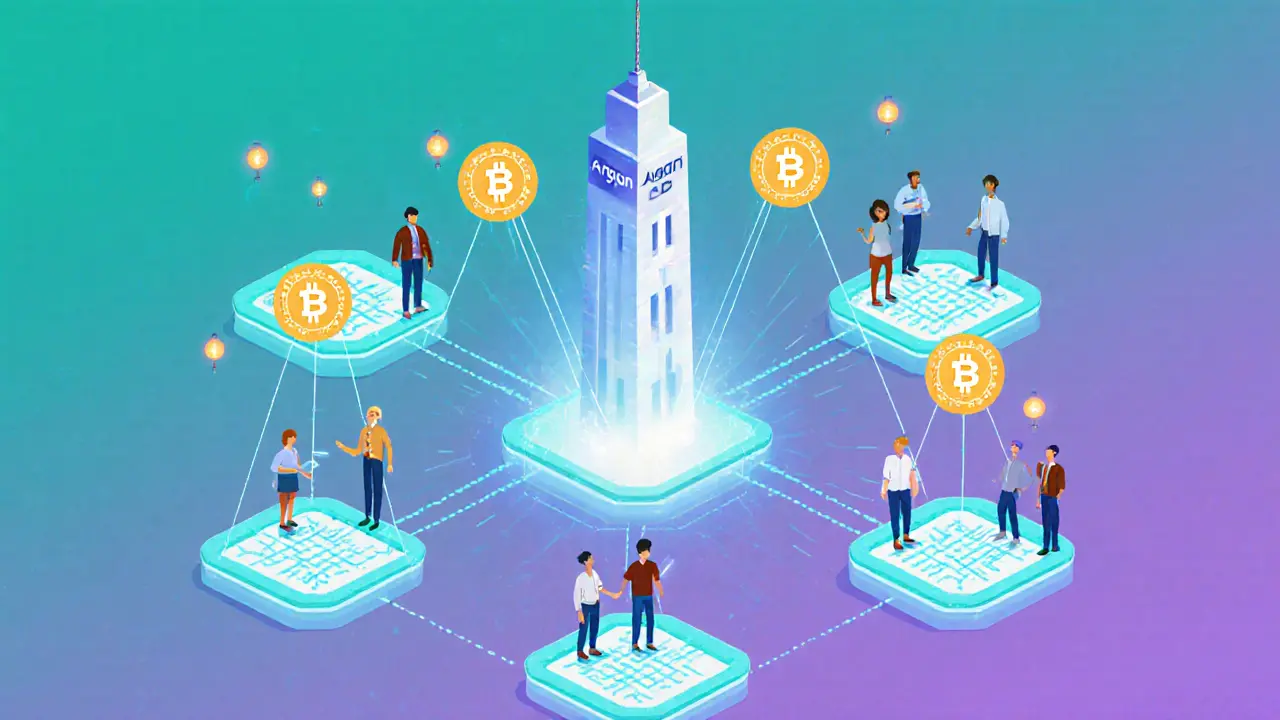
Aragon (ANT) is a decentralized platform for creating and managing DAOs with customizable governance, treasury tools, and a built-in dispute court. Learn how ANT works, its real-world uses, and why it's a key player in blockchain organization.
ANT Crypto: What It Is, How It Works, and Why It Matters in 2025
When people talk about ANT crypto, the native token of the AntChain blockchain platform designed for decentralized governance and network coordination. Also known as Aragon Network Token, it’s not just another coin—it’s a tool for communities to make decisions without central control. Unlike meme coins that vanish after a hype cycle, ANT was built to let users vote on upgrades, fund development, and manage treasury funds—all on-chain. It’s the engine behind projects that want to be truly decentralized, not just labeled as such.
ANT doesn’t exist in a vacuum. It connects to blockchain governance, the system that lets token holders propose and vote on changes to a protocol, which is what separates real Web3 projects from copycats. You’ll find this same idea in other tokens like LON and RDNT, where holders influence how the protocol evolves. But ANT was one of the first to make it simple, transparent, and usable for non-technical users. It also ties into decentralized networks, online systems that run without servers owned by a single company, like the ones powering DAOs, decentralized exchanges, and community-run apps. These networks need a way to agree on rules—and ANT gives them that.
Looking at the posts here, you’ll notice a pattern: people are tired of fake airdrops, dead tokens with zero volume, and scams disguised as opportunities. ANT doesn’t promise free money. It doesn’t have a billboard in Times Square or a TikTok influencer pushing it. What it does offer is substance: a working governance model, real usage in live projects, and a track record of resilience through market cycles. You won’t find ANT in a "get rich quick" story. But if you care about owning a piece of how a digital community runs—how votes are counted, how funds are spent, how updates happen—then ANT is one of the few tokens that actually delivers on that promise.
Below, you’ll find real breakdowns of tokens that tried to copy this model, failed, or got lost in the noise. Some are dead. Some are scams. A few are still quietly doing the work ANT was built for. No fluff. No hype. Just what’s real—and what’s not.